

JT9D inlet on the 747-100 prototype
A close-up of the prototype’s wing-mounted engine shows the inlet and fan behind the spinner.
The JT9D is Pratt & Whitney's early high-bypass widebody engine family. It launched on the Boeing 747 and later served additional Airbus, Boeing and McDonnell Douglas aircraft.
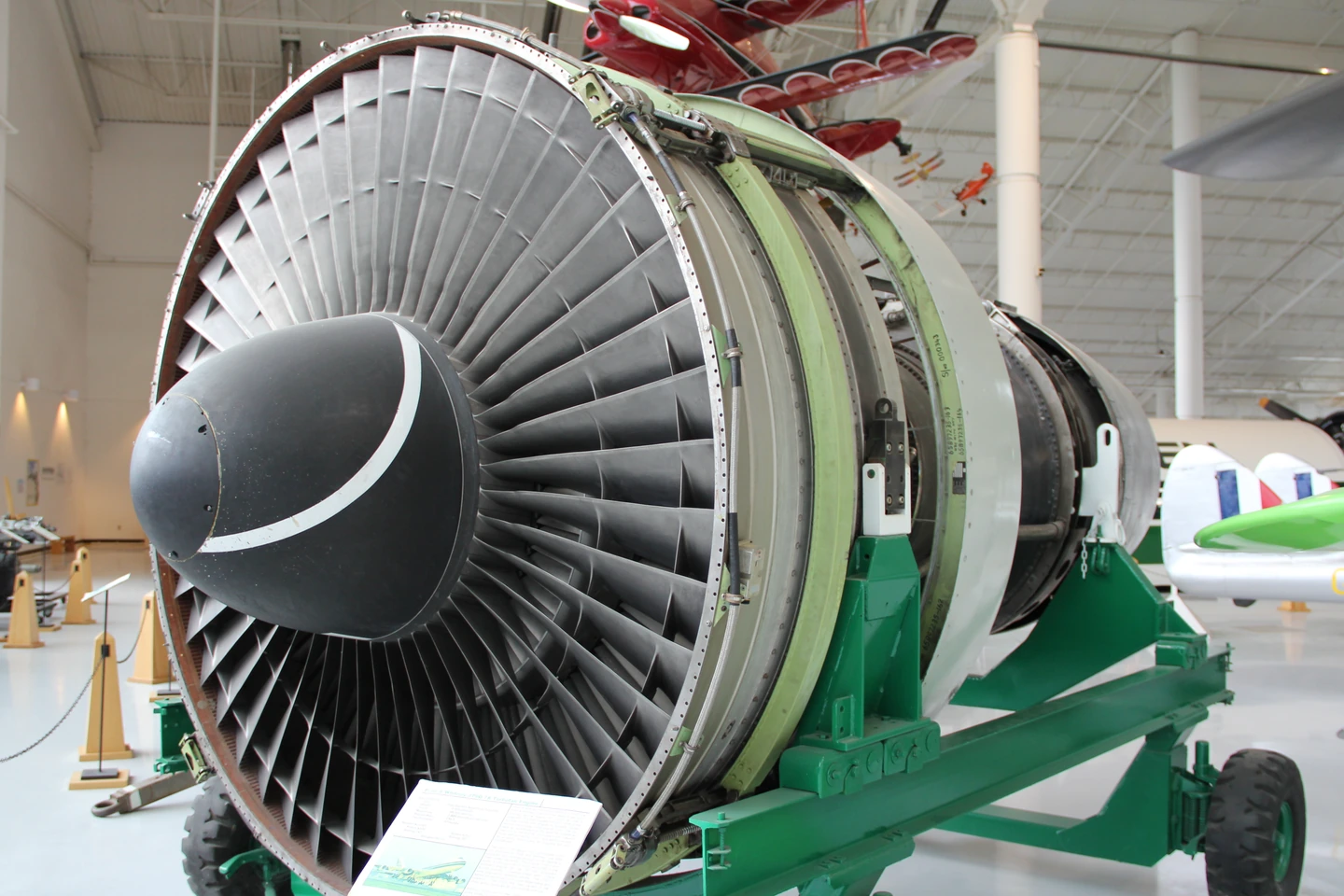
The JT9D is Pratt & Whitney's early high-bypass widebody engine family. It launched on the Boeing 747 and later served additional Airbus, Boeing and McDonnell Douglas aircraft.
Expand a branch to compare its models, aircraft applications and published ratings.
| Model and aircraft | Thrust or shaft power |
|---|---|
| JT9D-3A747-100 · 747-200B · 747-200C · 747-200F | |
| JT9D-7A747-100 · 747-200B · 747-200C · 747-200F | |
| JT9D-7F747-100 · 747-200B · 747-200C · 747-200F · 747SP | |
| JT9D-7J747-100 · 747-200B · 747-200C · 747-200F | |
| JT9D-59AA300 B4-120 · A300 B4-220 |
| Model and aircraft | Thrust or shaft power |
|---|---|
| JT9D-7R4D767-200 · 767-300 · 767-300BCF | |
| JT9D-7R4D1A310-221 | |
| JT9D-7R4G2747-200B · 747-200C · 747-200F · 747-300 | |
| JT9D-7R4H1A300 B4-620 · A300 C4-620 |
Related engine · Pratt & Whitney JT3C / J57
Related engine · Pratt & Whitney JT3D / TF33
Early 747s and Airbus and Boeing twins use different JT9D designations. The directory also includes separate JT3C and JT3D profiles for earlier jetliners. Pratt & Whitney engine programme references
Model pages show ICAO test values per engine and EASA noise examples tied to specific airframes, engine configurations and aircraft weights. Use these conditions when comparing figures across models.
Use the ring to locate the engine or a distinguishing feature. Aircraft records identify the installed configuration.
A close-up of the prototype’s wing-mounted engine shows the inlet and fan behind the spinner.
The engine uses a large single-stage fan and two-spool core. Later -7R4 ratings were adapted to different airframe programmes. Pratt & Whitney engine programme references
Expand a branch to compare its models, aircraft applications and published ratings.
| Model and aircraft | Thrust or shaft power |
|---|---|
| JT9D-3A747-100 · 747-200B · 747-200C · 747-200F | |
| JT9D-7A747-100 · 747-200B · 747-200C · 747-200F | |
| JT9D-7F747-100 · 747-200B · 747-200C · 747-200F · 747SP | |
| JT9D-7J747-100 · 747-200B · 747-200C · 747-200F | |
| JT9D-59AA300 B4-120 · A300 B4-220 |
| Model and aircraft | Thrust or shaft power |
|---|---|
| JT9D-7R4D767-200 · 767-300 · 767-300BCF | |
| JT9D-7R4D1A310-221 | |
| JT9D-7R4G2747-200B · 747-200C · 747-200F · 747-300 | |
| JT9D-7R4H1A300 B4-620 · A300 C4-620 |
The original widebody turbofan receives FAA certification in May.
The JT9D begins airline service as the Boeing 747’s original powerplant.
The improved series extends JT9D power to aircraft including early widebody twins.
Manufacturer data, type certificates and environmental records.