JT9D-7A
JT9D-7A belongs to the JT9D branch. Published aircraft certification records pair this rating with 747-100 and 747-200B.
- ICAO reference rated thrust

Compare within JT9D
Pound-force values from SI ratings are rounded to the nearest whole unit.
| Model | Thrust | Aircraft listed |
|---|---|---|
| JT9D-3A | 43,500 lbf = 193.5 kNTakeoff thrust · dry sea-level static · FAA E20EA · p. 1 | 747-100 · 747-200B · 747-200C · +1 aircraft |
| JT9D-7A | 46,153 lbf = 205.3 kNICAO reference rated thrust · ICAO Engine Emissions Databank · Issue 32B | 747-100 · 747-200B · 747-200C · +1 aircraft |
| JT9D-7F | 47,997 lbf = 213.5 kNICAO reference rated thrust · ICAO Engine Emissions Databank · Issue 32B | 747-100 · 747-200B · 747-200C · +2 aircraft |
| JT9D-7J | 49,998 lbf = 222.4 kNICAO reference rated thrust · ICAO Engine Emissions Databank · Issue 32B | 747-100 · 747-200B · 747-200C · +1 aircraft |
| JT9D-59A | 51,720 lbf = 230.06 kNTakeoff thrust · FAA E3NE · p. 1 | A300 B4-120 · A300 B4-220 |
Overview
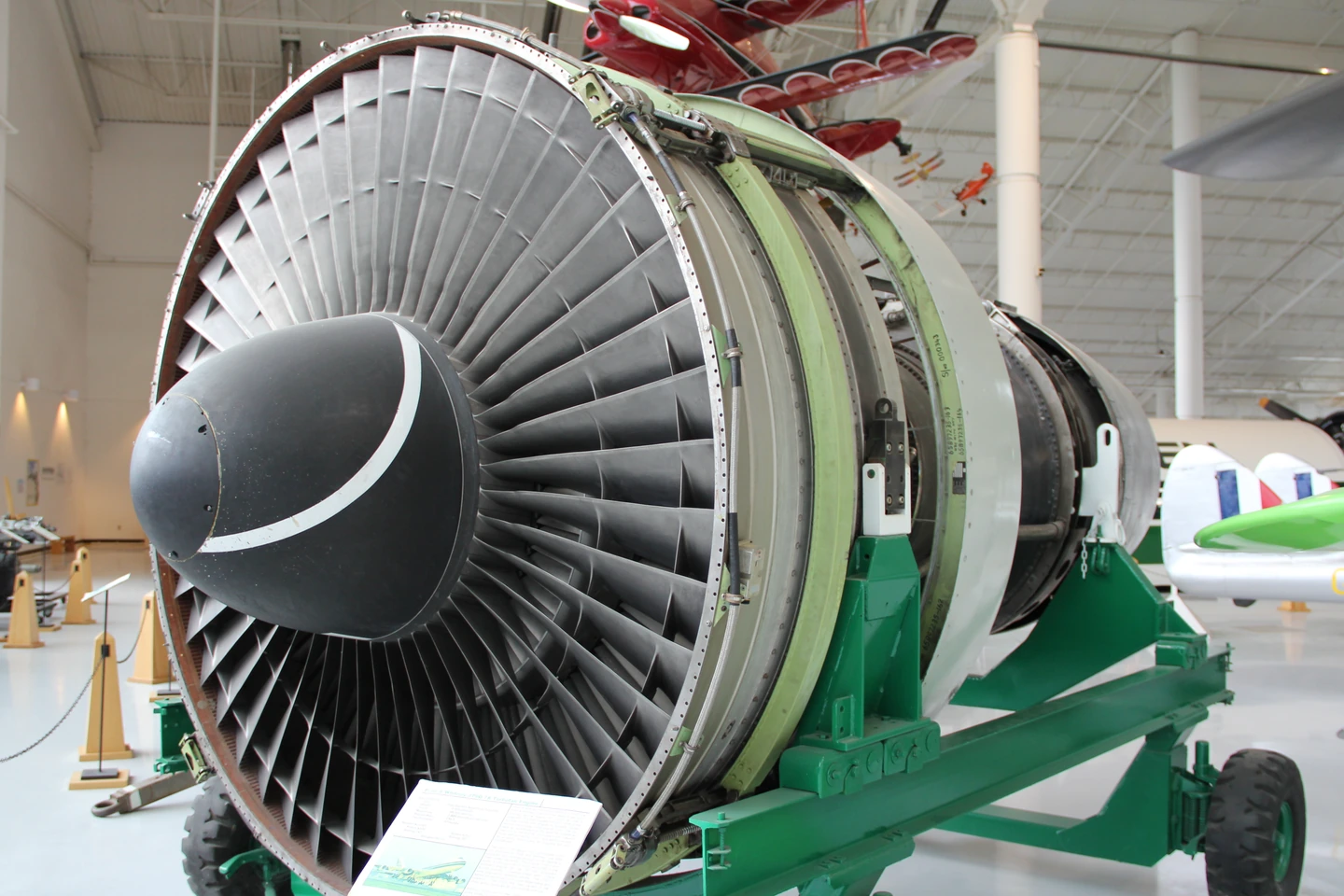
The JT9D was an early high-bypass turbofan used on the first Boeing 747s and other widebodies.
- Model designation
- JT9D-7A
- Engine series
- JT9DPratt & Whitney engine product references
- Engine family
- Pratt & Whitney JT9D
Aircraft applications
- 747-100JT9D-7AEASA noise configurationEASA A14014
- 747-200BJT9D-7AEASA noise configurationEASA A14020
- 747-200CJT9D-7AEASA noise configurationEASA A14038
- 747-200FJT9D-7AEASA noise configurationEASA A14054
Identification
An early widebody and period-specific nacelle shape are useful clues. Use fleet or engine records to distinguish the original JT9D from later replacements. Pratt & Whitney engine programme references
Use the engine data plate or the aircraft’s configuration records to confirm the exact suffix.
Technical records
The engine uses a large single-stage fan and two-spool core. Later -7R4 ratings were adapted to different airframe programmes. Pratt & Whitney engine programme references
- ICAO reference rated thrust
- 46,153 lbf = 205.3 kNICAO Engine Emissions Databank · Issue 32B
ICAO test reference conditions
- ICAO test record
- 8PW087 · JT9D-7AICAO Engine Emissions Databank · Issue 32B
- Pressure ratio
- 20.3:1
Development history
The engine entered service at the start of the Boeing 747 era. Later JT9D developments supported first-generation widebody twins. Pratt & Whitney engine programme references
The references document the JT9D series. A separate approval date for JT9D-7A remains unconfirmed.
Operations & environment
Early 747s and Airbus and Boeing twins use different JT9D designations. The directory also includes separate JT3C and JT3D profiles for earlier jetliners. Pratt & Whitney engine programme references
ICAO landing and takeoff cycle
Certification test data are per engine and use the ICAO reference cycle. Fuel-flow values refer to individual test points.
- ICAO test record
- 8PW087 · Pre-regulationICAO Engine Emissions Databank · Issue 32B
- Takeoff fuel flow
- 2.099 kg/s
- Idle fuel flow
- 0.211 kg/s
- NOₓ per reference cycle
- 12,291 g
- CO per reference cycle
- 28,647 g
- Hydrocarbons per reference cycle
- 12,108 g
Aircraft noise certification
Each example gives lateral, flyover and approach levels for a specific aircraft and engine configuration at its listed maximum takeoff mass.
- 747-100333,400 kg · EASA A14014100.6 / 108.6 / 107.2 EPNdB
Sources
From the archive
0 photos tagged JT9D-7A