Lockheed L-1049G Super Constellation

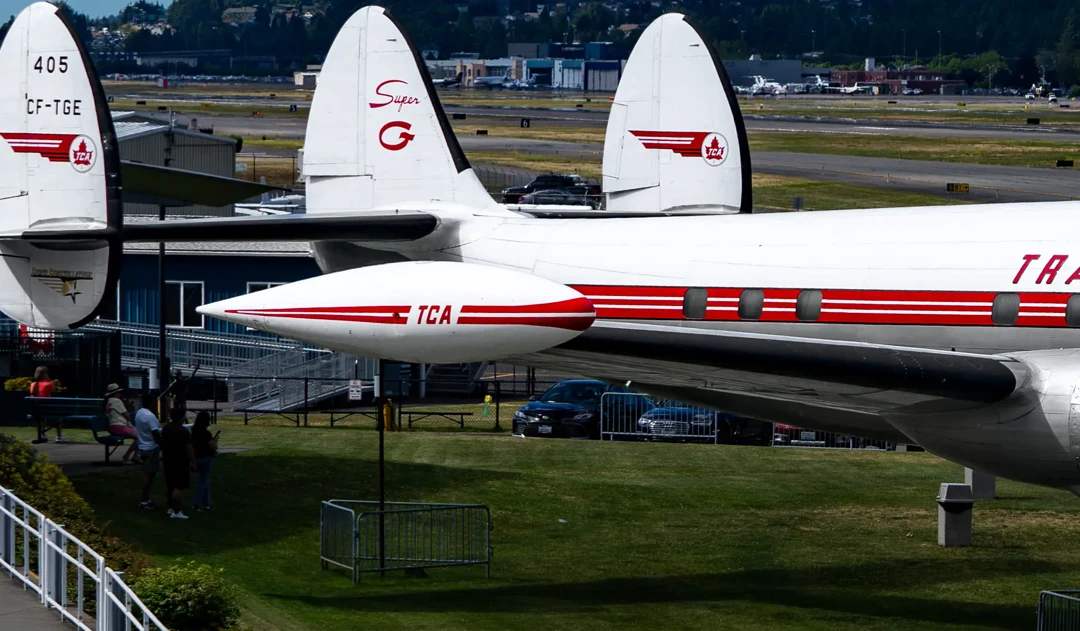
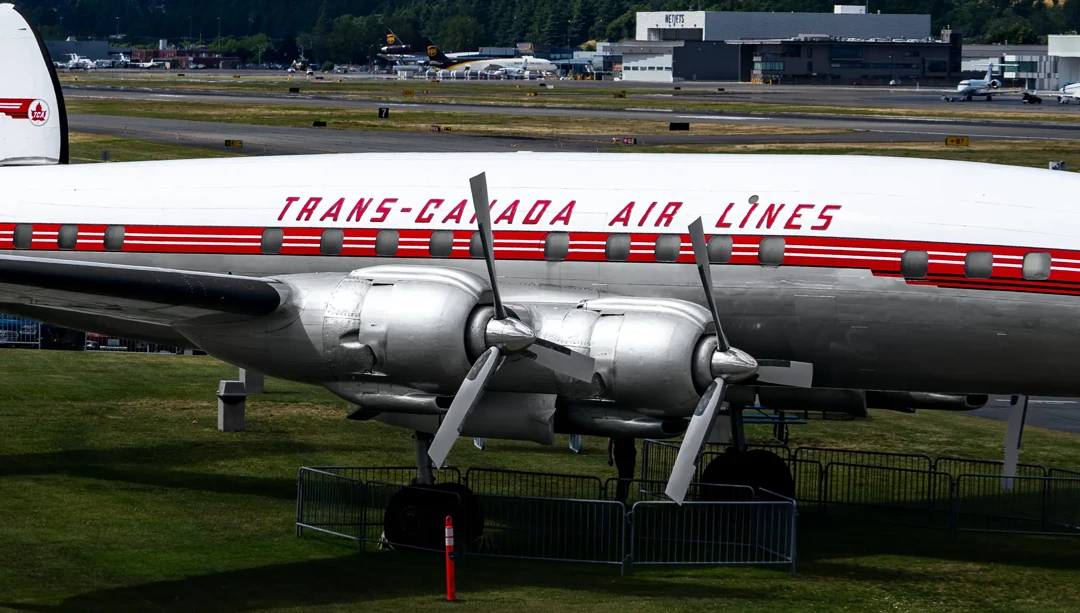
The L-1049G, known as the Super G, was a later Super Constellation variant. The Museum of Flight preserves CF-TGE, construction number 4544, in its former Trans-Canada Air Lines colors.

At a glance

Lockheed L-1049G Super Constellation

Length
34.75 m114 ft in the museum record for CF-TGE.
Wingspan
37.62 m123.42 ft in the museum record for CF-TGE.
Engine options
Wright R-3350The museum lists four engines at 3,250 hp each for CF-TGE. The exact installed suffix is unreported.
Main landing gear
Retractable tricycle landing gear, with nosewheel steering
Sources
Lockheed L-1049 Super Constellation model line

Compare models

Current aircraftLockheed L-1049 Super Constellation
Compare with

Comparing Lockheed L-1049G Super Constellation with Lockheed L-1049 Super Constellation.

SpecificationLockheed L-1049G Super ConstellationLockheed L-1049 Super Constellation
Length34.75 m114 ft in the museum record for CF-TGE.34.62 m113 ft 7 in on the first stretched L-1049.
Wingspan37.62 m123.42 ft in the museum record for CF-TGE.Unavailable
Maximum take-off weight62.37 t137,500 lb with autofeathering and dump valves.54.43 t120,000 lb for the original 1049-54 with dump valves.
Maximum payloadUnavailableUnavailable
Fuel tank capacity29,405 L7,768 US gal across the listed tanks with the optional 609-US-gal tanks at both wingtips.UnavailableChoose a variant
Engine optionsWright R-3350The museum lists four engines at 3,250 hp each for CF-TGE. The exact installed suffix is unreported.Wright R-3350The original 1049-54 is listed with four Wright 975C18CB-1 engines.
Typical two-class seatsUnavailableUnavailable
Published rangeUnavailableUnavailable

A dash indicates that a verified figure is unavailable. Figures follow the configuration specified by each source.

Comparison sources

Identification

Optional wingtip tanks
Look for the streamlined tank beyond the outer engine. CF-TGE carries the tank visible in this view.
Three vertical fins
Three rounded vertical fins stand across the tail. The near fin is at the left edge of this view.

Wingtip tanks were optional, and a photograph does not establish the exact R-3350 engine suffix. Confirm the model with the airframe record.

Design & cabins

Engine reference
Wright R-3350
Technical notes

Design notes

  • The Super G could carry optional wingtip fuel tanks for longer routes. The Museum of Flight dates the variant's first flight to December 7, 1954 and its commercial debut with Northwest Airlines to July 1, 1955.
  • CF-TGE was delivered in 1954 as an L-1049C and later converted to L-1049G standard. It retired from flying in 1965 after service with World Wide Airways. The Museum of Flight restored the earlier Trans-Canada Air Lines livery and displays the aircraft on its East Lawn in Seattle.

Limitations

  • The collection record identifies the Wright R-3350 family. It gives no exact engine suffix for this museum airframe.
Variant Technical Profile

Lockheed L-1049G Super Constellation is a specific configuration within Lockheed L-1049 Super Constellation, developed to cover a defined capacity, range, payload, or mission requirement inside the wider family.

Lockheed L-1049G Super Constellation is positioned as a capacity/range-specific solution within the narrowbody segment, serving routes better matched than sibling variants.

Technical features

  • Lockheed L-1049G Super Constellation: Single-aisle fuselage efficiency · structure. A narrow fuselage reduces structural weight and airport footprint for high-frequency short and medium routes.
  • Lockheed L-1049G Super Constellation: High-cycle operating design · maintenance. Doors, landing gear, brakes, and systems are optimized for repeated daily sectors and quick turnarounds.
  • Lockheed L-1049G Super Constellation: Wing and high-lift devices · aerodynamics. Flaps, slats, and wingtip devices balance runway performance with cruise efficiency.
  • Lockheed L-1049G Super Constellation: Engine generation changes · engine. Engine nacelle, thrust rating, fuel burn, and noise standards define each production generation.
  • Lockheed L-1049G Super Constellation: Fleet commonality · operational_efficiency. Common flight decks and maintenance practices reduce training and support cost across subfleets.

Advantages

  • Provides a more precise capacity or range match within the family.
  • Retains training, maintenance, and parts commonality with sibling variants.
  • Lets operators tune engine, cabin, and payload choices to route needs.

Weaknesses

  • Configuration identification complexity. Visually similar aircraft can differ materially by engine, weight standard, cabin layout, and conversion status.
  • Generation-dependent economics. Older generations usually trail newer designs in fuel burn, noise, avionics, or maintenance intervals.
  • Market-fit limits. Every variant has an ideal capacity and range band; outside it, load factor, range, or cost can become limiting.

Markets

  • Network airline trunk or feeder markets
  • Leasing and fleet replacement markets
  • Regional, domestic, or international airline markets

Operators

  • Full-service network airlines
  • Low-cost or leisure airlines
  • Cargo, government, or special-mission operators

Routes and missions

  • High-frequency short or medium-haul trunk routes
  • Medium-density long-haul or cross-regional routes
  • Fleet replacement, supplementation, or special missions

Sibling comparison

  • smaller sibling variants. Usually provides more seats, cargo volume, or thrust demand, but can be harder to fill on thinner routes.
  • larger or longer-range sibling variants. Usually has lower acquisition and operating exposure, but less range, payload, or growth margin.
Development & service

  • The Super G could carry optional wingtip fuel tanks for longer routes. The Museum of Flight dates the variant's first flight to December 7, 1954 and its commercial debut with Northwest Airlines to July 1, 1955.
  • CF-TGE was delivered in 1954 as an L-1049C and later converted to L-1049G standard. It retired from flying in 1965 after service with World Wide Airways. The Museum of Flight restored the earlier Trans-Canada Air Lines livery and displays the aircraft on its East Lawn in Seattle.

Sources