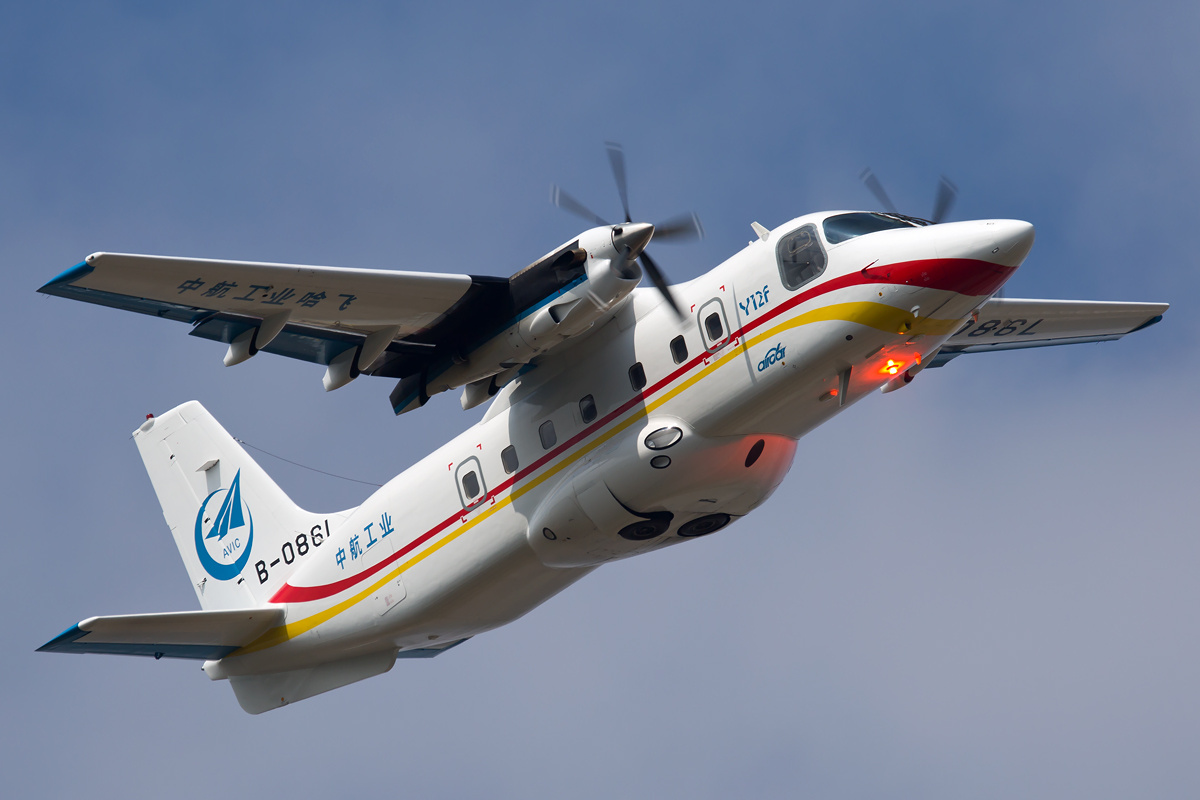
Harbin Y12F

The Y12F is an unpressurised, high-wing commuter turboprop with retractable tricycle landing gear and capacity for up to 19 passengers under its EASA type certificate.

Length
16.47 m
Wingspan
19.89 m
Engine options
PT6A-65B

Identification

Retractable tricycle landing gear
Use a correctly captioned in-flight view with gear up, or look for the gear fairings in a ground view.
Five-bladed propellers
EASA lists two Hartzell five-blade propellers for the F. Visible blade count is easiest to check in a parked photograph.

The extended wheels in a ground view alone cannot distinguish the F from earlier fixed-gear aircraft.

Select a circle to see the marked area up close.
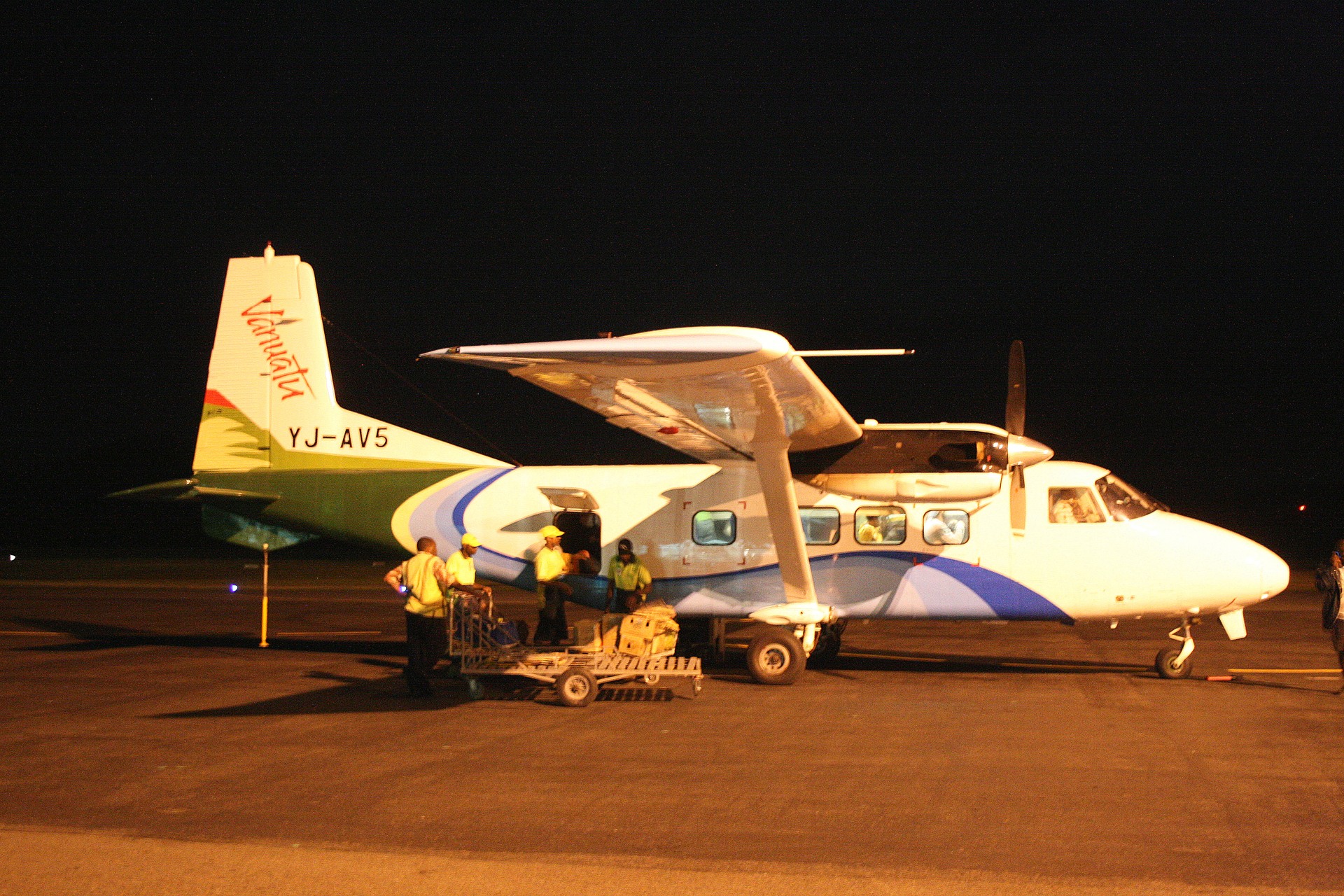
Air Vanuatu Harbin Y12 IV

YJ-AV5 at Bauerfield International Airport, Port Vila, 29 October 2009. Image resized for display.
YJ-AV5 at Bauerfield International Airport, Port Vila, 29 October 2009. Image resized for display.Photo by YSSYguy at English Wikipedia
Photo sourceCC BY-SA 3.0

Compare models

Current aircraftHarbin Y12F
Compare with

Comparing Harbin Y12F with Harbin Y12 IV.

SpecificationHarbin Y12FHarbin Y12 IV
Length16.47 mUnavailable
Wingspan19.89 mUnavailable
Maximum take-off weight8.4 t5.67 t
Maximum payloadUnavailableUnavailable
Fuel tank capacityUnavailableUnavailable
Engine optionsPT6A-65BPT6A-27
Typical two-class seatsUnavailableUnavailable
Published rangeUnavailableUnavailable

A dash indicates that a verified figure is unavailable. Figures follow the configuration specified by each source.

Comparison sources

Design & cabins

Technical notes

Design notes

  • EASA gives a length of 16.470 m, a span of 19.888 m, a height of 6.035 m and a maximum take-off mass of 8,400 kg.
  • Two Pratt & Whitney Canada PT6A-65B engines drive five-blade Hartzell propellers.
  • Look for the retracted wheels in a clean airborne view. With the gear down on the ground, compare the gear fairings and propellers and confirm the aircraft record.
Variant Technical Profile

Harbin Y12F is a specific configuration within Harbin Y-12 Family, developed to cover a defined capacity, range, payload, or mission requirement inside the wider family.

Harbin Y12F is positioned as a capacity/range-specific solution within the freighter segment, serving routes better matched than sibling variants.

Technical features

  • Harbin Y12F: Cargo door and floor loading · structure. Main-deck doors, reinforced floors, and cargo loading systems define usable freight capability.
  • Harbin Y12F: Payload-volume balance · range_payload. The aircraft must balance container volume, structural payload, and range for express or general cargo.
  • Harbin Y12F: Freighter conversion economics · maintenance. Passenger-to-freighter variants depend on feedstock price, engine life, and structural condition.
  • Harbin Y12F: Belly and main-deck logistics · operational_efficiency. ULD compatibility, loading height, and turnaround flow shape cargo network efficiency.
  • Harbin Y12F: Engine maintenance sensitivity · engine. Cargo operators often prioritize durable engines and predictable maintenance cost over passenger cabin features.

Advantages

  • Provides a more precise capacity or range match within the family.
  • Retains training, maintenance, and parts commonality with sibling variants.
  • Lets operators tune engine, cabin, and payload choices to route needs.

Weaknesses

  • Configuration identification complexity. Visually similar aircraft can differ materially by engine, weight standard, cabin layout, and conversion status.
  • Generation-dependent economics. Older generations usually trail newer designs in fuel burn, noise, avionics, or maintenance intervals.
  • Market-fit limits. Every variant has an ideal capacity and range band; outside it, load factor, range, or cost can become limiting.

Markets

  • Network airline trunk or feeder markets
  • Leasing and fleet replacement markets
  • Regional, domestic, or international airline markets

Operators

  • Full-service network airlines
  • Low-cost or leisure airlines
  • Cargo, government, or special-mission operators

Routes and missions

  • High-frequency short or medium-haul trunk routes
  • Medium-density long-haul or cross-regional routes
  • Express and general air-cargo networks

Sibling comparison

  • smaller sibling variants. Usually provides more seats, cargo volume, or thrust demand, but can be harder to fill on thinner routes.
  • larger or longer-range sibling variants. Usually has lower acquisition and operating exposure, but less range, payload, or growth margin.

Sources