Home/Encyclopedia/McDonnell Douglas/Douglas DC-3 / C-47 Family

Douglas DC-3 / C-47 Family

Douglas developed the DC-3 for civil airline service. The wartime C-47 Skytrain used the same basic twin-engine airframe with equipment for transporting people and cargo.

Models at a glance

Douglas C-47 Skytrain

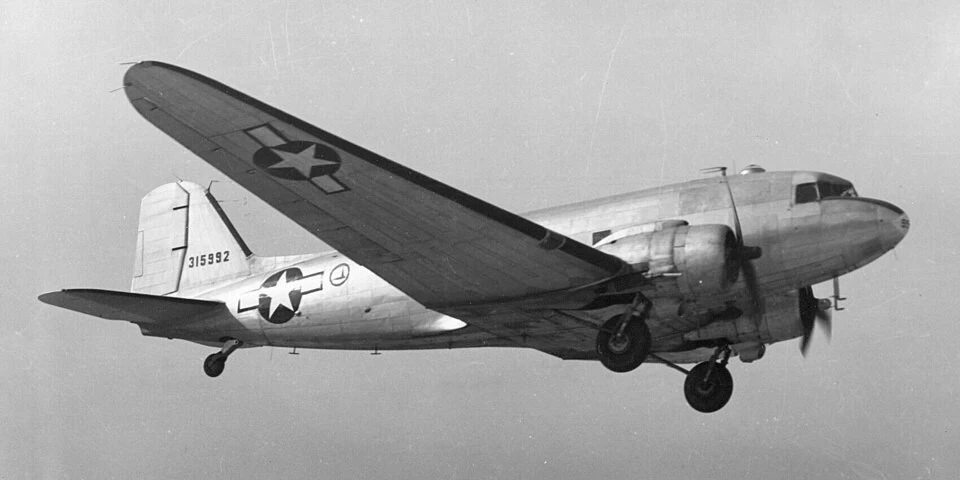
The C-47 was developed from the DC-3 for military transport. A wide aft side door and a strengthened cabin floor allowed bulky freight to be loaded into the cabin.

Length
19.65 m
Wingspan
28.96 m
Published seating
28Personnel transport layout. Special-mission layouts differ.
Maximum cargo payload
2.72 tU.S. Air Force museum’s 6,000 lb cargo example.
Engine options
Pratt & Whitney R-1830
Main landing gear
Unavailable
Sources

Douglas DC-3

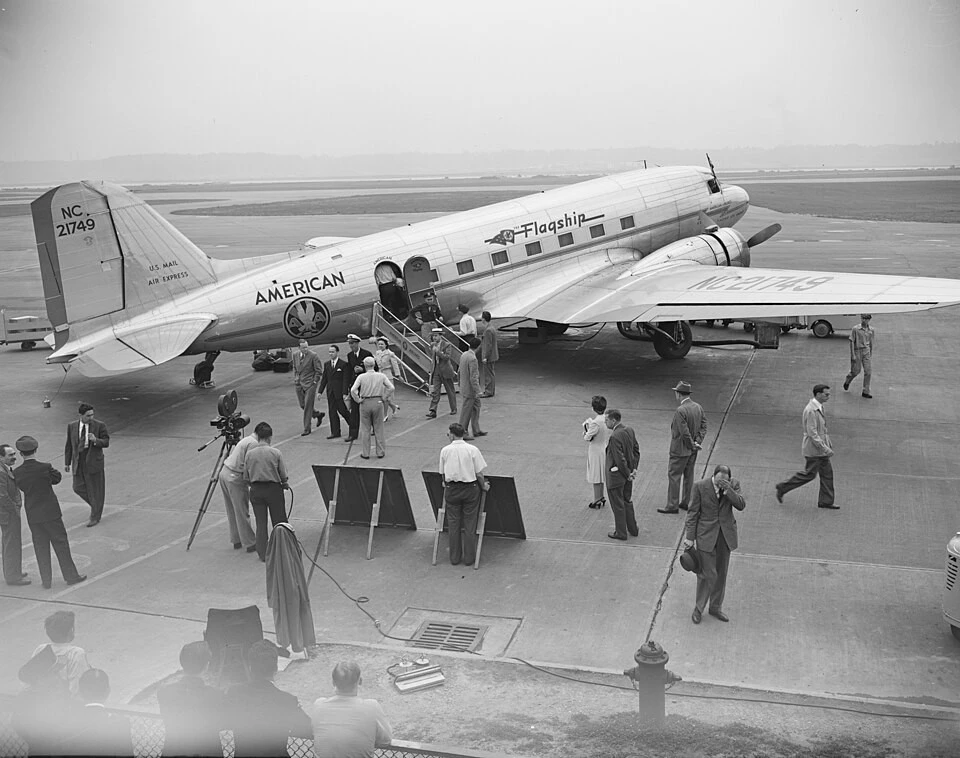
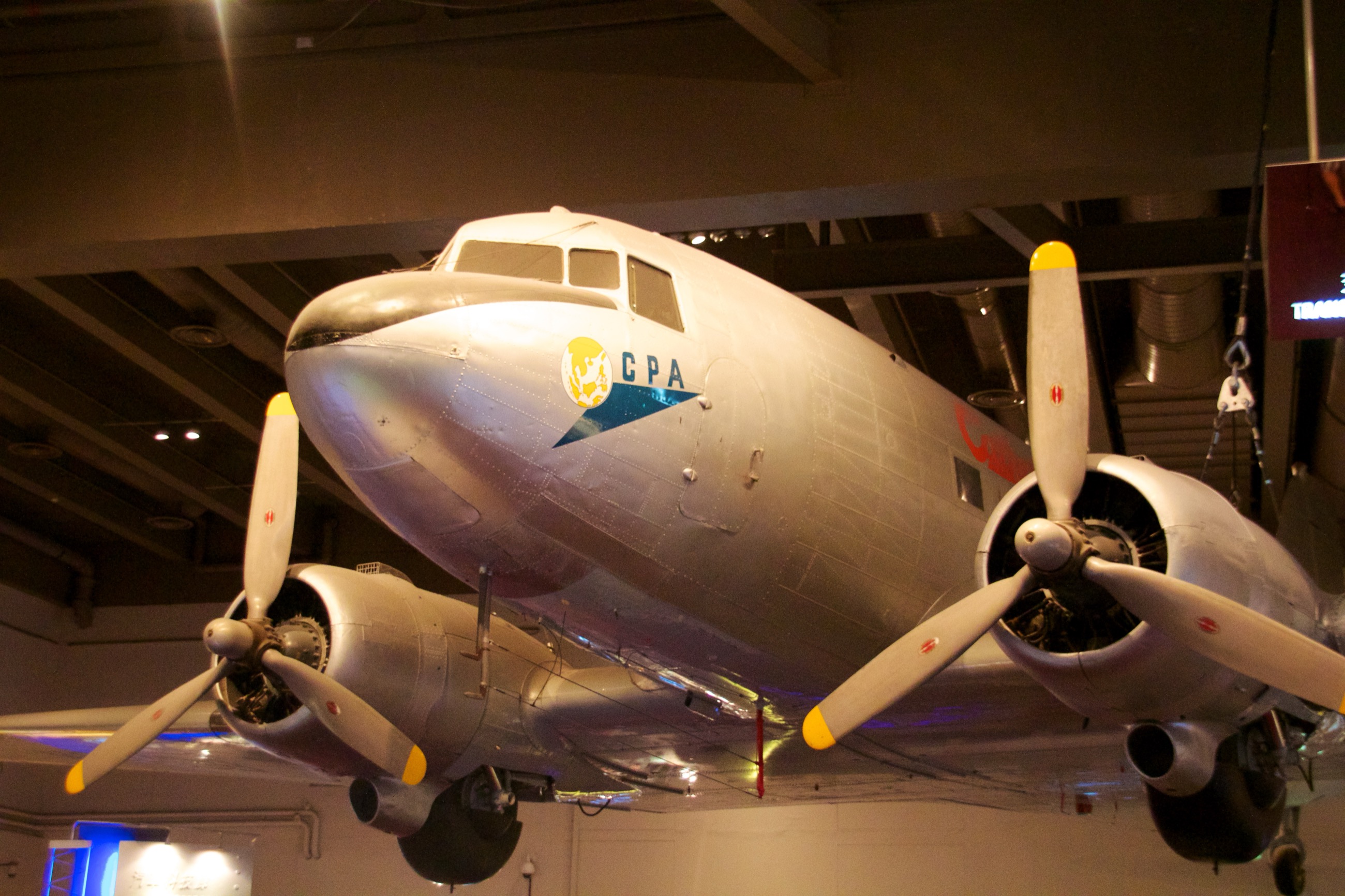
The civil DC-3 carried day passengers, sleepers or freight in layouts selected for each operation. Cathay Pacific began flying with a converted DC-3 named Betsy.

Length
19.65 m
Wingspan
28.96 m
Published seating
21–28Boeing’s historical day-passenger layouts. The sleeper used 14 berths.
Maximum cargo payload
Unavailable
Engine options
Unavailable
Main landing gear
Unavailable

Identification

Civil DC-3 airframe
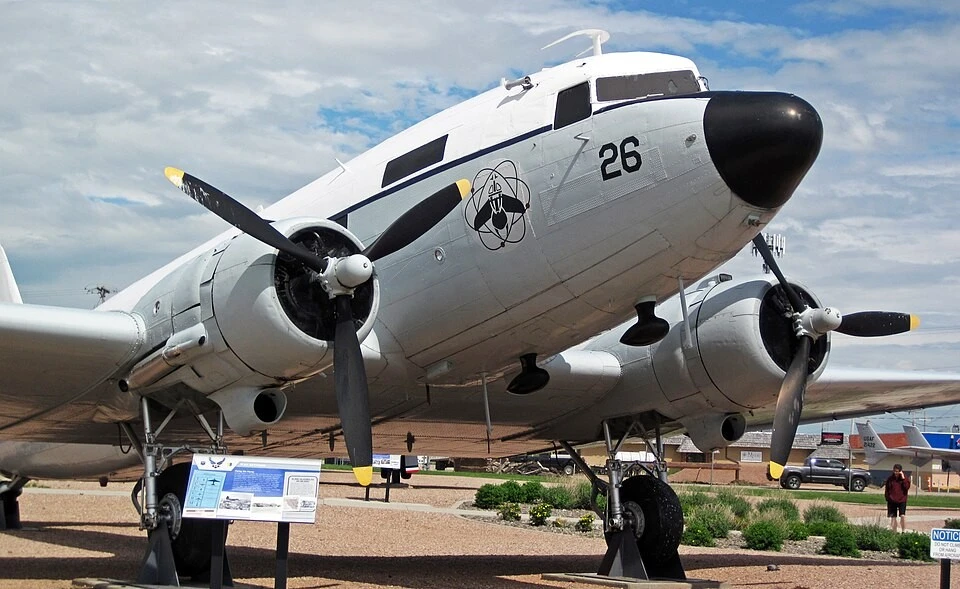
Look for two radial engines on a low wing and a tailwheel under the aft fuselage. Betsy is a preserved Cathay Pacific example.
C-47 cargo entrance
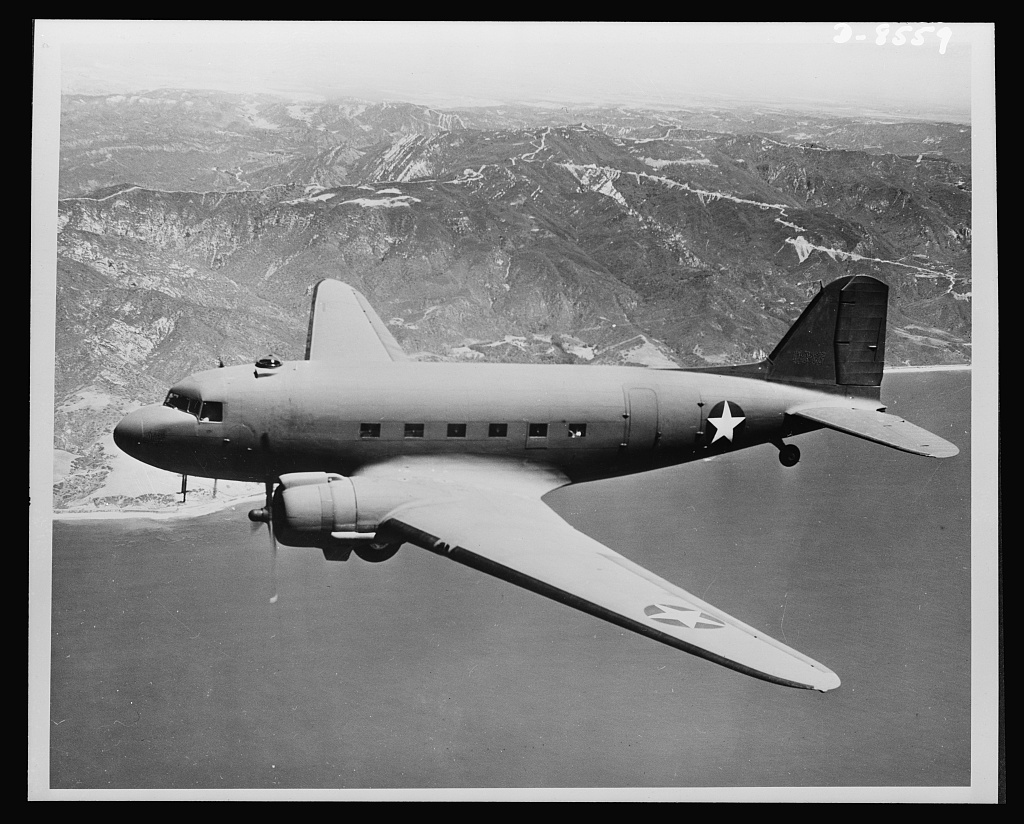
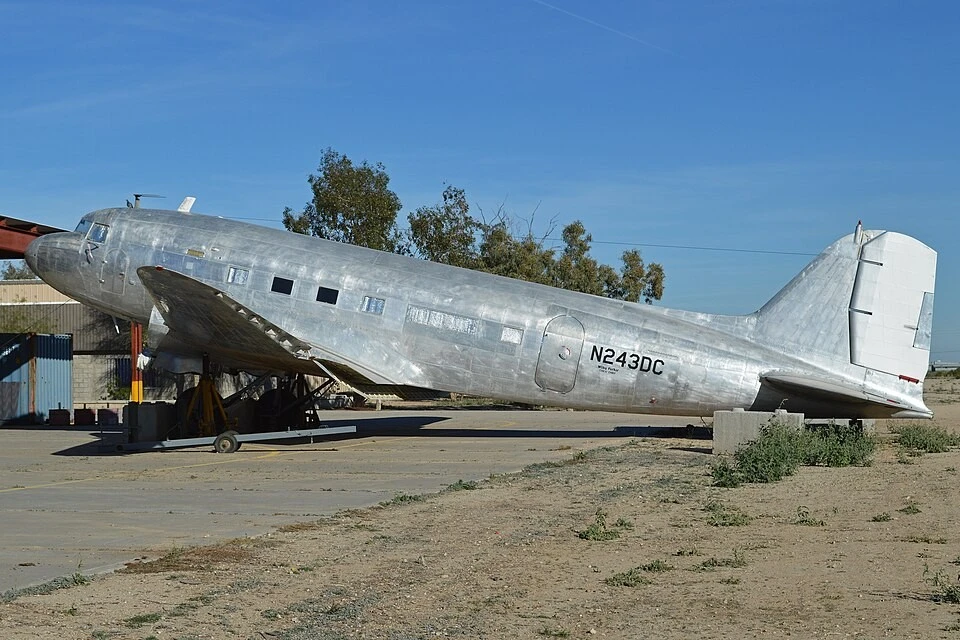
On the illustrated C-47, the broad port-side door is aft of the cabin windows. Boeing’s series diagram shows the cargo and passenger door positions.
Verify surviving aircraft
Restored liveries and civil conversions can share external details. Identify the configuration from the aircraft record as well as the door and wheel arrangement.

Select a circle to see the marked area up close.

Betsy (VR-HDB) · restored DC-3

This view shows the restored Cathay Pacific aircraft on display at the Hong Kong Science Museum. Image resized for display.
This view shows the restored Cathay Pacific aircraft on display at the Hong Kong Science Museum. Image resized for display.Photo by Photograph by Mike Peel (www.mikepeel.net)
Photo sourceCC BY-SA 4.0

U.S. Army Air Forces C-47 · port side

The Library of Congress image shows the left side in flight. The cargo door outline appears immediately ahead of the star insignia.
The Library of Congress image shows the left side in flight. The cargo door outline appears immediately ahead of the star insignia.Photo by Office of War Information · Library of Congress, Prints & Photographs Division, FSA/OWI Collection
Photo sourcePublic domain

Design & cabins

Technical notes

Design notes

  • The first DC-3 was a sleeper transport. The family first flew on 17 December 1935, and Douglas delivered the first examples to American Airlines in June 1936.
  • The C-47 added a wide side cargo entrance and reinforced floor for loading freight. Passenger and cargo configurations changed over individual aircraft's working lives.

Limitations

  • Check the door layout and aircraft record together. Civil conversions and military derivatives can share features.
Family Technical Profile

Douglas DC-3 / C-47 Family is one of Aircraft manufacturer's platforms in its market segment, balancing capacity, range, airport compatibility, maintenance economics, and mission flexibility.

Douglas DC-3 / C-47 Family serves the narrowbody market with family commonality and multiple configurations.

Technical features

  • Douglas DC-3 / C-47 Family: Single-aisle fuselage efficiency · structure. A narrow fuselage reduces structural weight and airport footprint for high-frequency short and medium routes.
  • Douglas DC-3 / C-47 Family: High-cycle operating design · maintenance. Doors, landing gear, brakes, and systems are optimized for repeated daily sectors and quick turnarounds.
  • Douglas DC-3 / C-47 Family: Wing and high-lift devices · aerodynamics. Flaps, slats, and wingtip devices balance runway performance with cruise efficiency.
  • Douglas DC-3 / C-47 Family: Engine generation changes · engine. Engine nacelle, thrust rating, fuel burn, and noise standards define each production generation.
  • Douglas DC-3 / C-47 Family: Fleet commonality · operational_efficiency. Common flight decks and maintenance practices reduce training and support cost across subfleets.

Advantages

  • One platform can cover several capacity and mission bands.
  • Family design reduces training, maintenance, and spares complexity.
  • Engine, wingtip, avionics, or structural upgrades can extend lifecycle value.

Weaknesses

  • Configuration identification complexity. Visually similar aircraft can differ materially by engine, weight standard, cabin layout, and conversion status.
  • Generation-dependent economics. Older generations usually trail newer designs in fuel burn, noise, avionics, or maintenance intervals.
  • Market-fit limits. Every variant has an ideal capacity and range band; outside it, load factor, range, or cost can become limiting.

Markets

  • Network airline trunk or feeder markets
  • Leasing and fleet replacement markets
  • Regional, domestic, or international airline markets

Operators

  • Full-service network airlines
  • Low-cost or leisure airlines
  • Cargo, government, or special-mission operators

Routes and missions

  • High-frequency short or medium-haul trunk routes
  • Medium-density long-haul or cross-regional routes
  • Fleet replacement, supplementation, or special missions
Development & service

  • The first DC-3 was a sleeper transport. The family first flew on 17 December 1935, and Douglas delivered the first examples to American Airlines in June 1936.

Sources