CRJ family

CRJ family covers regional jet aircraft in the Bombardier portfolio. The entry is imported from the McDonnell Douglas / Lockheed / Bombardier technical workbook and organized by family and derivative variant.

Models at a glance

CRJ100 / CL-600-2B19

CRJ100 / CL-600-2B19 is a regional jet / business jet derivative within CRJ family. Market positioning: 50-seat regional jet pioneer.

Length
26.76 m
Wingspan
21.21 m
Published range
985 nmOperator-published 1,825 km range for its CRJ100/200 fleet.
Maximum passenger seats
50
Engine options
CF34-3A1
Main landing gear
1 axle · 2 wheels per side
Sources

CRJ200

CRJ200 is a regional jet / business jet derivative within CRJ family. Market positioning: Improved 50-seat CRJ.

Length
26.76 m
Wingspan
21.21 m
Published range
1,400 nmMHIRJ published figure
Maximum passenger seats
50
Engine options
CF34-3B1
Main landing gear
1 axle · 2 wheels per side
Sources

CRJ440

CRJ440 is a regional jet / business jet derivative within CRJ family. Market positioning: 44-seat scope-clause restricted CRJ.

Length
26.76 m
Wingspan
20.94 m
Published range
2,300 nmApproximate CRJ200 LR airframe planning curve at 44 passengers and baggage. Still-air planning estimate.
Typical two-class seats
Unavailable
Maximum passenger seats
44
Engine options
CF34-3B1
Main landing gear
1 axle · 2 wheels per side
Sources

CRJ700

CRJ700 is a regional jet / business jet derivative within CRJ family. Market positioning: 70-seat regional jet.

Length
32.49 m
Wingspan
23.26 m
Published range
1,400 nmMHIRJ published figure
Typical two-class seats
66
Maximum passenger seats
78
Engine options
CF34-8C1 · CF34-8C5B1
Main landing gear
1 axle · 2 wheels per side
Sources
CRJ700 variants

CL-600-2C10

CL-600-2C10 is the certificated model for the Regional Jet Series 700, 701 and 702, within the CRJ700 line.

Length
32.49 m
Wingspan
23.26 m
Published range
1,400 nmMHIRJ CRJ700 figure
Typical two-class seats
66Manufacturer CRJ700 dual-class layout
Engine options
CF34-8C1 · CF34-8C5B1
Main landing gear
Unavailable
Sources

CRJ705

CRJ705 is a regional jet / business jet derivative within CRJ family. Market positioning: 75-seat premium-heavy scope variant.

Length
36.21 m
Wingspan
24.84 m
Published range
1,500 nmAir Canada Express / Jazz published 2,778 km range.
Typical two-class seats
75Air Canada Express / Jazz · 10 business and 65 economy seats.
Maximum passenger seats
75
Engine options
CF34-8C5 · CF34-8C5A1
Main landing gear
1 axle · 2 wheels per side

CRJ900

CRJ900 is a regional jet / business jet derivative within CRJ family. Market positioning: 76–90 seat regional jet.

Length
36.21 m
Wingspan
24.84 m
Published range
1,550 nmMHIRJ published figure
Typical two-class seats
81
Maximum passenger seats
90
Engine options
CF34-8C5
Main landing gear
1 axle · 2 wheels per side
Sources
CRJ900 variants

CL-600-2D24

CL-600-2D24 is the certificated model for the Regional Jet Series 900, marketed as the CRJ900.

Length
36.21 m
Wingspan
24.84 m
Published range
1,550 nmMHIRJ CRJ900 figure
Typical two-class seats
81Manufacturer CRJ900 dual-class layout
Engine options
CF34-8C5 · CF34-8C5A1
Main landing gear
Unavailable
Sources

CRJ1000

CRJ1000 is a regional jet / business jet derivative within CRJ family. Market positioning: 100-seat largest CRJ.

Length
39.1 m
Wingspan
26.2 m
Published range
1,650 nm102 kg per passenger
Typical two-class seats
97
Maximum passenger seats
104
Engine options
CF34-8C5 · CF34-8C5A1 · CF34-8C5A2
Main landing gear
Unavailable
Sources

Challenger 850

Challenger 850 is a regional jet / business jet derivative within CRJ family. Market positioning: CRJ-based business jet.

Length
26.77 mChallenger 850 uses the CL-600-2B19 airframe
Wingspan
21.21 mChallenger 850 uses the CL-600-2B19 airframe
Published range
2,811 nmChallenger 850 maximum published by Bombardier under specified operating conditions.
Typical two-class seats
Unavailable
Maximum passenger seats
Unavailable
Engine options
CF34-3B1
Main landing gear
Unavailable
Sources

Identification

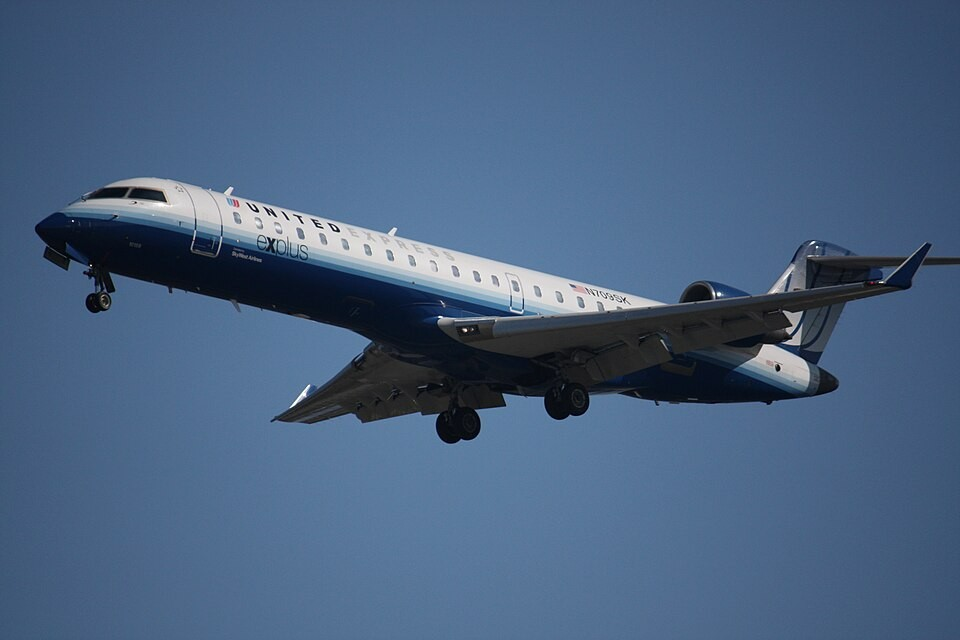
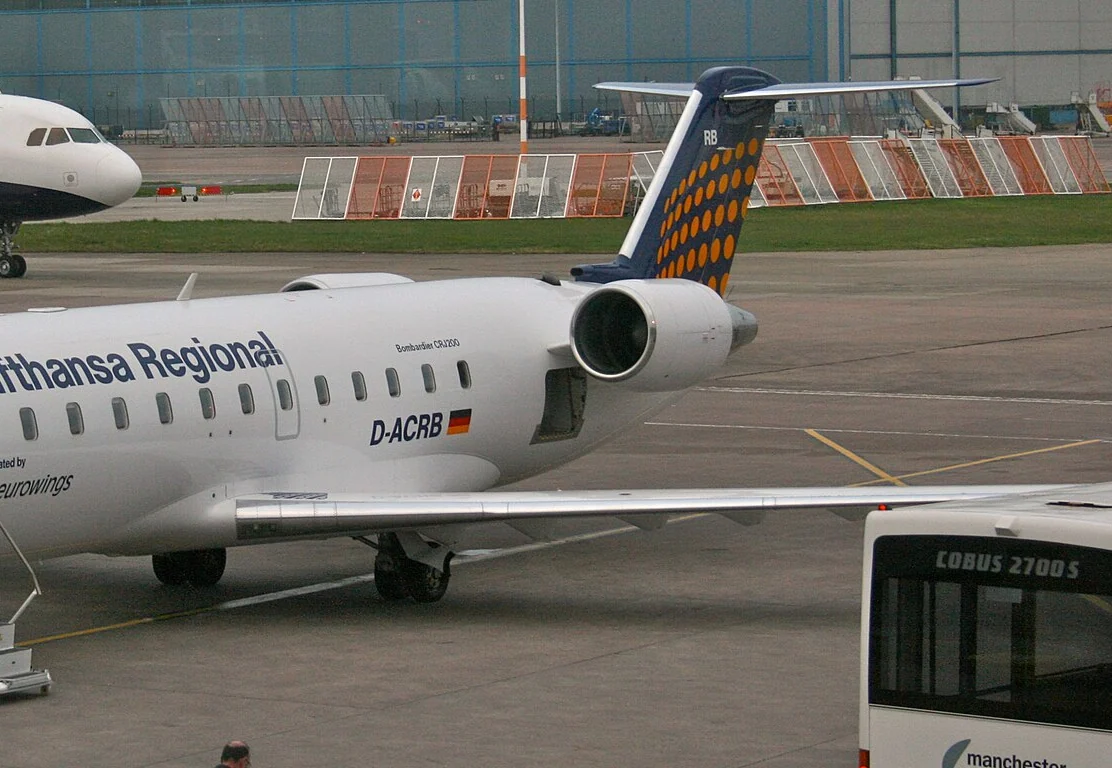
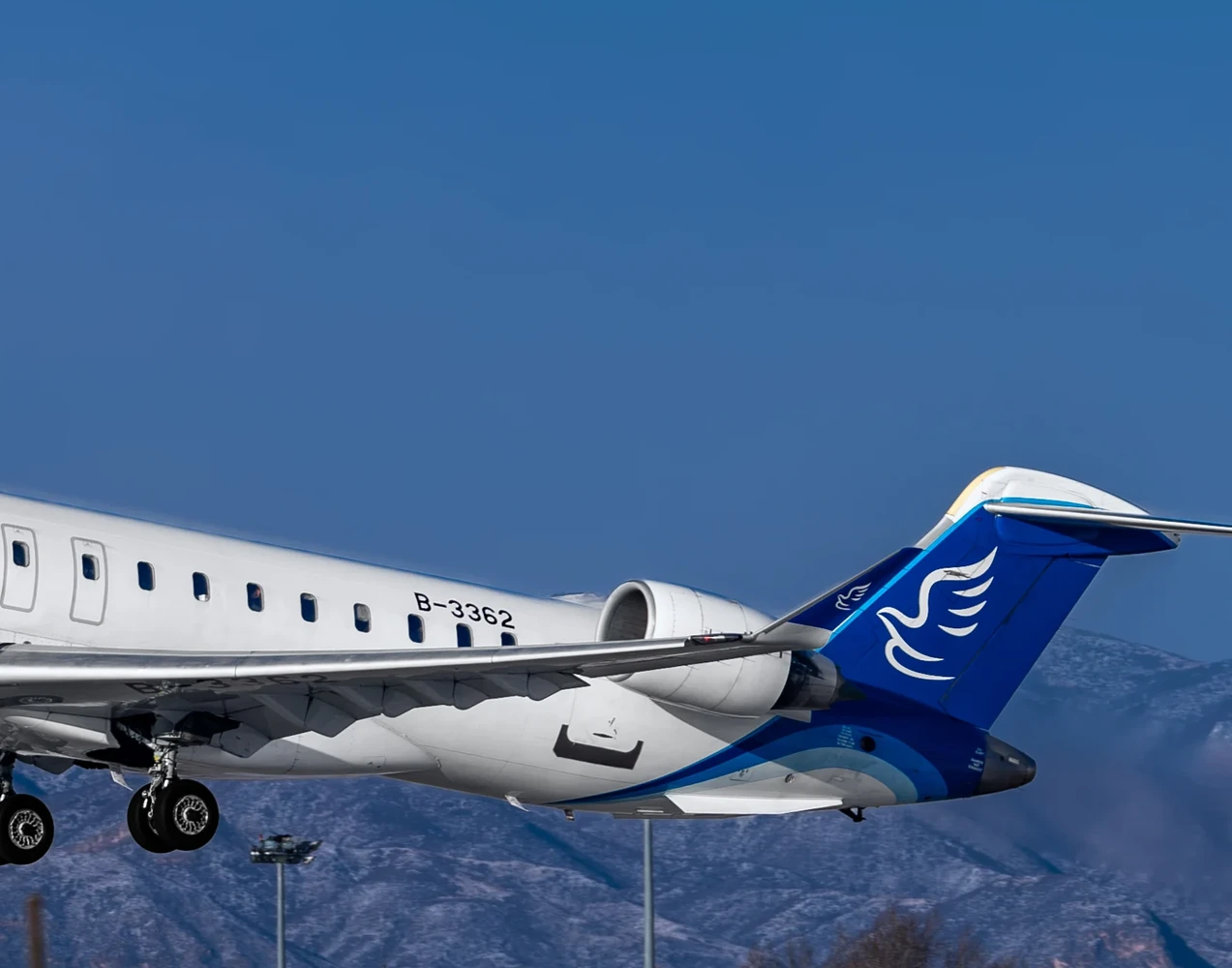
Rear-mounted engines
Start at the back of the narrow fuselage. Look for one engine on each side under a T-tail, then compare the low wing and wingtip shape.
Cabin proportions
Compare near side-on views. The CRJ200 is a short-body model. Among the longer versions, the fuselage increases in length from the CRJ700 to the CRJ900 and CRJ1000.

Executive derivatives share the outline. Exact certification models and cabin conversions need an aircraft record.

Design & cabins

  • CRJ100/200 to CRJ700/900/1000 airframe evolution

    The larger regional jets use stretched fuselages and revised wings and high-lift surfaces. The early and later CRJs follow distinct airframe standards.

  • CF34-3 and CF34-8C

    The early CRJs use CF34-3 variants. The larger CRJ700/900/1000 line uses CF34-8C variants.

  • Common flight-deck and type-rating lineage

    MHIRJ identifies a common pilot type rating across the family. Differences training and equipment follow the particular version.

More aircraft systems
  • Cabin and cargo

    The four-abreast cabin, baggage space and door arrangement differ with fuselage length. The CRJ550 has a distinct passenger and storage layout.

  • Landing gear and braking

    The larger models have their own weight and ground-clearance data. Read the gear and brake documents against the certified variant.

  • Onboard systems

    The APU supplies support systems on the ground and is documented as part of each certified installation.

Technical notes

Design notes

  • Derived from Challenger business jet platform
  • Rear-mounted twin engines and T-tail
  • CRJ700/900/1000 introduced improved wing and higher capacity
  • Fast regional jet cruise
  • Designed around North American scope-clause markets

Advantages

  • Derived from Challenger business jet platform
  • Rear-mounted twin engines and T-tail
  • CRJ700/900/1000 introduced improved wing and higher capacity

Limitations

  • Narrow cabin and small overhead bins
  • 50-seat CRJ economics weakened with high fuel prices
  • Less passenger comfort than E-Jets
  • High operating constraints under scope clauses
  • CRJ1000 competed poorly against E190/A220
Family Technical Profile

CRJ family is one of Aircraft manufacturer's platforms in its market segment, balancing capacity, range, airport compatibility, maintenance economics, and mission flexibility.

CRJ family serves the narrowbody market with family commonality and multiple configurations.

Technical features

  • CRJ family: Single-aisle fuselage efficiency · structure. A narrow fuselage reduces structural weight and airport footprint for high-frequency short and medium routes.
  • CRJ family: High-cycle operating design · maintenance. Doors, landing gear, brakes, and systems are optimized for repeated daily sectors and quick turnarounds.
  • CRJ family: Wing and high-lift devices · aerodynamics. Flaps, slats, and wingtip devices balance runway performance with cruise efficiency.
  • CRJ family: Engine generation changes · engine. Engine nacelle, thrust rating, fuel burn, and noise standards define each production generation.
  • CRJ family: Fleet commonality · operational_efficiency. Common flight decks and maintenance practices reduce training and support cost across subfleets.

Advantages

  • One platform can cover several capacity and mission bands.
  • Family design reduces training, maintenance, and spares complexity.
  • Engine, wingtip, avionics, or structural upgrades can extend lifecycle value.

Weaknesses

  • Configuration identification complexity. Visually similar aircraft can differ materially by engine, weight standard, cabin layout, and conversion status.
  • Generation-dependent economics. Older generations usually trail newer designs in fuel burn, noise, avionics, or maintenance intervals.
  • Market-fit limits. Every variant has an ideal capacity and range band; outside it, load factor, range, or cost can become limiting.

Markets

  • Network airline trunk or feeder markets
  • Leasing and fleet replacement markets
  • Regional, domestic, or international airline markets

Operators

  • Full-service network airlines
  • Low-cost or leisure airlines
  • Cargo, government, or special-mission operators

Routes and missions

  • High-frequency short or medium-haul trunk routes
  • Medium-density long-haul or cross-regional routes
  • Fleet replacement, supplementation, or special missions
Sources