Home/Encyclopedia/Airbus/Airbus A340 Family

Airbus A340 Family

The Airbus A340 is a four-engine long-range wide-body family developed alongside the A330, providing long overwater and ultra-long-range capability before modern twin-engine wide-bodies dominated the market.

Models at a glance

Entered service
1993
Length
59.44 m
Wingspan
60.29 m
Published range
7,990 nm2003 published maximum · approximately 14,800 km
Typical two-class seats
303Airbus cabin example · 30 first + 273 economy
Typical three-class seats
239
Maximum passenger seats
420Four type-A exits · MOD 40161
Engine options
CFM56-5C
Main landing gear
4 wheels per side + 2-wheel centre gear
Sources
A340-200 variants

A340-211

The A340-211 is a short-body A340-200 using the CFM56-5C2 engine family. Its four engines and shorter cabin distinguish it from the A330 and A340-300 respectively.

Length
59.44 m
Wingspan
60.29 m
Published range
7,500 nmApproximate Airbus planning range at maximum passenger payload · CFM56-5C2
Typical two-class seats
303Airbus two-class cabin example for A340-200
Main landing gear
4 wheels per side + 2-wheel centre gear
Sources

A340-212

The A340-212 is an A340-200 certificated with CFM56-5C3-series engines. It differs from the -211 primarily in its engine rating.

Length
59.44 m
Wingspan
60.29 m
Published range
6,800 nmApproximate Airbus planning range at maximum passenger payload · CFM56-5C3
Typical two-class seats
303Airbus two-class cabin example for A340-200
Main landing gear
4 wheels per side + 2-wheel centre gear
Sources

A340-213

The A340-213 uses CFM56-5C4-series engines on the shorter A340-200 airframe. The -213 suffix identifies this configuration in the A340 type certificate.

Length
59.44 m
Wingspan
60.29 m
Published range
7,600 nmApproximate Airbus planning range at maximum passenger payload · CFM56-5C4
Typical two-class seats
303Airbus two-class cabin example for A340-200
Main landing gear
4 wheels per side + 2-wheel centre gear
Sources

A340-213X

The -213X label describes an extended-range or higher-weight configuration within the A340-213 branch. Exact weight and fuel provisions depend on the aircraft standard.

Length
59.44 m
Wingspan
60.29 m
Published range
8,000 nmAirbus 275 t extended-range A340-200 with two centre tanks, published range at up to 239 passengers.
Typical two-class seats
303Airbus A340-200 two-class cabin example · varies when configured for extended range
Main landing gear
4 wheels per side + 2-wheel centre gear
Sources
Entered service
Unavailable
Length
63.7 m
Wingspan
60.29 m
Published range
7,510 nm2003 published maximum · approximately 13,900 km
Typical two-class seats
335Airbus cabin example · 30 first + 305 economy
Typical three-class seats
295
Maximum passenger seats
440Four type-A exits · MOD 40161
Engine options
CFM56-5C
Main landing gear
4 wheels per side + 2-wheel centre gear
Sources
A340-300 variants

A340-311

The A340-311 is an early long-body A340-300 with CFM56-5C2 engines. It has the longer cabin of the -300 while using the early -5C2 rating.

Length
63.7 m
Wingspan
60.29 m
Published range
6,700 nmApproximate Airbus planning range at maximum passenger payload · CFM56-5C2
Typical two-class seats
335Airbus two-class cabin example for A340-300
Main landing gear
4 wheels per side + 2-wheel centre gear
Sources

A340-313

The A340-313 is a CFM56-5C4-powered A340-300. It retains the longer passenger fuselage and is distinct from the later Trent-powered A340-600.

Length
63.7 m
Wingspan
60.29 m
Published range
7,100 nmApproximate Airbus planning range at maximum passenger payload · CFM56-5C4 at 271/275 t
Typical two-class seats
335Airbus two-class cabin example for A340-300
Main landing gear
4 wheels per side + 2-wheel centre gear
Sources

A340-313X

The -313X label denotes an extended-range or higher-weight A340-313 configuration. It belongs to the CFM56-powered A340-300 series.

Length
63.7 m
Wingspan
60.29 m
Published range
7,100 nmApproximate Airbus planning range at maximum passenger payload · 271 t CFM56-5C4 configuration
Typical two-class seats
335Airbus A340-300 two-class cabin example
Main landing gear
4 wheels per side + 2-wheel centre gear
Sources
Entered service
Unavailable
First flight
Unavailable
Length
67.94 m
Wingspan
63.46 m
Published range
8,640 nm2003 published maximum · approximately 16,000 km
Typical two-class seats
181Singapore Airlines’ 2004 long-range layout · 64 Raffles + 117 Executive Economy
Typical three-class seats
313
Maximum passenger seats
375
Main landing gear
4 wheels per side + 4-wheel centre gear
Sources
A340-500 variants

A340-541

The A340-541 is the A340-500 model using Trent 500 engines. It was developed for very long routes with a fuselage shorter than the A340-600.

Length
67.94 m
Wingspan
63.46 m
Published range
8,650 nmApproximate Airbus range at maximum passenger payload · Trent 553 chart
Typical two-class seats
181Singapore Airlines’ 2004 cabin · 64 Raffles + 117 Executive Economy
Engine options
Trent 553-61 · Trent 553A2-61
Main landing gear
4 wheels per side + 4-wheel centre gear
Sources

A340-541 high-weight

Higher-weight A340-541 configurations broaden the operating envelope of the A340-500. They retain the basic -541 airframe and Trent 500 installation.

Length
67.94 m
Wingspan
63.46 m
Published range
Unavailable
Typical two-class seats
Unavailable
Engine options
Trent 553-61 · Trent 553A2-61
Main landing gear
4 wheels per side + 4-wheel centre gear
Sources
Entered service
2002
First flight
April 2001
Length
75.35 m
Wingspan
63.46 m
Published range
7,640 nm2003 published maximum · approximately 14,150 km
Typical two-class seats
419Two-class layout illustrated in the PAHMIR study · 36 business + 383 economy
Typical three-class seats
380
Maximum passenger seats
440
Main landing gear
4 wheels per side + 4-wheel centre gear
Sources
A340-600 variants

A340-642

The A340-642 is the long A340-600 model with Trent 500 engines. Its stretched fuselage was designed for greater passenger and cargo capacity than the A340-500.

Length
75.35 m
Wingspan
63.46 m
Published range
7,550 nmApproximate Airbus range at maximum passenger payload · Trent 556 chart
Typical two-class seats
419PAHMIR cabin study · 36 business + 383 economy
Engine options
Trent 556-61 · Trent 556A2-61
Main landing gear
4 wheels per side + 4-wheel centre gear
Sources

A340-642 high-weight

Higher-weight A340-642 configurations expand the A340-600's available payload or fuel allowance. Exact eligibility is tied to the aircraft's approved weight variant.

Length
75.35 m
Wingspan
63.46 m
Published range
Unavailable
Typical two-class seats
Unavailable
Engine options
Trent 556-61 · Trent 556A2-61
Main landing gear
4 wheels per side + 4-wheel centre gear
Sources

A340-642X

The -642X label is used for extended-performance configurations within the A340-642 series. It retains the long A340-600 airframe.

Length
75.35 m
Wingspan
63.46 m
Engine options
Trent 556A2-61Documented on MSN 856 · certified -642 options vary
Main landing gear
4 wheels per side + 4-wheel centre gear
Sources

Identification

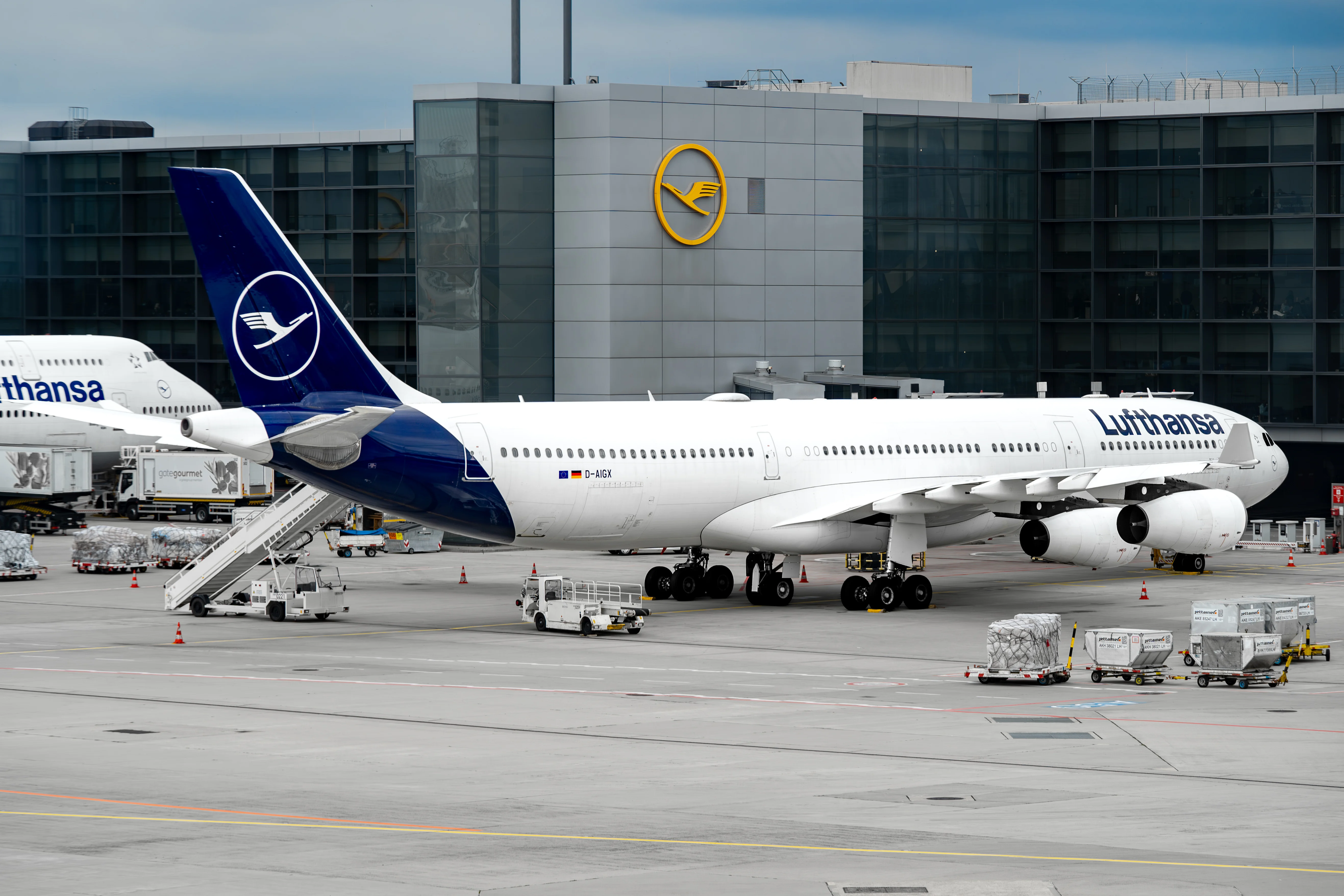
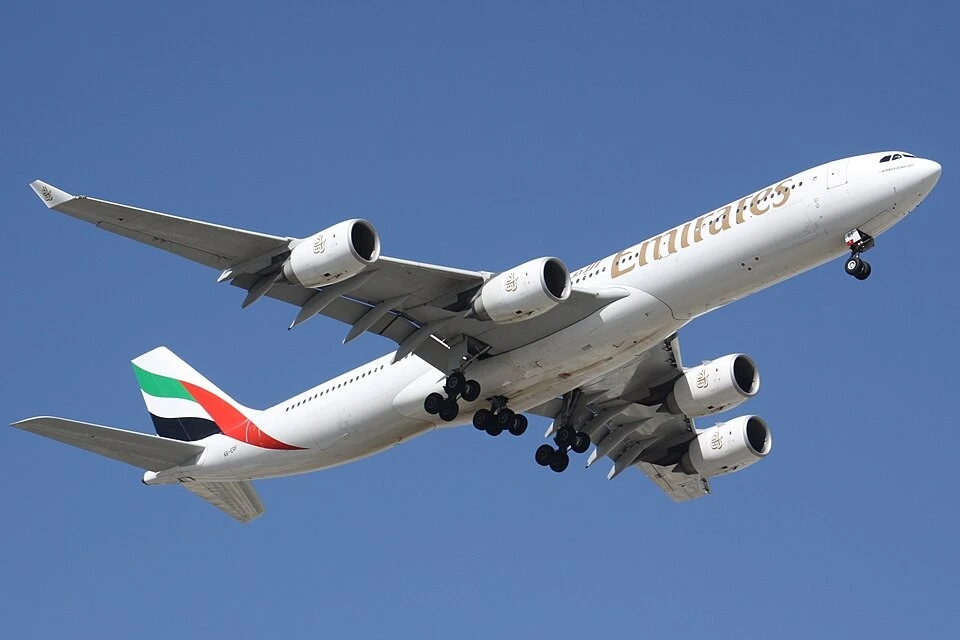
Four underwing engines
Count two nacelles on each wing and look for one row of cabin windows. The closely related A330 has two engines, while the A380 has two full passenger decks.
Long-body variants
Compare matched side views. The A340-600 has the longest profile of the family. The -500 and -600 also carry larger Trent 500 nacelles than the earlier -200 and -300.

Design & cabins

  • CFM56 and Trent 500 powerplants

    The shorter -200 and -300 use the CFM56-5C. The long-range -500 and -600 use the Trent 500 and differ in airframe scale.

  • Common flight deck with the A330

    The A340 and A330 were developed together. Flight-deck commonality and shared flight-control principles connect the two programmes.

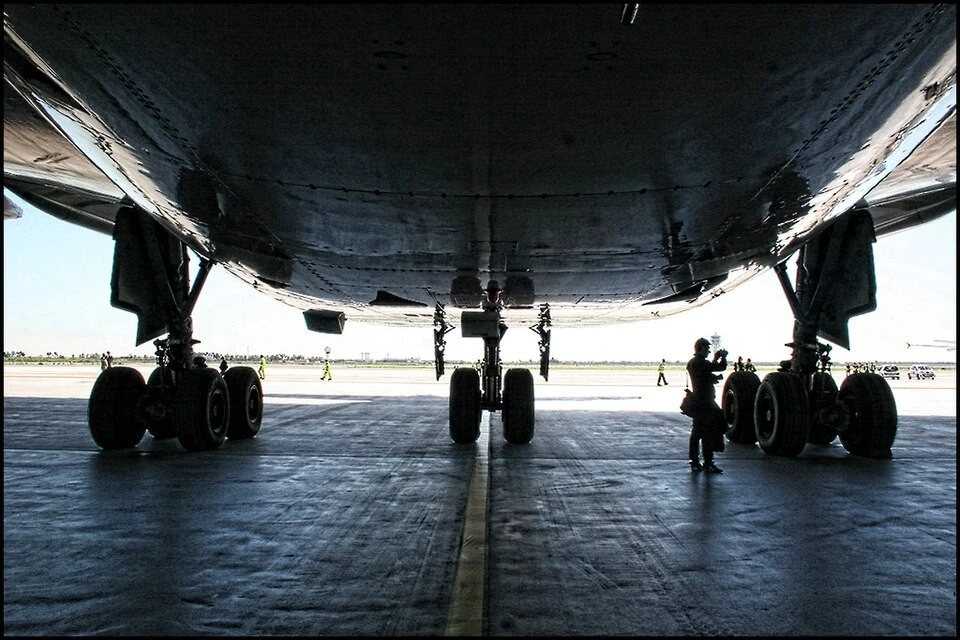
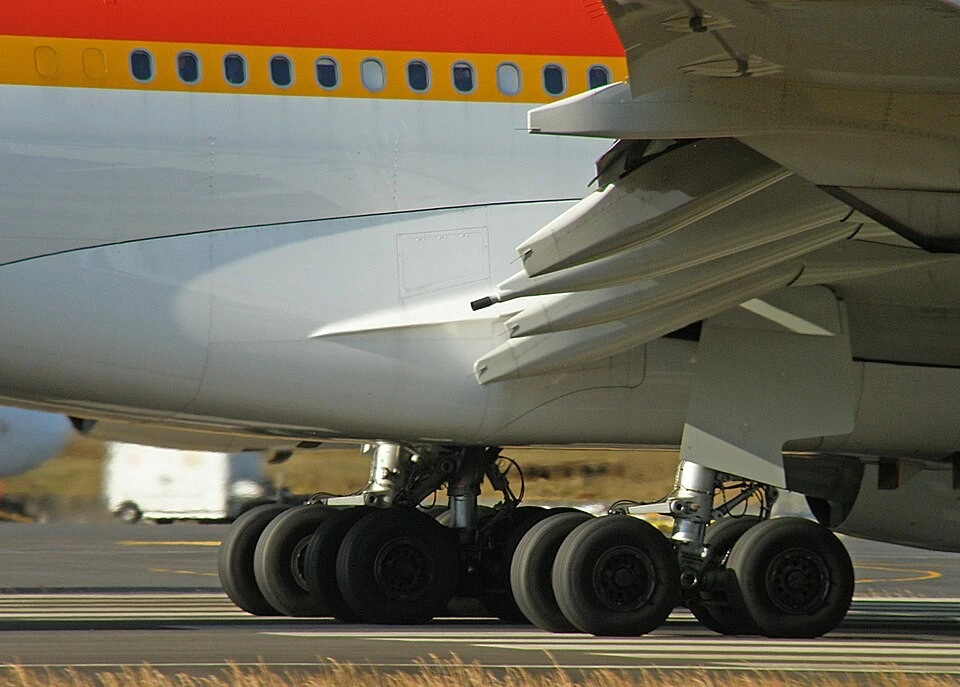
  • Longer airframes and the centre main gear

    The late A340-500/-600 designs have a larger centre main-gear bogie than the earlier A340-200/-300 aircraft.

More aircraft systems
Engine references
CFM56-5C · Rolls-Royce Trent 500
Cabin configuration examples

Full-service carriers

Five-star airlines

Technical notes

Design notes

  • A340-200 and A340-300 share strong commonality with early A330 designs.
  • A340-500 and A340-600 are larger, longer-range second-generation models with different engines and wing refinements.
  • Four-engine layout removed ETOPS dependency but later became a fuel-burn disadvantage.
  • Major variants covered here: A340-200, A340-300, A340-500, A340-600.

Advantages

  • Very long-range capability for its era.
  • Airbus cockpit commonality with A330 family.
  • Four engines reduced route-planning dependence on twin-engine diversion rules.

Limitations

  • Four-engine economics are weaker than modern twins.
  • Passenger fleets have declined significantly.
Family Technical Profile

Airbus A340 Family is one of Airbus's platforms in its market segment, balancing capacity, range, airport compatibility, maintenance economics, and mission flexibility.

Airbus A340 Family serves the widebody market with family commonality and multiple configurations.

Technical features

  • Airbus A340 Family: Wide-body fuselage · structure. Twin-aisle cabin and lower-deck cargo volume support long-haul passenger comfort and belly-freight revenue.
  • Airbus A340 Family: High-bypass turbofan integration · engine. Large engines are matched to long-range payload needs, ETOPS rules, and airline maintenance strategy.
  • Airbus A340 Family: Long-range fuel and payload balance · range_payload. Wing fuel capacity, MTOW growth, and cabin density determine whether the aircraft favors range, seats, or cargo.
  • Airbus A340 Family: Advanced flight deck · avionics. Glass-cockpit avionics and modern flight-management systems reduce crew workload on long sectors.
  • Airbus A340 Family: Cabin systems for long sectors · cabin. Pressurization, air conditioning, galleys, crew rest, and cargo holds are sized for extended missions.

Advantages

  • One platform can cover several capacity and mission bands.
  • Family design reduces training, maintenance, and spares complexity.
  • Engine, wingtip, avionics, or structural upgrades can extend lifecycle value.

Weaknesses

  • Configuration identification complexity. Visually similar aircraft can differ materially by engine, weight standard, cabin layout, and conversion status.
  • Generation-dependent economics. Older generations usually trail newer designs in fuel burn, noise, avionics, or maintenance intervals.
  • Market-fit limits. Every variant has an ideal capacity and range band; outside it, load factor, range, or cost can become limiting.

Markets

  • Network airline trunk or feeder markets
  • Leasing and fleet replacement markets
  • Regional, domestic, or international airline markets

Operators

  • Full-service network airlines
  • Low-cost or leisure airlines
  • Cargo, government, or special-mission operators

Routes and missions

  • High-frequency short or medium-haul trunk routes
  • Medium-density long-haul or cross-regional routes
  • Fleet replacement, supplementation, or special missions
Key terms
Engine configuration

The exact engine family and thrust standard installed on a specific model or production block.

  • Connects model suffixes, airline maintenance strategy, and performance limits.
  • Important for aircraft identification and fleet comparison.

Advantages. Helps explain range, payload, noise, and fuel-burn differences.

Limitations. Public data may omit thrust derates or later engine swaps.

Cabin configuration

The airline-selected layout of cabins, seats, galleys, lavatories, crew rest, and monuments.

  • Can change the same aircraft type from premium-heavy to high-density.
  • Affects range, payload, passenger experience, and turnaround flow.

Advantages. Lets airlines tailor the aircraft to route economics.

Limitations. Seat-map examples vary over time and by subfleet.

Fly-by-wire commonality

Airbus families use a common cockpit philosophy that helps reduce training differences across related aircraft.

  • This system is part of the A330 operating architecture and interacts with flight-control, electrical, hydraulic, engine, or environmental systems.
  • Exact configuration varies across A330ceo, A330neo, freighter, and military derivatives.

Advantages. Improves operational reliability, economics, or mission flexibility. Uses a mature wide-body systems architecture to reduce operational risk.

Limitations. System complexity increases maintenance, training, and troubleshooting demands. Airline configuration and engine choice can change real-world performance.

Sources