MD-11
MD-11 engine configuration is recorded from the structured aircraft-engine dataset. Each line maps an engine sub-variant to its parent engine model and aircraft application.
- Length
- 61.63 m
- Wingspan
- 51.97 m
- Engine options
- PW4460 · PW4462 · CF6-80C2
- Published range
- 6,650 nmiApproximate chart reading · 298 passengers and baggage · CF6-80C2D1F · 618,000 lb maximum takeoff weight
Identification
- Wingtips
- Look for the upturned winglets, then check the straight centre nacelle above the tailcone. The DC-10 shares the tail-engine arrangement but has plain tips.
- Fuselage proportions
- The MD-11 stretches the cabin compared with the DC-10. Compare a full side view together with the winglets.
Compare models
Comparing MD-11 with MD-10.
| Specification | MD-11 | MD-10 |
|---|---|---|
| Length | 61.63 m | 55.55 / 55.35 mMD-10-10 / MD-10-30 |
| Wingspan | 51.97 m | 47.35 / 50.39 mMD-10-10 / MD-10-30 |
| Maximum take-off weight | 273.29 tStandard Boeing planning value · higher take-off weights optional | 263.08 tMD-10-30F · MD-10-10F 199.581 t |
| Maximum payload | 52.63 t | 80.51 tMD-10-30F · MD-10-10F 63.049 t |
| Fuel tank capacity | 146,173 L | 137,509 LMD-10-30F · MD-10-10F 82,376 L |
| Engine options | PW4460 · PW4462 · CF6-80C2 | CF6-50C · CF6-6DMD-10-30F and MD-10-10F, respectively |
| Typical two-class seats | 323Boeing seating example · 34 first and 289 coach | Unavailable |
| Published range | 6,650 nmiApproximate chart reading · 298 passengers and baggage · CF6-80C2D1F · 618,000 lb maximum takeoff weight | 6,500 nmiFAA published maximum for MD-10-30F · MD-10-10F maximum 5,514 nmi |
A dash indicates that a verified figure is unavailable. Figures follow the configuration specified by each source.
Comparison sources
- FAA Aircraft Characteristics Database · October 2024ACD_Data · MD11 · Boeing (Douglas) MD 11
- Boeing · Historical aircraft technical specificationsPDF p. 34 · Standard passenger MD-11
- Boeing MD-11 (2.1 MB) ACAP · MDC K0388 Rev F§2.4.1, PDF p. 16, MD-11 passenger interior arrangements
- Boeing MD-11 (2.1 MB) ACAP · MDC K0388 Rev F§3.2.1, PDF p. 42, published passenger payload–range chart
- Boeing MD-11 (2.1 MB) ACAP · MDC K0388 Rev F§2.1, pp. 2-2–2-3, passenger column, no extended-range option
- Boeing DC/MD-10 ACAP · DAC-67803A Rev AMD-10 converted airframes
- Boeing DC/MD-10 (5.9 MB) ACAP · DAC-67803A Rev A§2.1, p. 5, MD-10-10F and MD-10-30F
- FAA · MD-10-10F and MD-10-30F enhanced flight visibility special conditionsFederal Register, Vol. 70, No. 161, p. 48845 · Background · MD-10-10F and MD-10-30F certified cargo models
Variants
MD-11C / Combi
MD-11C / Combi is a widebody / freighter / tanker derivative within DC-10 / KC-10 / MD-11 family. Market positioning: Mixed passenger/freight.
MD-11ER
MD-11ER is a widebody / freighter / tanker derivative within DC-10 / KC-10 / MD-11 family. Market positioning: Extended-range MD-11.
MD-11F
MD-11F is a widebody / freighter / tanker derivative within DC-10 / KC-10 / MD-11 family. Market positioning: Long-range freighter.
Design & cabins
PW4460
PW4462
CF6-80C2 installation
See the engine encyclopedia for ratings and aircraft applications.
Featured components & design
Wingtips
Look for the upturned winglets, then check the straight centre nacelle above the tailcone. The DC-10 shares the tail-engine arrangement but has plain tips.

FedEx MD-11F N615FE · upper and lower wingtip surfacesAdmin · cropped and resized Two-pilot flight deck
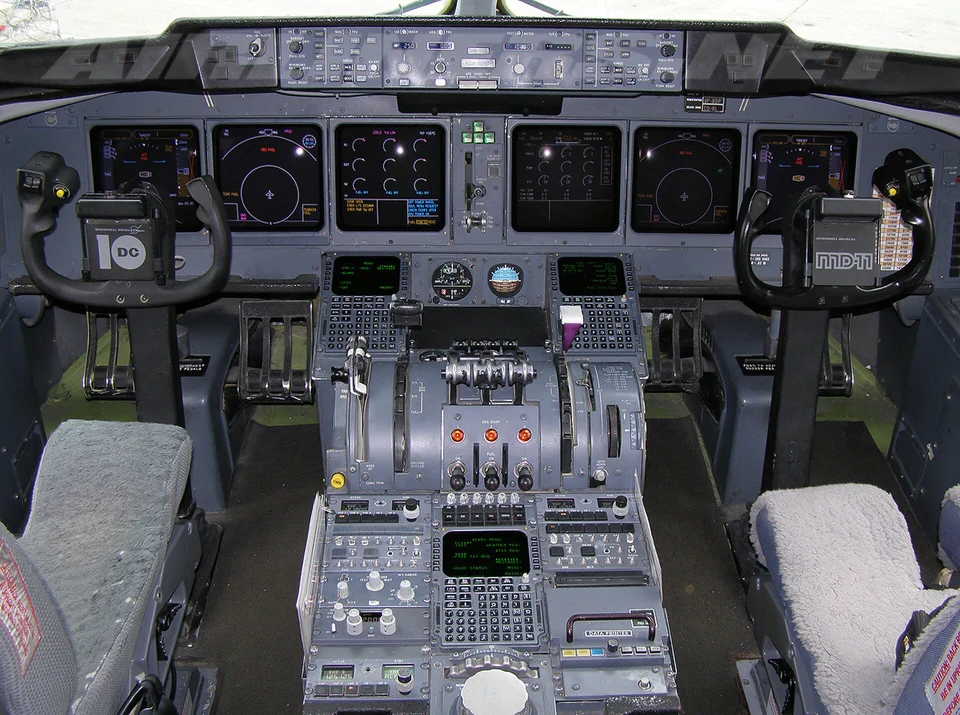
The MD-11 uses an updated avionics suite and a two-pilot flight deck. EASA lists pilot and co-pilot as the minimum crew for the MD-11 and MD-11F.
Landing gear
Eight wing-main wheels, a two-wheel center gear and two nose wheels.
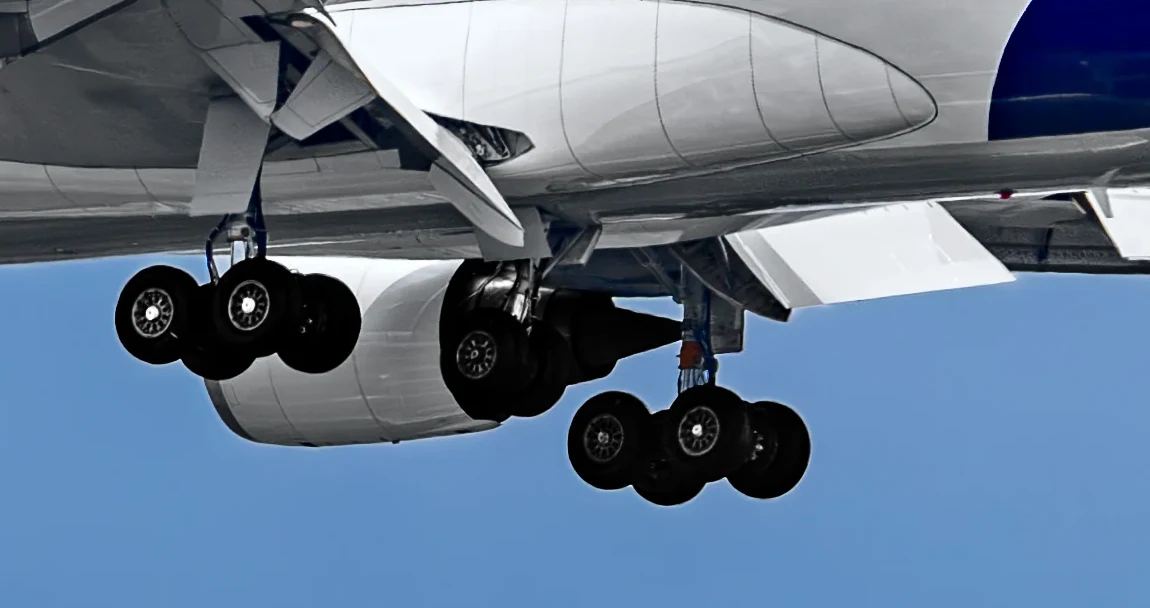
FedEx MD-11F N615FE · wing bogies and centre gearAdmin · detail crop Propulsion and engine installation
Engine configuration: 3 × GE CF6-80C2D1F or PW4460/PW4462.
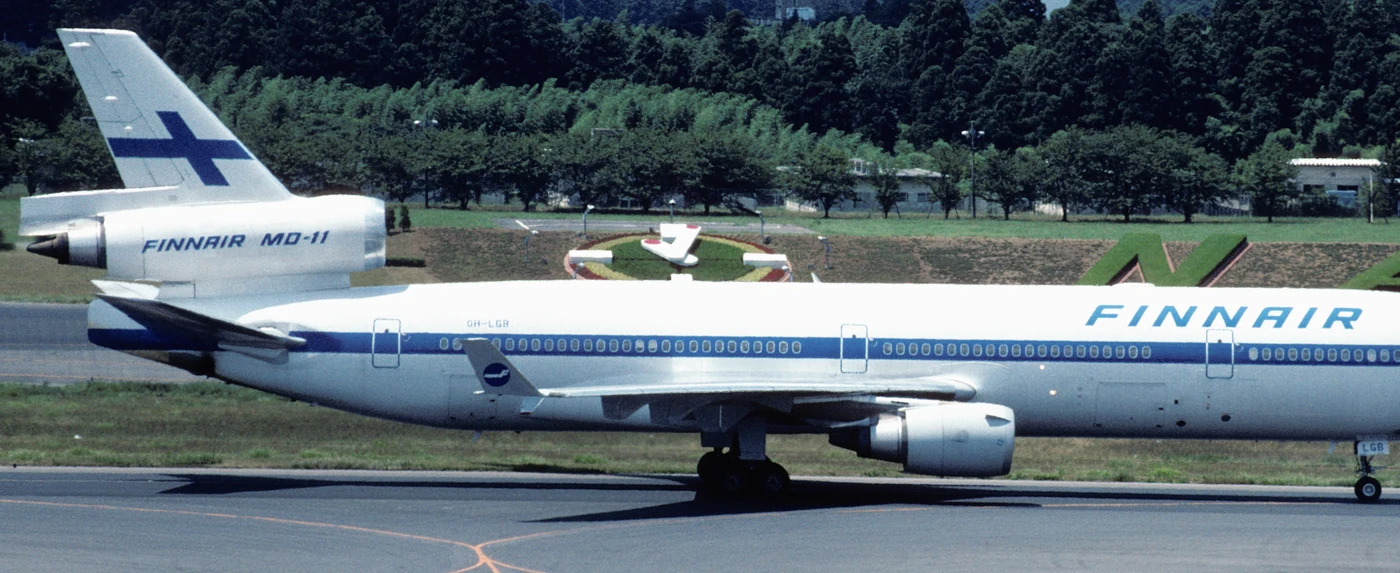
Finnair MD-11 OH-LGB · tail and underwing engine installationcontri · cropped and resized · CC BY-SA 2.0


Technical notes
Design notes
- Engine sub-variants can represent thrust rating, combustor standard, software standard, or installation differences rather than a fully separate hardware family.
- Use aircraft subtype, operator fleet data, and registration-level records before identifying a specific airframe engine.
Advantages
- Precise engine sub-variant lookup is available for this model.
Limitations
- Some planned, development, or military configurations may require certificate-level confirmation before operational use.
Variant Technical Profile
MD-11 is a specific configuration within DC-10 / KC-10 / MD-11 family, developed to cover a defined capacity, range, payload, or mission requirement inside the wider family.
MD-11 is positioned as a capacity/range-specific solution within the narrowbody segment, serving routes better matched than sibling variants.
Technical features
- MD-11: Single-aisle fuselage efficiency · structure. A narrow fuselage reduces structural weight and airport footprint for high-frequency short and medium routes.
- MD-11: High-cycle operating design · maintenance. Doors, landing gear, brakes, and systems are optimized for repeated daily sectors and quick turnarounds.
- MD-11: Wing and high-lift devices · aerodynamics. Flaps, slats, and wingtip devices balance runway performance with cruise efficiency.
- MD-11: Engine generation changes · engine. Engine nacelle, thrust rating, fuel burn, and noise standards define each production generation.
- MD-11: Fleet commonality · operational_efficiency. Common flight decks and maintenance practices reduce training and support cost across subfleets.
Advantages
- Provides a more precise capacity or range match within the family.
- Retains training, maintenance, and parts commonality with sibling variants.
- Lets operators tune engine, cabin, and payload choices to route needs.
Weaknesses
- Configuration identification complexity. Visually similar aircraft can differ materially by engine, weight standard, cabin layout, and conversion status.
- Generation-dependent economics. Older generations usually trail newer designs in fuel burn, noise, avionics, or maintenance intervals.
- Market-fit limits. Every variant has an ideal capacity and range band; outside it, load factor, range, or cost can become limiting.
Markets
- Network airline trunk or feeder markets
- Leasing and fleet replacement markets
- Regional, domestic, or international airline markets
Operators
- Full-service network airlines
- Low-cost or leisure airlines
- Cargo, government, or special-mission operators
Routes and missions
- High-frequency short or medium-haul trunk routes
- Medium-density long-haul or cross-regional routes
- Fleet replacement, supplementation, or special missions
Sibling comparison
- smaller sibling variants. Usually provides more seats, cargo volume, or thrust demand, but can be harder to fill on thinner routes.
- larger or longer-range sibling variants. Usually has lower acquisition and operating exposure, but less range, payload, or growth margin.
From the archive
Loading photographs…
Sources
- FAA Aircraft Characteristics Database · October 2024 · ACD_Data · MD11 · Boeing (Douglas) MD 11
- Boeing · Historical aircraft technical specifications · PDF p. 34 · Standard passenger MD-11
- Boeing MD-11 (2.1 MB) ACAP · MDC K0388 Rev F · §2.4.1, PDF p. 16, MD-11 passenger interior arrangements · §3.2.1, PDF p. 42, published passenger payload–range chart · §2.1, pp. 2-2–2-3, passenger column, no extended-range option