MD-11F

MD-11F is a widebody / freighter / tanker derivative within DC-10 / KC-10 / MD-11 family. Market positioning: Long-range freighter.

At a glance

MD-11F

Length
61.63 m
Wingspan
51.97 m
Published range
3,533 nmAt 91.185 t structural-limit net payload · Pratt & Whitney example
Range at stated payload
3,533 nmAt 91.19 t · Pratt & Whitney optional configuration
Maximum cargo payload
90.86 / 91.19 tGE / Pratt & Whitney optional structural-limit cargo configurations
Engine options
CF6-80C2D1F · PW4460 · PW4462
Main landing gear
4 wheels per side + 2-wheel centre gear
Sources
MD-11 model line

Compare models

Current aircraftMD-11
Compare with

Comparing MD-11F with MD-11.

SpecificationMD-11FMD-11
Length61.63 m61.63 m
Wingspan51.97 m51.97 m
Maximum take-off weight286 tBoeing high-weight freighter example · 630,500 lb273.29 tStandard Boeing planning value · higher take-off weights optional
Maximum payload90.86 / 91.19 tPublished cargo payload · GE / Pratt & Whitney optional structural-limit cargo configurations52.63 t
Fuel tank capacity146,169 LBoeing standard fuel · 38,615 US gal146,173 L
Engine optionsCF6-80C2D1F · PW4460 · PW4462PW4460 · PW4462 · CF6-80C2
Typical two-class seatsUnavailable323Boeing seating example · 34 first and 289 coach
Published range3,533 nmiAt 91.185 t structural-limit net payload · Pratt & Whitney example6,650 nmiApproximate chart reading · 298 passengers and baggage · CF6-80C2D1F · 618,000 lb maximum takeoff weight

A dash indicates that a verified figure is unavailable. Figures follow the configuration specified by each source.

Comparison sources

Identification

Wingtips
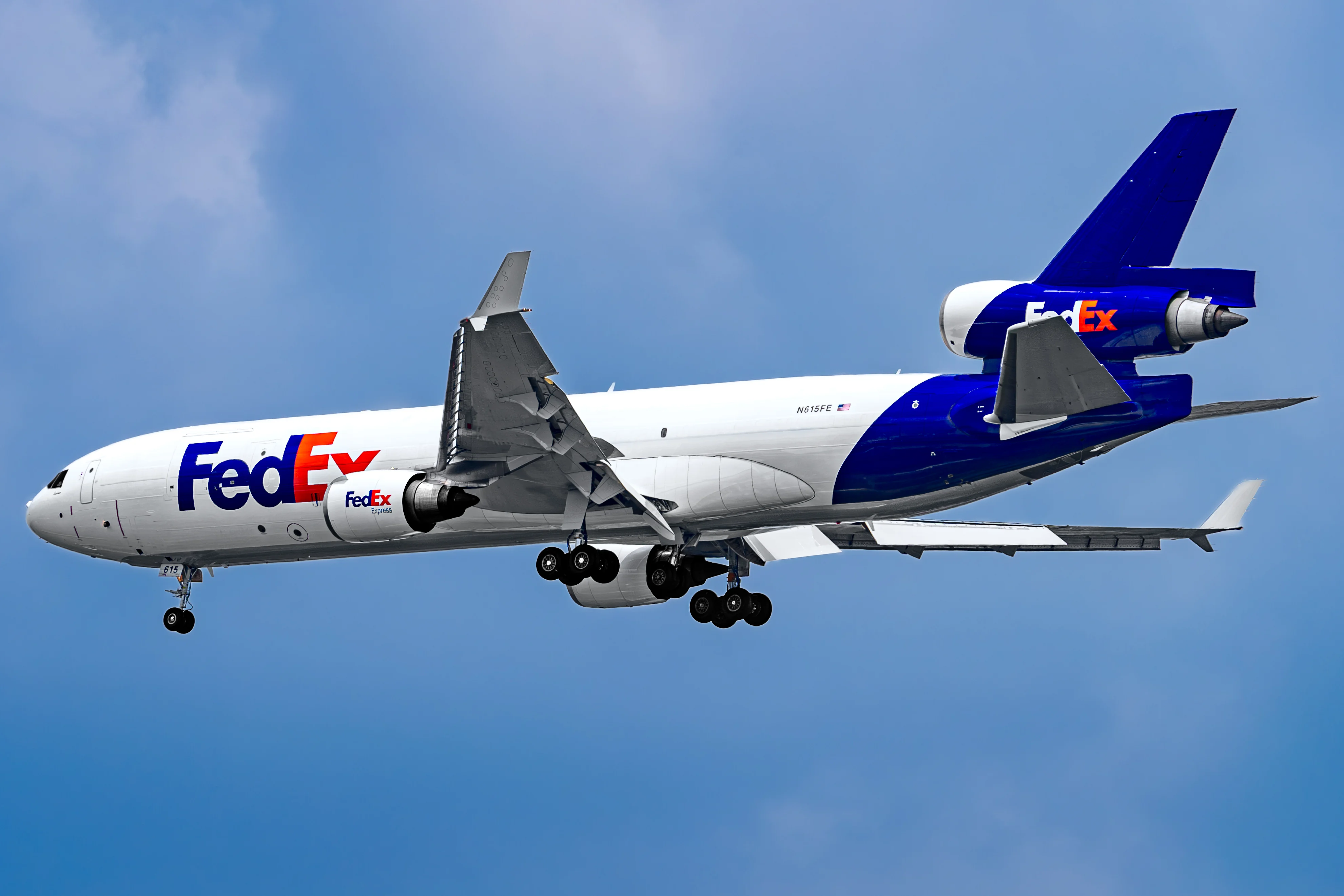
Look for the upturned winglets, then check the straight centre nacelle above the tailcone. The DC-10 shares the tail-engine arrangement but has plain tips.
Main-deck cargo door
Look on the aircraft's left side for the large upper cargo door just ahead of the wing. A typical all-cargo aircraft has a solid main-deck side behind the flight deck.

Check the aircraft record to distinguish different freighter conversion histories.

Design & cabins

Engine references
3 × GE CF6-80C2D1F · PW4460/PW4462
Technical notes

Design notes

  • Engine configuration: 3 × GE CF6-80C2D1F or PW4460/PW4462.
  • Market positioning: Long-range freighter.
  • Status: in service / declining.

Advantages

  • Strong freight payload/range
  • Still valuable in cargo

Limitations

  • Three-engine fuel/maintenance burden
  • Aging fleet
Variant Technical Profile

MD-11F is a specific configuration within MD-11, developed to cover a defined capacity, range, payload, or mission requirement inside the wider family.

MD-11F is positioned as a capacity/range-specific solution within the freighter segment, serving routes better matched than sibling variants.

Technical features

  • MD-11F: Cargo door and floor loading · structure. Main-deck doors, reinforced floors, and cargo loading systems define usable freight capability.
  • MD-11F: Payload-volume balance · range_payload. The aircraft must balance container volume, structural payload, and range for express or general cargo.
  • MD-11F: Freighter conversion economics · maintenance. Passenger-to-freighter variants depend on feedstock price, engine life, and structural condition.
  • MD-11F: Belly and main-deck logistics · operational_efficiency. ULD compatibility, loading height, and turnaround flow shape cargo network efficiency.
  • MD-11F: Engine maintenance sensitivity · engine. Cargo operators often prioritize durable engines and predictable maintenance cost over passenger cabin features.

Advantages

  • Provides a more precise capacity or range match within the family.
  • Retains training, maintenance, and parts commonality with sibling variants.
  • Lets operators tune engine, cabin, and payload choices to route needs.

Weaknesses

  • Configuration identification complexity. Visually similar aircraft can differ materially by engine, weight standard, cabin layout, and conversion status.
  • Generation-dependent economics. Older generations usually trail newer designs in fuel burn, noise, avionics, or maintenance intervals.
  • Market-fit limits. Every variant has an ideal capacity and range band; outside it, load factor, range, or cost can become limiting.

Markets

  • Network airline trunk or feeder markets
  • Leasing and fleet replacement markets
  • Regional, domestic, or international airline markets

Operators

  • Full-service network airlines
  • Low-cost or leisure airlines
  • Cargo, government, or special-mission operators

Routes and missions

  • High-frequency short or medium-haul trunk routes
  • Medium-density long-haul or cross-regional routes
  • Express and general air-cargo networks

Sibling comparison

  • smaller sibling variants. Usually provides more seats, cargo volume, or thrust demand, but can be harder to fill on thinner routes.
  • larger or longer-range sibling variants. Usually has lower acquisition and operating exposure, but less range, payload, or growth margin.
Sources