Home/Encyclopedia/McDonnell Douglas/DC-9 / MD-80 / MD-90 family

DC-9 / MD-80 / MD-90 family

The Douglas DC-9 established the narrowbody design that McDonnell Douglas developed into the MD-80 and MD-90. The MD-95 continued this lineage as the Boeing 717.

Models at a glance

DC-9-10

DC-9-10 is a narrowbody passenger derivative within DC-9 / MD-80 / MD-90 / 717 family. Market positioning: Small short-range jet for regional/domestic routes.

Entered service
1965Delta Air Lines
First flight
25 February 1965
Length
31.82 m
Wingspan
27.25 m
Published range
1,303 nmDelta’s published upper figure · converted from 1,500 statute miles
Typical two-class seats
72Boeing seating example · 12 first and 60 coach
Published seating
90
Engine options
JT8D
Main landing gear
1 axle · 2 wheels per side
Sources

DC-9-20

DC-9-20 is a narrowbody passenger derivative within DC-9 / MD-80 / MD-90 / 717 family. Market positioning: High-performance short-fuselage type.

Entered service
Unavailable
First flight
18 September 1968
Length
31.82 m
Wingspan
28.44 m
Published range
1,450 nmApproximate chart reading · DC-9-21 · 90 passengers and baggage
Typical two-class seats
72Boeing seating example · 12 first and 60 coach
Published seating
Unavailable
Engine options
JT8D-9 · JT8D-9A · JT8D-11
Main landing gear
1 axle · 2 wheels per side
Sources

DC-9-30

DC-9-30 is a narrowbody passenger derivative within DC-9 / MD-80 / MD-90 / 717 family. Market positioning: Main production DC-9.

First flight
1 August 1966
Length
36.36 m
Wingspan
28.44 m
Published range
1,300 nmApproximate chart reading · DC-9-32 · 115 passengers and baggage · standard fuel only
Typical two-class seats
97Boeing seating example · 12 first and 85 coach
Published seating
115
Engine options
JT8D
Main landing gear
1 axle · 2 wheels per side
Sources

DC-9-40

DC-9-40 is a narrowbody passenger derivative within DC-9 / MD-80 / MD-90 / 717 family. Market positioning: Stretched DC-9.

First flight
Unavailable
Length
38.28 m
Wingspan
28.44 m
Published range
1,100 nmApproximate chart reading · DC-9-41 · 125 passengers and baggage · standard fuel only
Typical two-class seats
99Boeing seating example · 12 first and 87 coach
Published seating
125
Engine options
JT8D-9 · JT8D-9A · JT8D-11 · JT8D-15 · JT8D-15A · JT8D-17 · JT8D-17A
Main landing gear
1 axle · 2 wheels per side
Sources

DC-9-50

DC-9-50 is a narrowbody passenger derivative within DC-9 / MD-80 / MD-90 / 717 family. Market positioning: Largest DC-9.

First flight
1974
Length
40.72 m
Wingspan
28.47 m
Published range
1,795 nmDelta DC-9-51 example · converted from 2,065.6 statute miles
Typical two-class seats
122Boeing seating example · 12 first and 110 coach
Published seating
Unavailable
Maximum passenger seats
Unavailable
Engine options
JT8D-15 · JT8D-15A · JT8D-17 · JT8D-17A
Main landing gear
1 axle · 2 wheels per side
Sources

MD-81

MD-81 is a narrowbody passenger derivative within DC-9 / MD-80 / MD-90 / 717 family. Market positioning: Lower-thrust MD-80 baseline.

First flight
18 October 1979
Length
45.05 m
Wingspan
32.89 m
Published range
1,390 nmApproximate historical figure
Typical two-class seats
142Standard MD-81 mixed-class layout in period industry specifications
Published seating
155Boeing standard single-class layout
Maximum passenger seats
172Boeing high-density layout
Engine options
JT8D-200
Main landing gear
1 axle · 2 wheels per side
Sources

MD-82

MD-82 is a narrowbody passenger derivative within DC-9 / MD-80 / MD-90 / 717 family. Market positioning: Higher-thrust main MD-80.

Length
45.05 m
Wingspan
32.89 m
Published range
2,050 nmApproximate chart reading · 155 passengers and baggage · JT8D-217/217A
Typical two-class seats
149RED Air example · 12 first and 137 coach
Published seating
155Boeing standard single-class layout
Maximum passenger seats
172Boeing high-density layout
Engine options
JT8D-200
Main landing gear
1 axle · 2 wheels per side
Sources

MD-83

MD-83 is a narrowbody passenger derivative within DC-9 / MD-80 / MD-90 / 717 family. Market positioning: Long-range/high-weight MD-80.

Length
45.05 m
Wingspan
32.89 m
Published range
2,500 nmApproximate chart reading · 155 passengers and baggage · JT8D-219
Typical two-class seats
140Alaska Airlines example · 12 first and 128 economy
Published seating
155Boeing standard single-class layout
Maximum passenger seats
172Boeing high-density layout
Engine options
JT8D-200
Main landing gear
1 axle · 2 wheels per side
Sources

MD-87

MD-87 is a narrowbody passenger derivative within DC-9 / MD-80 / MD-90 / 717 family. Market positioning: Short-fuselage longer-range MD-80.

Length
39.75 m
Wingspan
32.89 m
Published range
2,400 / 2,900 nmApproximate chart reading · 130 passengers and baggage · standard / auxiliary tanks
Typical two-class seats
117
Published seating
Unavailable
Maximum passenger seats
139Boeing high-density layout
Engine options
JT8D-200
Main landing gear
1 axle · 2 wheels per side
Sources

MD-88

MD-88 is a narrowbody passenger derivative within DC-9 / MD-80 / MD-90 / 717 family. Market positioning: MD-80 with avionics/cockpit improvements.

Length
45.05 m
Wingspan
32.89 m
Published range
2,050 nmApproximate chart reading · 155 passengers and baggage · JT8D-217/217A
Typical two-class seats
142Delta example · 14 first and 128 coach
Published seating
155Boeing standard single-class layout
Maximum passenger seats
172Boeing high-density layout
Engine options
JT8D-200
Main landing gear
1 axle · 2 wheels per side
Sources

MD-90-30

MD-90-30 is a narrowbody passenger derivative within DC-9 / MD-80 / MD-90 / 717 family. Market positioning: MD-80 successor with modern engines.

Entered service
1995Delta Air Lines
First flight
22 February 1993
Length
46.51 m
Wingspan
32.89 m
Published range
2,045 nmWith 153 passengers and baggage; standard-weight option
Typical two-class seats
153
Published seating
153
Maximum passenger seats
172Boeing high-density layout
Engine options
V2525-D5
Main landing gear
1 axle · 2 wheels per side
Sources

Related aircraft development · Boeing 717 Family

Identification

Tail and engines
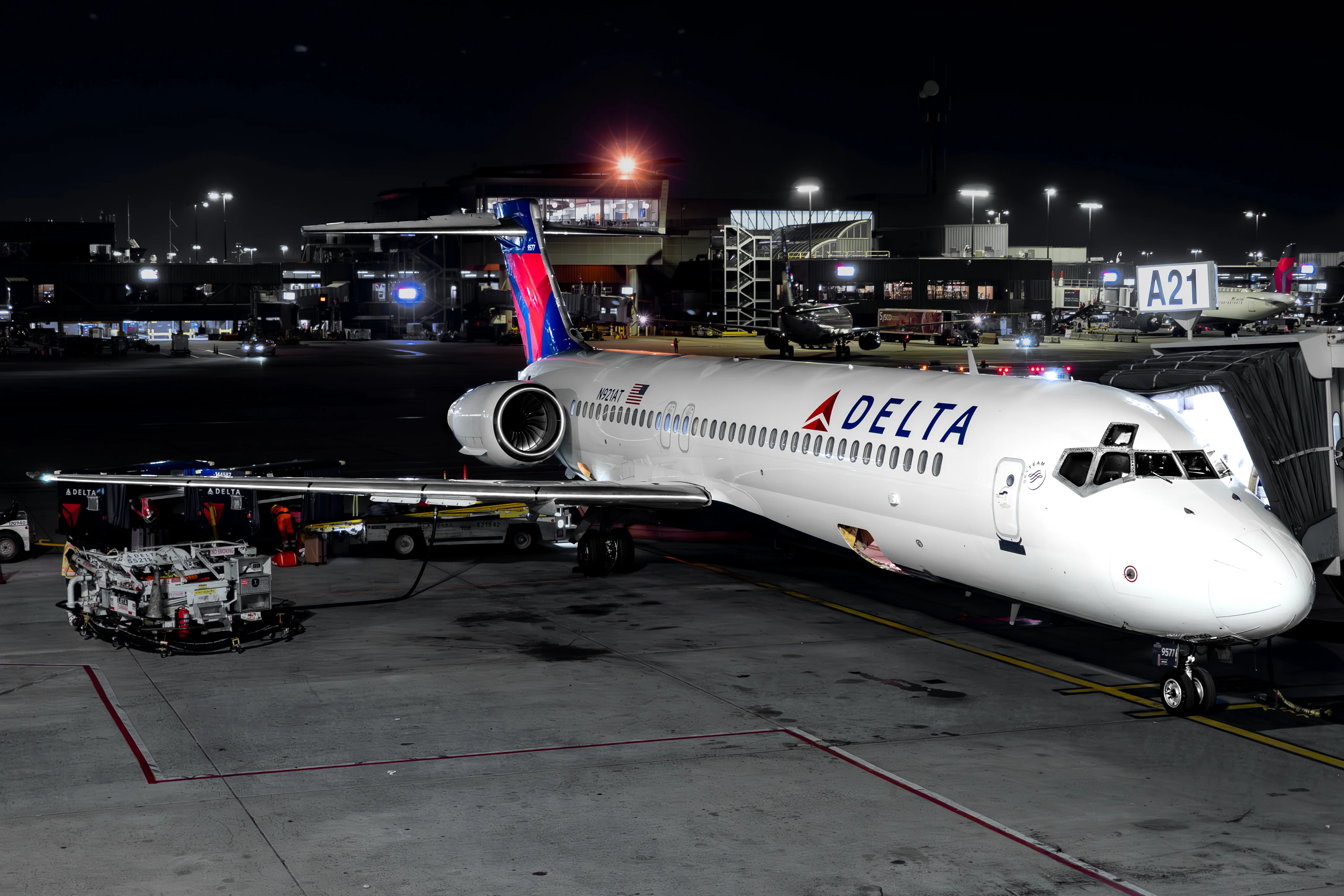
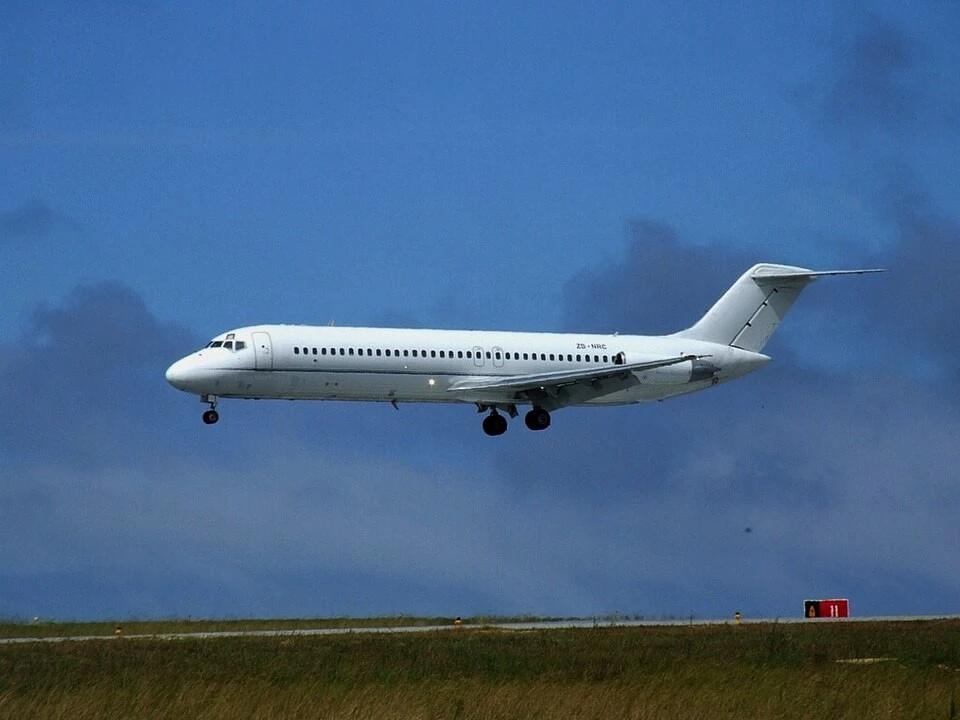
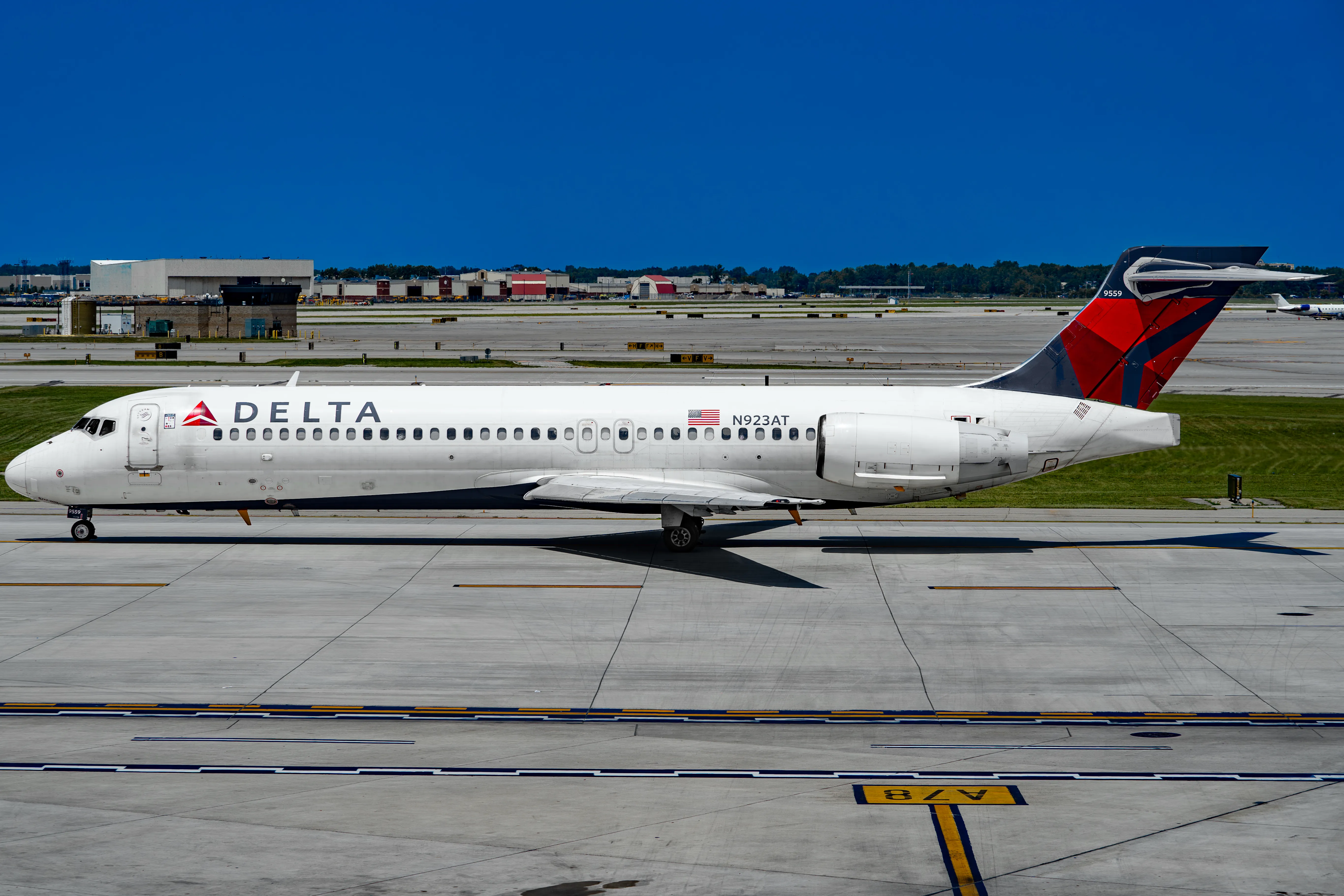
Trace the stabilizer across the top of the fin, then count two engines mounted beside the rear fuselage. This configuration is shared across the lineage.
Cabin proportions
Compare a side view. Many MD-80s and the MD-90 have an elongated passenger cabin. The MD-87, short DC-9 variants and the 717 have more compact profiles.

Use the length and nacelle shape as paired clues. A registration record can resolve close matches.

Design & cabins

  • Rear-mounted twins, T-tail and five-abreast cabin

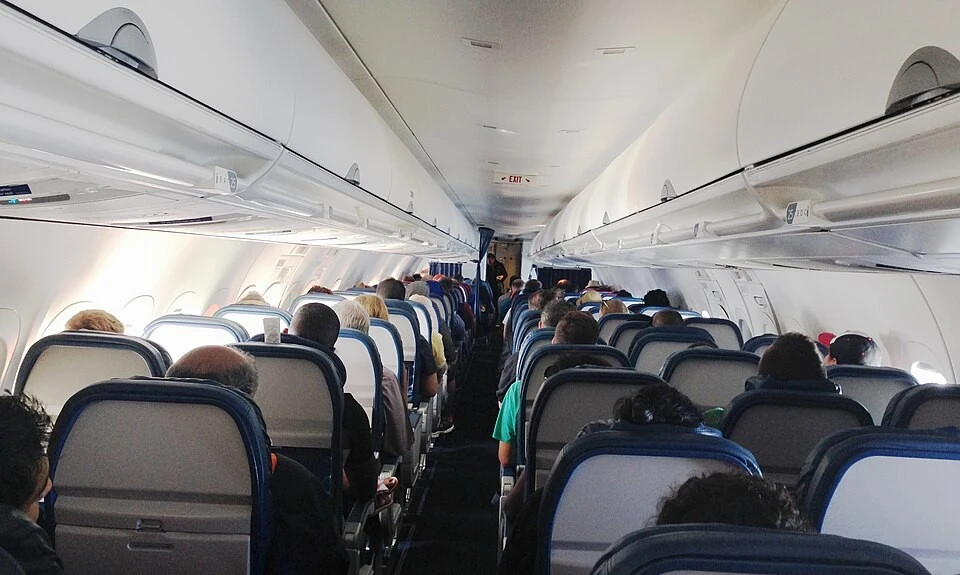
    This lineage uses fuselage-mounted engines, a high horizontal tail and a characteristic five-abreast passenger cross-section.

  • JT8D, V2500 and BR715 powerplants

    The DC-9 and MD-80 use JT8D branches, the MD-90 uses the V2500 and the 717-200 uses BR715.

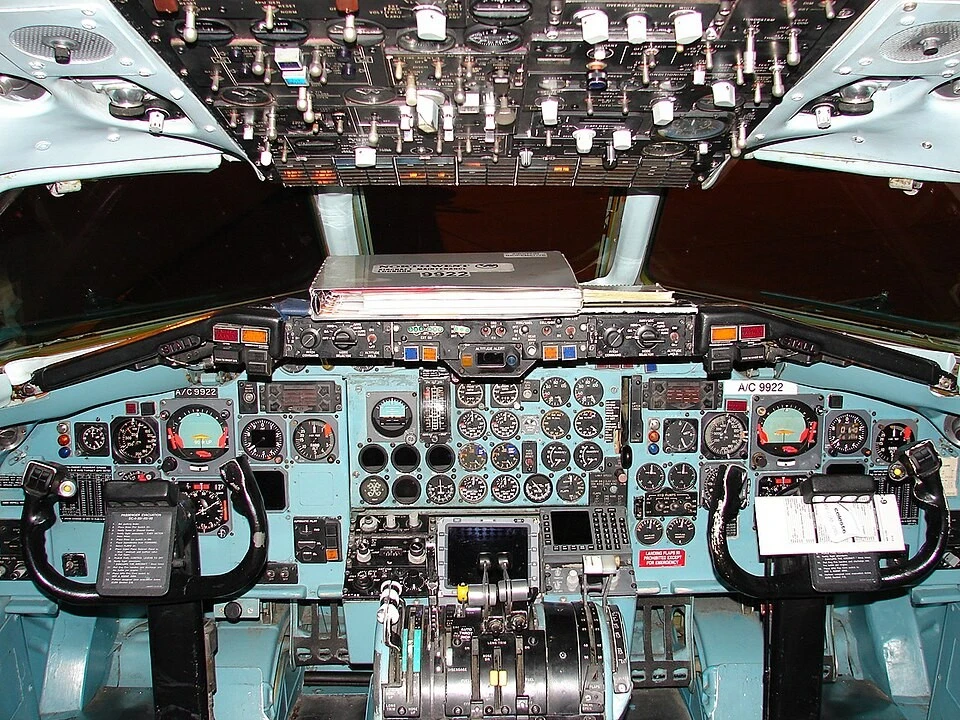
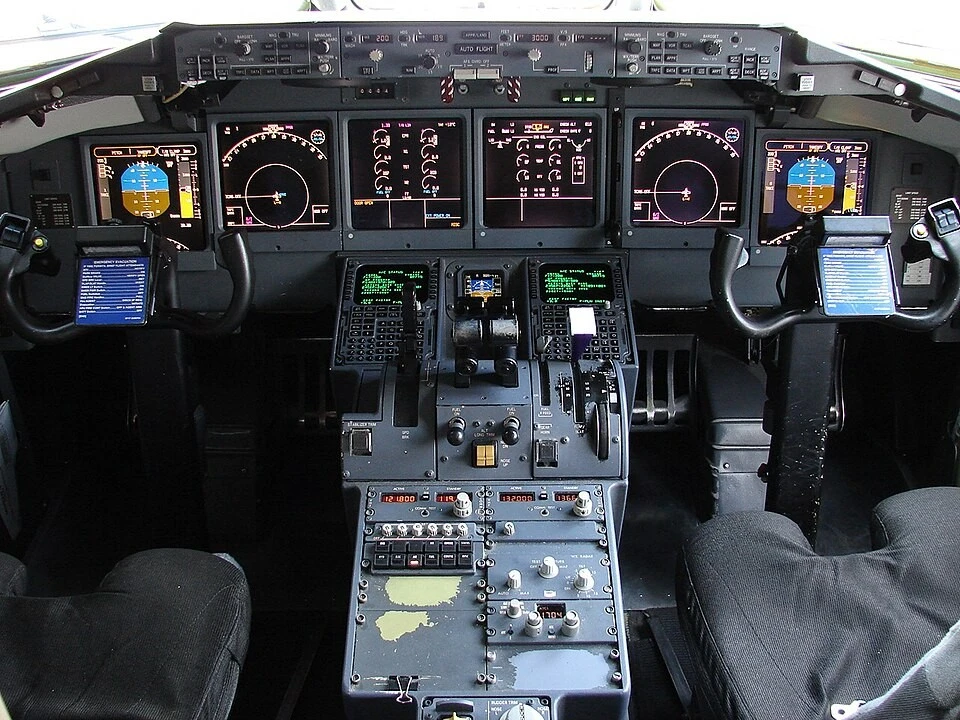
  • From early flight decks to the 717 glass cockpit

    The flight deck evolved along the DC-9, MD-80 and MD-90 line, with an integrated display cockpit in the 717.

More aircraft systems
  • Airframe and aerodynamics

    The DC-9 and its successors use different fuselage lengths, wing standards and high-lift arrangements.

  • Cabin and cargo

    Door locations, interior capacity and cargo provisions should be matched to each branch.

  • Landing gear and braking

    Model-specific gear, brake and ground-servicing information follows the aircraft planning data.

Technical notes

Design notes

  • Rear-mounted twin-engine layout
  • T-tail configuration
  • Low ground height useful for smaller airports
  • Progressive stretch from DC-9 to MD-80/MD-90
  • MD-90 and 717 introduced more modern high-bypass engines

Advantages

  • Rear-mounted twin-engine layout
  • T-tail configuration
  • Low ground height useful for smaller airports

Limitations

  • Rear-engine maintenance access can be harder than wing-mounted engines
  • Narrow cabin and limited overhead bin space
  • JT8D-powered variants became noisy and fuel-inefficient
  • T-tail deep-stall design considerations
  • Later economics fell behind A320/737NG
Family Technical Profile

DC-9 / MD-80 / MD-90 family is one of Boeing's platforms in its market segment, balancing capacity, range, airport compatibility, maintenance economics, and mission flexibility.

DC-9 / MD-80 / MD-90 family serves the narrowbody market with family commonality and multiple configurations.

Technical features

  • DC-9 / MD-80 / MD-90 family: Single-aisle fuselage efficiency · structure. A narrow fuselage reduces structural weight and airport footprint for high-frequency short and medium routes.
  • DC-9 / MD-80 / MD-90 family: High-cycle operating design · maintenance. Doors, landing gear, brakes, and systems are optimized for repeated daily sectors and quick turnarounds.
  • DC-9 / MD-80 / MD-90 family: Wing and high-lift devices · aerodynamics. Flaps, slats, and wingtip devices balance runway performance with cruise efficiency.
  • DC-9 / MD-80 / MD-90 family: Engine generation changes · engine. Engine nacelle, thrust rating, fuel burn, and noise standards define each production generation.
  • DC-9 / MD-80 / MD-90 family: Fleet commonality · operational_efficiency. Common flight decks and maintenance practices reduce training and support cost across subfleets.

Advantages

  • One platform can cover several capacity and mission bands.
  • Family design reduces training, maintenance, and spares complexity.
  • Engine, wingtip, avionics, or structural upgrades can extend lifecycle value.

Weaknesses

  • Configuration identification complexity. Visually similar aircraft can differ materially by engine, weight standard, cabin layout, and conversion status.
  • Generation-dependent economics. Older generations usually trail newer designs in fuel burn, noise, avionics, or maintenance intervals.
  • Market-fit limits. Every variant has an ideal capacity and range band; outside it, load factor, range, or cost can become limiting.

Markets

  • Network airline trunk or feeder markets
  • Leasing and fleet replacement markets
  • Regional, domestic, or international airline markets

Operators

  • Full-service network airlines
  • Low-cost or leisure airlines
  • Cargo, government, or special-mission operators

Routes and missions

  • High-frequency short or medium-haul trunk routes
  • Medium-density long-haul or cross-regional routes
  • Fleet replacement, supplementation, or special missions
Sources