C-17A
C-17A is a military transport derivative within C-17 Globemaster III. Market positioning: Strategic/tactical airlift.
- Length
- 53.04 m
- Wingspan
- 51.75 m
- Engine options
- F117-PW-100
- Published range
- 2,400 nmiApproximately · U.S. Air Force unrefueled example at 74.8 t cargo
Identification
Use these features to recognise the C-17 Globemaster III. Check the aircraft or programme record for the C-17A designation.
- High wing and tips
- Look for four jets suspended beneath a wing mounted above the cabin. Raised winglets at the tips help distinguish the C-17 from a C-5.
- Tail profile
- Follow the upswept rear fuselage toward the rear cargo ramp. The wide horizontal stabilizer sits at the top of the fin.
Compare models
| Specification | C-17A | Choose a family |
|---|---|---|
| Length | 53.04 m | |
| Wingspan | 51.75 m | |
| Maximum take-off weight | 265.35 t | |
| Maximum payload | 77.52 tPublished cargo payload | |
| Fuel tank capacity | 134,556 LUSAF 35,546 US gal converted to liters | |
| Engine options | F117-PW-100 | |
| Typical two-class seats | Unavailable | |
| Published range | 2,400 nmiApproximately · U.S. Air Force unrefueled example at 74.8 t cargo |
A dash indicates that a verified figure is unavailable. Figures follow the configuration specified by each source.
Comparison sources
- FAA Aircraft Characteristics Database · October 2024ACD_Data · C17 · Boeing Globemaster 3
- US Air Mobility Command · C-17 Globemaster IIIGeneral characteristics and payload
- Boeing · First flight of the C-17Flight test debut
- US Air Mobility Command · C-17 Globemaster IIIGeneral characteristics · cargo example
- US Air Mobility Command · C-17 Globemaster IIIC-17 transport specifications · unrefueled range and payload example
- Boeing · Historical aircraft technical specificationsC-17 Globemaster III technical specifications · 585,000 lb
- Air Mobility Command · C-17 published tank capacityPublished C-17 tank capacity
Design & cabins
F117-PW-100 installation
See the engine encyclopedia for ratings and aircraft applications.
Featured components & design
Engine installation · F117-PW-100
Published engine installation for the C-17A is F117-PW-100.
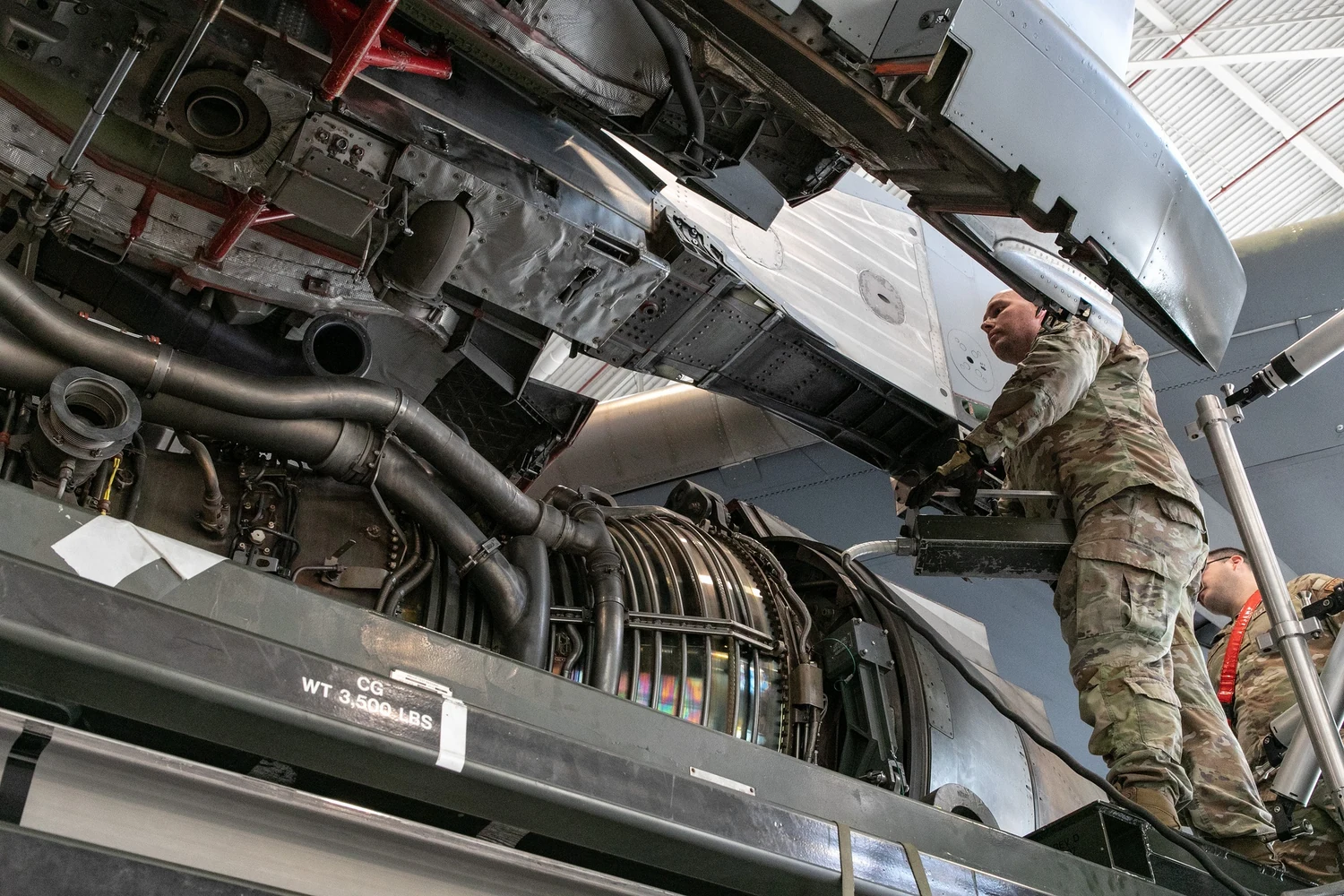
C-17A Globemaster III · F117-PW-100 turbofan during an engine changeU.S. Air Force/Roland Balik · resized · U.S. public domain Landing gear configuration · C-17A
Twelve main wheels on four three-wheel axles and two nose wheels, for fourteen in all.
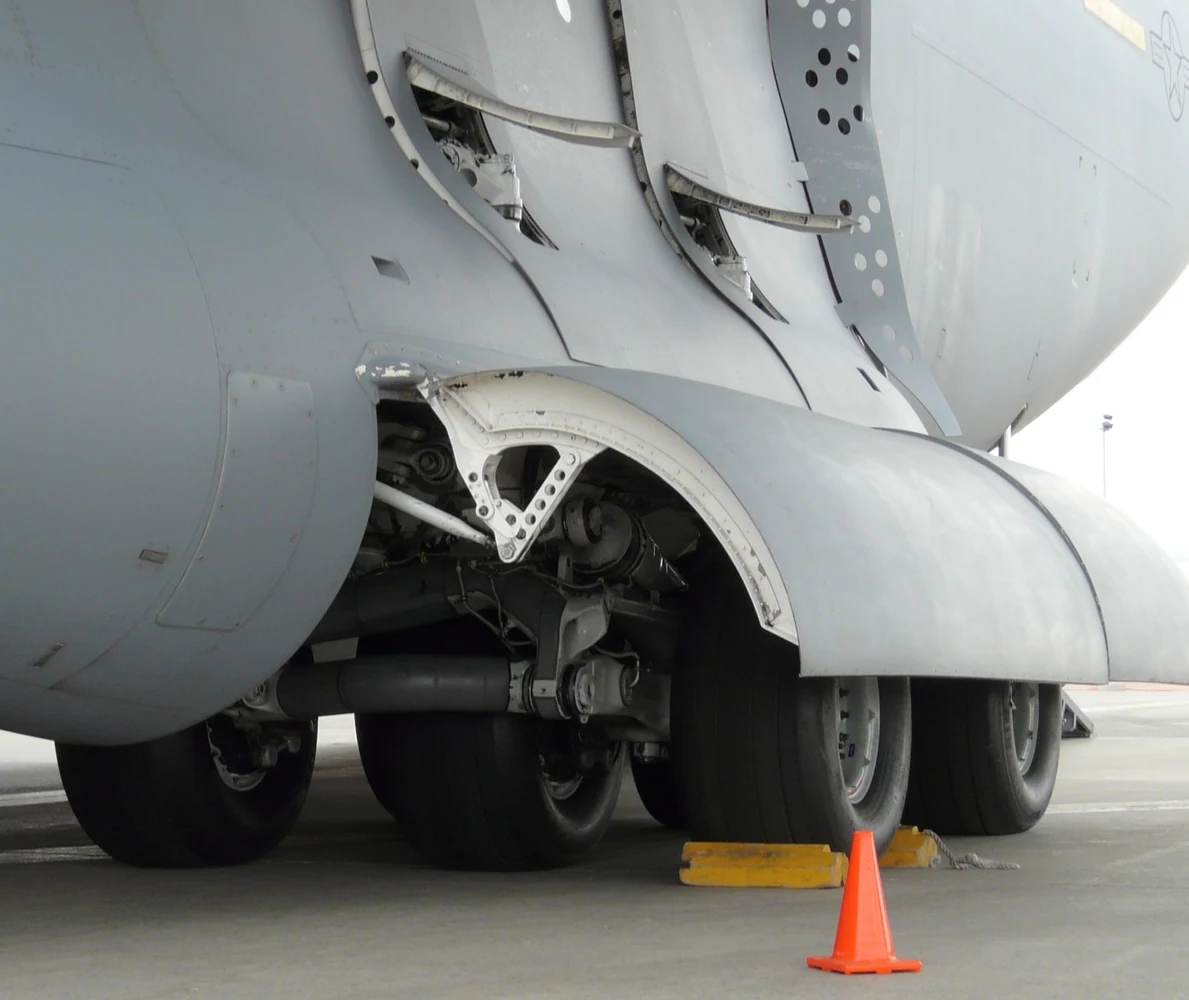
C-17A Globemaster III · main landing gear at Fairchild AFBGreg Goebel · resized · CC BY-SA 2.0 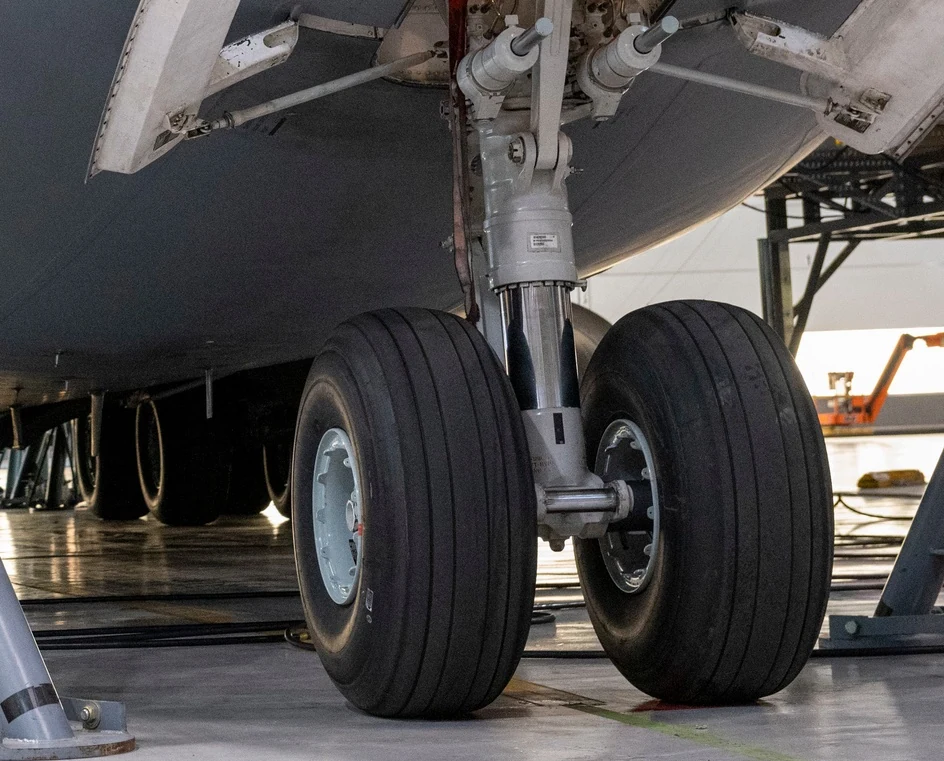
C-17A Globemaster III · twin-wheel nose gearU.S. Air National Guard/Edward Michon · detail crop · U.S. public domain

Technical notes
Design notes
- Engine configuration: 4 × Pratt & Whitney F117-PW-100 (PW2000-derived).
- Market positioning: Strategic/tactical airlift.
- Status: in service.
Advantages
- Large payload
- Short-field capability
- Global deployment
Limitations
- High cost
- Large support footprint
Variant Technical Profile
C-17A is a specific configuration within C-17 Globemaster III, developed to cover a defined capacity, range, payload, or mission requirement inside the wider family.
C-17A is positioned as a capacity/range-specific solution within the military_transport segment, serving routes better matched than sibling variants.
Technical features
- C-17A: Missionized structure · structure. Floor strength, ramps, doors, or mission equipment support cargo, surveillance, or maritime patrol roles.
- C-17A: Military avionics and communications · avionics. Secure radios, sensors, tactical displays, and mission computers distinguish the aircraft from civil variants.
- C-17A: Field performance · range_payload. Runway performance, payload, and operating environment matter more than pure seat-mile economics.
- C-17A: Systems redundancy · safety. Military missions require robust electrical, hydraulic, navigation, and defensive-system integration.
- C-17A: Multi-role adaptability · operational_efficiency. The platform can be configured for transport, patrol, training, surveillance, or special missions.
Advantages
- Provides a more precise capacity or range match within the family.
- Retains training, maintenance, and parts commonality with sibling variants.
- Lets operators tune engine, cabin, and payload choices to route needs.
Weaknesses
- Configuration identification complexity. Visually similar aircraft can differ materially by engine, weight standard, cabin layout, and conversion status.
- Generation-dependent economics. Older generations usually trail newer designs in fuel burn, noise, avionics, or maintenance intervals.
- Market-fit limits. Every variant has an ideal capacity and range band; outside it, load factor, range, or cost can become limiting.
Markets
- Network airline trunk or feeder markets
- Leasing and fleet replacement markets
- Military transport, tanker, and special-mission markets
Operators
- Full-service network airlines
- Low-cost or leisure airlines
- Cargo, government, or special-mission operators
Routes and missions
- High-frequency short or medium-haul trunk routes
- Medium-density long-haul or cross-regional routes
- Fleet replacement, supplementation, or special missions
Sibling comparison
- smaller sibling variants. Usually provides more seats, cargo volume, or thrust demand, but can be harder to fill on thinner routes.
- larger or longer-range sibling variants. Usually has lower acquisition and operating exposure, but less range, payload, or growth margin.
From the archive
Loading photographs…