Home/Encyclopedia/McDonnell Douglas/C-17 Globemaster III

C-17 Globemaster III

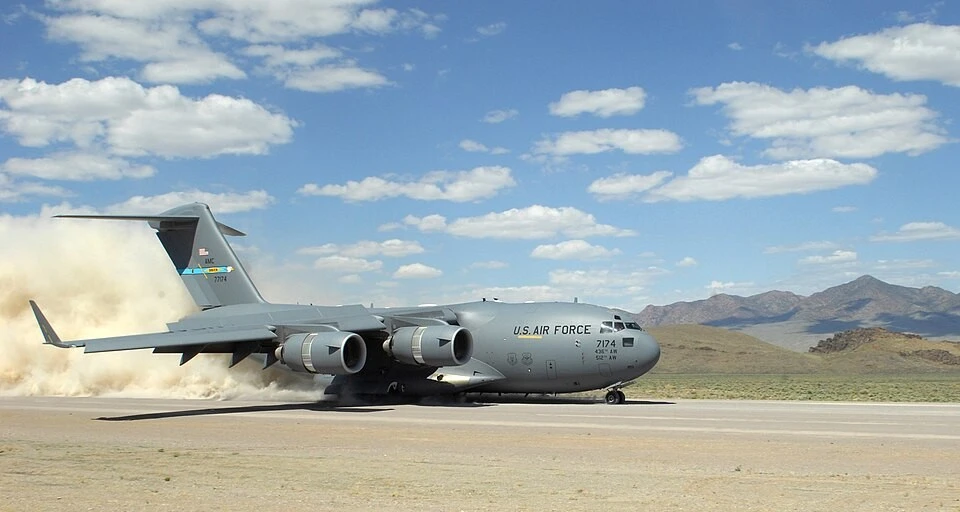
The C-17 Globemaster III is a purpose-built strategic transport originally developed by McDonnell Douglas. A high wing, four F117 turbofans and a rear ramp distinguish it from converted commercial transports.

Models at a glance

C-17A

C-17A is a military transport derivative within C-17 Globemaster III. Market positioning: Strategic/tactical airlift.

First flight
15 September 1991
Length
53.04 m
Wingspan
51.75 m
Published range
2,400 nmApproximately · U.S. Air Force unrefueled example at 74.8 t cargo
Range at stated payload
2,400 nmApproximate at 160,000 lb (72.6 t)
Maximum cargo payload
77.52 t
Engine options
F117-PW-100
Main landing gear
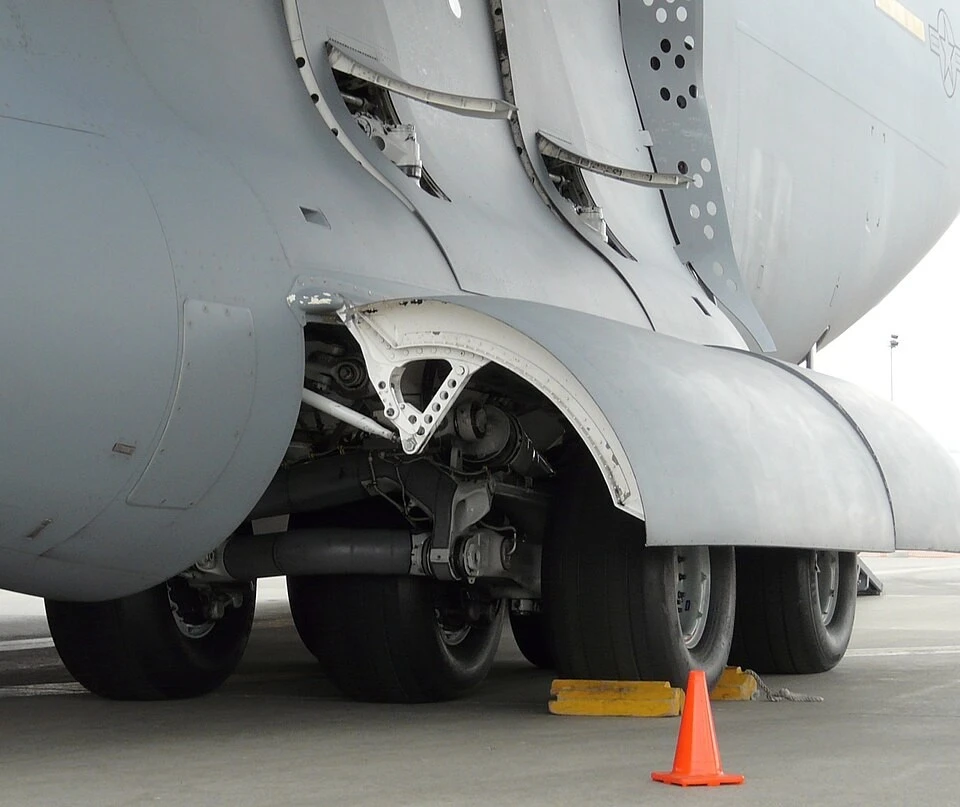
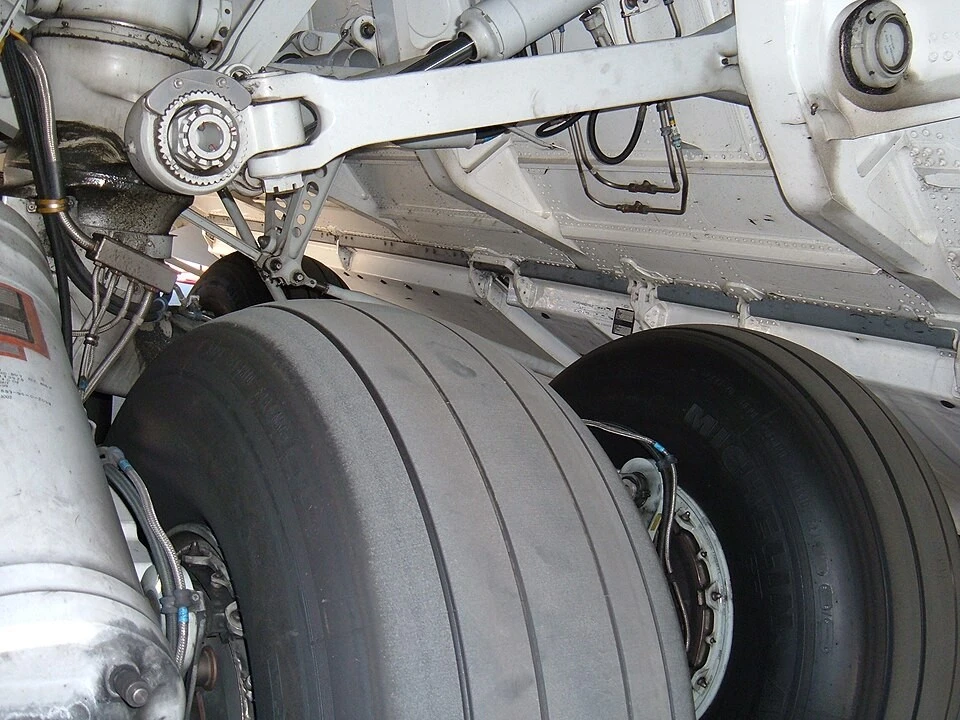
2 axles · 6 wheels per side
Sources

Identification

High wing and tips
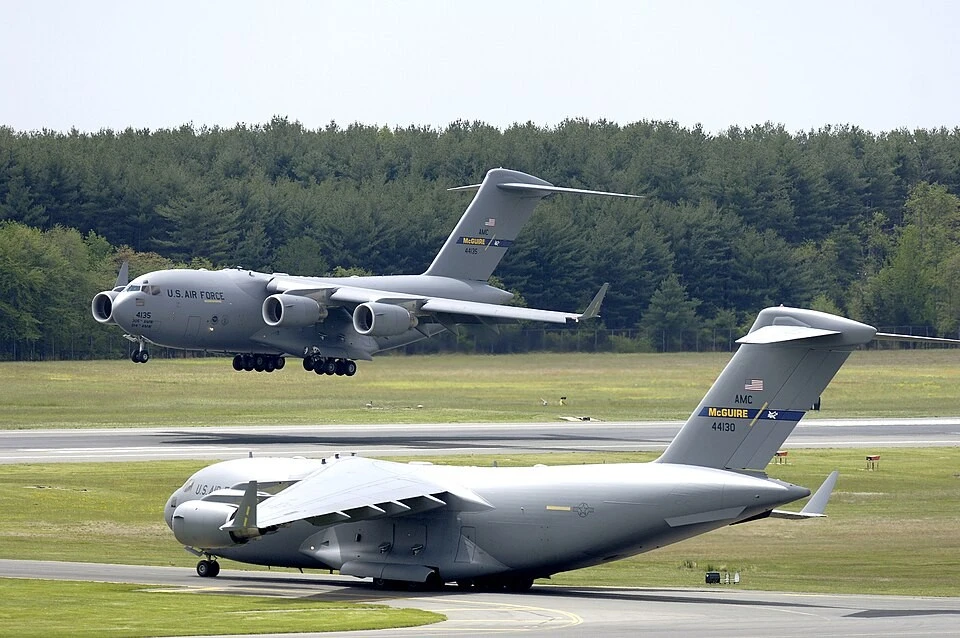
Look for four jets suspended beneath a wing mounted above the cabin. Raised winglets at the tips help distinguish the C-17 from a C-5.
Tail profile
Follow the upswept rear fuselage toward the rear cargo ramp. The wide horizontal stabilizer sits at the top of the fin.

Design & cabins

  • Externally blown high-lift flaps

    The high-lift wing combines slats and externally blown flaps. The engine exhaust contributes to the wing's low-speed lift.

  • F117 powerplant and thrust-reverser installation

    Four F117 engines are derived from the commercial PW2000 line. The thrust-reverser design is part of the aircraft's ground-handling architecture.

  • Large cargo hold, floor and rear ramp

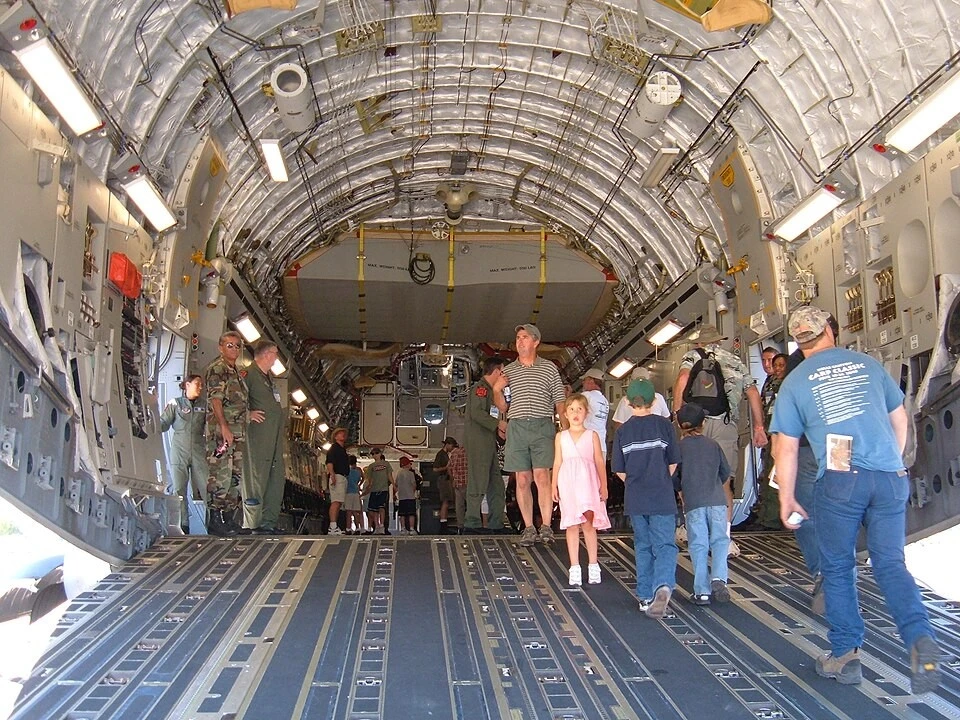
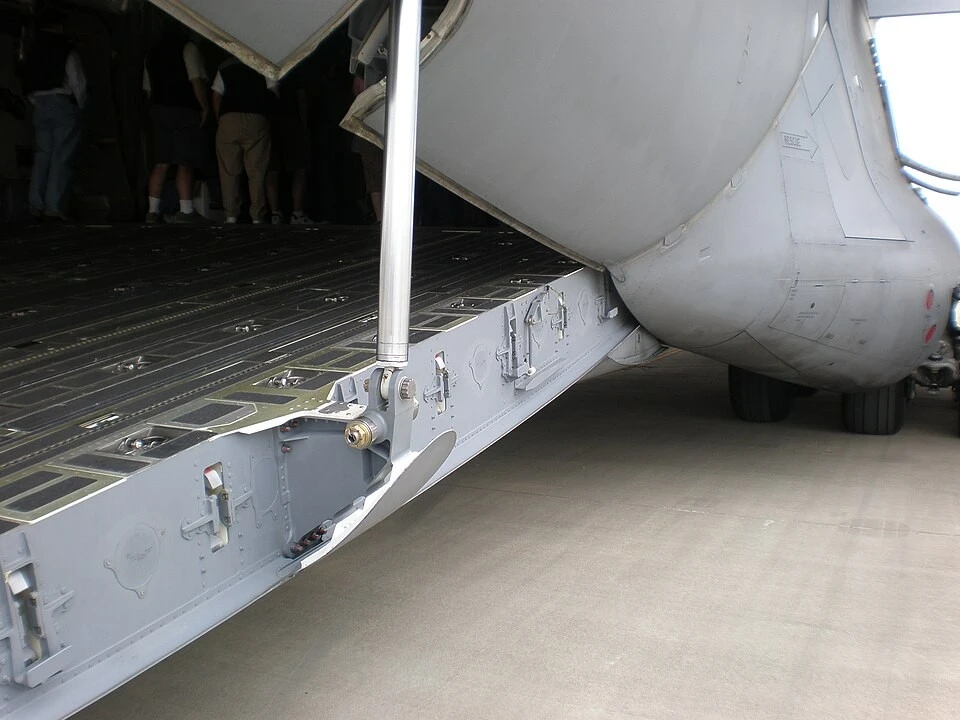
    The C-17 cargo deck and rear ramp accommodate bulky loads. The usable space and floor loading depend on the transport configuration.

More aircraft systems
  • Flight controls and avionics

    The flight deck and aircraft systems help the flight crew coordinate with the cargo operation.

  • Cabin and cargo

    Cargo fittings and interior options are organised by transport configuration.

  • Landing gear and braking

    The multi-wheel main gear and pavement-loading design support the aircraft's airfield compatibility.

  • Onboard systems

    Hydraulics and electrical power serve the aircraft and its cargo equipment.

Technical notes

Design notes

  • Four high-bypass turbofan military transport
  • Short-field landing with thrust reversers
  • High-wing T-tail airlifter layout
  • Large rear cargo ramp and roll-on/roll-off cargo floor
  • Strategic and tactical transport capability

Advantages

  • Four high-bypass turbofan military transport
  • Short-field landing with thrust reversers
  • High-wing T-tail airlifter layout

Limitations

  • High acquisition and maintenance cost
  • Too large for some austere fields compared with C-130
  • Production line closed
  • Large airport/ground support footprint
  • Military-only economics
Family Technical Profile

C-17 Globemaster III is one of Boeing's platforms in its market segment, balancing capacity, range, airport compatibility, maintenance economics, and mission flexibility.

C-17 Globemaster III serves the military_transport market with family commonality and multiple configurations.

Technical features

  • C-17 Globemaster III: Missionized structure · structure. Floor strength, ramps, doors, or mission equipment support cargo, surveillance, or maritime patrol roles.
  • C-17 Globemaster III: Military avionics and communications · avionics. Secure radios, sensors, tactical displays, and mission computers distinguish the aircraft from civil variants.
  • C-17 Globemaster III: Field performance · range_payload. Runway performance, payload, and operating environment matter more than pure seat-mile economics.
  • C-17 Globemaster III: Systems redundancy · safety. Military missions require robust electrical, hydraulic, navigation, and defensive-system integration.
  • C-17 Globemaster III: Multi-role adaptability · operational_efficiency. The platform can be configured for transport, patrol, training, surveillance, or special missions.

Advantages

  • One platform can cover several capacity and mission bands.
  • Family design reduces training, maintenance, and spares complexity.
  • Engine, wingtip, avionics, or structural upgrades can extend lifecycle value.

Weaknesses

  • Configuration identification complexity. Visually similar aircraft can differ materially by engine, weight standard, cabin layout, and conversion status.
  • Generation-dependent economics. Older generations usually trail newer designs in fuel burn, noise, avionics, or maintenance intervals.
  • Market-fit limits. Every variant has an ideal capacity and range band; outside it, load factor, range, or cost can become limiting.

Markets

  • Network airline trunk or feeder markets
  • Leasing and fleet replacement markets
  • Military transport, tanker, and special-mission markets

Operators

  • Full-service network airlines
  • Low-cost or leisure airlines
  • Cargo, government, or special-mission operators

Routes and missions

  • High-frequency short or medium-haul trunk routes
  • Medium-density long-haul or cross-regional routes
  • Fleet replacement, supplementation, or special missions
Sources