Home/Encyclopedia/Lockheed/L-1011 TriStar family

L-1011 TriStar family

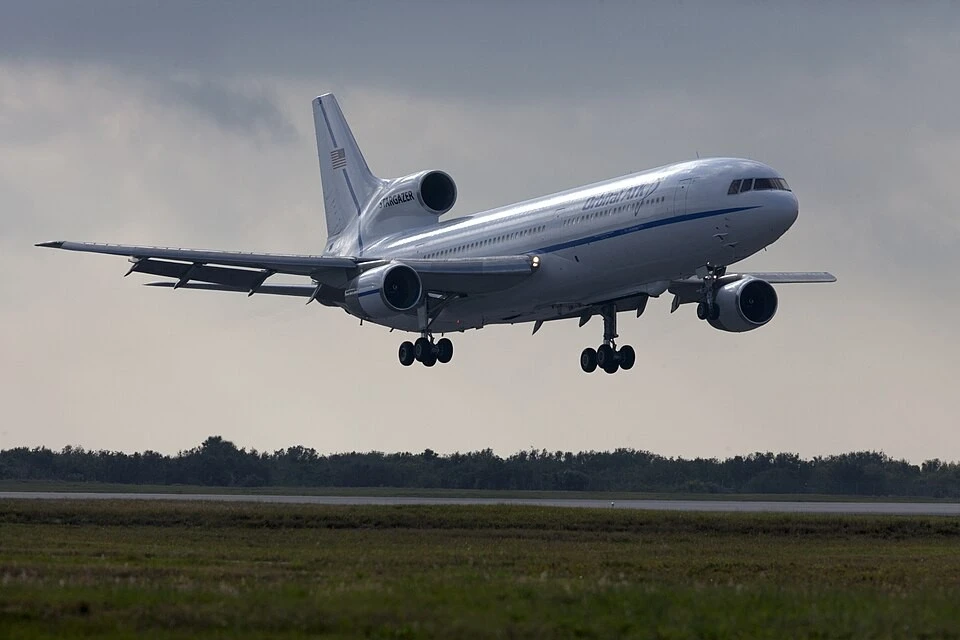
L-1011 TriStar family covers widebody passenger / tanker conversions aircraft in the Lockheed portfolio. The entry is imported from the McDonnell Douglas / Lockheed / Bombardier technical workbook and organized by family and derivative variant.

Models at a glance

L-1011-1

L-1011-1 is a widebody passenger derivative within L-1011 TriStar family. Market positioning: Baseline medium-range widebody.

Entered service
30 April 1972
First flight
1970
Length
54.15 m
Wingspan
47.35 m
Published range
2,060 nmApproximate conversion of Delta’s 2,370 statute miles
Typical two-class seats
250Delta cabin · 50 first + 200 economy
Published seating
250Delta layout · 50 first, 200 economy
Maximum passenger seats
400Four Type A exits per side, subject to approved interior
Engine options
RB211-22B-02
Main landing gear
Unavailable
Sources

L-1011-50

L-1011-50 is a widebody passenger derivative within L-1011 TriStar family. Market positioning: Increased-weight variant.

Entered service
Unavailable
First flight
Unavailable
Length
54.17 mMuseum airframe N31019 · original-length TriStar
Wingspan
47.34 mMuseum airframe N31019
Published range
Unavailable
Typical two-class seats
Unavailable
Published seating
Unavailable
Maximum passenger seats
Unavailable
Engine options
RB211-22B
Main landing gear
Unavailable
Sources

L-1011-100

L-1011-100 is a widebody passenger derivative within L-1011 TriStar family. Market positioning: Extended-range variant.

Length
54.15 m
Wingspan
47.35 m
Typical two-class seats
Unavailable
Engine options
RB211-22B-02Original Delta configuration · FAA lists additional approved engines for later installations
Main landing gear
Unavailable
Sources

L-1011-200

L-1011-200 is a widebody passenger derivative within L-1011 TriStar family. Market positioning: Higher-thrust/hot-high variant.

Length
54.15 m
Wingspan
47.35 m
Typical two-class seats
286Delta (1979) · 30 first + 256 coach
Engine options
RB211-524B-02 · RB211-524B3-02 · RB211-524B4-02 · RB211-524B4-D-02Commercial -200 uprated engine installations
Main landing gear
Unavailable
Sources

L-1011-250

L-1011-250 is a widebody passenger derivative within L-1011 TriStar family. Market positioning: Conversion/upgrade variant.

Length
54.15 mFAA standard-length TriStar geometry, retained by Delta's L-1011-250 conversion
Wingspan
Unavailable
Published range
Unavailable
Typical two-class seats
280Delta (1987) · 12 first + 268 coach
Maximum passenger seats
Unavailable
Engine options
RB211-524B4Delta -250 fleet
Main landing gear
Unavailable
Sources

L-1011-500

L-1011-500 is a widebody passenger derivative within L-1011 TriStar family. Market positioning: Short-fuselage long-range variant.

Length
50.04 m
Wingspan
47.35 / 50.04 mStandard / extended wing per FAA
Published range
5,000 nmLockheed hot-day example · up to 25.4 t payload at this distance
Typical two-class seats
241Delta (1979) · 24 first + 217 coach
Maximum passenger seats
315Three Type A exits per side, subject to approved interior
Main landing gear
Unavailable
Sources

Identification

Centre intake
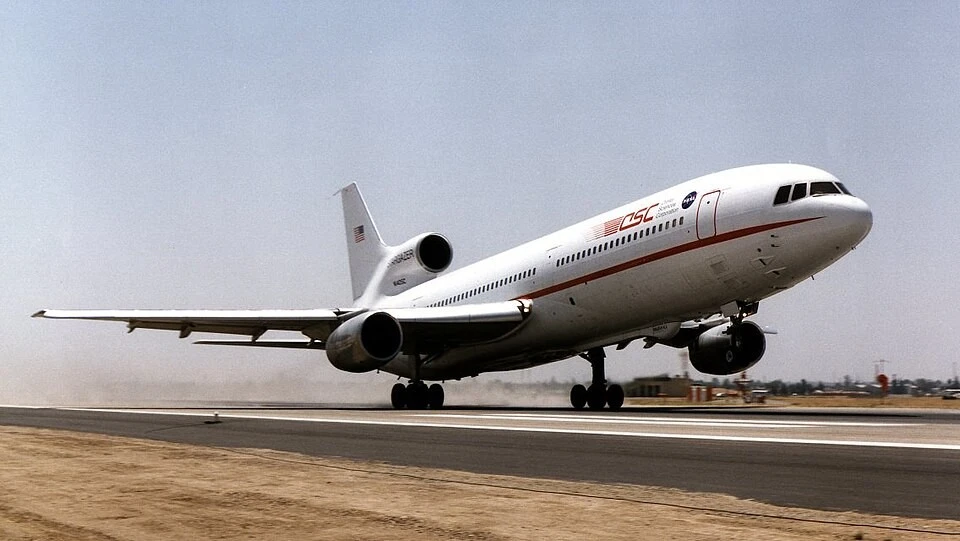
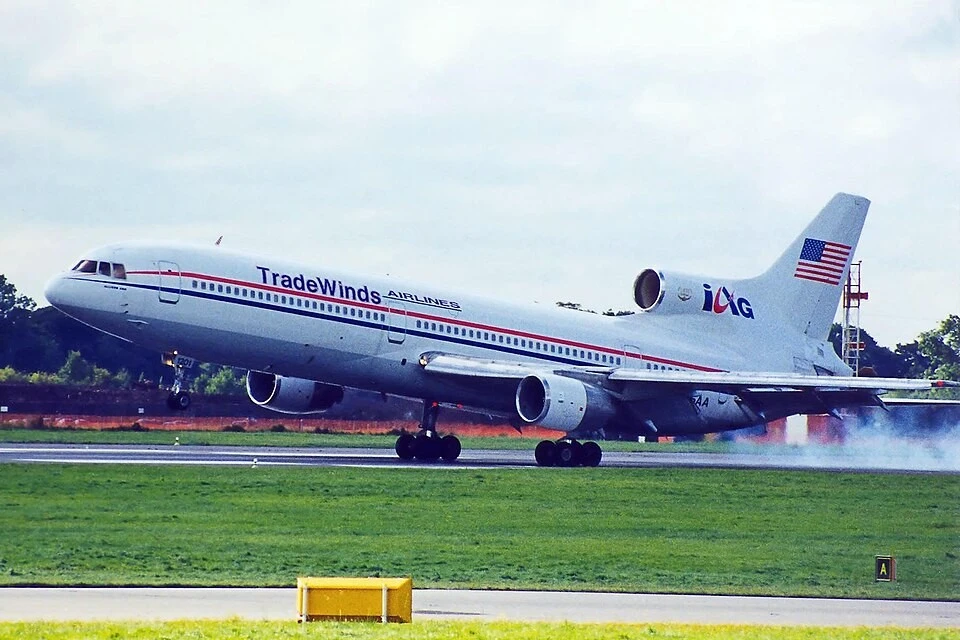
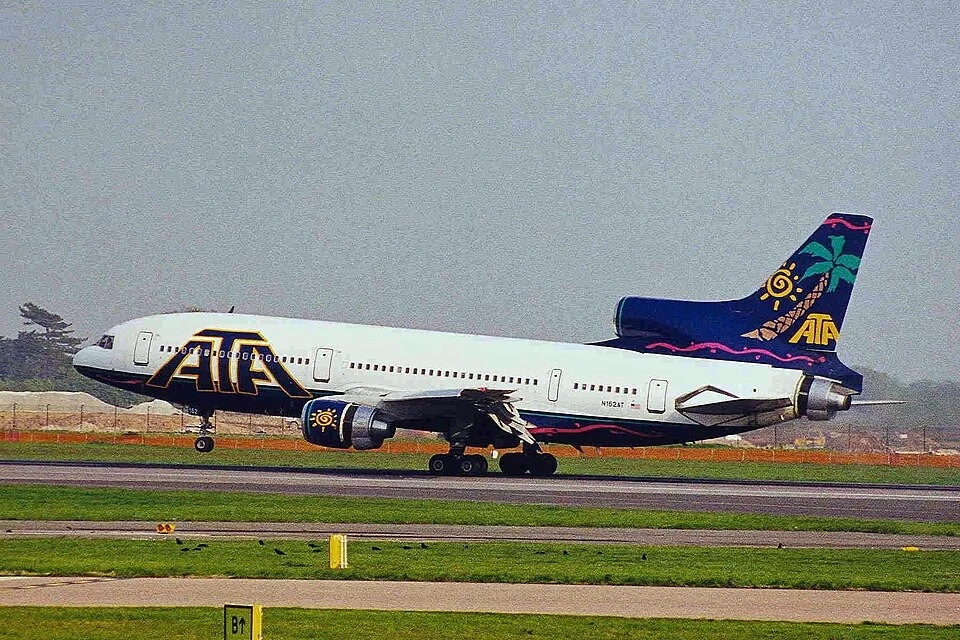
Look ahead of the fin for the centre intake fitted into the top of the fuselage. Two more engine pods hang beneath the wings.
Tailcone exhaust
From a rear quarter, follow the centre engine to the tailcone. The curved inlet duct places the exhaust low in the tail, below the corresponding DC-10 nacelle.

Design & cabins

  • Rolls-Royce RB211 and S-duct tail inlet

    The TriStar uses three RB211 engines. The centre engine is fed by an S-shaped intake rather than a straight-through nacelle at the base of the fin.

    DC-10 and MD-11 tail-engine layout

  • Autoland and direct lift control

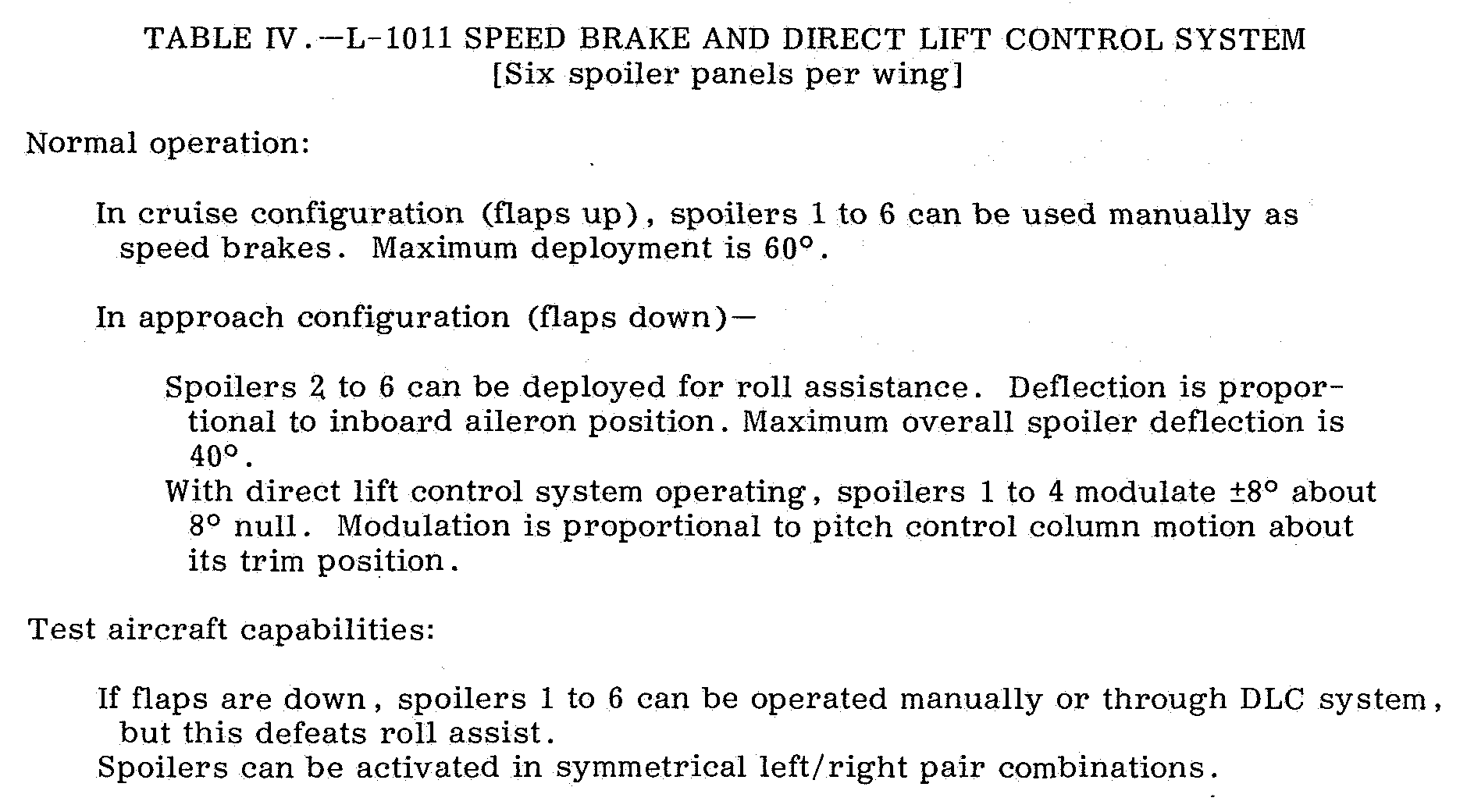
    The TriStar's automatic flight system supports automatic landings. Direct lift control uses spoilers to fine-tune lift on the approach.

  • L-1011-500 short-body long-range design

    The -500 shortened the passenger fuselage and adopted changes to support its long-range role.

More aircraft systems
  • Airframe and aerodynamics

    Wing and high-lift design are compared across the original aircraft and the -500 airframe.

  • Powerplant and fuel

    Fuel provisions and the fitted RB211 version depend on the specific TriStar model.

  • Cabin and cargo

    The twin-aisle passenger cabin and lower-deck baggage holds have model-specific layouts.

  • Landing gear and braking

    Landing gear, wheels and brake data belong to the applicable weight standard.

  • Onboard systems

    Hydraulics, electrics and pressurisation support both the flight systems and the passenger cabin.

Technical notes

Design notes

  • Three-engine widebody with RB211 engines
  • S-duct tail engine configuration
  • Advanced automatic flight and autoland capability
  • High system automation for its era
  • Comfortable twin-aisle cabin

Advantages

  • Three-engine widebody with RB211 engines
  • S-duct tail engine configuration
  • Advanced automatic flight and autoland capability

Limitations

  • Exclusive RB211 dependency and early engine delays
  • Three-engine economics later inferior to ETOPS twinjets
  • Smaller fleet/support ecosystem
  • Production ended with limited scale
  • Unit costs high on smaller -500 variant
Family Technical Profile

L-1011 TriStar family is one of Aircraft manufacturer's platforms in its market segment, balancing capacity, range, airport compatibility, maintenance economics, and mission flexibility.

L-1011 TriStar family serves the narrowbody market with family commonality and multiple configurations.

Technical features

  • L-1011 TriStar family: Single-aisle fuselage efficiency · structure. A narrow fuselage reduces structural weight and airport footprint for high-frequency short and medium routes.
  • L-1011 TriStar family: High-cycle operating design · maintenance. Doors, landing gear, brakes, and systems are optimized for repeated daily sectors and quick turnarounds.
  • L-1011 TriStar family: Wing and high-lift devices · aerodynamics. Flaps, slats, and wingtip devices balance runway performance with cruise efficiency.
  • L-1011 TriStar family: Engine generation changes · engine. Engine nacelle, thrust rating, fuel burn, and noise standards define each production generation.
  • L-1011 TriStar family: Fleet commonality · operational_efficiency. Common flight decks and maintenance practices reduce training and support cost across subfleets.

Advantages

  • One platform can cover several capacity and mission bands.
  • Family design reduces training, maintenance, and spares complexity.
  • Engine, wingtip, avionics, or structural upgrades can extend lifecycle value.

Weaknesses

  • Configuration identification complexity. Visually similar aircraft can differ materially by engine, weight standard, cabin layout, and conversion status.
  • Generation-dependent economics. Older generations usually trail newer designs in fuel burn, noise, avionics, or maintenance intervals.
  • Market-fit limits. Every variant has an ideal capacity and range band; outside it, load factor, range, or cost can become limiting.

Markets

  • Network airline trunk or feeder markets
  • Leasing and fleet replacement markets
  • Regional, domestic, or international airline markets

Operators

  • Full-service network airlines
  • Low-cost or leisure airlines
  • Cargo, government, or special-mission operators

Routes and missions

  • High-frequency short or medium-haul trunk routes
  • Medium-density long-haul or cross-regional routes
  • Fleet replacement, supplementation, or special missions

Sources