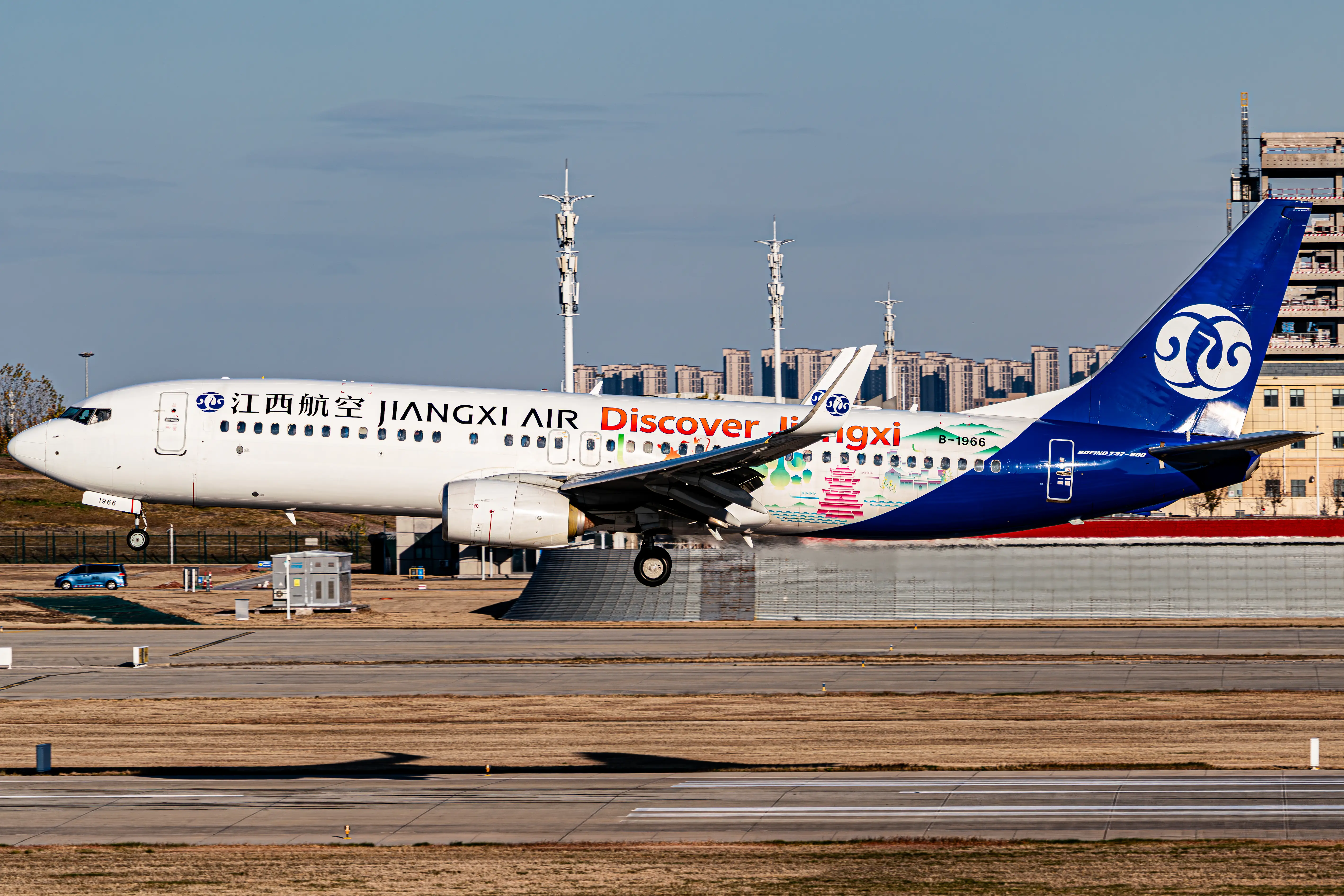
B-1966 · Jiangxi Air
Boeing 737-800 · TAO/ZSQD ·
CFM56-7B22 belongs to the CFM56-7B branch. Published aircraft certification records pair this rating with 737-600 and 737-700.
Pound-force values from SI ratings are rounded to the nearest whole unit.
| Model | Thrust | Aircraft listed |
|---|---|---|
| CFM56-7B18 | 19,491 lbf = 86.7 kNICAO reference rated thrust · ICAO Engine Emissions Databank · Issue 32B | 737-600 (related build) |
| CFM56-7B20 | 20,592 lbf = 91.6 kNICAO reference rated thrust · ICAO Engine Emissions Databank · Issue 32B | 737-600 · 737-700 |
| CFM56-7B22 | 22,706 lbf = 101 kNICAO reference rated thrust · ICAO Engine Emissions Databank · Issue 32B | 737-600 · 737-700 |
| CFM56-7B24 | 24,212 lbf = 107.7 kNICAO reference rated thrust · ICAO Engine Emissions Databank · Issue 32B | 737-700 · 737-800 · 737-900 |
| CFM56-7B24/3 | 24,201 lbf = 107.65 kNTakeoff thrust (5 min) · EASA E.004 · Issue 07 · p. 15 | Application records pending |
| CFM56-7B26 | 26,303 lbf = 117 kNICAO reference rated thrust · ICAO Engine Emissions Databank · Issue 32B | 737-700 · 737-800 · 737-900 · +1 aircraft |
| CFM56-7B27 | 27,292 lbf = 121.4 kNICAO reference rated thrust · ICAO Engine Emissions Databank · Issue 32B | 737-800 · 737-900 · 737-900ER |
| CFM56-7B27E | 27,299 lbf = 121.43 kNTakeoff thrust (5 min) · EASA E.004 · Issue 07 · p. 15 | Application records pending |
The CFM56-7B powers the Boeing 737 Next Generation. Its range of ratings spans different airframe lengths and derivative configurations.
These are broader aircraft names or candidate combinations that the records above do not establish at this level of detail.
The flattened inlet is especially apparent on the 737 Classic and Next Generation. These generations use distinct -3 and -7B installations. CFM International CFM56 programme and history
Use the engine data plate or the aircraft’s configuration records to confirm the exact suffix.
Different branches adapt the fan, core and nacelle to the aircraft. The -3 is closely packaged under the 737 Classic wing and the -5C is the A340 branch. CFM International CFM56 programme and history
The CFM56-2 entered commercial service in 1982. The -3 followed with the 737 Classic, and the family later expanded to the A320 and 737 Next Generation. CFM International CFM56 programme and history
Aircraft certification records distinguish ratings, combustor configurations and modifications. The full suffix, including slashes, matters when comparing variants. CFM International CFM56 programme and history
Certification test data are per engine and use the ICAO reference cycle. Fuel-flow values refer to individual test points.
Each example gives lateral, flyover and approach levels for a specific aircraft and engine configuration at its listed maximum takeoff mass.
0 photos tagged CFM56-7B22
Boeing 737-800 · TAO/ZSQD ·

Boeing 737-800BCF · HET/ZBHH ·

Boeing 737-800BCF · HET/ZBHH ·

Boeing 737-800 · HET/ZBHH ·

Boeing 737-800 · HET/ZBHH ·

Boeing 737-800 · HET/ZBHH ·