Home/Encyclopedia/Embraer/Embraer Tucano and Super Tucano

Embraer Tucano and Super Tucano

The EMB 312 Tucano and later EMB 314/A-29 Super Tucano cover different generations of turboprop training and light-attack aircraft.

Models at a glance

EMB 314 Super Tucano

The EMB 314 Super Tucano is the larger development of the original Tucano. It uses the PT6A-68C engine and is also known by the A-29 designation.

Entered service
Unavailable
First flight
Unavailable
Length
11.3 m
Wingspan
11.14 m
Published range
720 nmU.S. Air Force A-29 figure. Published ferry range is 1,541 nmi.
Engine options
PT6A-68C
Main landing gear
Unavailable

Identification

Single nose propeller
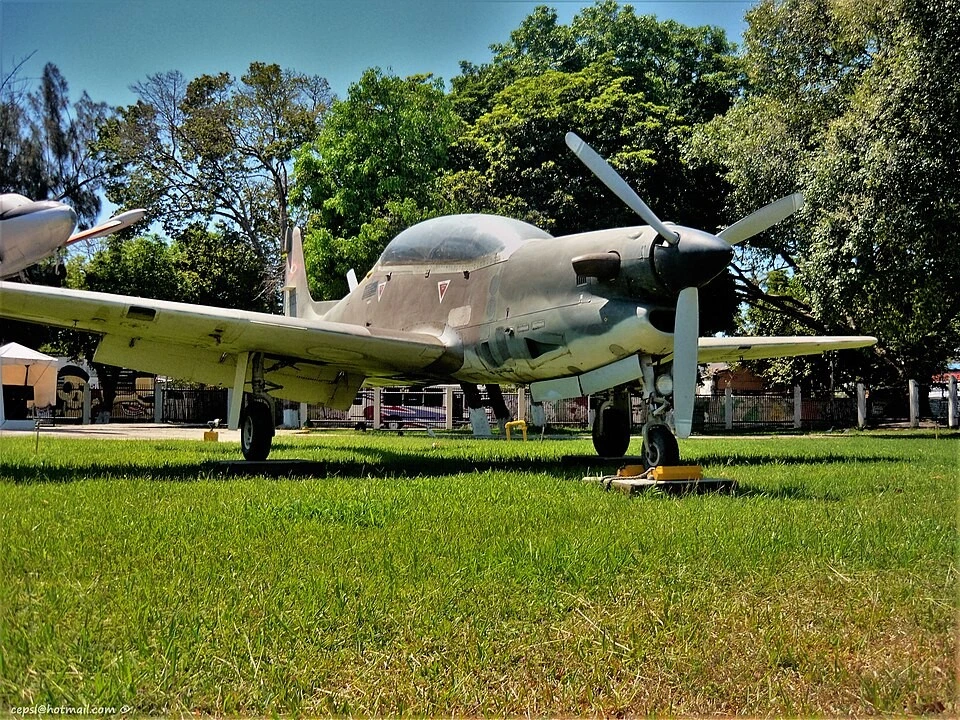
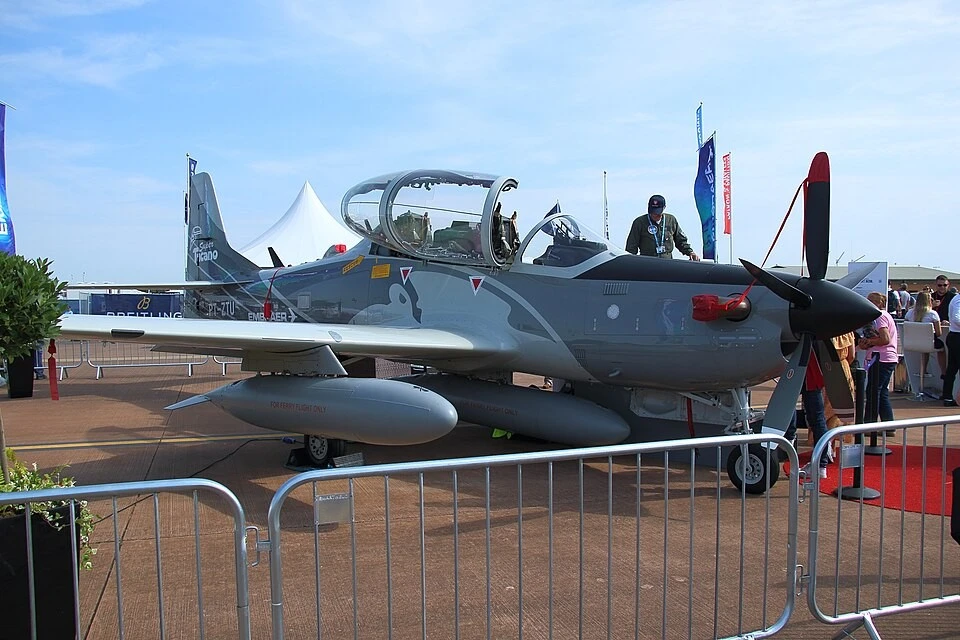
Look for a single propeller in front of the fuselage and an unswept-looking low wing.
Stepped tandem canopy
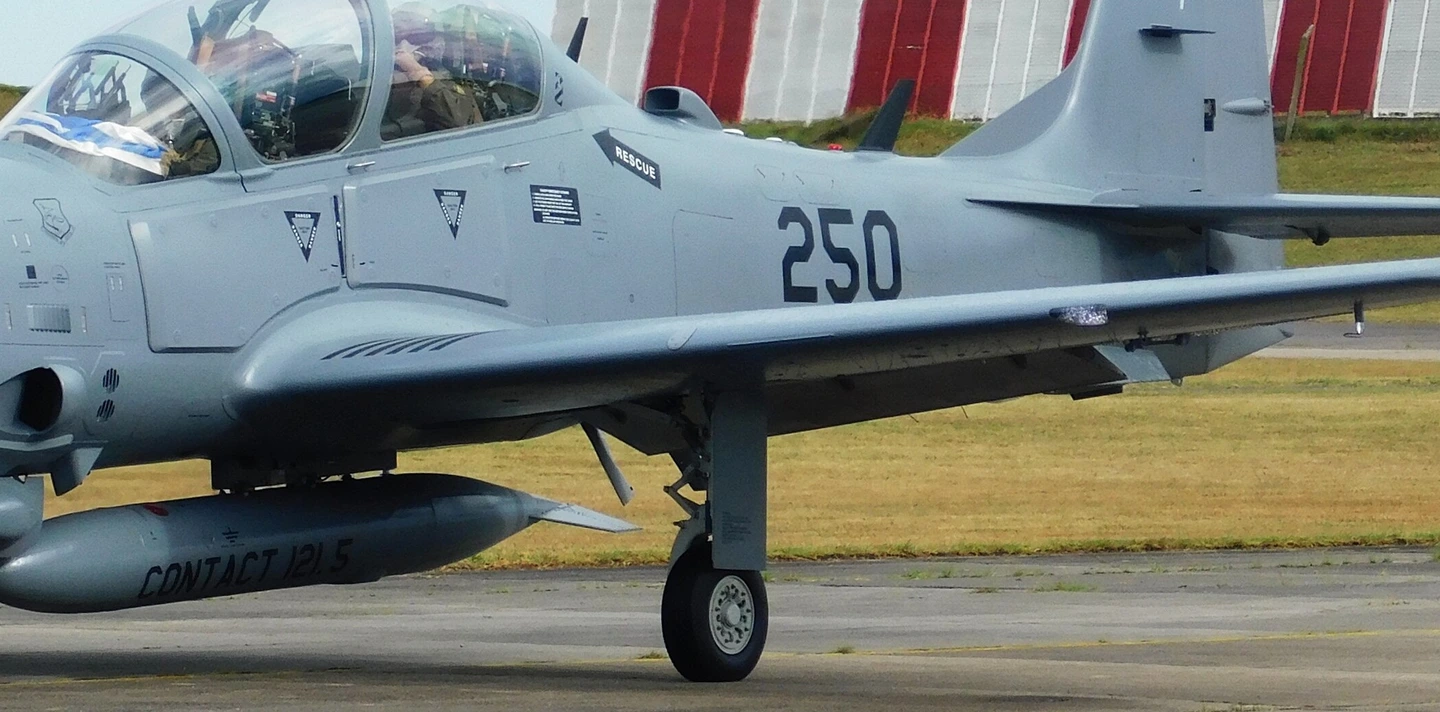
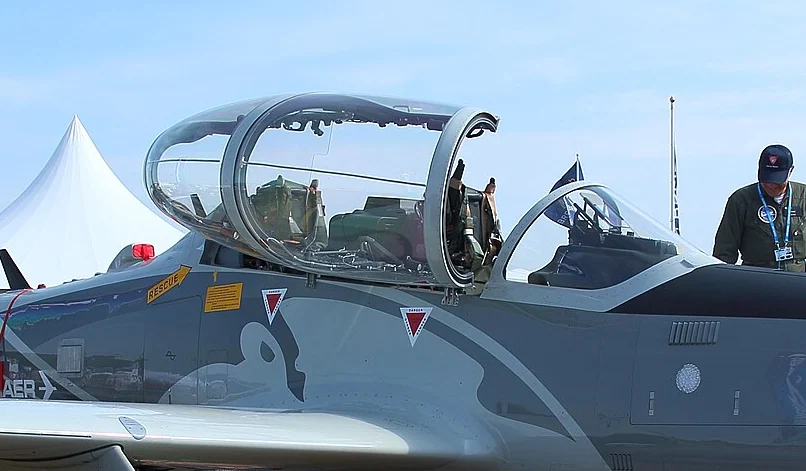
From the side, trace the long two-seat canopy. The rear seat sits higher than the front seat.

Several turboprop trainers have similar features, including the later Super Tucano. Confirm the type with the aircraft's serial or operator record.

Design & cabins

  • Tandem training cockpit and visibility

    The Tucano layout places two crew positions in tandem for training. The Super Tucano programme also offers a single-seat configuration.

  • Tucano and Super Tucano propulsion

    The EMB 312 and EMB 314/A-29 are separate generations. The EMB 314/A-29 uses the PT6A-68C with a corresponding propeller installation.

  • Super Tucano digital flight deck

    Integrated displays and engine indications give the later EMB 314/A-29 a distinct cockpit equipment fit.

More aircraft systems
  • Airframe and aerodynamics

    Wing, fuselage and canopy details are compared by training variant and generation.

  • Powerplant and fuel

    Fuel and propeller-control details vary with the installed engine and documented aircraft version.

  • Flight controls and avionics

    Training and display equipment is attributed to the variant that carries it.

  • Landing gear and braking

    Landing gear, ground geometry and braking reflect the size of each training airframe.

Technical notes

Design notes

  • The EMB 312 Tucano is the earlier training aircraft.
  • The EMB 314/A-29 Super Tucano is a later platform for advanced training, armed reconnaissance, and light attack.

Advantages

  • Turboprop aircraft can serve training and, for the A-29, multiple operational roles.

Limitations

  • Do not transfer A-29 mission systems or engine specifications to the earlier EMB 312.
Family Technical Profile

Embraer Tucano and Super Tucano is one of Embraer's platforms in its market segment, balancing capacity, range, airport compatibility, maintenance economics, and mission flexibility.

Embraer Tucano and Super Tucano serves the military_transport market with family commonality and multiple configurations.

Technical features

  • Embraer Tucano and Super Tucano: Missionized structure · structure. Floor strength, ramps, doors, or mission equipment support cargo, surveillance, or maritime patrol roles.
  • Embraer Tucano and Super Tucano: Military avionics and communications · avionics. Secure radios, sensors, tactical displays, and mission computers distinguish the aircraft from civil variants.
  • Embraer Tucano and Super Tucano: Field performance · range_payload. Runway performance, payload, and operating environment matter more than pure seat-mile economics.
  • Embraer Tucano and Super Tucano: Systems redundancy · safety. Military missions require robust electrical, hydraulic, navigation, and defensive-system integration.
  • Embraer Tucano and Super Tucano: Multi-role adaptability · operational_efficiency. The platform can be configured for transport, patrol, training, surveillance, or special missions.

Advantages

  • One platform can cover several capacity and mission bands.
  • Family design reduces training, maintenance, and spares complexity.
  • Engine, wingtip, avionics, or structural upgrades can extend lifecycle value.

Weaknesses

  • Configuration identification complexity. Visually similar aircraft can differ materially by engine, weight standard, cabin layout, and conversion status.
  • Generation-dependent economics. Older generations usually trail newer designs in fuel burn, noise, avionics, or maintenance intervals.
  • Market-fit limits. Every variant has an ideal capacity and range band; outside it, load factor, range, or cost can become limiting.

Markets

  • Network airline trunk or feeder markets
  • Leasing and fleet replacement markets
  • Military transport, tanker, and special-mission markets

Operators

  • Full-service network airlines
  • Low-cost or leisure airlines
  • Cargo, government, or special-mission operators

Routes and missions

  • High-frequency short or medium-haul trunk routes
  • Medium-density long-haul or cross-regional routes
  • Fleet replacement, supplementation, or special missions
Sources