EMB 312 Tucano
The EMB 312 Tucano is Embraer's original tandem-seat turboprop trainer. It is the smaller predecessor of the EMB 314 Super Tucano.
- Length
- 9.86 m
- Wingspan
- 11.14 m
- Engine options
- PT6A-25C
- Published range
- 1,111 nmiApproximate conversion of Embraer's 2,058 km
Identification
Use these features to recognise the Embraer Tucano and Super Tucano. Check the aircraft or programme record for the EMB 312 Tucano designation.
- Single nose propeller
- Look for a single propeller in front of the fuselage and an unswept-looking low wing.
- Stepped tandem canopy
- From the side, trace the long two-seat canopy. The rear seat sits higher than the front seat.
Several turboprop trainers have similar features, including the later Super Tucano. Confirm the type with the aircraft's serial or operator record.
Compare models
Comparing EMB 312 Tucano with EMB 314 Super Tucano.
| Specification | EMB 312 Tucano | EMB 314 Super Tucano |
|---|---|---|
| Length | 9.86 m | 11.3 m |
| Wingspan | 11.14 m | 11.14 m |
| Maximum take-off weight | 3.18 tBrazilian Air Force T-27 maximum weight | 5.4 t |
| Maximum payload | Unavailable | Unavailable |
| Fuel tank capacity | Unavailable | Unavailable |
| Engine options | PT6A-25C | PT6A-68C |
| Typical two-class seats | Unavailable | Unavailable |
| Published range | 1,111 nmiApproximate conversion of Embraer's 2,058 km | 720 nmiU.S. Air Force A-29 figure. Published ferry range is 1,541 nmi. |
A dash indicates that a verified figure is unavailable. Figures follow the configuration specified by each source.
Comparison sources
- Brazilian Air Force · EMB-312 technical informationHistória and Informações Técnicas
- Embraer historical centre, EMB 312 TucanoInformações técnicas, Alcance
- Brazilian Air Force Esquadrilha da Fumaça · EMB-312 T-27 TucanoFicha técnica · Peso máximo
- Brazilian Air Force · EMB-314 technical informationInformações Técnicas
- U.S. Air Force Silver Wings · A-29 Super Tucano specificationsBLAZE Hangar Tails · Range and ferry range
- Embraer aircraft portfolio brochureA-29 airframe weights table
Design & cabins
PT6A-25C installation
See the engine encyclopedia for ratings and aircraft applications.
Featured components & design
Landing gear configuration · EMB-312 Tucano
Hydraulically retractable tricycle arrangement with a steerable nose wheel.
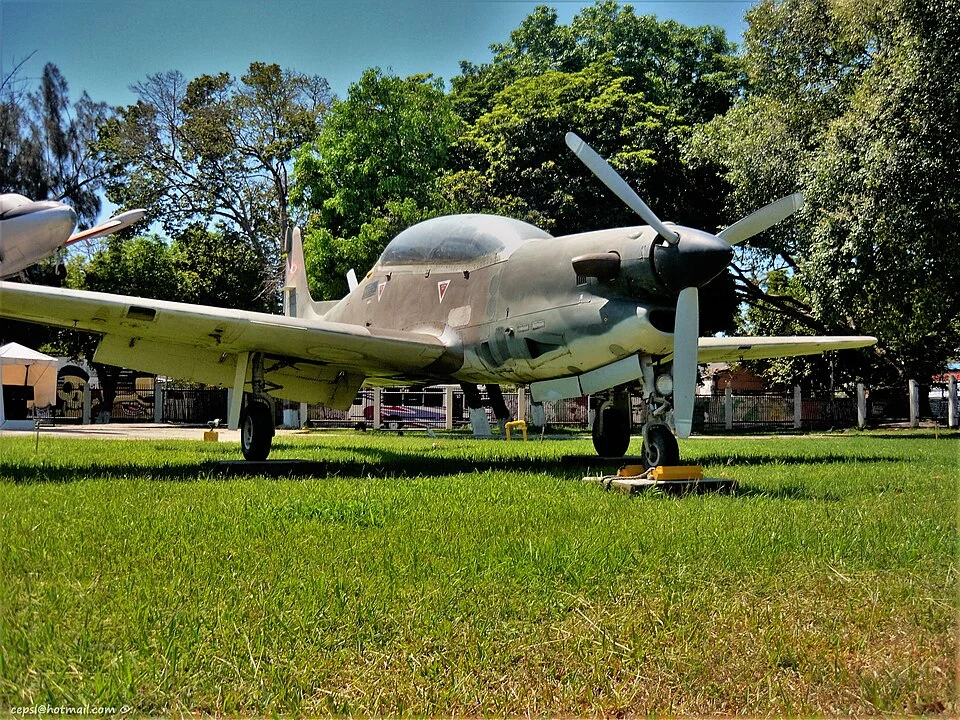
EMB-312 Tucano tricycle landing gear · museum aircraftCarlos E. Perez S.L · resized for display · CC BY-SA 4.0

Technical notes
Design notes
- Engine sub-variants can represent thrust rating, combustor standard, software standard, or installation differences rather than a fully separate hardware family.
- Use aircraft subtype, operator fleet data, and registration-level records before identifying a specific airframe engine.
Advantages
- Precise engine sub-variant lookup is available for this model.
Limitations
- Some planned, development, or military configurations may require certificate-level confirmation before operational use.
Variant Technical Profile
EMB 312 Tucano is a specific configuration within Embraer Tucano and Super Tucano, developed to cover a defined capacity, range, payload, or mission requirement inside the wider family.
EMB 312 Tucano is positioned as a capacity/range-specific solution within the military_transport segment, serving routes better matched than sibling variants.
Technical features
- EMB 312 Tucano: Missionized structure · structure. Floor strength, ramps, doors, or mission equipment support cargo, surveillance, or maritime patrol roles.
- EMB 312 Tucano: Military avionics and communications · avionics. Secure radios, sensors, tactical displays, and mission computers distinguish the aircraft from civil variants.
- EMB 312 Tucano: Field performance · range_payload. Runway performance, payload, and operating environment matter more than pure seat-mile economics.
- EMB 312 Tucano: Systems redundancy · safety. Military missions require robust electrical, hydraulic, navigation, and defensive-system integration.
- EMB 312 Tucano: Multi-role adaptability · operational_efficiency. The platform can be configured for transport, patrol, training, surveillance, or special missions.
Advantages
- Provides a more precise capacity or range match within the family.
- Retains training, maintenance, and parts commonality with sibling variants.
- Lets operators tune engine, cabin, and payload choices to route needs.
Weaknesses
- Configuration identification complexity. Visually similar aircraft can differ materially by engine, weight standard, cabin layout, and conversion status.
- Generation-dependent economics. Older generations usually trail newer designs in fuel burn, noise, avionics, or maintenance intervals.
- Market-fit limits. Every variant has an ideal capacity and range band; outside it, load factor, range, or cost can become limiting.
Markets
- Network airline trunk or feeder markets
- Leasing and fleet replacement markets
- Military transport, tanker, and special-mission markets
Operators
- Full-service network airlines
- Low-cost or leisure airlines
- Cargo, government, or special-mission operators
Routes and missions
- High-frequency short or medium-haul trunk routes
- Medium-density long-haul or cross-regional routes
- Fleet replacement, supplementation, or special missions
Sibling comparison
- smaller sibling variants. Usually provides more seats, cargo volume, or thrust demand, but can be harder to fill on thinner routes.
- larger or longer-range sibling variants. Usually has lower acquisition and operating exposure, but less range, payload, or growth margin.
From the archive
Loading photographs…