Falcon 2000LX

The Falcon 2000LX is the winglet-equipped commercial version of the Falcon 2000EX EASy, with two Pratt & Whitney Canada PW308C turbofans. EASA approved the LX change on 23 April 2009.

At a glance

Falcon 2000EX model line

Compare models

Current aircraftFalcon 2000EX
Compare with

Comparing Falcon 2000LX with Falcon 2000EX.

SpecificationFalcon 2000LXFalcon 2000EX
Length20.23 m20.23 m
Wingspan21.38 m19.24 m
Maximum take-off weight19.14 tM2846; 19.414 t with M2846 and M339018.46 tWithout M1826
Maximum payloadUnavailable2.72 t
Fuel tank capacityUnavailable9,067 LUsable fuel volume without M1826
Engine optionsPW308CPW308C
Typical two-class seatsUnavailableUnavailable
Published range4,000 nmiManufacturer figure at Mach 0.80Unavailable

A dash indicates that a verified figure is unavailable. Figures follow the configuration specified by each source.

Comparison sources

Identification

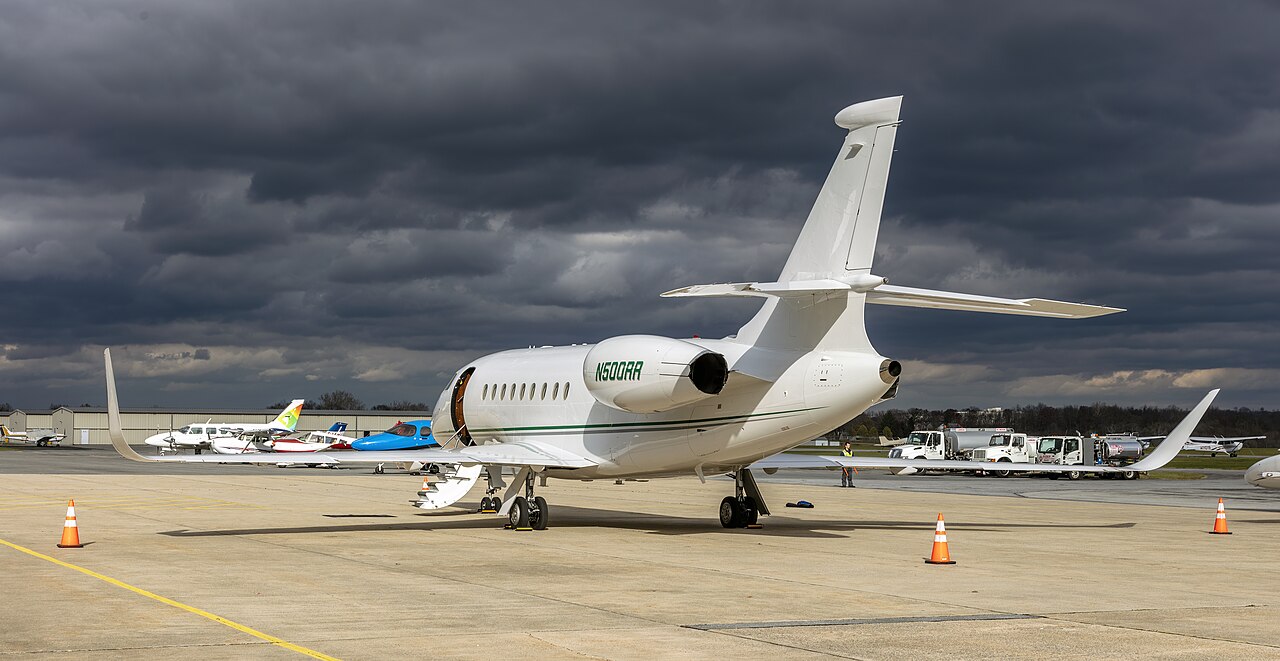
Blended winglets
Look for a smoothly rising extension at the outer end of the wing. From this side angle the near winglet crosses the projected line of the cabin windows.
Aft engine installation
Find the near nacelle behind the cabin. Pair the winglet cue with the Falcon 2000 outline and the registered aircraft identity.

Other Falcon 2000EX derivatives can carry winglets. Confirm the LX commercial configuration from a model or aircraft record.

Design & cabins

Engine reference
PW308C
Technical notes

Design notes

  • EASA distinguishes the Falcon 2000LX commercial name from the certified Falcon 2000EX model. The production LX combines M2846 winglets with revised M3229 slats.
  • The LX spans 21.38 m and is 20.228 m long. Dassault's 4,000 nmi range figure is at Mach 0.80 with six passengers, two crew and NBAA IFR reserves.
  • EASA lists a maximum take-off weight of 19,142 kg with M2846, and 19,414 kg when M3390 is also embodied. Neither figure establishes the weight limit for the photographed airframe.

Advantages

  • The blended winglets improve wing efficiency on longer sectors.

Limitations

  • Other Falcon 2000 versions and retrofits also have winglets. Confirm the version from aircraft records, not the silhouette alone.
Variant Technical Profile

Falcon 2000LX is a specific configuration within Falcon 2000EX, developed to cover a defined capacity, range, payload, or mission requirement inside the wider family.

Falcon 2000LX is positioned as a capacity/range-specific solution within the narrowbody segment, serving routes better matched than sibling variants.

Technical features

  • Falcon 2000LX: Single-aisle fuselage efficiency · structure. A narrow fuselage reduces structural weight and airport footprint for high-frequency short and medium routes.
  • Falcon 2000LX: High-cycle operating design · maintenance. Doors, landing gear, brakes, and systems are optimized for repeated daily sectors and quick turnarounds.
  • Falcon 2000LX: Wing and high-lift devices · aerodynamics. Flaps, slats, and wingtip devices balance runway performance with cruise efficiency.
  • Falcon 2000LX: Engine generation changes · engine. Engine nacelle, thrust rating, fuel burn, and noise standards define each production generation.
  • Falcon 2000LX: Fleet commonality · operational_efficiency. Common flight decks and maintenance practices reduce training and support cost across subfleets.

Advantages

  • Provides a more precise capacity or range match within the family.
  • Retains training, maintenance, and parts commonality with sibling variants.
  • Lets operators tune engine, cabin, and payload choices to route needs.

Weaknesses

  • Configuration identification complexity. Visually similar aircraft can differ materially by engine, weight standard, cabin layout, and conversion status.
  • Generation-dependent economics. Older generations usually trail newer designs in fuel burn, noise, avionics, or maintenance intervals.
  • Market-fit limits. Every variant has an ideal capacity and range band; outside it, load factor, range, or cost can become limiting.

Markets

  • Network airline trunk or feeder markets
  • Leasing and fleet replacement markets
  • Regional, domestic, or international airline markets

Operators

  • Full-service network airlines
  • Low-cost or leisure airlines
  • Cargo, government, or special-mission operators

Routes and missions

  • High-frequency short or medium-haul trunk routes
  • Medium-density long-haul or cross-regional routes
  • Fleet replacement, supplementation, or special missions

Sibling comparison

  • smaller sibling variants. Usually provides more seats, cargo volume, or thrust demand, but can be harder to fill on thinner routes.
  • larger or longer-range sibling variants. Usually has lower acquisition and operating exposure, but less range, payload, or growth margin.
Key terms
Blended winglets

Tall curved wingtip extensions are a useful recognition clue, shared with some other Falcon 2000 versions and retrofits.

  • This system is part of the A330 operating architecture and interacts with flight-control, electrical, hydraulic, engine, or environmental systems.
  • Exact configuration varies across A330ceo, A330neo, freighter, and military derivatives.

Advantages. Improves operational reliability, economics, or mission flexibility. Uses a mature wide-body systems architecture to reduce operational risk.

Limitations. System complexity increases maintenance, training, and troubleshooting demands. Airline configuration and engine choice can change real-world performance.

Sources