Falcon 2000EX
The Falcon 2000EX develops the original airframe with Pratt & Whitney Canada PW308C engines. The LX is derived from its EASy flight-deck configuration.
- Length
- 20.23 m
- Wingspan
- 19.24 m
- Engine options
- PW308C
Identification
Use these features to recognise the Dassault Falcon 2000 Family. Check the aircraft or programme record for the Falcon 2000EX designation.
- Twin aft engines
- Trace the two nacelles to the rear fuselage. The low swept wing is clear of engine pylons.
- Tailplane above the engine height
- On a side view, the tailplane joins the fin well above the fuselage centreline, below the tip of the fin.
Wingtip appearance and nacelle shape can guide a first identification. Use the registration and aircraft documentation for the exact version.
Compare models
Comparing Falcon 2000EX with Falcon 2000.
| Specification | Falcon 2000EX | Falcon 2000 |
|---|---|---|
| Length | 20.23 m | 20.23 m |
| Wingspan | 19.24 m | 19.24 m |
| Maximum take-off weight | 18.46 tWithout M1826 | 16.24 tWithout M57 and M59 |
| Maximum payload | 2.72 t | 2.72 t |
| Fuel tank capacity | 9,067 LUsable fuel volume without M1826 | 6,865 LUsable fuel volume without M3072 |
| Engine options | PW308C | CFE738-1-1B |
| Typical two-class seats | Unavailable | Unavailable |
| Published range | UnavailableChoose a variant | Unavailable |
A dash indicates that a verified figure is unavailable. Figures follow the configuration specified by each source.
Comparison sources
- EASA.A.008 Issue 13 · Falcon 2000EX type design§§3.5.3–3.5.4 and §3.5.17
- EASA.A.008 Issue 13 · Falcon 2000EX type design§§3.5.7, 3.5.11 and 3.5.19
- EASA.A.008 Issue 13 · Falcon 2000 type design§§2.5.3–2.5.4 and §2.5.17
- EASA.A.008 Issue 13 · Falcon 2000 type design§§2.5.7, 2.5.11 and 2.5.19, basic configuration
Variants
Dassault Falcon 2000EX EASy
The EASy name describes the Falcon 2000EX configuration with enhanced avionics and associated changes to oxygen control and pressurization.
Falcon 2000LX
The Falcon 2000LX is the winglet-equipped commercial version of the Falcon 2000EX EASy, with two Pratt & Whitney Canada PW308C turbofans. EASA approved the LX change on 23 April 2009.
Design & cabins
PW308C installation
See the engine encyclopedia for ratings and aircraft applications.
Featured components & design
Engine installation · PW308C
Published engine installation for the Falcon 2000EX is PW308C.
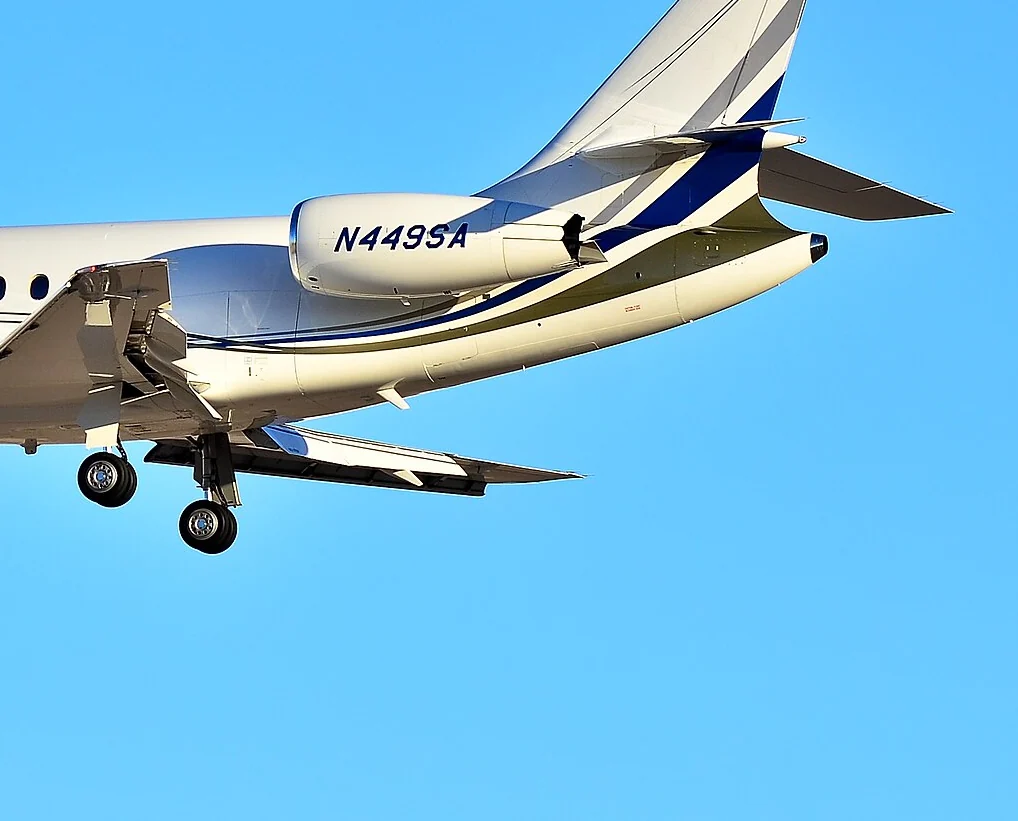
Dassault Falcon 2000EX EASy N449SA · PW308C installationTomás Del Coro from Las Vegas, Nevada, USA · detail crop · CC BY-SA 2.0 Fuselage structure and proportions
The Falcon 2000EX develops the original airframe with Pratt & Whitney Canada PW308C engines. The LX is derived from its EASy flight-deck configuration.
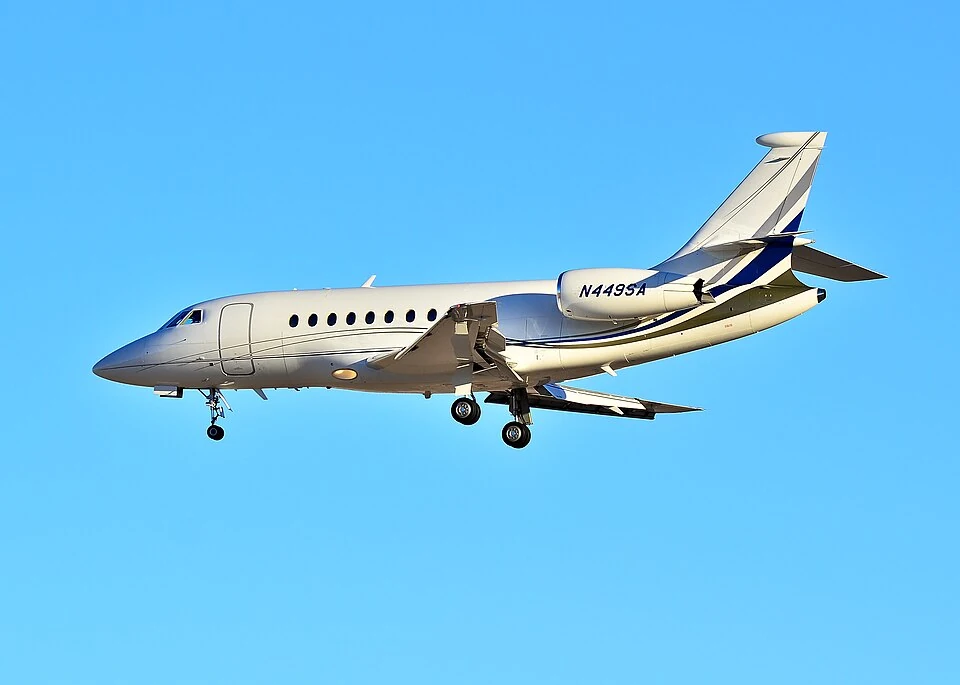
Dassault Falcon 2000EX EASy N449SA · fuselage proportionsTomás Del Coro from Las Vegas, Nevada, USA · resized and converted to WebP · CC BY-SA 2.0

Technical notes
Design notes
- EASA identifies the 2000EX as its own model under type certificate EASA.A.008.
- The basic EX dimensions in the certificate are 20.228 m long and 19.238 m in wingspan. The LX winglet modification changes the latter.
Advantages
- The EX retains the original cabin cross-section while introducing a different engine installation.
Limitations
- EASy and the LX modifications are configuration identifiers, not interchangeable labels for every 2000EX.
Variant Technical Profile
Falcon 2000EX is a specific configuration within Dassault Falcon 2000 Family, developed to cover a defined capacity, range, payload, or mission requirement inside the wider family.
Falcon 2000EX is positioned as a capacity/range-specific solution within the narrowbody segment, serving routes better matched than sibling variants.
Technical features
- Falcon 2000EX: Single-aisle fuselage efficiency · structure. A narrow fuselage reduces structural weight and airport footprint for high-frequency short and medium routes.
- Falcon 2000EX: High-cycle operating design · maintenance. Doors, landing gear, brakes, and systems are optimized for repeated daily sectors and quick turnarounds.
- Falcon 2000EX: Wing and high-lift devices · aerodynamics. Flaps, slats, and wingtip devices balance runway performance with cruise efficiency.
- Falcon 2000EX: Engine generation changes · engine. Engine nacelle, thrust rating, fuel burn, and noise standards define each production generation.
- Falcon 2000EX: Fleet commonality · operational_efficiency. Common flight decks and maintenance practices reduce training and support cost across subfleets.
Advantages
- Provides a more precise capacity or range match within the family.
- Retains training, maintenance, and parts commonality with sibling variants.
- Lets operators tune engine, cabin, and payload choices to route needs.
Weaknesses
- Configuration identification complexity. Visually similar aircraft can differ materially by engine, weight standard, cabin layout, and conversion status.
- Generation-dependent economics. Older generations usually trail newer designs in fuel burn, noise, avionics, or maintenance intervals.
- Market-fit limits. Every variant has an ideal capacity and range band; outside it, load factor, range, or cost can become limiting.
Markets
- Network airline trunk or feeder markets
- Leasing and fleet replacement markets
- Regional, domestic, or international airline markets
Operators
- Full-service network airlines
- Low-cost or leisure airlines
- Cargo, government, or special-mission operators
Routes and missions
- High-frequency short or medium-haul trunk routes
- Medium-density long-haul or cross-regional routes
- Fleet replacement, supplementation, or special missions
Sibling comparison
- smaller sibling variants. Usually provides more seats, cargo volume, or thrust demand, but can be harder to fill on thinner routes.
- larger or longer-range sibling variants. Usually has lower acquisition and operating exposure, but less range, payload, or growth margin.
From the archive
Loading photographs…