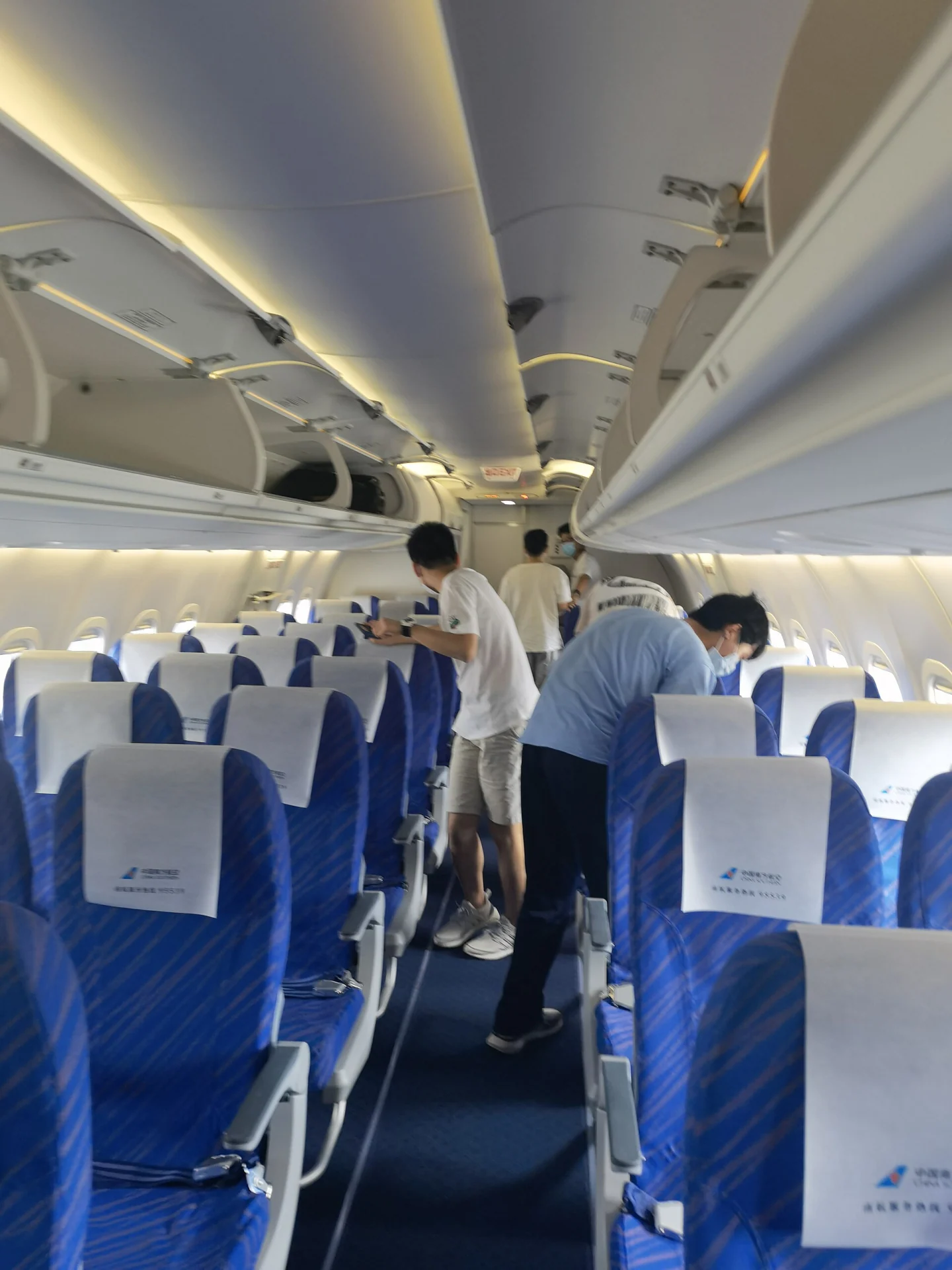
ARJ21-700
The ARJ21-700 is the baseline production model of COMAC's ARJ21 regional jet programme. COMAC now markets the family as the C909.
- Entered service
- 2016
- First flight
- 28 November 2008
- Length
- 33.46 m
- Wingspan
- 27.29 m
- Published range
- 1,200–2,000 nmAdvertised variants
- Typical two-class seats
- 78Manufacturer mixed-class layout.
- Published seating
- 78 / 90Mixed / all-economy in airport planning manual
- Engine options
- CF34-10A
- Main landing gear
- 1 axle · 2 wheels per side
Sources
- COMAC product briefing · Paris Air Show, June 2025Paris 2025 · C909 basic configuration
- COMAC · ARJ21 commercial name and service historyCommercial service
- COMAC · ARJ21-700 airport planning manualGeneral aircraft dimensions · ARJ21-700
- Shanghai Aircraft Design and Research Institute · ARJ21 historyARJ21-700 · Programme chronology
- COMAC · ARJ21-700 airport planning manual§07-02 fig. 1 · ARJ21-700 STD and ER landing gear footprint
- COMAC · ARJ21-700 airport planning manual§02-01 · Passenger layout examples
- COMAC · ARJ21-700 airport planning manual§02-01, Issue 003, pp. 1–2
ARJ21-700 variants
ARJ21-700 ER
The ARJ21-700 ER is the extended-range passenger configuration of COMAC’s ARJ21-700. COMAC lists it as C909ER, with a maximum takeoff weight of 43,500 kg compared with 40,500 kg for the standard-range configuration.
- Length
- 33.46 m
- Wingspan
- 27.29 m
- Published range
- 1,981 nm8,165 kg payload · ISA, zero wind · 200 nm alternate and 45 min reserve
- Typical two-class seats
- 78COMAC ER mixed-class layout
- Engine options
- CF34-10A16
- Main landing gear
- Unavailable
Sources
- COMAC · ARJ21-700 airport planning manualIssue 003, §§02-01 and 02-02 · ER planning column and shared three-view drawing
- COMAC · C909 Airport Operations Guide, November 2025§1.1 · engine installation on C909 STD and ER
- COMAC · C909 Airport Planning Manual, §03-02 payload-range chart§03-02 Fig. 1 · ARJ21-700 ER payload-range curve
ARJ21-700 STD
The ARJ21-700 STD is the standard-range passenger configuration of COMAC’s ARJ21-700, marketed as the C909. COMAC identifies this configuration as C909STD.
- Length
- 33.46 m
- Wingspan
- 27.29 m
- Published range
- 1,258 nm8,165 kg payload · ISA, zero wind · 200 nm alternate and 45 min reserve
- Typical two-class seats
- 78COMAC STD mixed-class layout
- Engine options
- CF34-10A16
- Main landing gear
- Unavailable
Sources
- COMAC · ARJ21-700 airport planning manualIssue 003, §§02-01 and 02-02 · STD planning column and shared three-view drawing
- COMAC · C909 Airport Operations Guide, November 2025§1.1 · engine installation on C909 STD and ER
- COMAC · C909 Airport Planning Manual, §03-02 payload-range chart§03-02 Fig. 1 · ARJ21-700 STD payload-range curve
ARJ21-700B
ARJ21-700B engine configuration is recorded from the structured aircraft-engine dataset. Each line maps an engine sub-variant to its parent engine model and aircraft application.
- Entered service
- Unavailable
- Length
- 33.46 m
- Wingspan
- 27.29 m
- Published range
- 3,078 nmCOMAC’s approximately 5,700 km programme figure with auxiliary tanks.
- Maximum cargo payload
- Unavailable
- Engine options
- CF34-10A16-B
- Main landing gear
- Unavailable
Sources
- CAAC C909 (ARJ21) Series Aircraft Evaluation Report, AER.050A Revision 3Section 1.2 items 1.2, 1.3, 1.8; ARJ21-700B
- COMAC · Commercial Aircraft magazine, July 2023 CBJ programmeCBJ feature · Published maximum range with auxiliary fuel tanks
ARJ21-700CCF
ARJ21-700CCF engine configuration is recorded from the structured aircraft-engine dataset. Each line maps an engine sub-variant to its parent engine model and aircraft application.
- Entered service
- 2024
- Length
- 33.46 m
- Wingspan
- 27.29 m
- Published range
- 1,500 nmDesign range · 2,778 km
- Maximum cargo payload
- 10 t
- Engine options
- CF34-10A16
- Main landing gear
- Unavailable
Sources
- COMAC · ARJ21 cargo conversion approvalCargo conversion · Approved January 2023
- COMAC · ARJ21-700 airport planning manualGeneral aircraft dimensions · ARJ21-700
- COMAC · First ARJ21 cargo-conversion commercial flightARJ21 passenger-to-freighter · Service entry and design range
- CAAC C909 (ARJ21) Series Aircraft Evaluation Report, AER.050A Revision 3Section 1.2 items 1.2, 1.3, 1.8; ARJ21-700CCF
ARJ21-700E
ARJ21-700E engine configuration is recorded from the structured aircraft-engine dataset. Each line maps an engine sub-variant to its parent engine model and aircraft application.
- Length
- 33.46 m
- Wingspan
- 27.29 m
- Published range
- Unavailable
- Engine options
- CF34-10A16-B
- Main landing gear
- Unavailable
Sources
- CAAC C909 (ARJ21) Series Aircraft Evaluation Report, AER.050A Revision 3Section 1.2 items 1.2, 1.3, 1.8; ARJ21-700E
ARJ21-700M
ARJ21-700M engine configuration is recorded from the structured aircraft-engine dataset. Each line maps an engine sub-variant to its parent engine model and aircraft application.
- Length
- 33.46 m
- Wingspan
- 27.29 m
- Published range
- 1,998 nmCOMAC’s standard range of 3,700 km, converted to nautical miles.
- Engine options
- CF34-10A16-B
- Main landing gear
- Unavailable
Sources
- CAAC C909 (ARJ21) Series Aircraft Evaluation Report, AER.050A Revision 3Section 1.2 items 1.2, 1.3, 1.8; ARJ21-700M
- COMAC · Delivery of the first C909 medical aircraftAircraft specification · C909MSJ maximum designed payload and standard range