Home/Encyclopedia/Other manufacturers/Canadair CL-215 / CL-415 Family

Canadair CL-215 / CL-415 Family

Canadair's amphibious firefighting line includes the piston CL-215, the CL-215T turboprop conversion and the factory-built turboprop CL-415. All use a boat-shaped fuselage to scoop water and two engines on a high wing.

Models at a glance

Canadair CL-215

The original CL-215 uses radial piston engines. Round, broad cowls and the absence of the later turboprop winglets and tail finlets are useful cues in a clear photograph.

Length
19.82 m
Wingspan
28.6 m
Engine options
2 × Double Wasp CA3 radial piston engines
Main landing gear
Unavailable

Identification

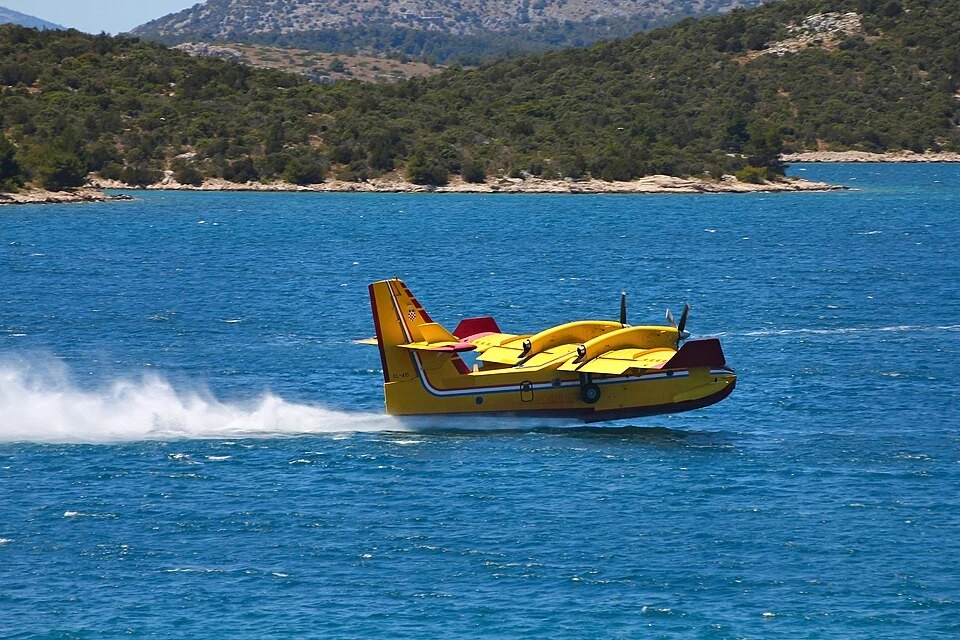
Boat-shaped hull
A deep hull supports the aircraft on water. The outboard floats stabilise the airframe during water operations.
Two engines and a conventional tail
Count the two wing-mounted engines. The larger AG600 has four and carries the horizontal tail at the top of its fin.
Round radial-engine cowls
The piston CL-215 has large round cowls. A good front-quarter view separates the radials from the longer turboprop nacelles.
Winglets and tailplane finlets
Both turboprop variants have small vertical surfaces at the wingtips and near the ends of the horizontal tail.
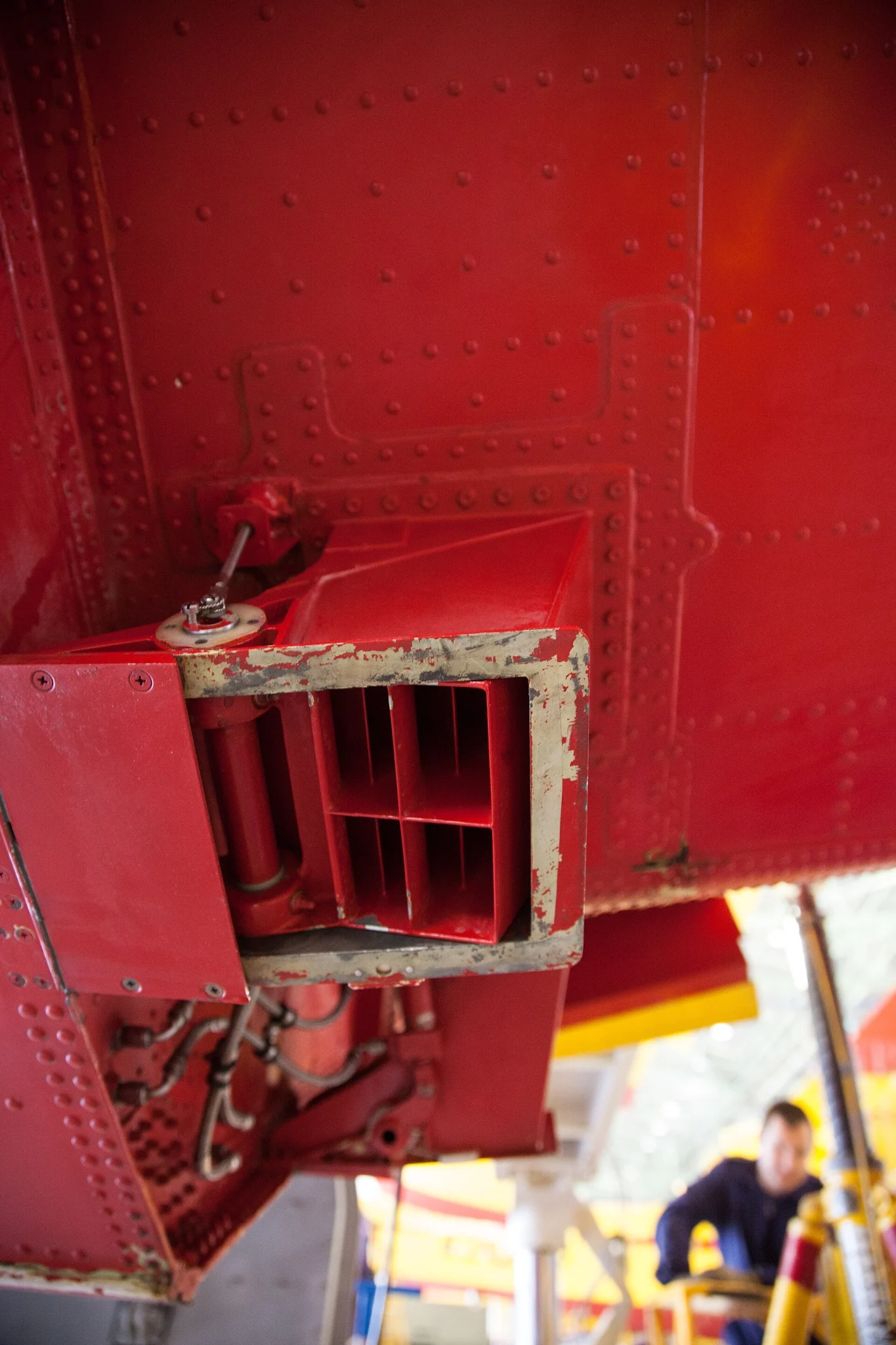
Water drop doors
The manufacturer describes two doors on the CL-215T and four on the factory CL-415. Count them only when the underside is clearly visible.

Select a circle to see the marked area up close.

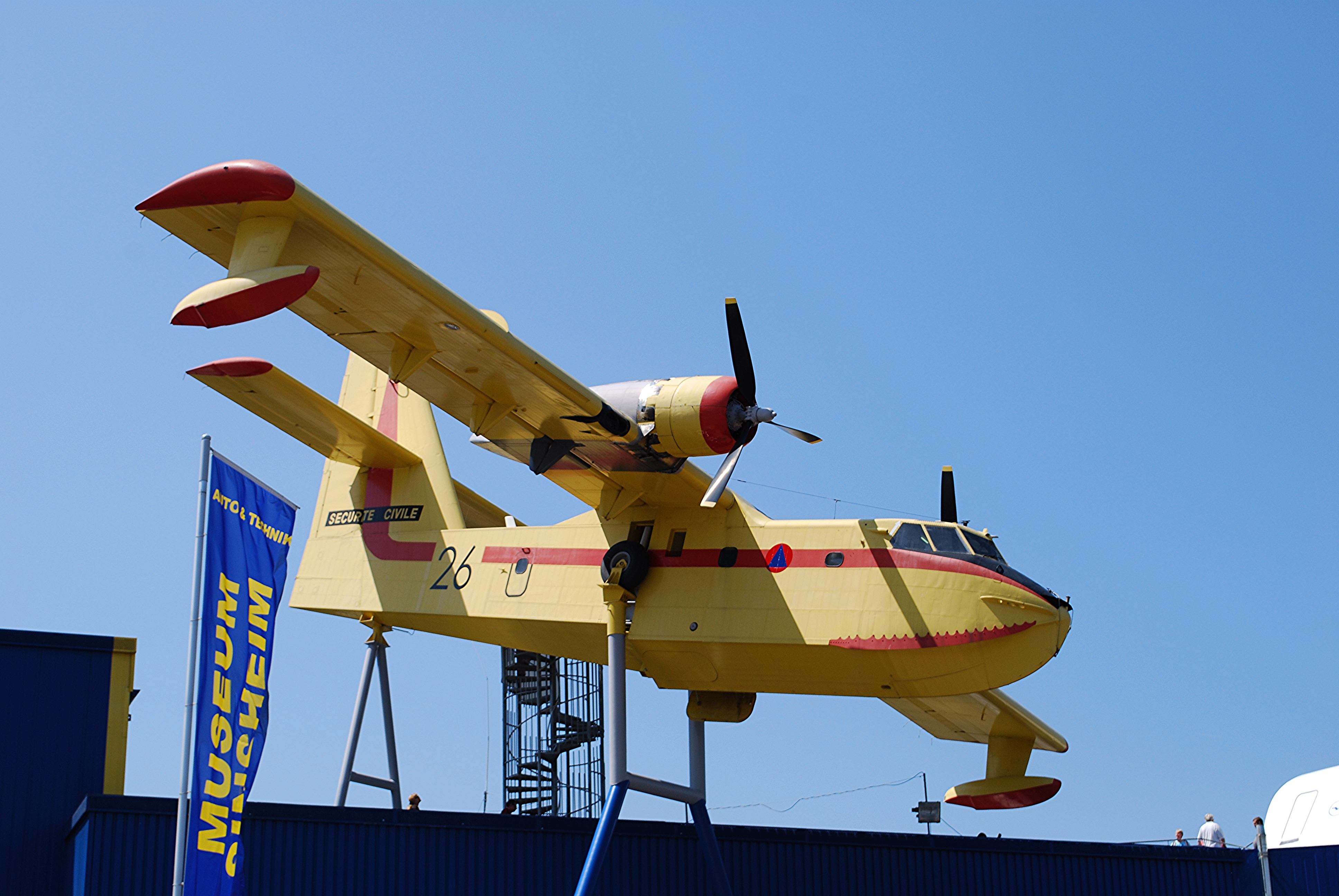
Canadair CL-215 F-ZBBH

The preserved Sécurité Civile CL-215, fleet number 26, at Technik Museum Sinsheim on 3 June 2011.
The preserved Sécurité Civile CL-215, fleet number 26, at Technik Museum Sinsheim on 3 June 2011.Photo by Hugh Llewelyn
Photo sourceCC BY-SA 2.0

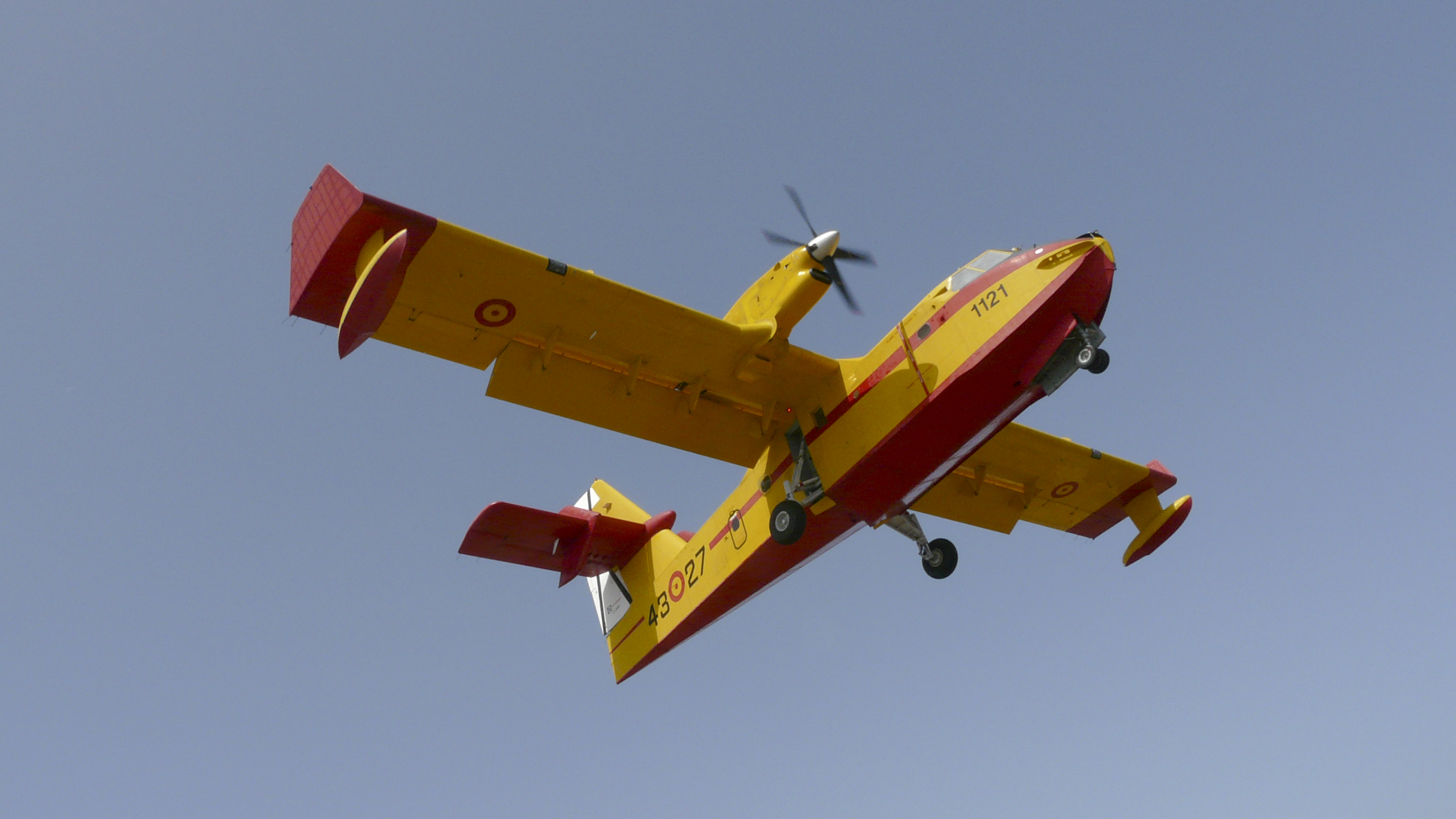
Canadair CL-215T 43-27

Spanish Air Force CL-215T 43-27, airframe 1121, at Lanzarote on 3 May 2008.
Spanish Air Force CL-215T 43-27, airframe 1121, at Lanzarote on 3 May 2008.Photo by andym_uk (monstermunch)
Photo sourceCC BY-SA 2.0

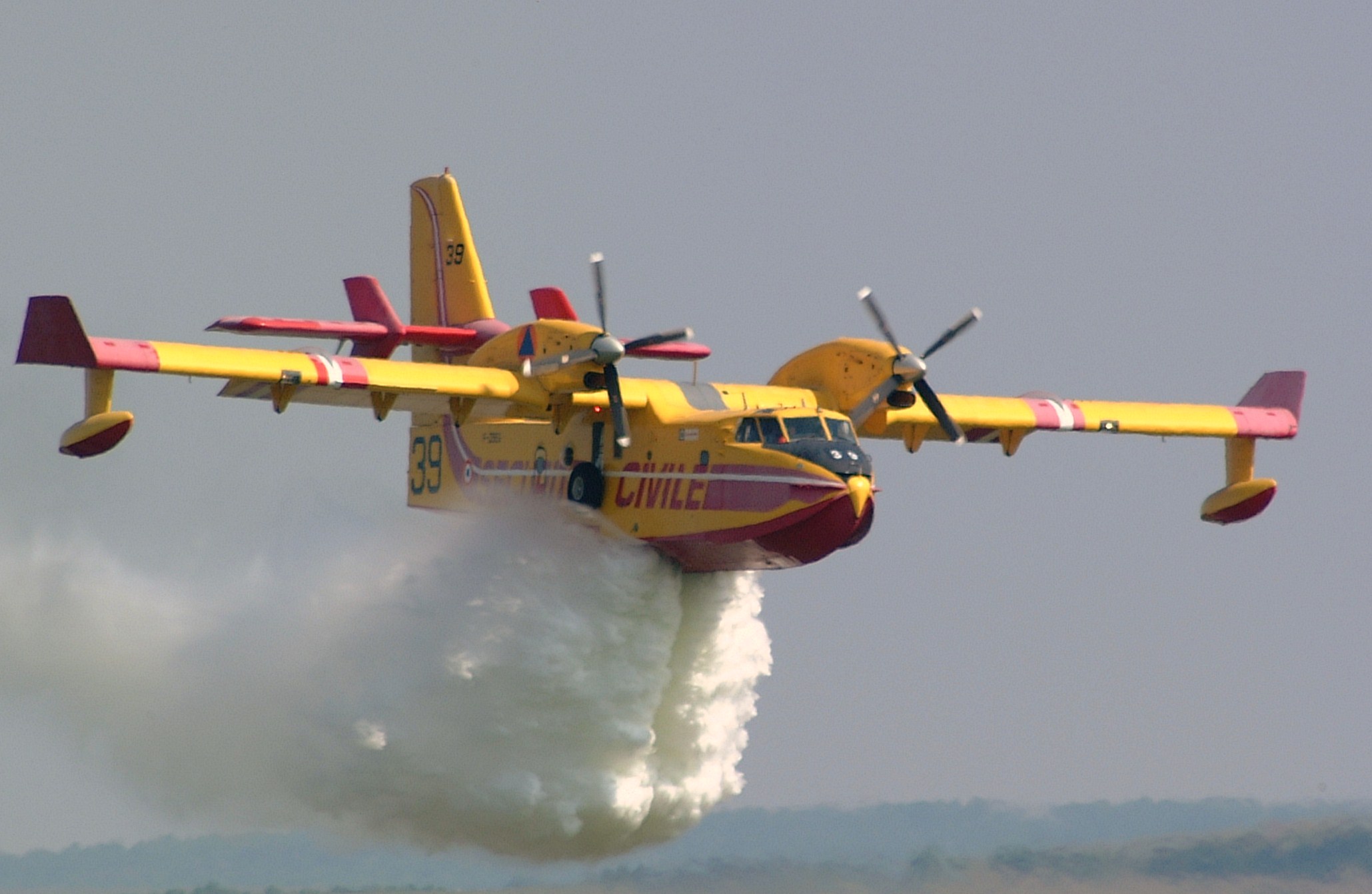
Canadair CL-415 F-ZBEG

Sécurité Civile CL-415 F-ZBEG, fleet number 39, drops water at Cognac on 15 May 2004.
Sécurité Civile CL-415 F-ZBEG, fleet number 39, drops water at Cognac on 15 May 2004.Photo by Jerry Gunner
Photo sourceCC BY 2.0

Design & cabins

Technical notes

Design notes

  • EASA.IM.A.643 lists the piston aircraft as CL-215-1A10. The CL-215T and CL-415 share the European designation CL-215-6B11, with separate variant applicability.
  • Compare the pair of engines and conventional tailplane with the four turboprops and T-tail on the AG600.
Family Technical Profile

Canadair CL-215 / CL-415 Family is one of Aircraft manufacturer's platforms in its market segment, balancing capacity, range, airport compatibility, maintenance economics, and mission flexibility.

Canadair CL-215 / CL-415 Family serves the narrowbody market with family commonality and multiple configurations.

Technical features

  • Canadair CL-215 / CL-415 Family: Single-aisle fuselage efficiency · structure. A narrow fuselage reduces structural weight and airport footprint for high-frequency short and medium routes.
  • Canadair CL-215 / CL-415 Family: High-cycle operating design · maintenance. Doors, landing gear, brakes, and systems are optimized for repeated daily sectors and quick turnarounds.
  • Canadair CL-215 / CL-415 Family: Wing and high-lift devices · aerodynamics. Flaps, slats, and wingtip devices balance runway performance with cruise efficiency.
  • Canadair CL-215 / CL-415 Family: Engine generation changes · engine. Engine nacelle, thrust rating, fuel burn, and noise standards define each production generation.
  • Canadair CL-215 / CL-415 Family: Fleet commonality · operational_efficiency. Common flight decks and maintenance practices reduce training and support cost across subfleets.

Advantages

  • One platform can cover several capacity and mission bands.
  • Family design reduces training, maintenance, and spares complexity.
  • Engine, wingtip, avionics, or structural upgrades can extend lifecycle value.

Weaknesses

  • Configuration identification complexity. Visually similar aircraft can differ materially by engine, weight standard, cabin layout, and conversion status.
  • Generation-dependent economics. Older generations usually trail newer designs in fuel burn, noise, avionics, or maintenance intervals.
  • Market-fit limits. Every variant has an ideal capacity and range band; outside it, load factor, range, or cost can become limiting.

Markets

  • Network airline trunk or feeder markets
  • Leasing and fleet replacement markets
  • Regional, domestic, or international airline markets

Operators

  • Full-service network airlines
  • Low-cost or leisure airlines
  • Cargo, government, or special-mission operators

Routes and missions

  • High-frequency short or medium-haul trunk routes
  • Medium-density long-haul or cross-regional routes
  • Fleet replacement, supplementation, or special missions
Sources