Global 5000
Global 5000 is a business jet derivative within Global family. Market positioning: Shorter-range Global.
- Length
- 29.5 m
- Wingspan
- 28.65 m
- Engine options
- BR700-710A2-20
- Published range
- 5,200 nmiBombardier published maximum range
Identification
Use these features to recognise the Global family. Check the aircraft or programme record for the Global 5000 designation.
- Rear nacelles and T-tail
- Start with the prominent twin nacelles beside the rear fuselage, then follow the fin up to the high tailplane.
- Long cabin ahead of the wing
- In a side profile, look for the long span from the forward door to the tail-mounted engines. Compare the full outline with Bombardier's Challenger and Global illustrations.
Use the aircraft record for the exact Global version and any cabin, range or performance upgrade.
Compare models
Comparing Global 5000 with Global 5500.
| Specification | Global 5000 | Global 5500 |
|---|---|---|
| Length | 29.5 m | 29.5 m |
| Wingspan | 28.65 m | 28.7 m |
| Maximum take-off weight | 41.96 t | 41.96 t |
| Maximum payload | 3.24 t | Unavailable |
| Fuel tank capacity | 22,012 LUpdated Global 5000 configuration. Original BD-700-1A11 is 20,294 L. | 22,012 LCertified high-capacity BD-700-1A11 configuration. |
| Engine options | BR700-710A2-20 | BR700-710D5-21Rolls-Royce Pearl 15 |
| Typical two-class seats | Unavailable | Unavailable |
| Published range | 5,200 nmiBombardier published maximum range | 5,900 nmiPublished maximum range |
A dash indicates that a verified figure is unavailable. Figures follow the configuration specified by each source.
Comparison sources
- FAA Aircraft Characteristics Database · October 2024ACD_Data · GL5T · Bombardier BD-700 Global 5000
- Bombardier · Global 5000 aircraft brochurePerformance · Published maximum range
- ANAC · Bombardier Global Series type certificate data sheetEA-2006T08-20 · Section 1 Type Design
- FAA T00003NY · Bombardier Global Series type certificateRev. 24 pp. 3–4 · Certified maximum weights and usable fuel
- Bombardier · Global 5000 specification brochureSpecification brochure · weights
- Bombardier · Aircraft specificationsAircraft product lineup
- Bombardier Global 5500 original specification sheetExterior dimensions · overall length and wingspan
Design & cabins
BR700-710A2-20 installation
See the engine encyclopedia for ratings and aircraft applications.
Featured components & design
BR700-710A2-20 installation
Global 5000 uses the BR700-710A2-20 engine in the documented configuration.
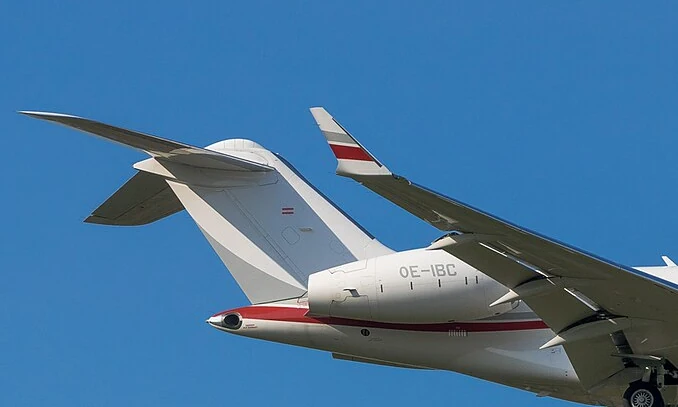
Global 5000 OE-IBC · aft-mounted BR710 installationPapas Dos from Moscow, Russia · detail crop · CC BY 2.0

Technical notes
Design notes
- Engine configuration: 2 × Rolls-Royce BR710A2-20.
- Market positioning: Shorter-range Global.
- Status: in service.
Advantages
- Lower cost than longer Global
- High speed
Limitations
- Less range
- Older platform
Variant Technical Profile
Global 5000 is a specific configuration within Global family, developed to cover a defined capacity, range, payload, or mission requirement inside the wider family.
Global 5000 is positioned as a capacity/range-specific solution within the narrowbody segment, serving routes better matched than sibling variants.
Technical features
- Global 5000: Single-aisle fuselage efficiency · structure. A narrow fuselage reduces structural weight and airport footprint for high-frequency short and medium routes.
- Global 5000: High-cycle operating design · maintenance. Doors, landing gear, brakes, and systems are optimized for repeated daily sectors and quick turnarounds.
- Global 5000: Wing and high-lift devices · aerodynamics. Flaps, slats, and wingtip devices balance runway performance with cruise efficiency.
- Global 5000: Engine generation changes · engine. Engine nacelle, thrust rating, fuel burn, and noise standards define each production generation.
- Global 5000: Fleet commonality · operational_efficiency. Common flight decks and maintenance practices reduce training and support cost across subfleets.
Advantages
- Provides a more precise capacity or range match within the family.
- Retains training, maintenance, and parts commonality with sibling variants.
- Lets operators tune engine, cabin, and payload choices to route needs.
Weaknesses
- Configuration identification complexity. Visually similar aircraft can differ materially by engine, weight standard, cabin layout, and conversion status.
- Generation-dependent economics. Older generations usually trail newer designs in fuel burn, noise, avionics, or maintenance intervals.
- Market-fit limits. Every variant has an ideal capacity and range band; outside it, load factor, range, or cost can become limiting.
Markets
- Network airline trunk or feeder markets
- Leasing and fleet replacement markets
- Regional, domestic, or international airline markets
Operators
- Full-service network airlines
- Low-cost or leisure airlines
- Cargo, government, or special-mission operators
Routes and missions
- High-frequency short or medium-haul trunk routes
- Medium-density long-haul or cross-regional routes
- Fleet replacement, supplementation, or special missions
Sibling comparison
- smaller sibling variants. Usually provides more seats, cargo volume, or thrust demand, but can be harder to fill on thinner routes.
- larger or longer-range sibling variants. Usually has lower acquisition and operating exposure, but less range, payload, or growth margin.
From the archive
Loading photographs…