Global family

Global family covers ultra-long-range business jet aircraft in the Bombardier portfolio. The entry is imported from the McDonnell Douglas / Lockheed / Bombardier technical workbook and organized by family and derivative variant.

Models at a glance

Global Express

Global Express is a business jet derivative within Global family. Market positioning: Initial ultra-long-range Global.

Length
30.3 m
Wingspan
28.65 m
Published range
6,010 nmBombardier Mach 0.85 case, eight passengers and four crew with NBAA IFR reserves
Engine options
BR700-710A2-20
Main landing gear
1 axle · 2 wheels per side
Sources

Global 5000

Global 5000 is a business jet derivative within Global family. Market positioning: Shorter-range Global.

Length
29.5 m
Wingspan
28.65 m
Published range
5,200 nmBombardier published maximum range
Engine options
BR700-710A2-20
Main landing gear
1 axle · 2 wheels per side
Sources

Global 5500

Global 5500 is a business jet derivative within Global family. Market positioning: Pearl-powered 5000 successor.

Length
29.5 m
Wingspan
28.7 m
Published range
5,900 nmPublished maximum range
Maximum passenger seats
16
Engine options
BR700-710D5-21Rolls-Royce Pearl 15
Main landing gear
Unavailable
Sources

Global 6000

Global 6000 is a business jet derivative within Global family. Market positioning: Improved Global Express.

Length
30.3 m
Wingspan
28.65 m
Published range
6,000 nmWith eight passengers, four crew and NBAA IFR reserves.
Maximum passenger seats
Unavailable
Engine options
BR700-710A2-20
Main landing gear
1 axle · 2 wheels per side
Sources

Global 6500

Global 6500 is a business jet derivative within Global family. Market positioning: Pearl-powered 6000 successor.

Entered service
2019
Length
30.3 m
Wingspan
28.7 m
Published range
6,600 nmPublished maximum range
Maximum passenger seats
17
Engine options
BR700-710D5-21Rolls-Royce Pearl 15
Main landing gear
Unavailable
Sources

Global 7500

Global 7500 is a business jet derivative within Global family. Market positioning: Clean-sheet flagship Global.

Entered service
2018
Length
33.71 m
Wingspan
31.79 m
Published range
7,700 nmManufacturer published range.
Maximum passenger seats
Unavailable
Engine options
Passport 20
Main landing gear
1 axle · 2 wheels per side
Sources

Global 8000

Global 8000 is a business jet derivative within Global family. Market positioning: Further range/speed flagship.

Entered service
2025
Length
33.8 m
Wingspan
31.7 m
Published range
8,000 nmPublished maximum range
Maximum passenger seats
19
Engine options
Passport 20
Main landing gear
Unavailable
Sources

Identification

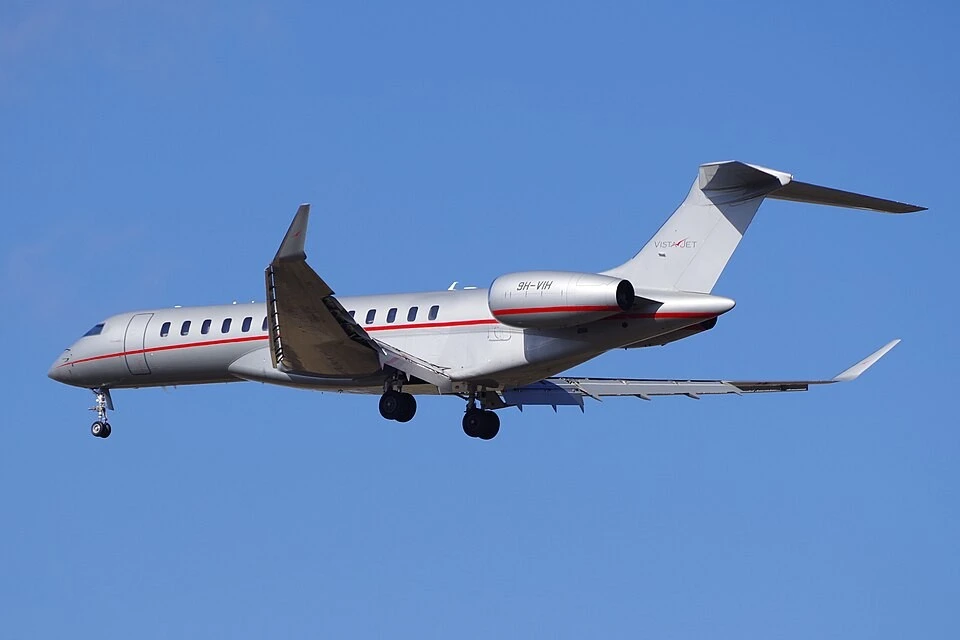
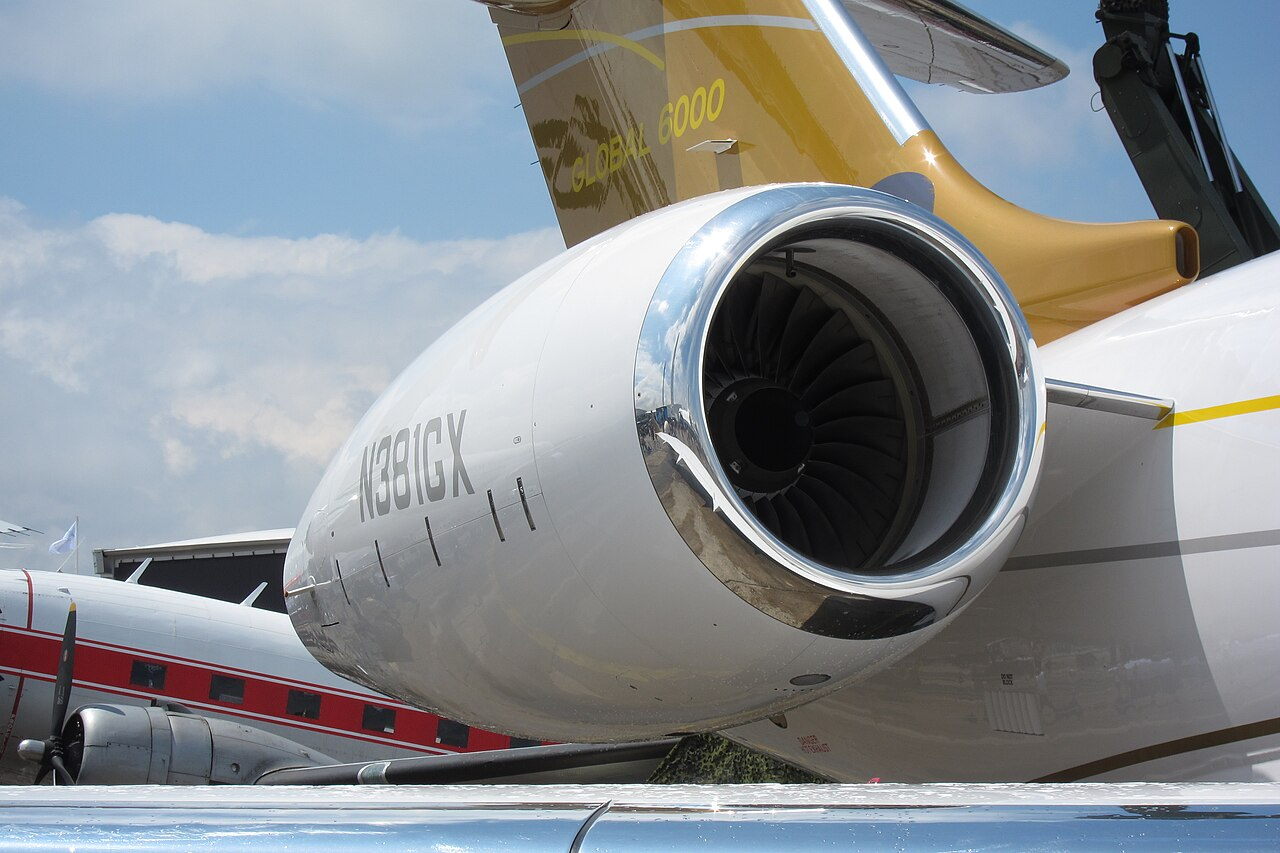
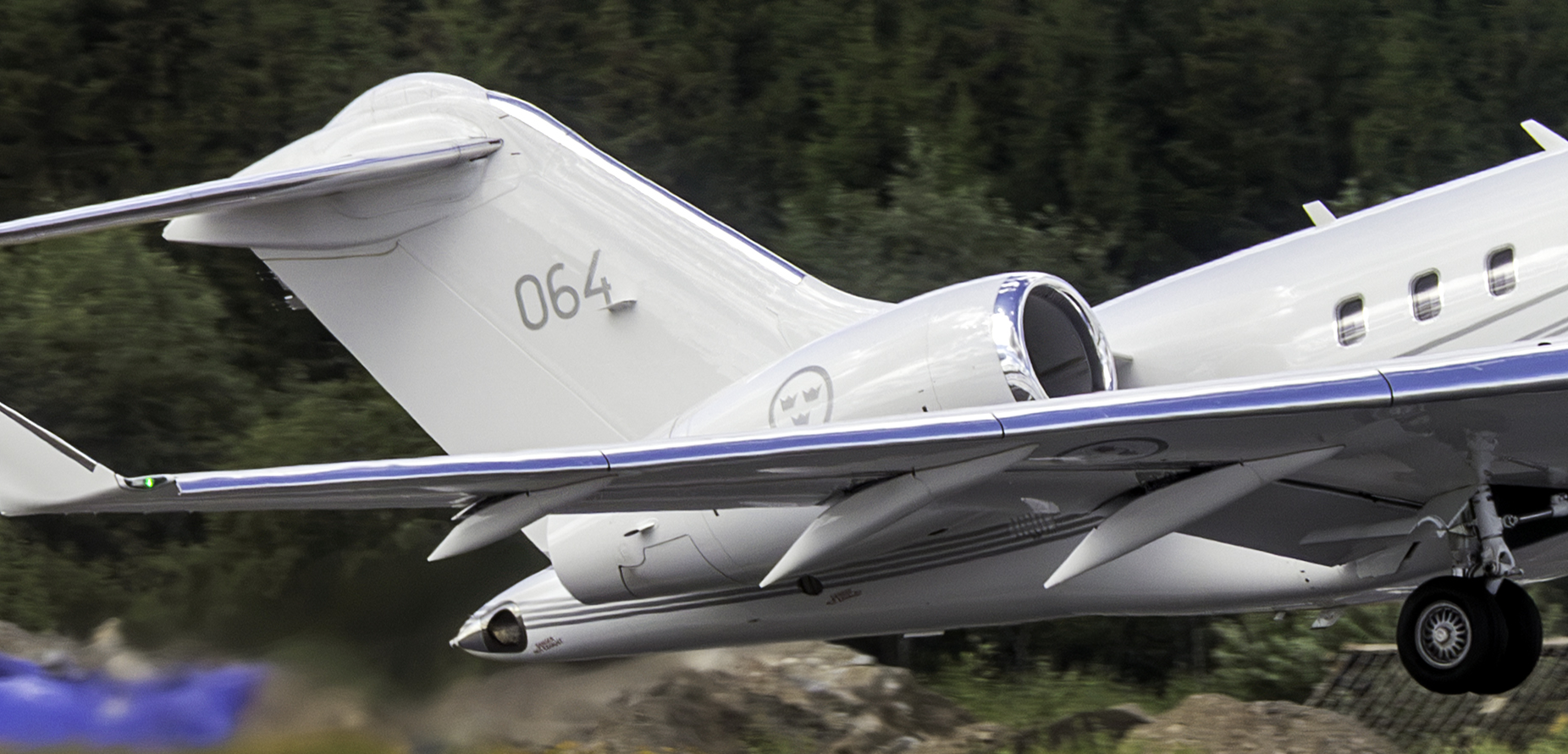
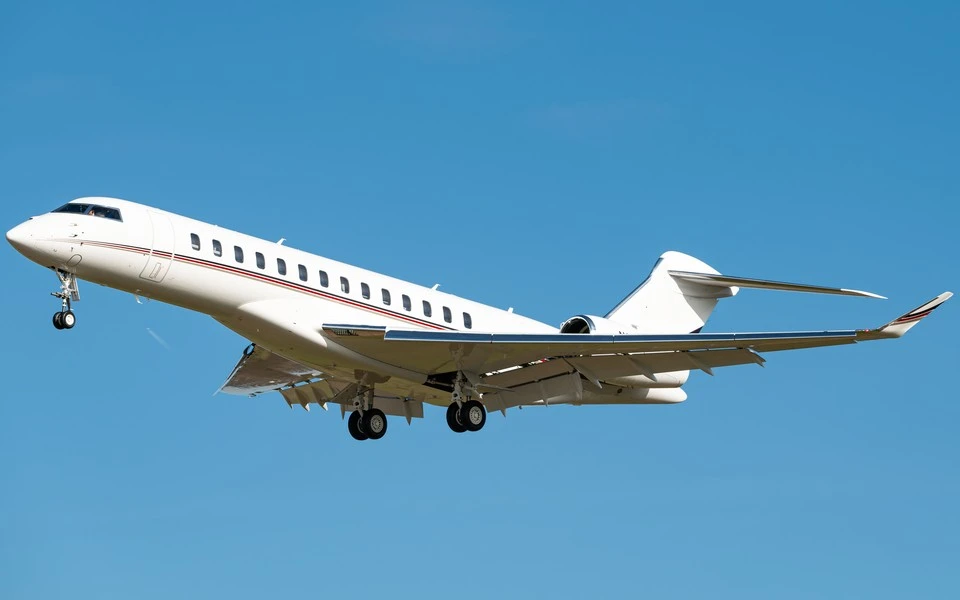
Rear nacelles and T-tail
Start with the prominent twin nacelles beside the rear fuselage, then follow the fin up to the high tailplane.
Long cabin ahead of the wing
In a side profile, look for the long span from the forward door to the tail-mounted engines. Compare the full outline with Bombardier's Challenger and Global illustrations.

Use the aircraft record for the exact Global version and any cabin, range or performance upgrade.

Design & cabins

  • BR710, Pearl 15 and Passport powerplants

    The Global Express line uses BR710. Global 5500/6500 use Pearl 15, and Global 7500/8000 use the GE Passport engine.

  • Global 7500 and 8000 wing design

    The 7500/8000 airframe branch has a wing designed for its long-range mission and ride characteristics.

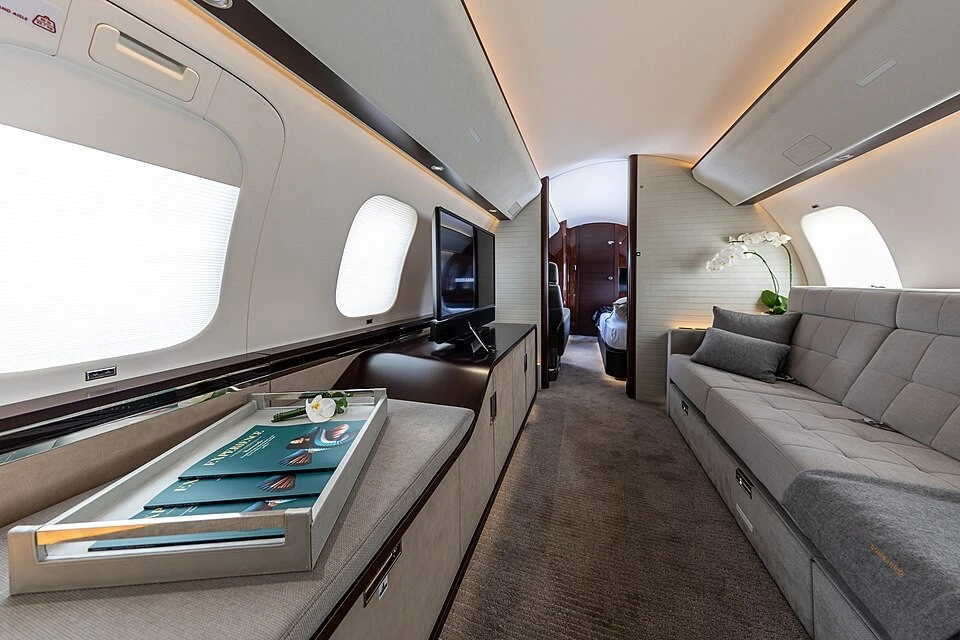
  • Multi-zone long-range cabin

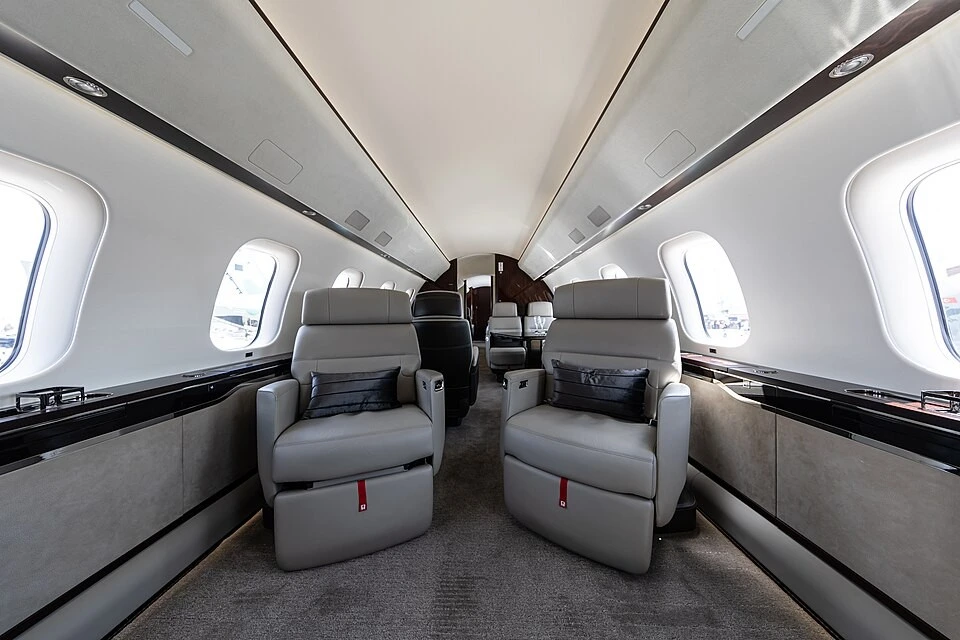
    Separate living and working areas and the cabin pressure environment are part of the Global's long-sector design. The usable zones depend on the version.

More aircraft systems
  • Airframe and aerodynamics

    The 5000, 6000 and later branches have distinct body lengths and airframe standards.

  • Powerplant and fuel

    Fuel volume and payload should be compared for the applicable range conditions and model.

  • Flight controls and avionics

    The Global flight-deck suite and optional equipment vary across programme generations.

  • Cabin and cargo

    Baggage access, interior zones and environmental equipment depend on the length and cabin fit.

  • Landing gear and braking

    Ground clearance, braking and loads are documented for the particular Global model.

Engine references
2 × BMW Rolls-Royce BR710A2-20 · 2 × Rolls-Royce BR710A2-20 · 2 × Rolls-Royce Pearl 15 · 2 × GE Passport
Technical notes

Design notes

  • Large-cabin ultra-long-range business jet design
  • BR710/Pearl 15/GE Passport engine evolution
  • Advanced avionics and high-speed cruise
  • Global 7500 introduced new wing and very long range
  • Designed for intercontinental nonstop business missions

Advantages

  • Large-cabin ultra-long-range business jet design
  • BR710/Pearl 15/GE Passport engine evolution
  • Advanced avionics and high-speed cruise

Limitations

  • Very high acquisition/operating cost
  • Large airport/support footprint for business aviation
  • Fuel consumption high in absolute terms
  • High-end market cyclicality
  • Global 8000 status should be tracked as latest program evolves
Family Technical Profile

Global family is one of Aircraft manufacturer's platforms in its market segment, balancing capacity, range, airport compatibility, maintenance economics, and mission flexibility.

Global family serves the narrowbody market with family commonality and multiple configurations.

Technical features

  • Global family: Single-aisle fuselage efficiency · structure. A narrow fuselage reduces structural weight and airport footprint for high-frequency short and medium routes.
  • Global family: High-cycle operating design · maintenance. Doors, landing gear, brakes, and systems are optimized for repeated daily sectors and quick turnarounds.
  • Global family: Wing and high-lift devices · aerodynamics. Flaps, slats, and wingtip devices balance runway performance with cruise efficiency.
  • Global family: Engine generation changes · engine. Engine nacelle, thrust rating, fuel burn, and noise standards define each production generation.
  • Global family: Fleet commonality · operational_efficiency. Common flight decks and maintenance practices reduce training and support cost across subfleets.

Advantages

  • One platform can cover several capacity and mission bands.
  • Family design reduces training, maintenance, and spares complexity.
  • Engine, wingtip, avionics, or structural upgrades can extend lifecycle value.

Weaknesses

  • Configuration identification complexity. Visually similar aircraft can differ materially by engine, weight standard, cabin layout, and conversion status.
  • Generation-dependent economics. Older generations usually trail newer designs in fuel burn, noise, avionics, or maintenance intervals.
  • Market-fit limits. Every variant has an ideal capacity and range band; outside it, load factor, range, or cost can become limiting.

Markets

  • Network airline trunk or feeder markets
  • Leasing and fleet replacement markets
  • Regional, domestic, or international airline markets

Operators

  • Full-service network airlines
  • Low-cost or leisure airlines
  • Cargo, government, or special-mission operators

Routes and missions

  • High-frequency short or medium-haul trunk routes
  • Medium-density long-haul or cross-regional routes
  • Fleet replacement, supplementation, or special missions
Sources