Q400 / Dash 8-400
Q400 / Dash 8-400 is a regional turboprop passenger derivative within Dash 8 / Q Series family. Market positioning: High-speed 70–90 seat turboprop.
- Length
- 32.86 m
- Wingspan
- 28.44 m
- Engine options
- PW150A
- Published range
- 1,100 nmiManufacturer Design Weight Increase performance figure for full passengers, 102 kg per person
Identification
- Six propeller blades
- When the aircraft is parked, count the blades on one propeller. The Series 400 uses six-bladed Dowty R408 propellers.
- Longest Dash 8 fuselage
- Compare the cabin fore and aft of the high wing. The 400 is 32.83 m long, with the longest body in the family.
Check the high wing, engine nacelles and fuselage together. Six blades are also found on some ATRs.
Compare models
Comparing Q400 / Dash 8-400 with Q300.
| Specification | Q400 / Dash 8-400 | Q300 |
|---|---|---|
| Length | 32.86 m | 25.69 m |
| Wingspan | 28.44 m | 27.43 m |
| Maximum take-off weight | 29.57 tExtra high gross weight option | 19.51 tOptional weight for specified DHC-8-311/-314/-315 aircraft. Standard is 18.643 t. |
| Maximum payload | 8.42 tExtra high gross weight option | 6.29 tQ300 Model 311 at increased take-off weight |
| Fuel tank capacity | 6,526 L | 3,160 LUsable main-tank fuel. Optional auxiliary tanks are excluded. |
| Engine options | PW150A | PW123 · PW123B · PW123E |
| Typical two-class seats | 74Manufacturer example of dual-class cabin | Unavailable |
| Published range | 1,100 nmiManufacturer Design Weight Increase performance figure for full passengers, 102 kg per person | 816 nmiCAAC lists 1,511 km for the standard Q300 |
A dash indicates that a verified figure is unavailable. Figures follow the configuration specified by each source.
Comparison sources
- FAA Aircraft Characteristics Database · October 2024ACD_Data · DH8D · DeHavilland Canada 8/DHC8-400
- De Havilland Canada · Dash 8-400 specificationsStandard cabin and full-passenger range
- UK CAA · De Havilland DHC-8 type certificate data sheetIssue 2 · Section 5 §19 and Notes 1, 3
- De Havilland Dash 8-400 specifications and cabin layoutsAircraft specifications and cabin layouts
- De Havilland Canada Dash 8-400 specifications with Design Weight IncreaseDesign Weight and Performance tables
- UK CAA UK.TC.A.00066 DHC-8 type certificate, Issue 2Section 5 §9, DHC-8 Series 400 fuel
- FAA Aircraft Characteristics Database · October 2024ACD_Data · DH8C · DeHavilland Canada Dash 8/DHC8-300
- UK CAA · De Havilland DHC-8 type certificate data sheetIssue 2 · Section 4 §§5, 19
- Civil Aviation Administration of China Dash 8 Q-series specificationsBasic data, Q300 standard model
- UK CAA UK.TC.A.00066 DHC-8 type certificate, Issue 2Section 4 §§9, 13, fuel and maximum certified weights
- Dash 8 Series 300 manufacturer airport planning manualFigure 2-1, July 2001, Model 311, 19.5 t option
Variants
DHC-8-402
The DHC-8-402 is a certified model in the Dash 8 Series 400, also marketed as the Q400.
Design & cabins
PW150A installation
See the engine encyclopedia for ratings and aircraft applications.
Featured components & design
Longer fuselage and active cabin vibration control
The Dash 8-400 is the stretched Dash 8 variant. Equipped cabins use active noise and vibration suppression to cancel engine and propeller vibration.
Rearward-retracting twin-wheel main gear
Both main legs carry two wheels and stow rearward in the engine nacelles. The arrangement gives each nacelle its extended rear profile.
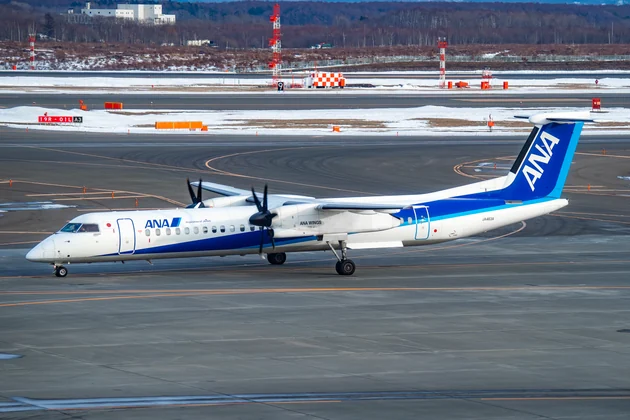
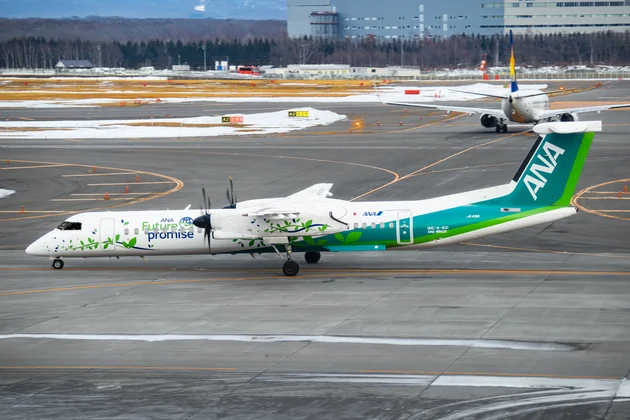
Engine configurations
- Pratt & Whitney Canada PW150
Model configurations
- PW150A · PW150
PW150A (PW150)
- PW150A · PW150
Technical notes
Design notes
- Engine configuration: 2 × PW150A.
- Market positioning: High-speed 70–90 seat turboprop.
- Status: in service.
Advantages
- Near-jet speed on short sectors
- Excellent short-field performance
Limitations
- More complex maintenance
- Turboprop perception
Variant Technical Profile
Q400 / Dash 8-400 is a specific configuration within Dash 8 / Q Series family, developed to cover a defined capacity, range, payload, or mission requirement inside the wider family.
Q400 / Dash 8-400 is positioned as a capacity/range-specific solution within the narrowbody segment, serving routes better matched than sibling variants.
Technical features
- Q400 / Dash 8-400: Single-aisle fuselage efficiency · structure. A narrow fuselage reduces structural weight and airport footprint for high-frequency short and medium routes.
- Q400 / Dash 8-400: High-cycle operating design · maintenance. Doors, landing gear, brakes, and systems are optimized for repeated daily sectors and quick turnarounds.
- Q400 / Dash 8-400: Wing and high-lift devices · aerodynamics. Flaps, slats, and wingtip devices balance runway performance with cruise efficiency.
- Q400 / Dash 8-400: Engine generation changes · engine. Engine nacelle, thrust rating, fuel burn, and noise standards define each production generation.
- Q400 / Dash 8-400: Fleet commonality · operational_efficiency. Common flight decks and maintenance practices reduce training and support cost across subfleets.
Advantages
- Provides a more precise capacity or range match within the family.
- Retains training, maintenance, and parts commonality with sibling variants.
- Lets operators tune engine, cabin, and payload choices to route needs.
Weaknesses
- Configuration identification complexity. Visually similar aircraft can differ materially by engine, weight standard, cabin layout, and conversion status.
- Generation-dependent economics. Older generations usually trail newer designs in fuel burn, noise, avionics, or maintenance intervals.
- Market-fit limits. Every variant has an ideal capacity and range band; outside it, load factor, range, or cost can become limiting.
Markets
- Network airline trunk or feeder markets
- Leasing and fleet replacement markets
- Regional, domestic, or international airline markets
Operators
- Full-service network airlines
- Low-cost or leisure airlines
- Cargo, government, or special-mission operators
Routes and missions
- High-frequency short or medium-haul trunk routes
- Medium-density long-haul or cross-regional routes
- Fleet replacement, supplementation, or special missions
Sibling comparison
- smaller sibling variants. Usually provides more seats, cargo volume, or thrust demand, but can be harder to fill on thinner routes.
- larger or longer-range sibling variants. Usually has lower acquisition and operating exposure, but less range, payload, or growth margin.
From the archive
Loading photographs…