Home/Encyclopedia/Boeing/Boeing 787 Dreamliner Family

Boeing 787 Dreamliner Family

The Boeing 787 Dreamliner is a long-range twin-engine wide-body family built around extensive composite structure, more-electric systems, improved cabin altitude, and efficient engines.

Models at a glance

787-8

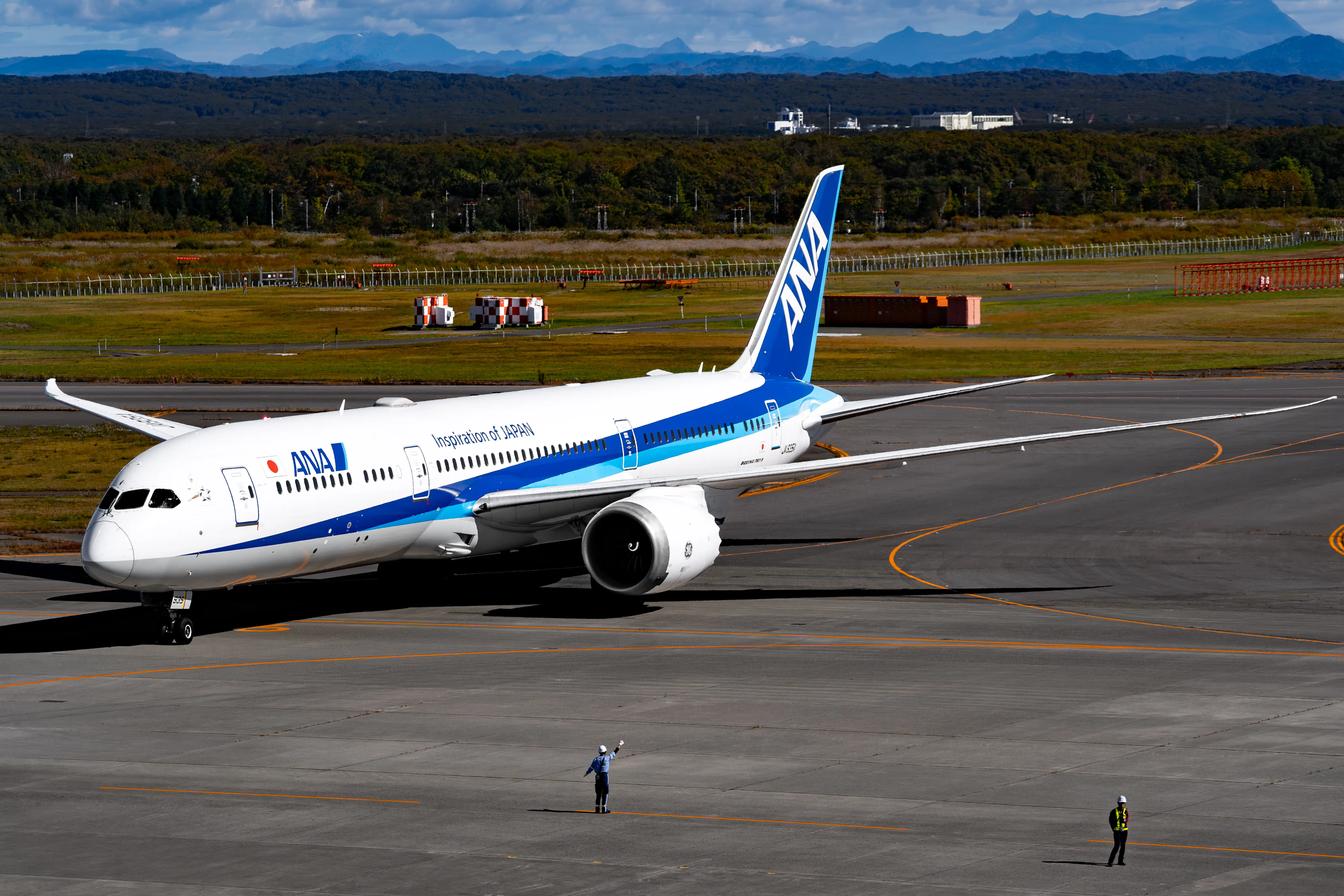
The 787-8 launched the Dreamliner family and is its shortest production model. The aircraft was designed for long routes that need fewer seats than the stretched variants.

Entered service
2011All Nippon Airways
Length
56.7 m
Wingspan
60.1 m
Published range
8,000 nmPublished upper figure
Typical two-class seats
200–275
Engine options
GEnx-1B · Trent 1000
Main landing gear
2 axles · 4 wheels per side
Sources

787-9

The 787-9 stretches the original Dreamliner and increases its payload–range capability. It sits between the -8 and -10 in fuselage length.

Entered service
Unavailable
Length
62.8 m
Wingspan
60.1 m
Published range
8,300 nmPublished upper figure
Typical two-class seats
250–325
Engine options
GEnx-1B · Trent 1000
Main landing gear
2 axles · 4 wheels per side
Sources
787-9 variants

787-9 High-Weight

The 787-9 High-Weight configuration is the Dreamliner build standard that supports Boeing’s increased maximum takeoff weight (iMTOW) option. The approved option allows up to 571,500 lb (259,228 kg) after activation.

Length
62.8 m
Wingspan
60.1 m
Published range
8,300 nmBoeing published upper range figure · depends on payload
Typical two-class seats
290Boeing planning layout · 28 business and 262 economy
Engine options
GEnx-1B · Trent 1000
Main landing gear
Unavailable
Sources

787-10

The 787-10 is the longest Dreamliner. It builds on the -9 platform to carry more passengers on routes suited to its shorter published range.

Entered service
2018Singapore Airlines
Length
68.3 m
Wingspan
60.1 m
Published range
7,500 nmPublished upper figure
Typical two-class seats
300–375
Engine options
GEnx-1B · Trent 1000
Main landing gear
2 axles · 4 wheels per side
Sources
787-10 variants

787-10 high-weight

The FAA cleared a higher maximum takeoff weight for the 787-10 in 2026. Boeing reports that aircraft assembled from December 2025 are structurally capable of the higher weight. The certified operating weight is assigned to each airframe.

Programme status
Higher takeoff weight approved in 2026
Length
68.3 m
Wingspan
60.1 m
Published range
7,500 nmBoeing current maximum design figure; range depends on payload
Typical two-class seats
330Boeing airport-planning example · 32 business and 298 economy
Engine options
GEnx-1B · Trent 1000
Main landing gear
2 axles · 4 wheels per side
Sources

Identification

Engine nacelles
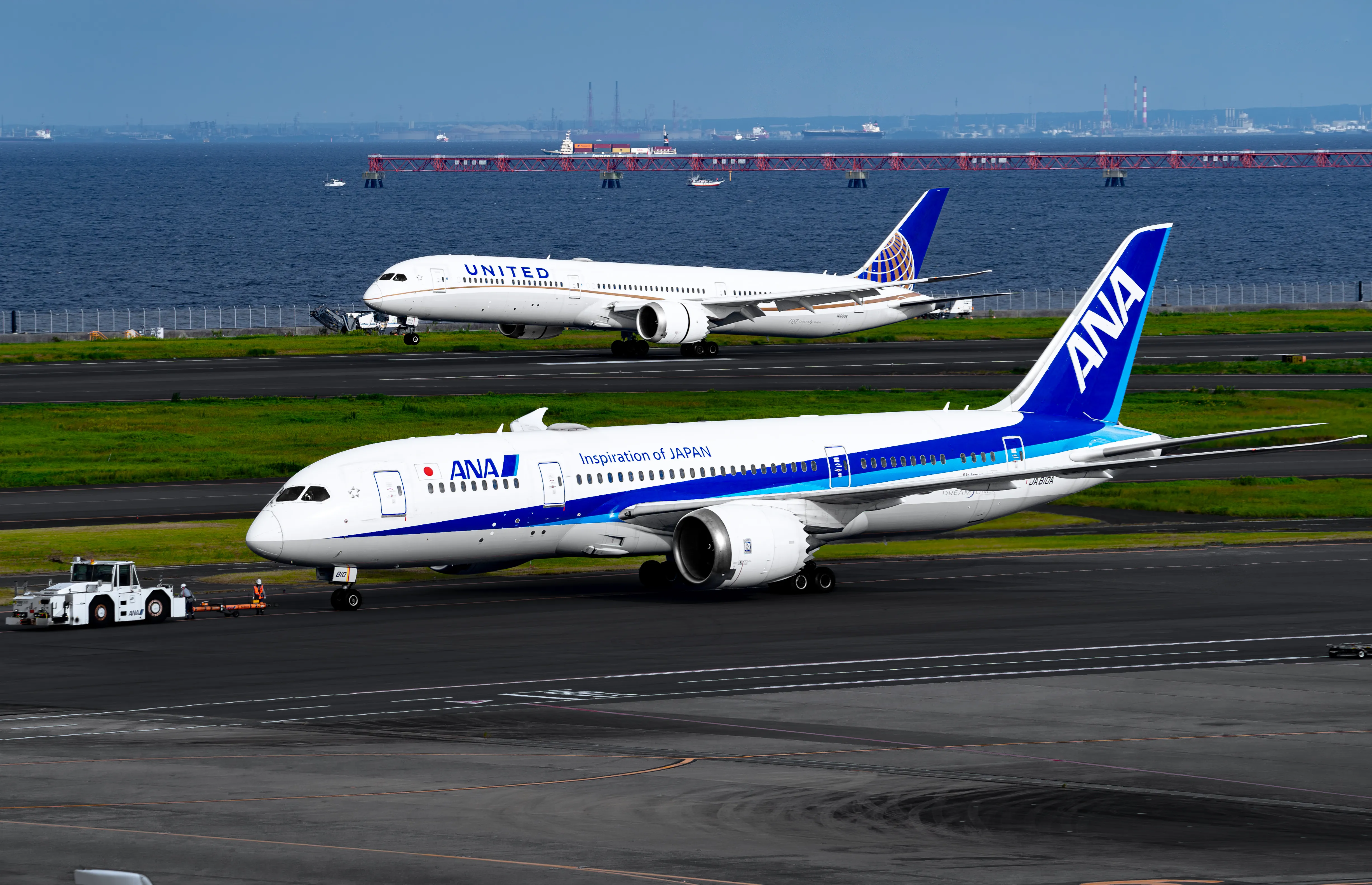
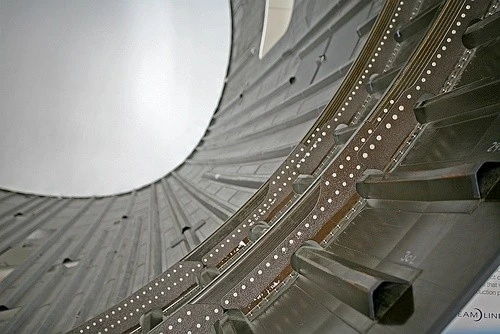
Look at the back of either underwing engine pod for the serrated chevrons. They appear on both engine options for the Dreamliner.
Wing and gear
Look for the long swept-back wingtip and count two axles on the main bogie nearest the camera. The larger 777 uses three axles per side.

Use a side view to compare the three fuselage lengths. All three share the basic wing shape.

Design & cabins

  • Composite fuselage sections

    Large carbon-composite fuselage sections are a defining feature of the 787 airframe. The material choice also affects cabin pressurisation design.

  • More-electric systems architecture

    Electrical equipment performs several functions supplied by engine bleed air on earlier designs, including cabin air compression. Boeing's planning manual details the resulting ground-service connections.

  • Cabin pressure, humidity and dimmable windows

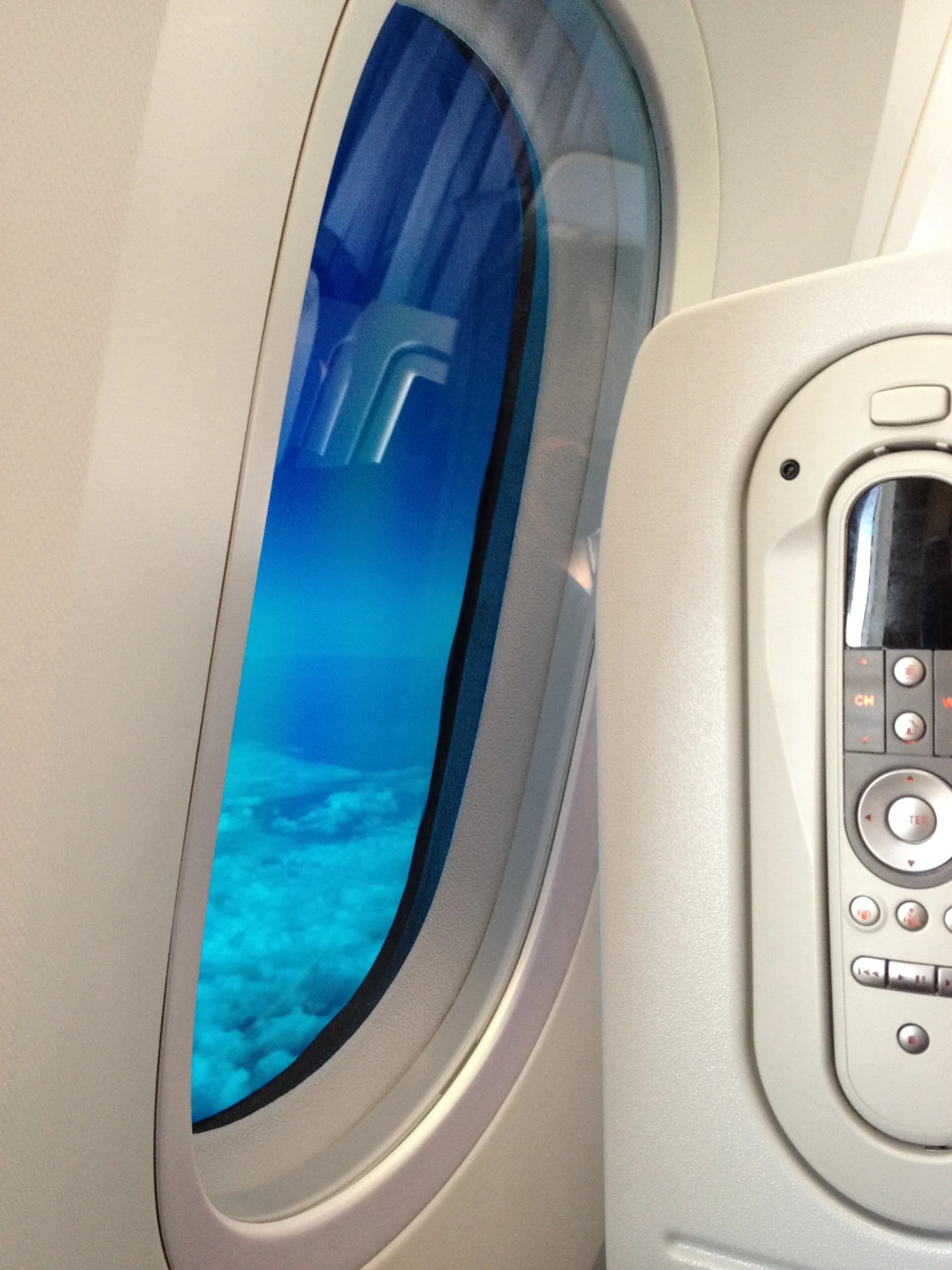
    The 787 cabin combines a lower design cabin altitude, higher permitted humidity and large electronically dimmable windows.

  • GEnx-1B and Trent 1000

    The 787 offered GE and Rolls-Royce engines. The engine and its certified dash number should be matched to the particular aircraft.

More aircraft systems
Engine references
GEnx-1B · Rolls-Royce Trent 1000
Cabin configuration examples

Low-cost carriers

Full-service carriers

Five-star airlines

Technical notes

Design notes

  • The main passenger variants are 787-8, 787-9, and 787-10.
  • Composite primary structure reduces corrosion concerns and supports a different cabin pressurization strategy.
  • The aircraft uses large electrical power generation and reduced reliance on traditional bleed-air architecture.
  • Major variants covered here: 787-8, 787-9, 787-10.

Advantages

  • Efficient long-haul service on thinner routes.
  • Passenger comfort improvements such as larger windows and lower cabin altitude.
  • High commonality across three sizes.

Limitations

  • Composite repairs and systems architecture require specialized processes.
  • 787-10 range is shorter than smaller 787 variants.
Family Technical Profile

Boeing 787 Dreamliner Family is one of Boeing's platforms in its market segment, balancing capacity, range, airport compatibility, maintenance economics, and mission flexibility.

Boeing 787 Dreamliner Family serves the widebody market with family commonality and multiple configurations.

Technical features

  • Boeing 787 Dreamliner Family: Wide-body fuselage · structure. Twin-aisle cabin and lower-deck cargo volume support long-haul passenger comfort and belly-freight revenue.
  • Boeing 787 Dreamliner Family: High-bypass turbofan integration · engine. Large engines are matched to long-range payload needs, ETOPS rules, and airline maintenance strategy.
  • Boeing 787 Dreamliner Family: Long-range fuel and payload balance · range_payload. Wing fuel capacity, MTOW growth, and cabin density determine whether the aircraft favors range, seats, or cargo.
  • Boeing 787 Dreamliner Family: Advanced flight deck · avionics. Glass-cockpit avionics and modern flight-management systems reduce crew workload on long sectors.
  • Boeing 787 Dreamliner Family: Cabin systems for long sectors · cabin. Pressurization, air conditioning, galleys, crew rest, and cargo holds are sized for extended missions.

Advantages

  • One platform can cover several capacity and mission bands.
  • Family design reduces training, maintenance, and spares complexity.
  • Engine, wingtip, avionics, or structural upgrades can extend lifecycle value.

Weaknesses

  • Configuration identification complexity. Visually similar aircraft can differ materially by engine, weight standard, cabin layout, and conversion status.
  • Generation-dependent economics. Older generations usually trail newer designs in fuel burn, noise, avionics, or maintenance intervals.
  • Market-fit limits. Every variant has an ideal capacity and range band; outside it, load factor, range, or cost can become limiting.

Markets

  • Network airline trunk or feeder markets
  • Leasing and fleet replacement markets
  • Regional, domestic, or international airline markets

Operators

  • Full-service network airlines
  • Low-cost or leisure airlines
  • Cargo, government, or special-mission operators

Routes and missions

  • High-frequency short or medium-haul trunk routes
  • Medium-density long-haul or cross-regional routes
  • Fleet replacement, supplementation, or special missions
Key terms
Engine configuration

The exact engine family and thrust standard installed on a specific model or production block.

  • Connects model suffixes, airline maintenance strategy, and performance limits.
  • Important for aircraft identification and fleet comparison.

Advantages. Helps explain range, payload, noise, and fuel-burn differences.

Limitations. Public data may omit thrust derates or later engine swaps.

Cabin configuration

The airline-selected layout of cabins, seats, galleys, lavatories, crew rest, and monuments.

  • Can change the same aircraft type from premium-heavy to high-density.
  • Affects range, payload, passenger experience, and turnaround flow.

Advantages. Lets airlines tailor the aircraft to route economics.

Limitations. Seat-map examples vary over time and by subfleet.

Fleet commonality

Boeing families often preserve handling, maintenance, and cockpit continuity across generations where practical.

  • This system is part of the A330 operating architecture and interacts with flight-control, electrical, hydraulic, engine, or environmental systems.
  • Exact configuration varies across A330ceo, A330neo, freighter, and military derivatives.

Advantages. Improves operational reliability, economics, or mission flexibility. Uses a mature wide-body systems architecture to reduce operational risk.

Limitations. System complexity increases maintenance, training, and troubleshooting demands. Airline configuration and engine choice can change real-world performance.

Sources