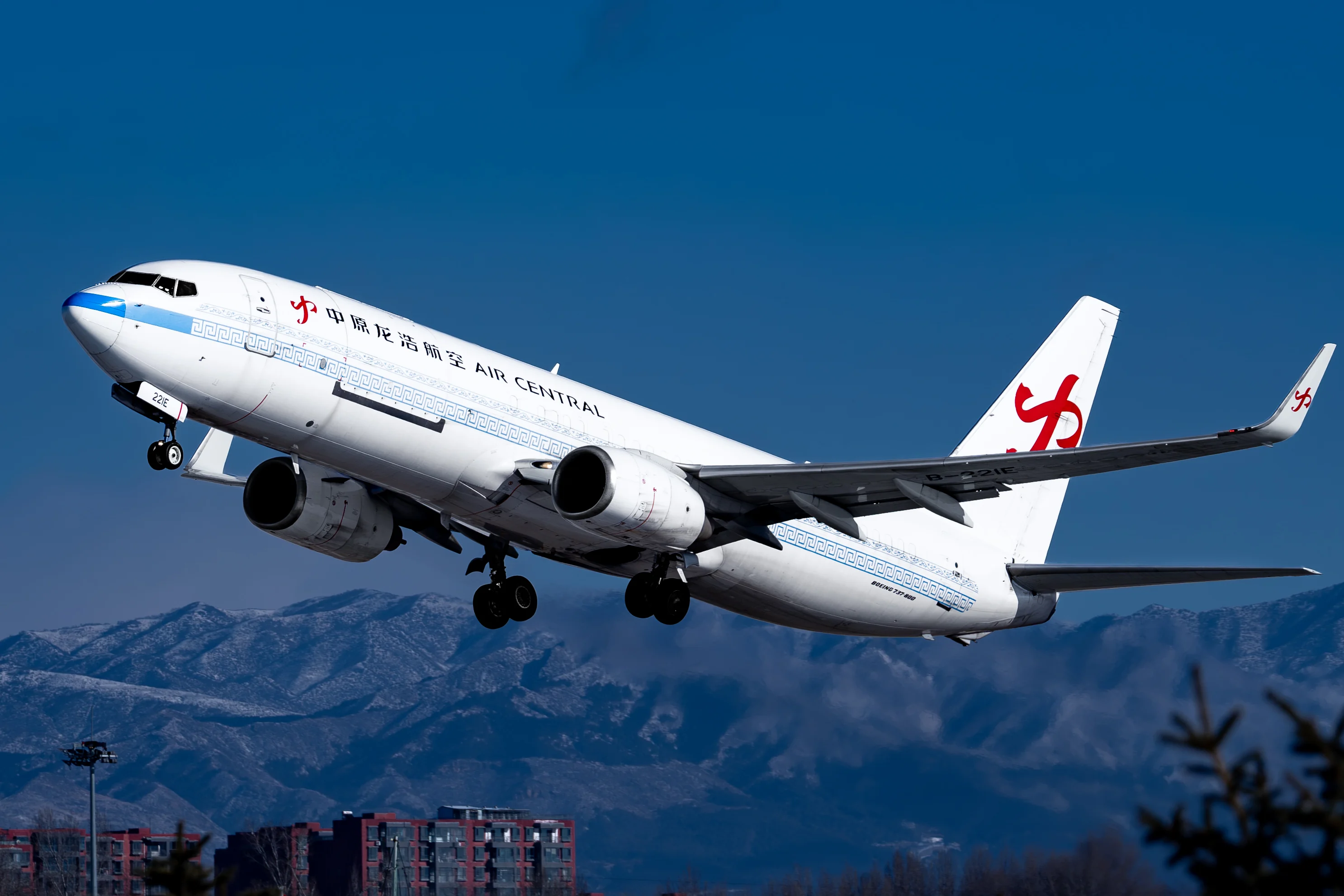
737-800F

737-800F is the archive label for a 737-800 freighter whose conversion programme is unspecified.

At a glance

737-800F

Length
39.5 mExample · Boeing 737-800BCF; the archive label does not name a conversion programme
Wingspan
35.8 mWinglet-equipped example · Example · Boeing 737-800BCF; the archive label does not name a conversion programme
Published range
2,000 nmAt 24 t structural payload · Example · Boeing 737-800BCF; the archive label does not name a conversion programme
Engine options
CFM56-7BExample · Boeing 737-800BCF; the archive label does not name a conversion programme
Main landing gear
Unavailable
Sources
737-800 model line

Compare models

Current aircraft737-800
Compare with

Comparing 737-800F with 737-800.

Specification737-800F737-800
Length39.5 mExample · Boeing 737-800BCF; the archive label does not name a conversion programme39.47 m
Wingspan35.8 mWinglet-equipped example · Example · Boeing 737-800BCF; the archive label does not name a conversion programme34.32 / 35.78 mWithout / with wingtip devices
Maximum take-off weight79.02 tExample · Boeing 737-800BCF; the archive label does not name a conversion programme79.02 tHighest listed design weight
Maximum payload24 tPublished structural payload · Example · Boeing 737-800BCF; the archive label does not name a conversion programme21.01 tStructural payload, 174,200 lb configuration
Fuel tank capacity26,024 LUsable fuel · Example · Boeing 737-800BCF; the archive label does not name a conversion programme26,020 L
Engine optionsCFM56-7BExample · Boeing 737-800BCF; the archive label does not name a conversion programmeCFM56-7B
Typical two-class seatsUnavailable160–180
Published range2,000 nmiAt 24 t structural payload · Example · Boeing 737-800BCF; the archive label does not name a conversion programme2,800 nmiPublished upper figure

A dash indicates that a verified figure is unavailable. Figures follow the configuration specified by each source.

Comparison sources

Identification

Use these features to recognise the 737-800. Check the aircraft or programme record for the 737-800F designation.

Nacelle trailing edge
Check the CFM56-7B nacelles for a smooth trailing edge. A similarly sized 737 MAX has serrated nacelle edges.
Overwing exits
In a full side view, look for two overwing exit hatches per side in the standard passenger layout. Its 39.5 m fuselage sits between the -700 and -900.

Some Next Generation aircraft carry split retrofit winglets. Use the nacelle and body together.

Design & cabins

Technical notes

Design notes

  • The 737-800 freighter conversions replace the passenger cabin with a main-deck cargo compartment.
  • Boeing markets its conversion as the 737-800BCF. Aeronautical Engineers markets its conversion as the 737-800SF. Each programme has a separate entry.
Variant Technical Profile

737-800F is a specific configuration within 737-800, developed to cover a defined capacity, range, payload, or mission requirement inside the wider family.

737-800F is positioned as a capacity/range-specific solution within the freighter segment, serving routes better matched than sibling variants.

Technical features

  • 737-800F: Cargo door and floor loading · structure. Main-deck doors, reinforced floors, and cargo loading systems define usable freight capability.
  • 737-800F: Payload-volume balance · range_payload. The aircraft must balance container volume, structural payload, and range for express or general cargo.
  • 737-800F: Freighter conversion economics · maintenance. Passenger-to-freighter variants depend on feedstock price, engine life, and structural condition.
  • 737-800F: Belly and main-deck logistics · operational_efficiency. ULD compatibility, loading height, and turnaround flow shape cargo network efficiency.
  • 737-800F: Engine maintenance sensitivity · engine. Cargo operators often prioritize durable engines and predictable maintenance cost over passenger cabin features.

Advantages

  • Provides a more precise capacity or range match within the family.
  • Retains training, maintenance, and parts commonality with sibling variants.
  • Lets operators tune engine, cabin, and payload choices to route needs.

Weaknesses

  • Configuration identification complexity. Visually similar aircraft can differ materially by engine, weight standard, cabin layout, and conversion status.
  • Generation-dependent economics. Older generations usually trail newer designs in fuel burn, noise, avionics, or maintenance intervals.
  • Market-fit limits. Every variant has an ideal capacity and range band; outside it, load factor, range, or cost can become limiting.

Markets

  • Network airline trunk or feeder markets
  • Leasing and fleet replacement markets
  • Regional, domestic, or international airline markets

Operators

  • Full-service network airlines
  • Low-cost or leisure airlines
  • Cargo, government, or special-mission operators

Routes and missions

  • High-frequency short or medium-haul trunk routes
  • Medium-density long-haul or cross-regional routes
  • Express and general air-cargo networks

Sibling comparison

  • smaller sibling variants. Usually provides more seats, cargo volume, or thrust demand, but can be harder to fill on thinner routes.
  • larger or longer-range sibling variants. Usually has lower acquisition and operating exposure, but less range, payload, or growth margin.
Sources