Home/Encyclopedia/Boeing/Boeing 727 Family

Boeing 727 Family

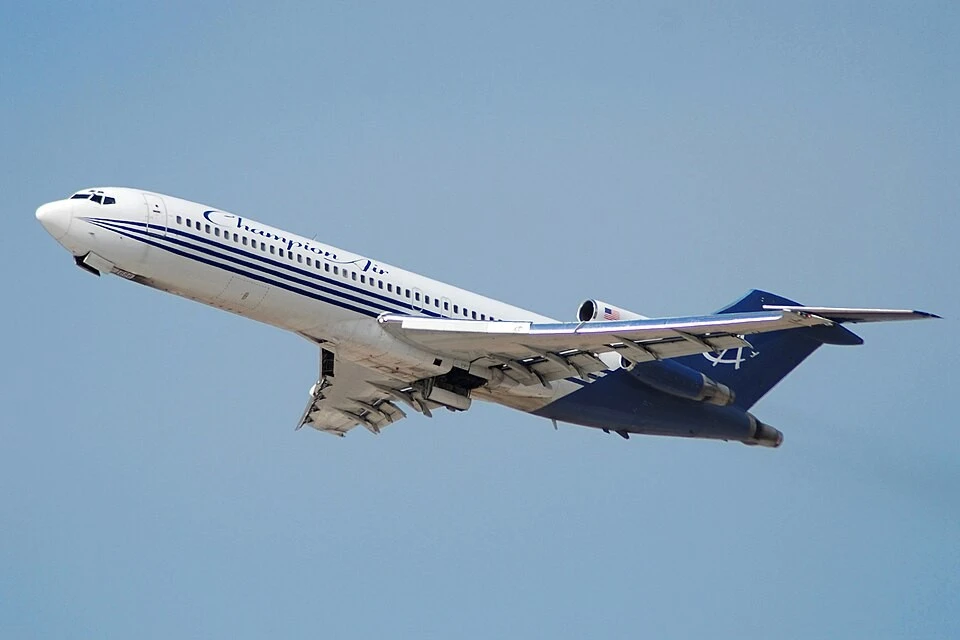
The Boeing 727 is a three-engine narrow-body jet designed for shorter runways and medium-range routes, using a T-tail and rear engine arrangement that made it visually distinctive.

Models at a glance

727-100

The 727-100 was the original, shorter-body 727. Its three rear-mounted engines and high-lift wing made it suitable for domestic and regional routes.

Entered service
Unavailable
First flight
1963
Length
40.6 m
Wingspan
32.92 m
Published range
2,700 nmApproximate historical figure
Typical two-class seats
106
Published seating
131
Engine options
JT8D
Main landing gear
1 axle · 2 wheels per side
Sources

727-200

The 727-200 stretched the original 727 fuselage and retained the tail-mounted trijet arrangement. The extra cabin length increased its passenger capacity.

Entered service
1967Northeast Airlines
First flight
Unavailable
Length
46.7 m
Wingspan
32.92 / 33.31 mWithout / with wingtip devices
Published range
1,500 nmApproximate chart reading · Standard model with 134 passengers and baggage · 173,000 lb taxi-weight curve
Typical two-class seats
134
Published seating
155Single class at 34-inch pitch
Engine options
JT8D
Main landing gear
1 axle · 2 wheels per side
Sources
727-200 variants

727-200 Advanced

The Advanced 727-200 added higher operating weights and longer-range capability to the stretched 727. It retained the -200 fuselage and rear-engine layout.

Length
46.7 m
Wingspan
32.92 / 33.31 mWithout / with wingtip devices
Published range
2,330 nmApproximately · 134 passengers plus baggage, JT8D-17 planning chart
Typical two-class seats
134Boeing example · 20 first and 114 tourist
Engine options
JT8D-17Engine in published Boeing performance example
Main landing gear
1 axle · 2 wheels per side
Sources
Length
46.68 mBoeing factory 727-200F example
Wingspan
32.92 mBoeing factory 727-200F example
Published range
1,597 nmBoeing factory 727-200F example · maximum zero-fuel-weight payload · nautical scale
Engine options
JT8D-17ABoeing factory 727-200F example
Main landing gear
Unavailable
Sources

727 freighter conversions

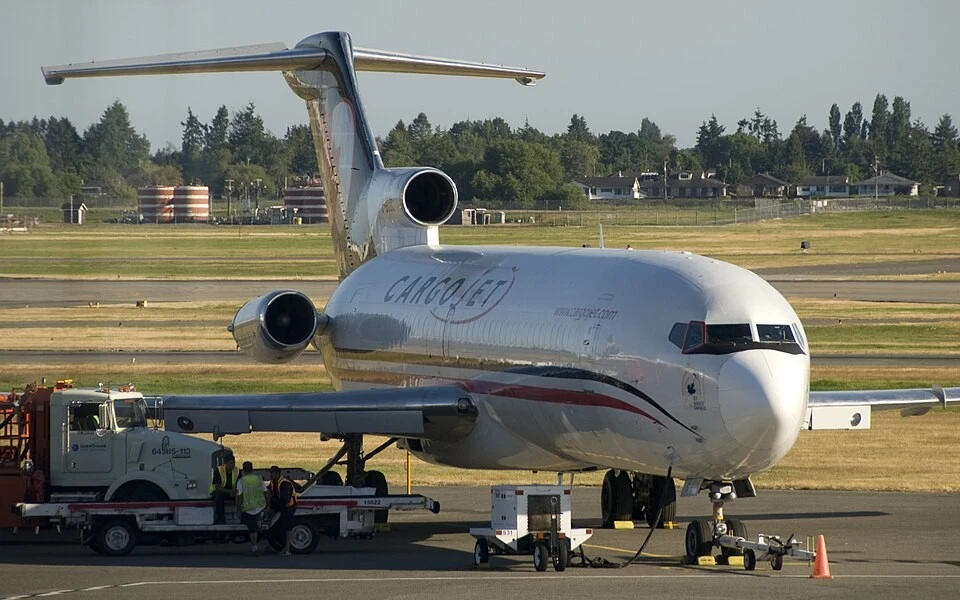
Passenger 727s were converted for cargo service by adapting the main deck for freight. Conversion standards and installed engines vary by airframe.

Length
40.59 mShort-fuselage 727-100QF example · 133 ft 2 in
Wingspan
32.92 mStandard span · 727-100C/727-200 freighter airframes
Published range
Unavailable
Engine options
Rolls-Royce Tay 651727-100QF Tay conversion example
Main landing gear
Unavailable
Sources

Identification

Centre intake
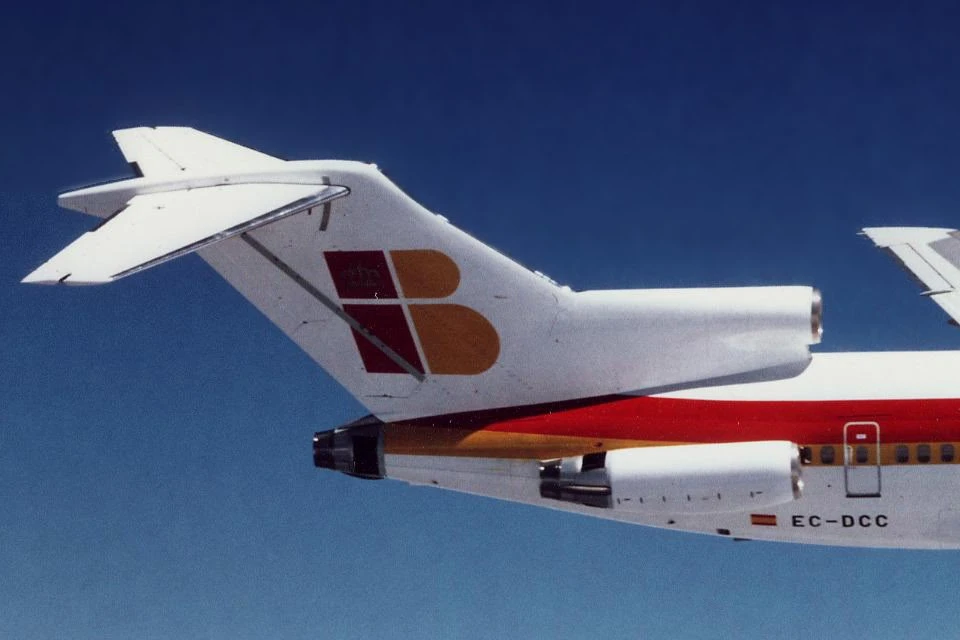
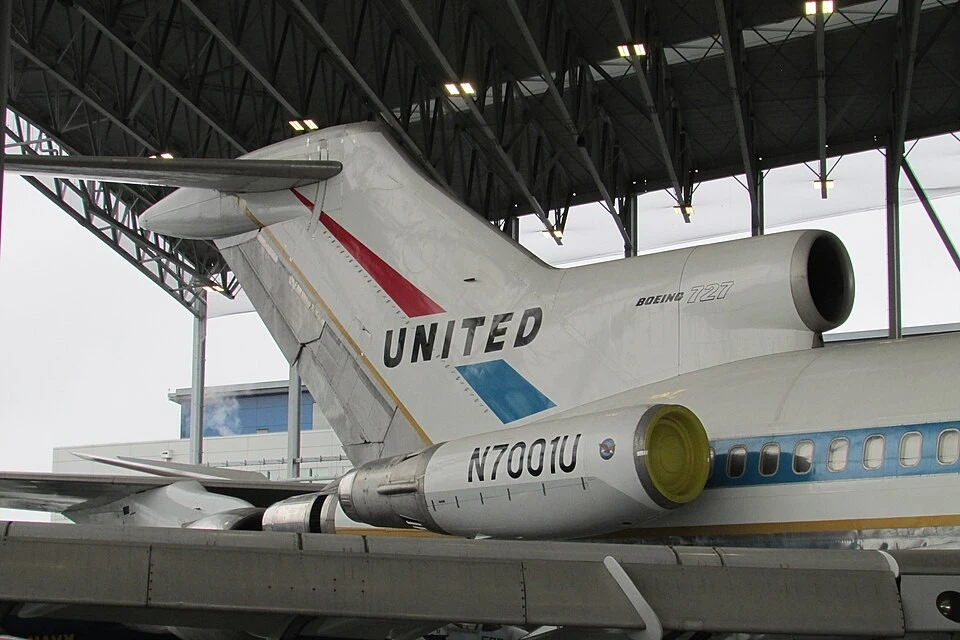
Find the inlet at the foot of the tall T-tail, above the aft fuselage. It feeds the centre engine, giving the 727 three intakes in the tail area.
Side pods
Check the second and third intakes on either side of the rear fuselage. The wings carry no engines, a quick difference from the 737.

Design & cabins

  • JT8D trijet and S-duct centre inlet

    The 727 carries two engines on the aft fuselage sides and feeds the centre JT8D through an S-shaped inlet ahead of the T-tail.

  • Triple-slotted flaps and short-runway design

    The high-lift wing, including triple-slotted trailing-edge flaps, supported operation from shorter runways.

  • Auxiliary power and built-in airstair

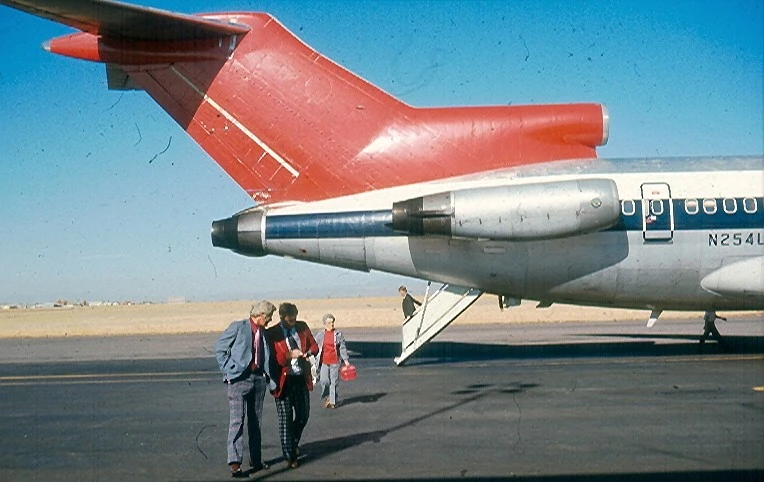
    An onboard APU and the rear airstair made the 727 more self-sufficient during turns at airports with limited facilities.

More aircraft systems
Engine reference
Pratt & Whitney JT8D
Technical notes

Design notes

  • The 727-100 and stretched 727-200 formed the main passenger family.
  • Built-in airstairs and strong field performance helped it serve airports with less ground infrastructure.
  • Many aircraft later moved into cargo and special operations roles.
  • Major variants covered here: 727-100, 727-200, 727 Freighter.

Advantages

  • Good runway performance for its era.
  • Flexible airport access and robust short-to-medium-haul utility.

Limitations

  • Three-engine fuel burn and noise are no longer competitive.
  • Older avionics and maintenance requirements limit modern commercial use.
Family Technical Profile

Boeing 727 Family is one of Boeing's platforms in its market segment, balancing capacity, range, airport compatibility, maintenance economics, and mission flexibility.

Boeing 727 Family serves the narrowbody market with family commonality and multiple configurations.

Technical features

  • Boeing 727 Family: Single-aisle fuselage efficiency · structure. A narrow fuselage reduces structural weight and airport footprint for high-frequency short and medium routes.
  • Boeing 727 Family: High-cycle operating design · maintenance. Doors, landing gear, brakes, and systems are optimized for repeated daily sectors and quick turnarounds.
  • Boeing 727 Family: Wing and high-lift devices · aerodynamics. Flaps, slats, and wingtip devices balance runway performance with cruise efficiency.
  • Boeing 727 Family: Engine generation changes · engine. Engine nacelle, thrust rating, fuel burn, and noise standards define each production generation.
  • Boeing 727 Family: Fleet commonality · operational_efficiency. Common flight decks and maintenance practices reduce training and support cost across subfleets.

Advantages

  • One platform can cover several capacity and mission bands.
  • Family design reduces training, maintenance, and spares complexity.
  • Engine, wingtip, avionics, or structural upgrades can extend lifecycle value.

Weaknesses

  • Configuration identification complexity. Visually similar aircraft can differ materially by engine, weight standard, cabin layout, and conversion status.
  • Generation-dependent economics. Older generations usually trail newer designs in fuel burn, noise, avionics, or maintenance intervals.
  • Market-fit limits. Every variant has an ideal capacity and range band; outside it, load factor, range, or cost can become limiting.

Markets

  • Network airline trunk or feeder markets
  • Leasing and fleet replacement markets
  • Regional, domestic, or international airline markets

Operators

  • Full-service network airlines
  • Low-cost or leisure airlines
  • Cargo, government, or special-mission operators

Routes and missions

  • High-frequency short or medium-haul trunk routes
  • Medium-density long-haul or cross-regional routes
  • Fleet replacement, supplementation, or special missions
Key terms
Engine configuration

The exact engine family and thrust standard installed on a specific model or production block.

  • Connects model suffixes, airline maintenance strategy, and performance limits.
  • Important for aircraft identification and fleet comparison.

Advantages. Helps explain range, payload, noise, and fuel-burn differences.

Limitations. Public data may omit thrust derates or later engine swaps.

Cabin configuration

The airline-selected layout of cabins, seats, galleys, lavatories, crew rest, and monuments.

  • Can change the same aircraft type from premium-heavy to high-density.
  • Affects range, payload, passenger experience, and turnaround flow.

Advantages. Lets airlines tailor the aircraft to route economics.

Limitations. Seat-map examples vary over time and by subfleet.

Fleet commonality

Boeing families often preserve handling, maintenance, and cockpit continuity across generations where practical.

  • This system is part of the A330 operating architecture and interacts with flight-control, electrical, hydraulic, engine, or environmental systems.
  • Exact configuration varies across A330ceo, A330neo, freighter, and military derivatives.

Advantages. Improves operational reliability, economics, or mission flexibility. Uses a mature wide-body systems architecture to reduce operational risk.

Limitations. System complexity increases maintenance, training, and troubleshooting demands. Airline configuration and engine choice can change real-world performance.

Sources