A310-300
The A310-300 extends the original A310's range with changes to fuel capacity and available operating weights. It retained the -200 fuselage length.
- Length
- 46.7 m
- Wingspan
- 43.89 m
- Engine options
- CF6-80C2A2 · CF6-80C2A8 · JT9D-7R4E1 · PW4152 · PW4156A
- Published range
- 5,180 nmiHistorical manufacturer maximum for the longer-range A310 family.
Identification
- Compact fuselage and small wingtip devices
- Look for the short A310 fuselage and the tip devices introduced on the -300. Compare proportions with the longer A300-600, which also has tip fences.
Confirm the specific A310 model from the registration or aircraft records.
Compare models
Comparing A310-300 with A310F.
| Specification | A310-300 | A310F |
|---|---|---|
| Length | 46.7 m | 46.7 m |
| Wingspan | 43.89 m | 43.89 m |
| Maximum take-off weight | 164 tHighest Airbus planning weight in variants WV008 and WV013. | 164 tFedEx A310-300F example, 361,558 lb. Its A310-200F is 142 t. |
| Maximum payload | 37.29 tAirbus planning estimate with CF6-80 and WV013. | 37.73 tFedEx A310-300 freighter fleet example. |
| Fuel tank capacity | 61,090 LEASA base configuration before the optional auxiliary centre tank. | 61,070 LEFW A310-300F standard tanks. With one optional additional centre tank, 68,270 L. |
| Engine options | CF6-80C2A2 · CF6-80C2A8 · JT9D-7R4E1 · PW4152 · PW4156A | CF6-80A3 · JT9D-7R4D1 · JT9D-7R4E1 · CF6-80C2A2 · CF6-80C2A8 · PW4152 · PW4156ADepends on the A310-200/-300 donor model. EASA lists A310-203/-221/-222/-304/-308/-324/-325 under freighter STC 10013960. |
| Typical two-class seats | 220Manufacturer two-class passenger example for the A310 family. | Unavailable |
| Published range | 5,180 nmiHistorical manufacturer maximum for the longer-range A310 family. | 3,400 nmiFedEx A310-300F published range. Its A310-200F is 2,300 nmi. |
A dash indicates that a verified figure is unavailable. Figures follow the configuration specified by each source.
Comparison sources
- FAA Aircraft Characteristics Database · October 2024ACD_Data · A310 · Airbus A310
- EASA.A.172 type-certificate data sheet · Issue 08p. 38 §13.2 · Certified A310-300 engine options
- EADS · 2001 Reference DocumentA310 family two-class commercial reference
- EADS · 2001 Reference DocumentA310 family published maximum range
- Airbus A310 · aircraft characteristics§2-1-0, Airbus A310-300 planning data
- EASA.A.172 · Airbus A300 and A310 type certificate§13.6 · A310-300 usable fuel, including the tailplane tank
- EASA.A.172 type-certificate data sheet · Issue 08§11.2 and §13.2 · A310-200 and -300 donor-model powerplants
- FedEx · 2020 aircraft financing prospectusFederal Express aircraft type table · A310-300F FedEx configuration
- FedEx 2019 Form 10-K · Airbus A310-300 freighter fleetItem 2 · FedEx Express aircraft maximum gross structural payload
- EADS EFW · Airbus A310-300F conversion programme dataA310-300F technical table · Maximum fuel capacity
Design & cabins
CF6-80C2A2 installation
See the engine encyclopedia for ratings and aircraft applications.
CF6-80C2A8 installation
See the engine encyclopedia for ratings and aircraft applications.
JT9D-7R4E1 installation
See the engine encyclopedia for ratings and aircraft applications.
PW4152 installation
See the engine encyclopedia for ratings and aircraft applications.
PW4156A installation
See the engine encyclopedia for ratings and aircraft applications.
Featured components & design
Compact fuselage and small wingtip devices
Look for the short A310 fuselage and the tip devices introduced on the -300. Compare proportions with the longer A300-600, which also has tip fences.
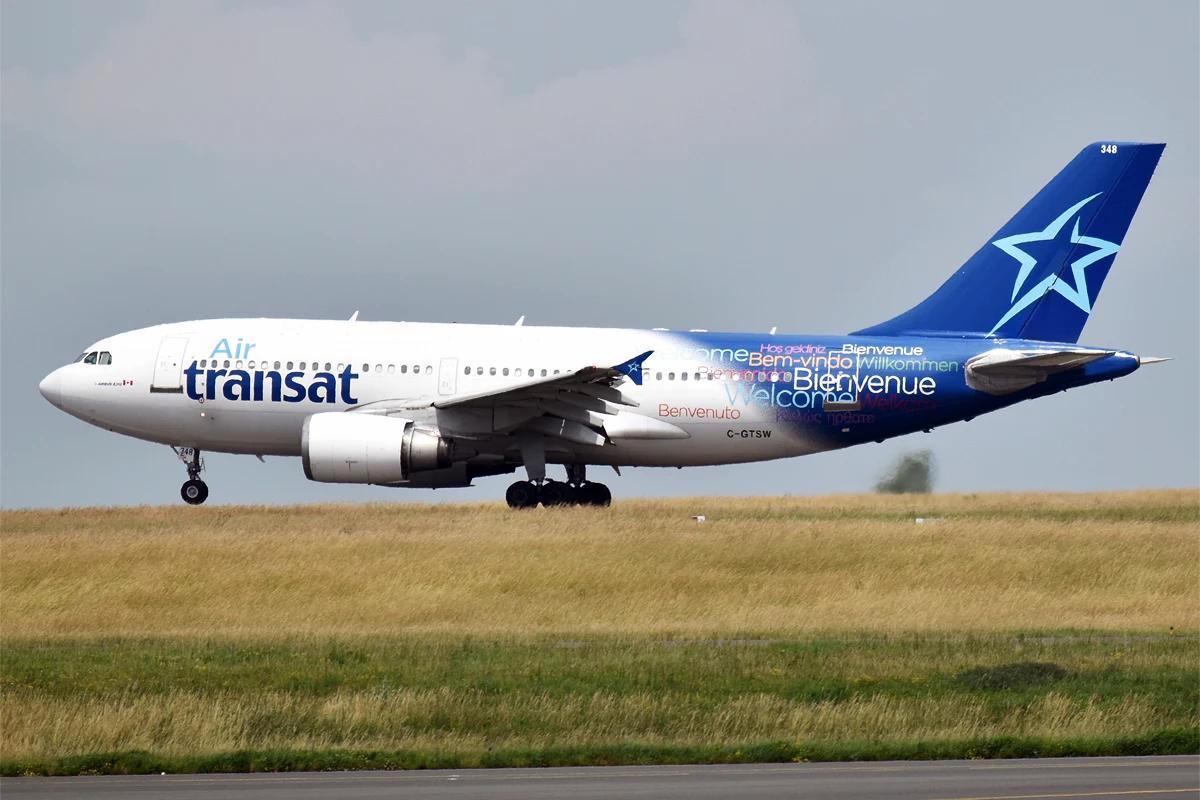
Air Transat A310-300 C-GTSW · compact fuselageAnna Zvereva from Tallinn, Estonia · resized · CC BY-SA 2.0 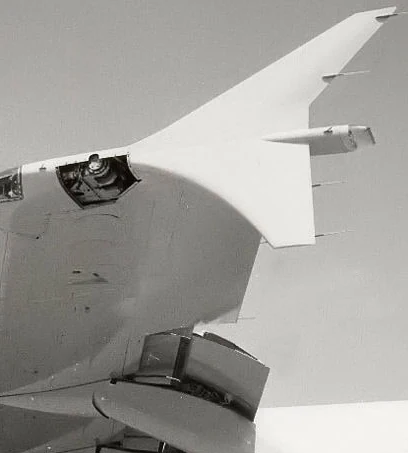
A310-300 · wingtip fence from belowAdrian Pingstone (Arpingstone) · detail crop · Public domain Engine installation · CF6-80C2A2 / CF6-80C2A8 / JT9D-7R4E1 / PW4152 / PW4156A
Published engine installation for the A310-300 is CF6-80C2A2, CF6-80C2A8, JT9D-7R4E1, PW4152, PW4156A.
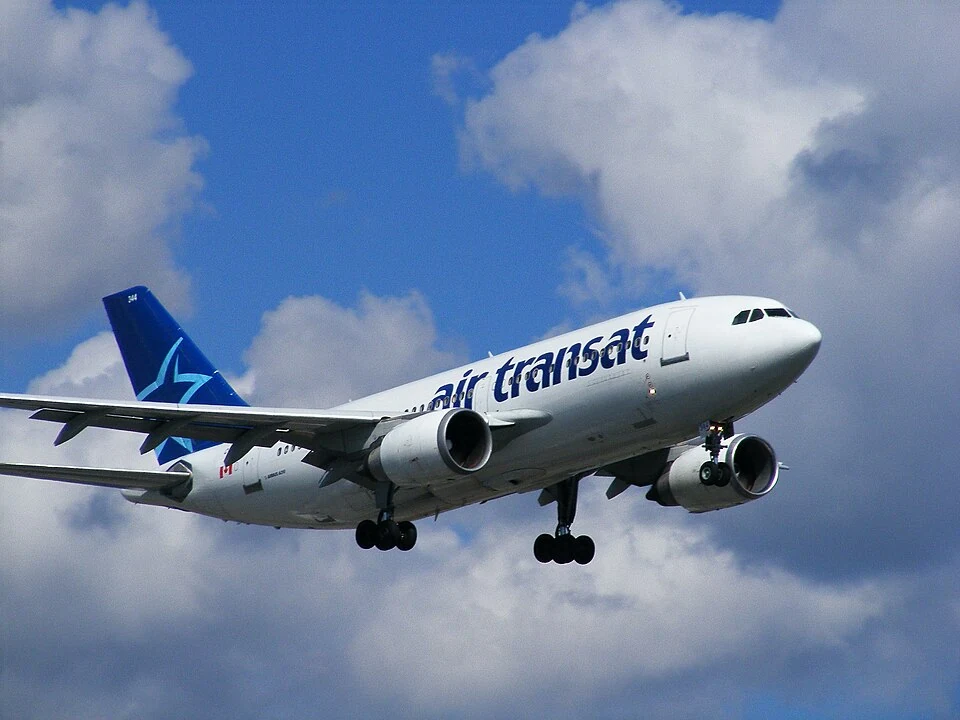
Airbus A310-308 · GE CF6-80C2 installationabdallahh from Montréal, Canada · resized · CC BY 2.0


Airbus A310 Family Fuselage and Cabin Architecture
Airbus A310 Family fuselage design defines the usable cabin width, door layout, cargo volume, stretch potential, and airline cabin flexibility across A310-200, A310-300, A310F, A310 MRTT.
Airbus A310 Family Wing and High-Lift System
Airbus A310 Family wing design is central to runway performance, cruise efficiency, fuel capacity, and the family improvement path across its variants.
Airbus A310 Family Landing Gear and Braking System
Airbus A310 Family landing gear and braking architecture support the aircraft's weight growth, field performance, pavement loading, and maintenance profile.
Airbus A310 Family Flight Deck and Avionics
Airbus A310 Family cockpit architecture reflects the manufacturer's operating philosophy, training commonality, display technology, and automation level.
Airbus A310 Family Materials and Structural Design
Airbus A310 Family structural design balances weight, fatigue life, corrosion resistance, repairability, production cost, and the technology level of its generation.
Airbus A310 Family Cargo and Cabin Systems
Airbus A310 Family cargo and cabin systems affect payload, turnaround, passenger comfort, conversion potential, and airline route economics.
Technical notes
Design notes
- Family context: The Airbus A310 is a shorter, longer-range development of the A300, designed for medium-density routes requiring wide-body comfort and intercontinental capability.
- Exact airline configuration can change seat count, galley arrangement, cargo capability, and operating range.
- Engine reference: A310-300 uses JT9D-7R4; A310-300 uses CF6-80A; A310-300 uses CF6-80C2; A310-300 uses PW4000-94.
- Cabin configuration should be treated as airline-specific: the same variant may be high-density, full-service, or premium-heavy.
Advantages
- Wide-body range in a smaller capacity class.
- Useful for medium-density long routes.
- Important step toward Airbus cockpit commonality.
Limitations
- Small modern fleet and aging airframes.
- Less efficient than later A330 family aircraft.
Variant Technical Profile
A310-300 is a specific configuration within Airbus A310 Family, developed to cover a defined capacity, range, payload, or mission requirement inside the wider family.
A310-300 is positioned as a capacity/range-specific solution within the widebody segment, serving routes better matched than sibling variants.
Technical features
- A310-300: Wide-body fuselage · structure. Twin-aisle cabin and lower-deck cargo volume support long-haul passenger comfort and belly-freight revenue.
- A310-300: High-bypass turbofan integration · engine. Large engines are matched to long-range payload needs, ETOPS rules, and airline maintenance strategy.
- A310-300: Long-range fuel and payload balance · range_payload. Wing fuel capacity, MTOW growth, and cabin density determine whether the aircraft favors range, seats, or cargo.
- A310-300: Advanced flight deck · avionics. Glass-cockpit avionics and modern flight-management systems reduce crew workload on long sectors.
- A310-300: Cabin systems for long sectors · cabin. Pressurization, air conditioning, galleys, crew rest, and cargo holds are sized for extended missions.
Advantages
- Provides a more precise capacity or range match within the family.
- Retains training, maintenance, and parts commonality with sibling variants.
- Lets operators tune engine, cabin, and payload choices to route needs.
Weaknesses
- Configuration identification complexity. Visually similar aircraft can differ materially by engine, weight standard, cabin layout, and conversion status.
- Generation-dependent economics. Older generations usually trail newer designs in fuel burn, noise, avionics, or maintenance intervals.
- Market-fit limits. Every variant has an ideal capacity and range band; outside it, load factor, range, or cost can become limiting.
Markets
- Network airline trunk or feeder markets
- Leasing and fleet replacement markets
- Regional, domestic, or international airline markets
Operators
- Full-service network airlines
- Low-cost or leisure airlines
- Cargo, government, or special-mission operators
Routes and missions
- High-frequency short or medium-haul trunk routes
- Medium-density long-haul or cross-regional routes
- Fleet replacement, supplementation, or special missions
Sibling comparison
- smaller sibling variants. Usually provides more seats, cargo volume, or thrust demand, but can be harder to fill on thinner routes.
- larger or longer-range sibling variants. Usually has lower acquisition and operating exposure, but less range, payload, or growth margin.
Key terms
- Engine configuration
The exact engine family and thrust standard installed on a specific model or production block.
- Connects model suffixes, airline maintenance strategy, and performance limits.
- Important for aircraft identification and fleet comparison.
Advantages. Helps explain range, payload, noise, and fuel-burn differences.
Limitations. Public data may omit thrust derates or later engine swaps.
- Cabin configuration
The airline-selected layout of cabins, seats, galleys, lavatories, crew rest, and monuments.
- Can change the same aircraft type from premium-heavy to high-density.
- Affects range, payload, passenger experience, and turnaround flow.
Advantages. Lets airlines tailor the aircraft to route economics.
Limitations. Seat-map examples vary over time and by subfleet.
- Fly-by-wire commonality
Airbus families use a common cockpit philosophy that helps reduce training differences across related aircraft.
- This system is part of the A330 operating architecture and interacts with flight-control, electrical, hydraulic, engine, or environmental systems.
- Exact configuration varies across A330ceo, A330neo, freighter, and military derivatives.
Advantages. Improves operational reliability, economics, or mission flexibility. Uses a mature wide-body systems architecture to reduce operational risk.
Limitations. System complexity increases maintenance, training, and troubleshooting demands. Airline configuration and engine choice can change real-world performance.
From the archive
Loading photographs…