Airbus A400M-180
A400M-180 is the certified model designation in EASA.A.169 for the Airbus A400M Atlas.
- Length
- 45.11 m
- Wingspan
- 42.4 m
- Engine options
- TP400-D6
- Published range
- 4,800 nmiAirbus ferry range. Maximum payload range is 1,780 nmi.
Identification
Use these features to recognise the Airbus A400M Atlas. Check the aircraft or programme record for the Airbus A400M-180 designation.
- Four eight-blade propellers
- From the front, count two propellers on each shoulder-mounted wing. A parked aircraft makes it easier to pick out the eight curved blades per propeller.
- T-tail outline
- Look aft for the horizontal tail on top of the fin. The high tail and four propellers together distinguish the Atlas from a four-jet C-17 and the lower-tailed Hercules.
Compare models
| Specification | Airbus A400M-180 | Choose a family |
|---|---|---|
| Length | 45.11 m | |
| Wingspan | 42.4 m | |
| Maximum take-off weight | 137.5 t | |
| Maximum payload | 37 tPublished cargo payload | |
| Fuel tank capacity | 63,500 LStandard tanks; optional cargo-hold tanks are excluded. | |
| Engine options | TP400-D6 | |
| Typical two-class seats | Unavailable | |
| Published range | 4,800 nmiAirbus ferry range. Maximum payload range is 1,780 nmi. |
A dash indicates that a verified figure is unavailable. Figures follow the configuration specified by each source.
Comparison sources
- FAA Aircraft Characteristics Database · October 2024ACD_Data · A400 · Airbus A400M Atlas
- Airbus A400M · SpecificationsPayload and powerplant
- Airbus Group Annual Review 2013 · A400M service entryAirbus Defence & Space · A400M enters service
- Airbus A400M · SpecificationsSpecifications · Over longer distances
- Airbus · Our Journeyp. 42 · A400M maiden flight
- Airbus A400M · Specification brochureSpecifications and dimensions · Range
- EASA A.169 · Airbus A400M type certificateCertified weights
- Airbus · A400M standard fuel capacityAirbus standard tank capacity
Design & cabins
TP400-D6 installation
See the engine encyclopedia for ratings and aircraft applications.
Featured components & design
Engine installation · TP400-D6
Published engine installation for the Airbus A400M-180 is TP400-D6.
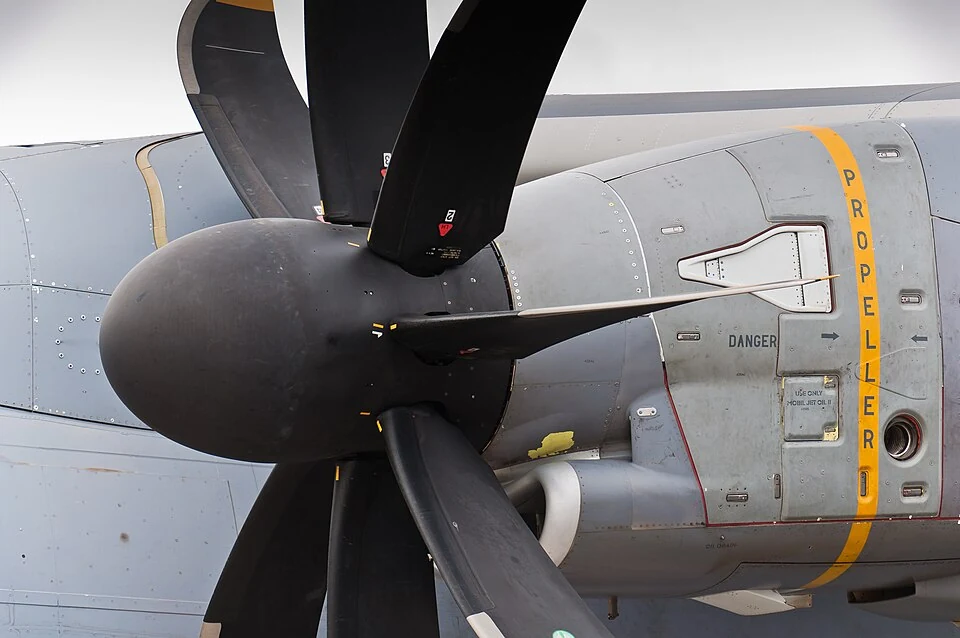
A400M flight-test aircraft EC-404 · installed Europrop TP400-D6Julian Herzog · resized · CC BY 4.0 Configuration and applicability
A400M-180 is the certified model designation in EASA.A.169 for the Airbus A400M Atlas.
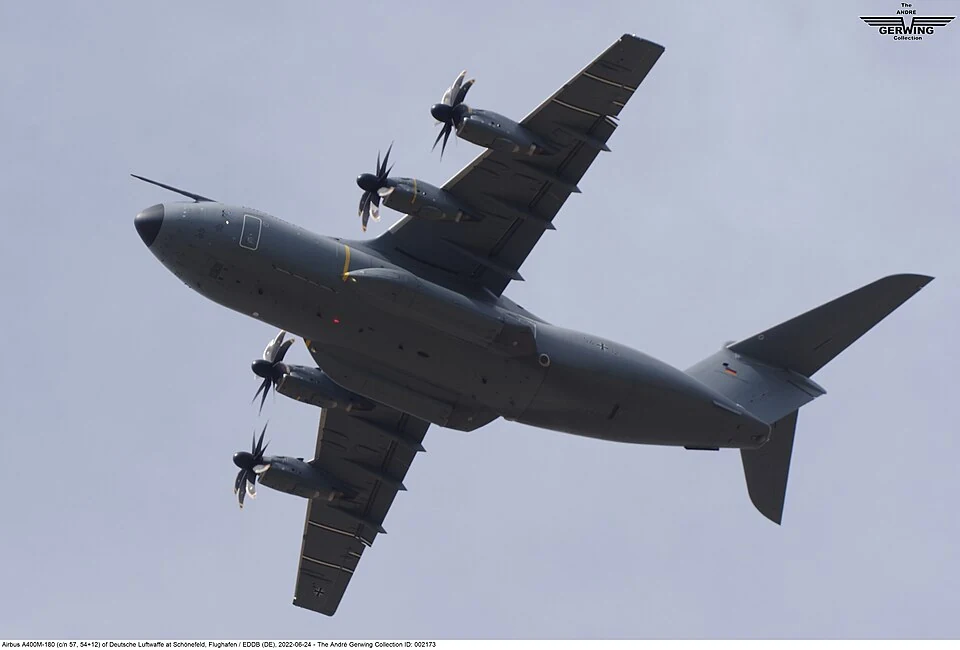
Luftwaffe A400M-180 54+12 · production configurationAndré Gerwing · resized · CC BY-SA 4.0 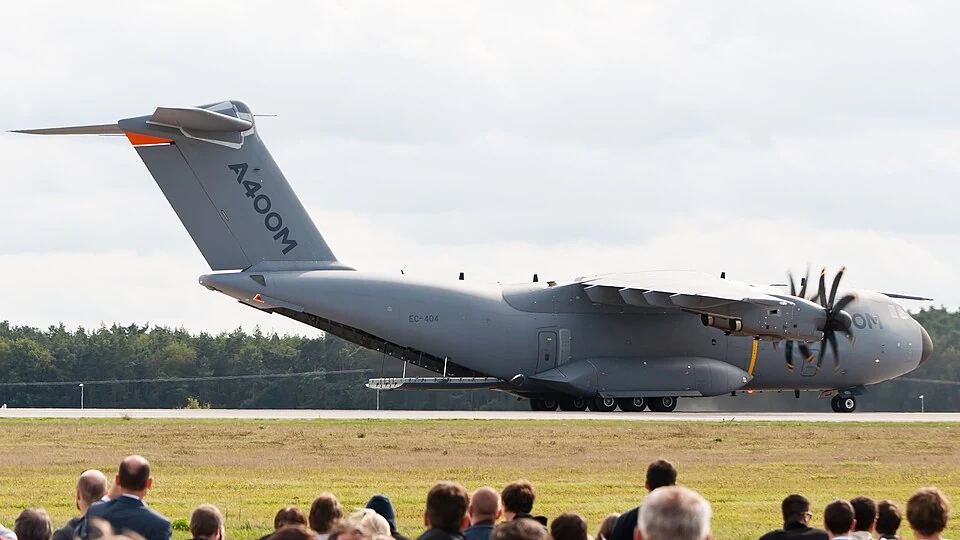
A400M flight-test aircraft EC-404 · high wing, T-tail and rear cargo rampJulian Herzog · resized · CC BY 4.0 Landing gear configuration · Airbus A400M-180
Six main wheels on each side, with kneeling capability.
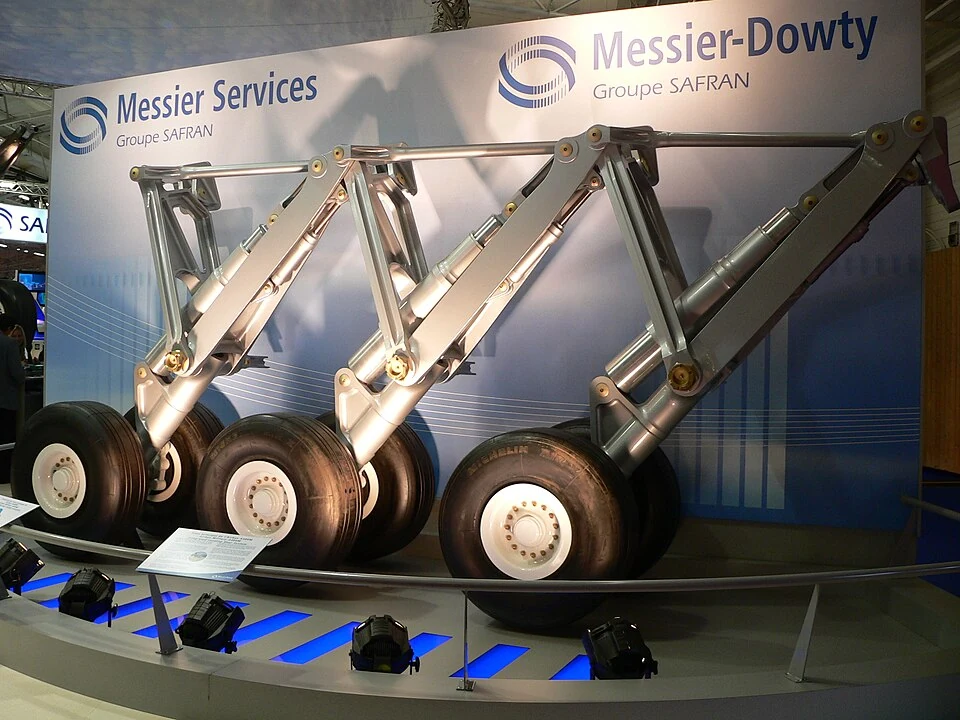
A400M main landing gear · six-wheel assembly on displayDavid Monniaux · resized · CC BY-SA 3.0


Technical notes
Design notes
- The certified powerplant comprises four Europrop International TP400-D6 turboprops.
Variant Technical Profile
Airbus A400M-180 is a specific configuration within Airbus A400M Atlas, developed to cover a defined capacity, range, payload, or mission requirement inside the wider family.
Airbus A400M-180 is positioned as a capacity/range-specific solution within the military_transport segment, serving routes better matched than sibling variants.
Technical features
- Airbus A400M-180: Missionized structure · structure. Floor strength, ramps, doors, or mission equipment support cargo, surveillance, or maritime patrol roles.
- Airbus A400M-180: Military avionics and communications · avionics. Secure radios, sensors, tactical displays, and mission computers distinguish the aircraft from civil variants.
- Airbus A400M-180: Field performance · range_payload. Runway performance, payload, and operating environment matter more than pure seat-mile economics.
- Airbus A400M-180: Systems redundancy · safety. Military missions require robust electrical, hydraulic, navigation, and defensive-system integration.
- Airbus A400M-180: Multi-role adaptability · operational_efficiency. The platform can be configured for transport, patrol, training, surveillance, or special missions.
Advantages
- Provides a more precise capacity or range match within the family.
- Retains training, maintenance, and parts commonality with sibling variants.
- Lets operators tune engine, cabin, and payload choices to route needs.
Weaknesses
- Configuration identification complexity. Visually similar aircraft can differ materially by engine, weight standard, cabin layout, and conversion status.
- Generation-dependent economics. Older generations usually trail newer designs in fuel burn, noise, avionics, or maintenance intervals.
- Market-fit limits. Every variant has an ideal capacity and range band; outside it, load factor, range, or cost can become limiting.
Markets
- Network airline trunk or feeder markets
- Leasing and fleet replacement markets
- Military transport, tanker, and special-mission markets
Operators
- Full-service network airlines
- Low-cost or leisure airlines
- Cargo, government, or special-mission operators
Routes and missions
- High-frequency short or medium-haul trunk routes
- Medium-density long-haul or cross-regional routes
- Fleet replacement, supplementation, or special missions
Sibling comparison
- smaller sibling variants. Usually provides more seats, cargo volume, or thrust demand, but can be harder to fill on thinner routes.
- larger or longer-range sibling variants. Usually has lower acquisition and operating exposure, but less range, payload, or growth margin.
From the archive
Loading photographs…