A Dreamliner From Xiamen to Addis Ababa
XiamenAir’s first African route links Fujian directly to Ethiopia. The inaugural timetable shows how one weekly flight can connect a province to a much larger network.
On a Saturday evening timetable from Xiamen, one departure opens a route to a new continent. The destination is Addis Ababa, the Ethiopian capital and the centre of one of Africa’s largest airline networks.123
Saturday out, Sunday back
XiamenAir is scheduled to fly MF807 from Xiamen Gaoqi to Addis Ababa Bole on Saturday, 28 November 2026. The flight’s listing on the morning of 28 November showed a planned departure at 17:40 in Xiamen and arrival at 00:15 on Sunday in Ethiopia. With the five-hour time difference, that allows 11 hours and 35 minutes. The return, MF808, is scheduled to leave Addis Ababa on Sunday afternoon and reach Xiamen on Monday morning.
It will be Fujian’s first scheduled nonstop passenger service to Africa. A single weekly round trip makes the days as important as the destination. On the launch timetable, the outward and return legs are concentrated into one weekend, so travellers going beyond either airport have to build their itineraries around that rhythm.123
The widebody that took XiamenAir long-haul
The scheduled aircraft is a Boeing 787-8. XiamenAir accepted its first one in August 2014. It was the operator’s first widebody, arriving nearly three decades after the airline began flying with two 737-200s. At delivery, Boeing pointed to Europe, North America and Australia as the markets the new aircraft would help the airline reach.
That history makes the choice of aircraft as interesting as the new city pair. The 787-8 that opened a different kind of route for XiamenAir in 2014 now sits on the timetable for its first African service. The archive also shows the larger 787-9 at Gaoqi in the airline’s blue UN Sustainable Development Goals livery.4
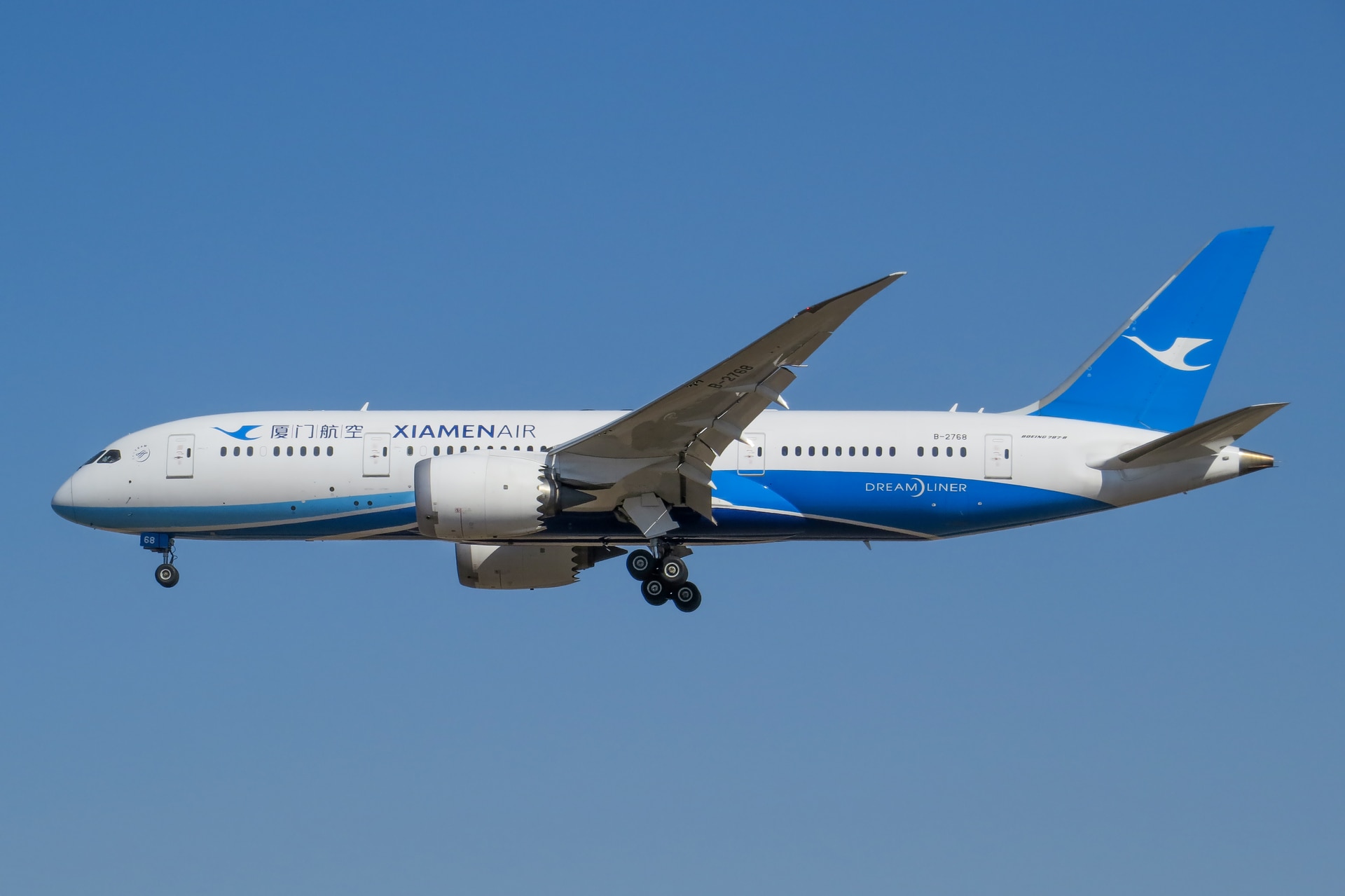
XiamenAir 787-8 B-2768 approaches Beijing Capital from Fuzhou on 9 March 2017. The aircraft illustrates the variant scheduled to fly to Addis Ababa.

Why the route ends at Bole
On a route map, Addis Ababa is a destination in its own right. It is also the hub of Ethiopian Airlines, whose October 2026 fact sheet lists more than 60 African destinations. The map centres on Addis Ababa and extends to places such as Nairobi, Accra and Dar es Salaam. That network gives the new service its wider geographic significance. The availability of any particular connection depends on its schedule and ticketing arrangements.
Fujian gains a direct link to Ethiopia and a starting point for journeys deeper into the continent. The published timing also shows how different the experience can be from one itinerary to the next. An arrival shortly after midnight is one thing for a traveller staying in Addis Ababa, and another for someone continuing on a morning flight.5
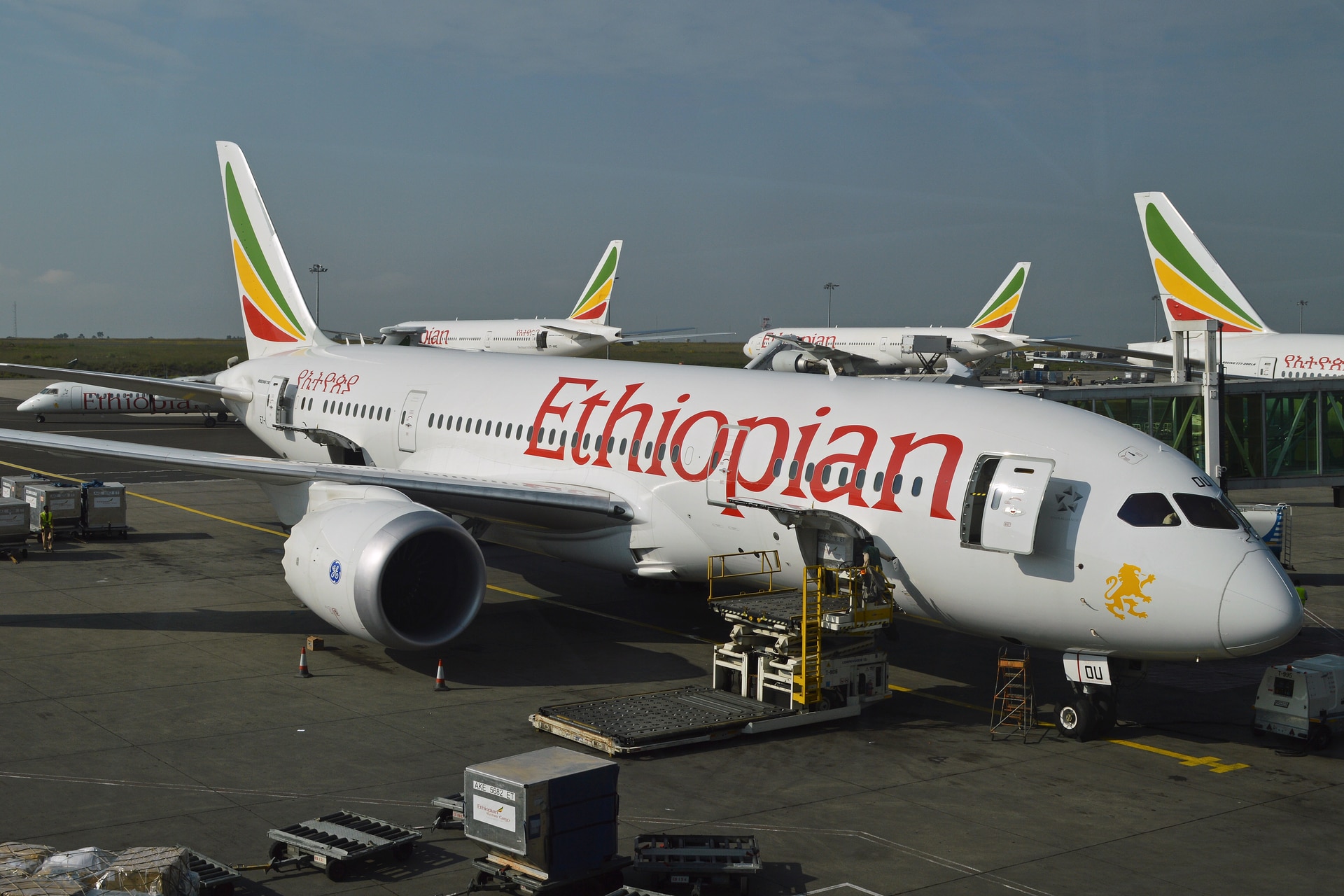
Ethiopian Airlines 787-8 ET-AOU on the apron at Addis Ababa Bole on 23 September 2014, an earlier view of the hub at the African end of the route.

A new line from an old airport
The departure airport is still Gaoqi, Xiamen’s island gateway. The city is preparing a separate move to Xiang’an, so the African launch also adds a chapter to the existing airport’s long-haul history. Its timing places a new continent on the route map while the departure address is still familiar.
As of the morning of 28 November, the inaugural flight was still scheduled for that evening. The flight listing showed a Boeing 787-8 assignment. The actual departure and arrival were pending.12