Fuji Dream’s Seventeenth Jet Goes Black and Red
Junko Koshino’s livery for JA17FJ ties a new Embraer E175 to the uniforms on board and the colours that make the Japanese regional airline recognisable.
At Fuji Dream Airlines, you can identify many aircraft by colour before you can read their registrations. The airline’s seventeenth jet will bring a black and red scheme designed by Junko Koshino to that already varied line-up.12
Two colours for No. 17
Fuji Dream Airlines has spent years making its Embraer jets easy to tell apart. At New Chitose, a gold E175 and a navy E175 can look like aircraft from different airlines until you see the same large FDA letters on their fuselages. The Shizuoka-based carrier’s seventeenth aircraft will extend that approach in a different direction. On 27 November 2026 it unveiled BLACK RED, a design by Japanese fashion designer Junko Koshino for E175 JA17FJ.
The airline calls the two colours Super Black and Crimson Red. Koshino pairs curves in black with straighter red graphics, an interplay the airline links to strength and elegance. The design also draws on the visual identity of the uniforms she created for Fuji Dream’s cabin crew and ground staff. The idea extends from what a passenger sees through the terminal window to what they see as they board.12
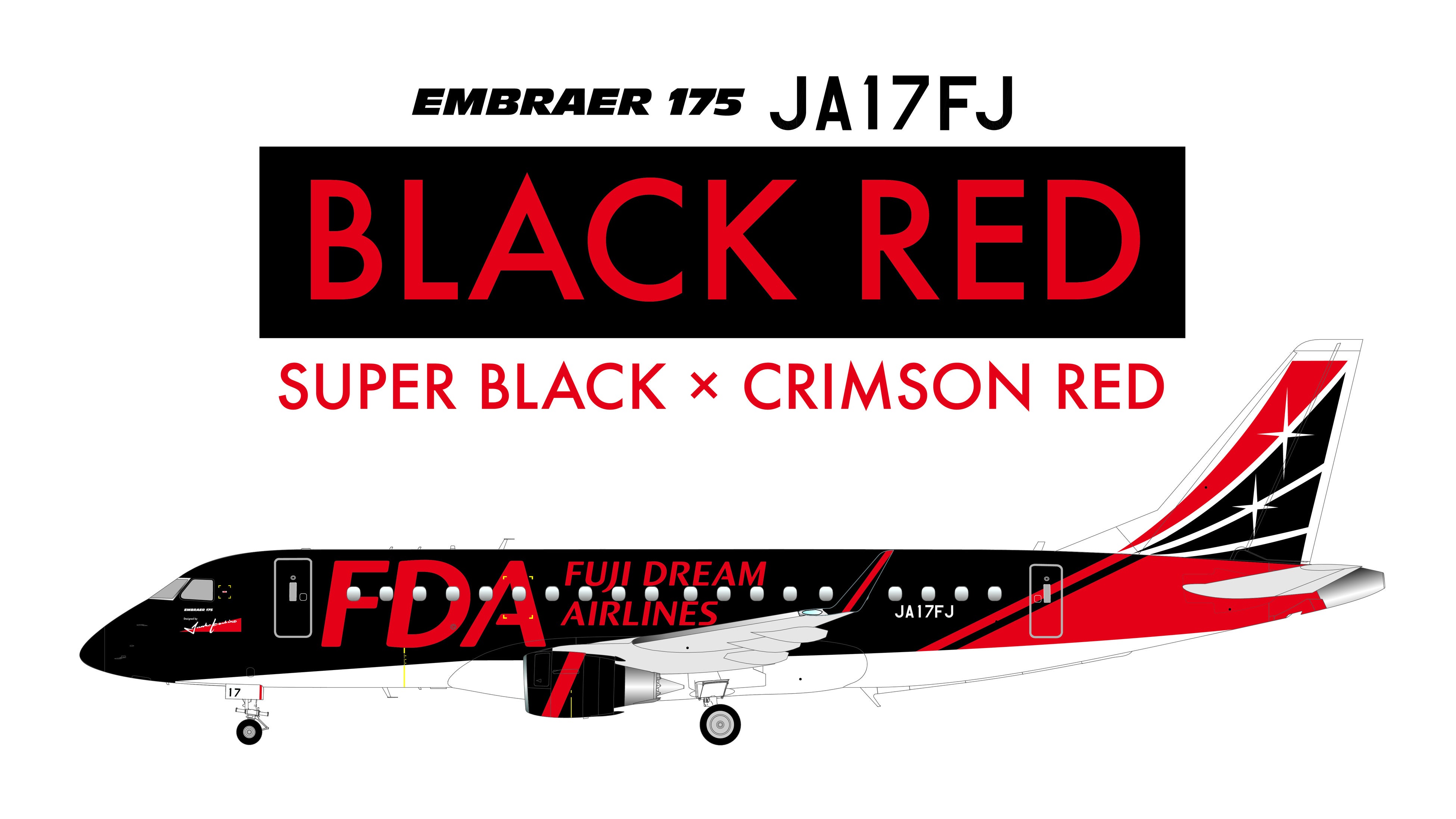
Official livery rendering of JA17FJ, released on 27 November 2026. Junko Koshino’s design pairs a curved black nose with red lines sweeping toward the tail.
How colour became part of the fleet
Fuji Dream began scheduled flying from Shizuoka on 23 July 2009, opening links to Komatsu, Kumamoto and Kagoshima. Its first Embraer E170, JA01FJ, wore Dream Red, while JA02FJ was light blue. As E175s joined the fleet, the colours widened to include orange, purple, yellow, gold and navy. The airline likens that variation to the way Mount Fuji changes appearance in different light.
The two whyaviation photographs from New Chitose show the system at work. JA09FJ wears a gold fuselage and JA13FJ a deep navy one. Both retain the broad FDA titles and the familiar star graphic on the tail. An earlier photograph of orange JA05FJ shows how established that way of identifying the fleet was more than a decade before the BLACK RED announcement.34
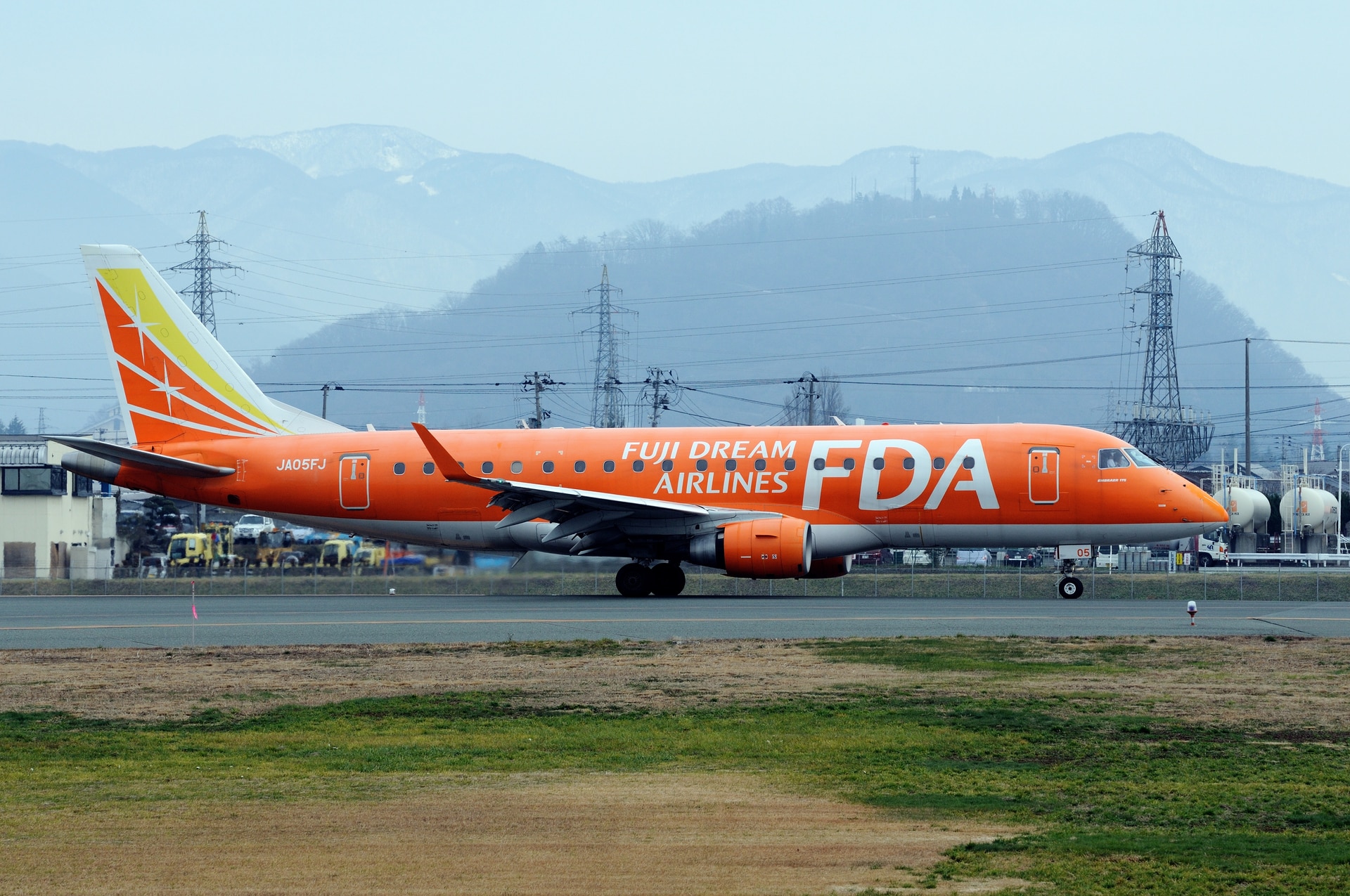
Orange Fuji Dream Airlines E175 JA05FJ, photographed on 10 December 2015. This earlier fleet colour shows how long Fuji Dream has varied the paint across the same aircraft family.

The regional jet beneath the paint
JA17FJ is an 84-seat Embraer E175, part of the same E-Jet family Fuji Dream has used since it began flying. Its cabin has two seats on either side of the aisle. The E175 gives the airline a small jet it can use on direct links between regional cities, where the passenger demand and schedule are different from those on Japan’s busiest trunk routes.
Common aircraft make the operation legible to crews and maintenance teams. Individual colours make it legible from outside. That contrast is particularly visible in a fleet where two aircraft of the same model can sit side by side and still be instantly distinguishable from the terminal.15
When JA17FJ is due in Japan
Fuji Dream expects JA17FJ to arrive at Nagoya’s Komaki airport in early March 2027. As of 28 November the airline had announced the design and estimated arrival, with the first date of commercial service still under consideration.
Until the aircraft arrives, the fleet photographs give the new look its context. Gold, navy and orange already belong to one airline despite their different appearances. BLACK RED adds a scheme that connects an individual aircraft with the people passengers will meet around it.12