Xi'an MA600

The Modern Ark 600 is a later aircraft in the Xi'an regional turboprop line. CAAC presented its transport-category type certificate on 18 May 2010.

Engine options
PW127J

Identification

High-wing regional turboprop
Use the outline to narrow the family, then check the registration and documented type.
Distinguishing MA60 and MA600
CAAC certificate and maintenance records distinguish the models when a distant exterior view does not.

The MA60 reference photograph does not represent a photographed MA600.

Select a circle to see the marked area up close.
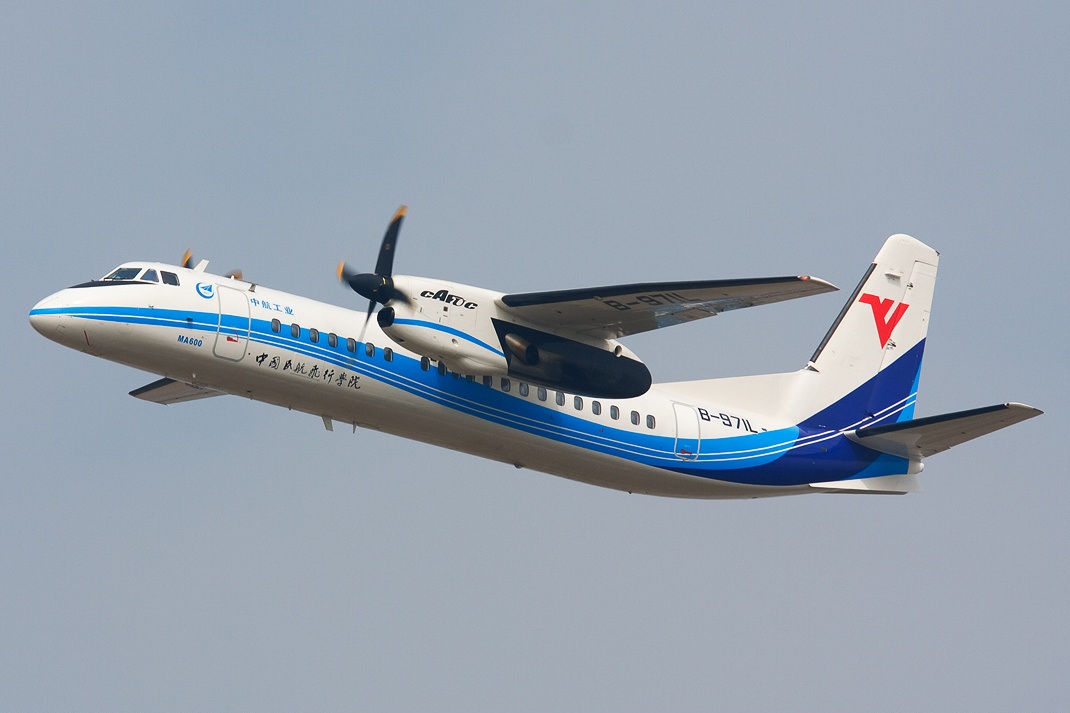
CAFUC Xi’an MA600

Civil Aviation Flight University of China B-971L at Zhuhai, 17 November 2010.
Civil Aviation Flight University of China B-971L at Zhuhai, 17 November 2010.Photo by 3GO*CHN-405/mjordan_6
Photo sourceCC BY-SA 3.0

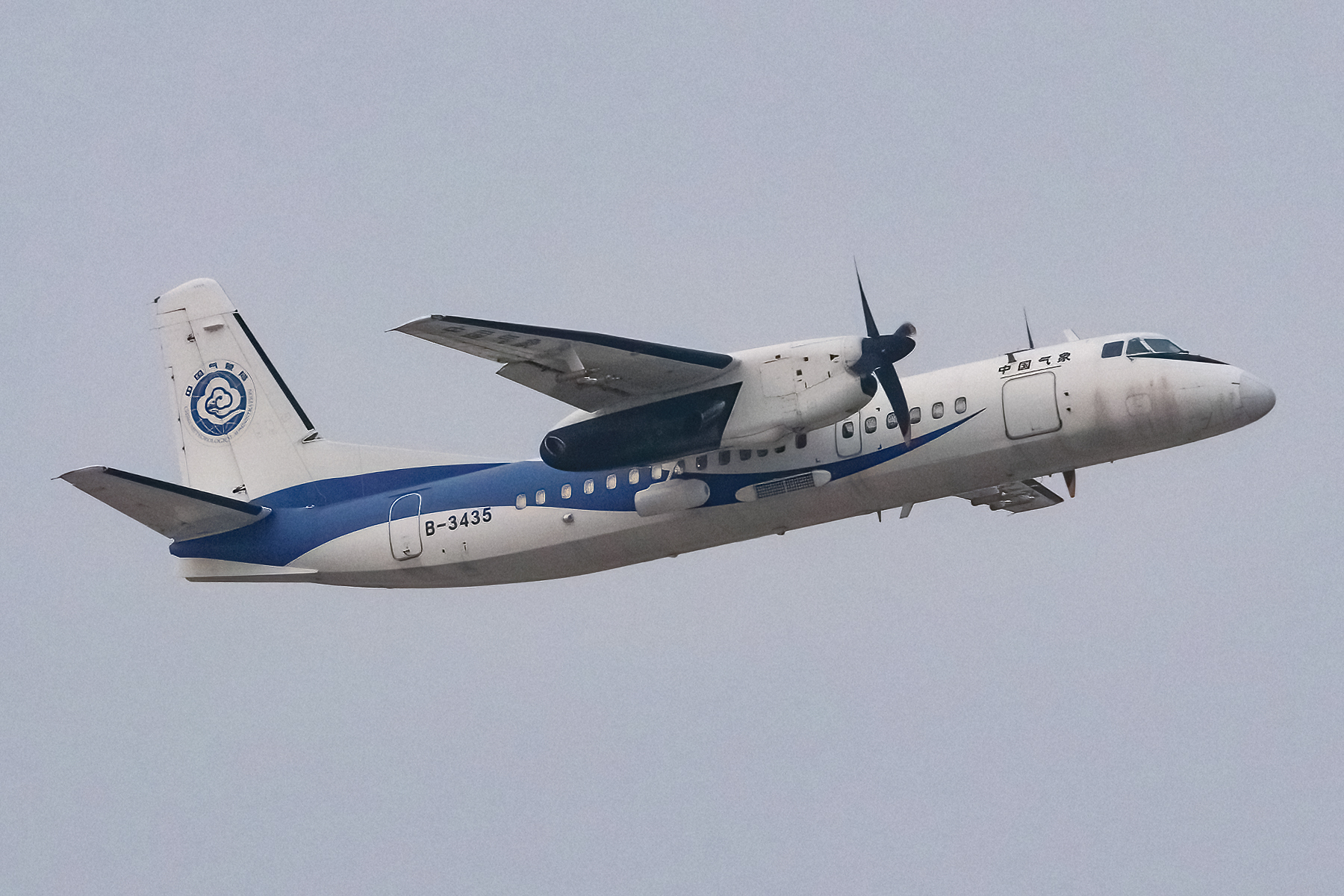
Sichuan Tri-Star General Aviation MA60

B-3435 departing Zhengzhou Xinzheng International Airport, 13 October 2024.
B-3435 departing Zhengzhou Xinzheng International Airport, 13 October 2024.Photo by Windmemories
Photo sourceCC BY-SA 4.0

Compare models

Current aircraftXi'an MA600
Compare with

Comparing Xi'an MA600 with Xi'an MA60.

SpecificationXi'an MA600Xi'an MA60
LengthUnavailable24.71 m
WingspanUnavailable29.2 m
Maximum take-off weightUnavailable21.8 t
Maximum payloadUnavailable5.5 t
Fuel tank capacityUnavailableUnavailable
Engine optionsPW127JPW127C · PW127JCAAC records PW127C for Y-7-200A development; Okay Airways delivery identifies PW127J.
Typical two-class seatsUnavailableUnavailable
Published rangeUnavailableUnavailable

A dash indicates that a verified figure is unavailable. Figures follow the configuration specified by each source.

Comparison sources

Design & cabins

Technical notes

Design notes

  • The CAAC maintenance training list includes an MA600 designation with the Pratt & Whitney Canada PW127J.
  • CAAC's 2015 historical retrospective records the MA600 succeeding the last in-service Y-7-100 in the flight-training operation described there.

Limitations

  • Confirm the MA600 identity from the registered aircraft record where appearance overlaps with the MA60.
Variant Technical Profile

Xi'an MA600 is a specific configuration within Xi'an MA60 / MA600 Family, developed to cover a defined capacity, range, payload, or mission requirement inside the wider family.

Xi'an MA600 is positioned as a capacity/range-specific solution within the narrowbody segment, serving routes better matched than sibling variants.

Technical features

  • Xi'an MA600: Single-aisle fuselage efficiency · structure. A narrow fuselage reduces structural weight and airport footprint for high-frequency short and medium routes.
  • Xi'an MA600: High-cycle operating design · maintenance. Doors, landing gear, brakes, and systems are optimized for repeated daily sectors and quick turnarounds.
  • Xi'an MA600: Wing and high-lift devices · aerodynamics. Flaps, slats, and wingtip devices balance runway performance with cruise efficiency.
  • Xi'an MA600: Engine generation changes · engine. Engine nacelle, thrust rating, fuel burn, and noise standards define each production generation.
  • Xi'an MA600: Fleet commonality · operational_efficiency. Common flight decks and maintenance practices reduce training and support cost across subfleets.

Advantages

  • Provides a more precise capacity or range match within the family.
  • Retains training, maintenance, and parts commonality with sibling variants.
  • Lets operators tune engine, cabin, and payload choices to route needs.

Weaknesses

  • Configuration identification complexity. Visually similar aircraft can differ materially by engine, weight standard, cabin layout, and conversion status.
  • Generation-dependent economics. Older generations usually trail newer designs in fuel burn, noise, avionics, or maintenance intervals.
  • Market-fit limits. Every variant has an ideal capacity and range band; outside it, load factor, range, or cost can become limiting.

Markets

  • Network airline trunk or feeder markets
  • Leasing and fleet replacement markets
  • Regional, domestic, or international airline markets

Operators

  • Full-service network airlines
  • Low-cost or leisure airlines
  • Cargo, government, or special-mission operators

Routes and missions

  • High-frequency short or medium-haul trunk routes
  • Medium-density long-haul or cross-regional routes
  • Fleet replacement, supplementation, or special missions

Sibling comparison

  • smaller sibling variants. Usually provides more seats, cargo volume, or thrust demand, but can be harder to fill on thinner routes.
  • larger or longer-range sibling variants. Usually has lower acquisition and operating exposure, but less range, payload, or growth margin.

Sources