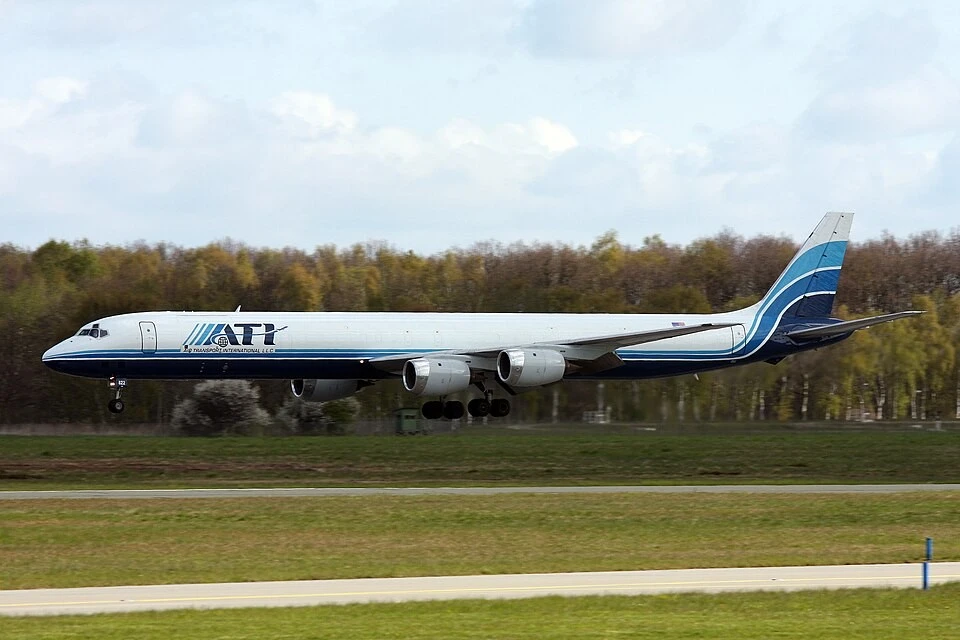
DC-8 family

DC-8 family covers passenger / freighter aircraft in the McDonnell Douglas / Douglas portfolio. The entry is imported from the McDonnell Douglas / Lockheed / Bombardier technical workbook and organized by family and derivative variant.

Models at a glance

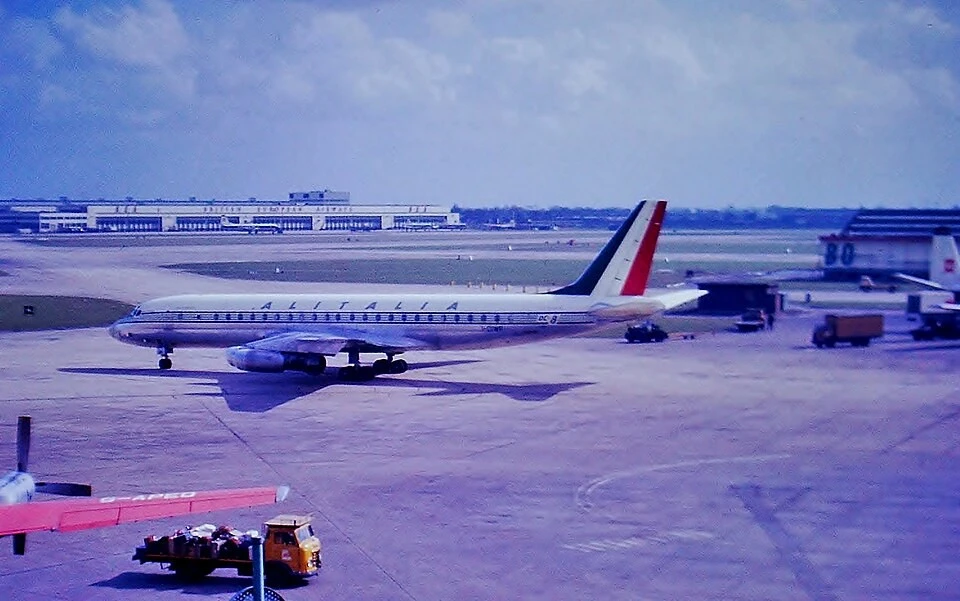
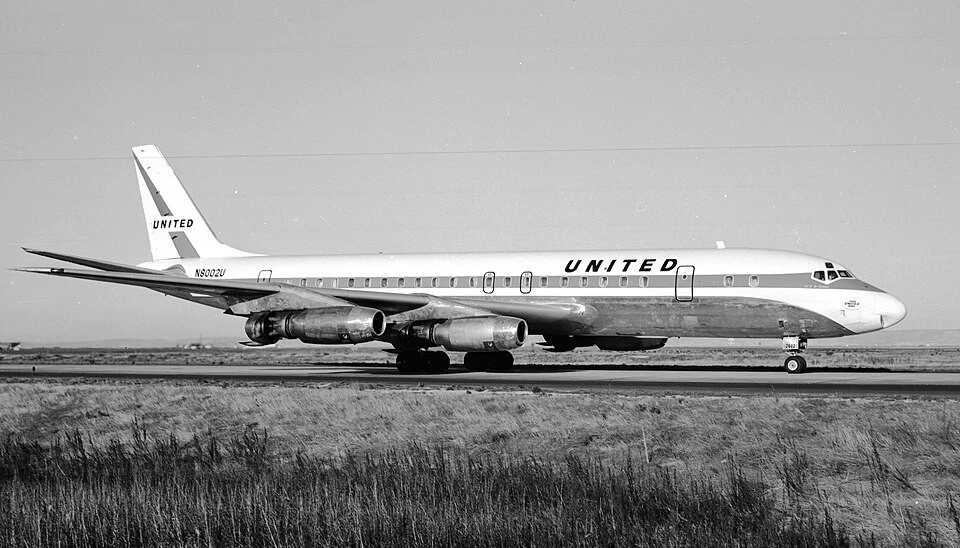
DC-8-10

DC-8-10 is a passenger / freighter derivative within DC-8 family. Market positioning: Early domestic/medium-range jetliner.

Entered service
1959Delta and United
First flight
1958
Length
45.87 m
Wingspan
43.41 m
Published range
2,381 nmDelta DC-8-11 example · converted from 2,740 statute miles
Typical two-class seats
119Delta example · First Class and Supercoach
Engine options
JT3C
Main landing gear
Unavailable
Sources

DC-8-20

DC-8-20 is a passenger / freighter derivative within DC-8 family. Market positioning: Higher-thrust early DC-8.

Entered service
Unavailable
First flight
Unavailable
Length
45.87 m
Wingspan
43.41 m
Published range
2,670 nmDC-8-21 with full passenger load at high-speed cruise in the Douglas study
Typical two-class seats
12434 first and 90 coach
Engine options
JT4A
Main landing gear
Unavailable
Sources

DC-8-30

DC-8-30 is a passenger / freighter derivative within DC-8 family. Market positioning: Longer-range intercontinental DC-8.

Length
45.87 m
Wingspan
43.41 m
Published range
Unavailable
Typical two-class seats
12434 first and 90 coach
Engine options
JT4A
Main landing gear
Unavailable
Sources

DC-8-40

DC-8-40 is a passenger / freighter derivative within DC-8 family. Market positioning: Conway turbofan-powered option.

Length
45.93 m
Wingspan
43.4 m
Published range
4,150 nmApproximate chart reading · DC-8-43 · 177 passengers and baggage
Typical two-class seats
12434 first and 90 coach
Engine options
Rolls-Royce Conway
Main landing gear
2 axles · 4 wheels per side
Sources

DC-8-50

DC-8-50 is a passenger / freighter derivative within DC-8 family. Market positioning: Improved turbofan DC-8.

Length
45.93 m
Wingspan
43.4 m
Published range
4,650 nmApproximate chart reading · DC-8-55 · 189 passengers and baggage
Typical two-class seats
144DC-8-55 example · 24 first and 120 coach
Published seating
Unavailable
Engine options
JT3D
Main landing gear
2 axles · 4 wheels per side
Sources

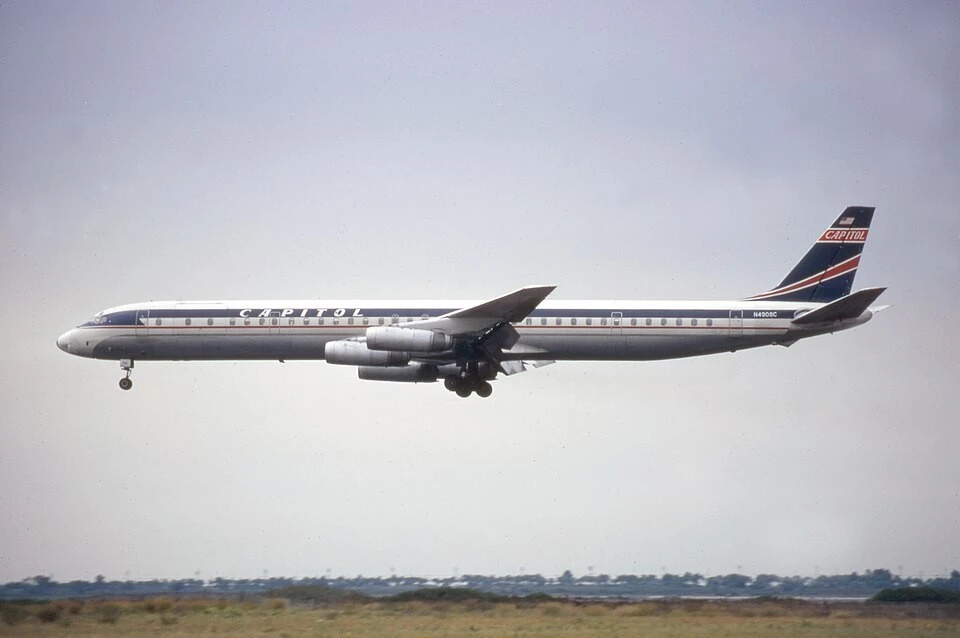
DC-8-61

DC-8-61 is a passenger / freighter derivative within DC-8 family. Market positioning: High-capacity stretched DC-8.

Length
57.12 m
Wingspan
43.4 m
Published range
3,300 nmApproximate chart reading · 259 passengers and baggage
Typical two-class seats
209Boeing published mixed-class total
Published seating
259All-economy configuration
Engine options
JT3D
Main landing gear
2 axles · 4 wheels per side
Sources

DC-8-62

DC-8-62 is a passenger / freighter derivative within DC-8 family. Market positioning: Long-range DC-8.

Length
48.01 m
Wingspan
45.23 m
Published range
5,200 nmApproximate chart reading · 189 passengers and baggage
Typical two-class seats
16224 first and 138 coach
Published seating
Unavailable
Engine options
JT3D
Main landing gear
2 axles · 4 wheels per side
Sources

DC-8-63

DC-8-63 is a passenger / freighter derivative within DC-8 family. Market positioning: High-capacity long-range DC-8.

Length
57.12 m
Wingspan
45.23 m
Published range
3,910 nmOver this distance with 259 passengers in the historical example
Typical two-class seats
209Boeing published mixed-class total
Published seating
259Boeing passenger example
Engine options
JT3D
Main landing gear
2 axles · 4 wheels per side
Sources

DC-8-71

DC-8-71 is a passenger / freighter derivative within DC-8 family. Market positioning: Re-engined DC-8-61.

Length
57.12 m
Wingspan
43.4 m
Published range
3,700 nmApproximate chart reading · 259 passengers and baggage
Typical two-class seats
209Boeing published mixed-class total
Engine options
CFM56-2
Main landing gear
2 axles · 4 wheels per side
Sources

DC-8-72

DC-8-72 is a passenger / freighter derivative within DC-8 family. Market positioning: Re-engined DC-8-62.

Length
48.01 m
Wingspan
45.23 m
Published range
5,350 nmApproximate chart reading · 189 passengers and baggage
Typical two-class seats
16224 first and 138 coach
Engine options
CFM56-2
Main landing gear
2 axles · 4 wheels per side
Sources

DC-8-73

DC-8-73 is a passenger / freighter derivative within DC-8 family. Market positioning: Re-engined DC-8-63.

Length
57.12 m
Wingspan
45.23 m
Published range
4,600 nmApproximate chart reading · 259 passengers and baggage
Typical two-class seats
209Boeing published mixed-class total
Engine options
CFM56-2
Main landing gear
2 axles · 4 wheels per side
Sources

Identification

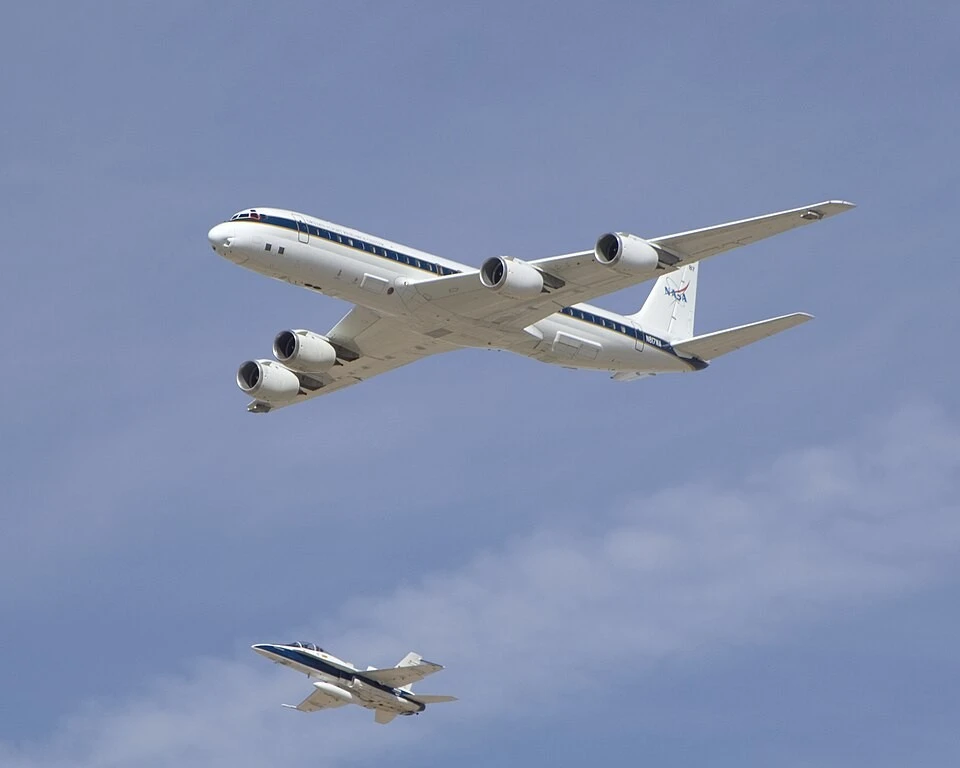
Four underwing engines
Count two separate pods below each low swept wing on a single-deck fuselage. On re-engined Super 70 aircraft the CFM56 nacelles are broader than the early DC-8 pods.
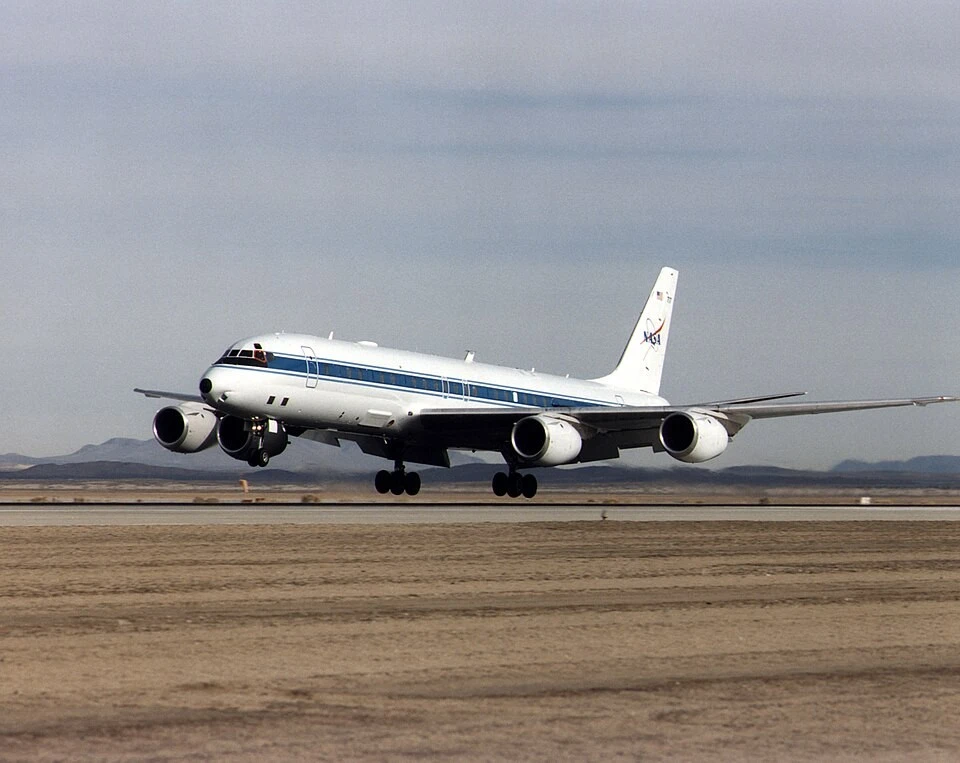
Lower nose
From low front-quarter view, look below the flight deck for the pair of air inlet openings in the lower nose. They help separate the DC-8 from a Boeing 707.

The air scoops are easiest to see head-on. Super 60 and 70 series lengths vary.

Design & cabins

  • Swept wing and early four-engine installations

    The DC-8 uses four engines on a swept wing. Turbojet and early turbofan installations distinguish its early series.

  • Super 60 stretches and wing differences

    The Super 60 line covers different fuselage lengths and aerodynamic configurations, with the -61, -62 and -63 developed for different capacity and range needs.

  • Super 70 CFM56 re-engining

    The Super 70 converted Super 60 airframes to CFM56 engines. The re-engined models retain the relevant fuselage and wing configuration of their donors.

More aircraft systems
  • Airframe and aerodynamics

    The dimensions, structure and fuel capacity changed across the DC-8's early and stretched series.

  • Flight controls and avionics

    The DC-8's cockpit and systems are documented by model and avionics modification.

  • Cabin and cargo

    Passenger, combination and freight layouts use different doors and loading arrangements.

  • Landing gear and braking

    Ground clearances, gear and braking details depend on the model and its weight standard.

Technical notes

Design notes

  • Four-engine low-wing jetliner layout
  • Swept wing optimized for long-range jet cruise
  • Super 60/70 stretch and re-engine evolution
  • CFM56 re-engining on -70 series improved noise and fuel burn
  • Strong later-life freighter utility

Advantages

  • Four-engine low-wing jetliner layout
  • Swept wing optimized for long-range jet cruise
  • Super 60/70 stretch and re-engine evolution

Limitations

  • Four-engine maintenance and fuel-cost penalty
  • Narrow cabin cross-section compared with later widebodies
  • Older flight deck and systems compared with later ETOPS twins
  • Early engines had high noise and fuel burn
  • Passenger market economics declined against 767/A300/A310
Family Technical Profile

DC-8 family is one of Aircraft manufacturer's platforms in its market segment, balancing capacity, range, airport compatibility, maintenance economics, and mission flexibility.

DC-8 family serves the narrowbody market with family commonality and multiple configurations.

Technical features

  • DC-8 family: Single-aisle fuselage efficiency · structure. A narrow fuselage reduces structural weight and airport footprint for high-frequency short and medium routes.
  • DC-8 family: High-cycle operating design · maintenance. Doors, landing gear, brakes, and systems are optimized for repeated daily sectors and quick turnarounds.
  • DC-8 family: Wing and high-lift devices · aerodynamics. Flaps, slats, and wingtip devices balance runway performance with cruise efficiency.
  • DC-8 family: Engine generation changes · engine. Engine nacelle, thrust rating, fuel burn, and noise standards define each production generation.
  • DC-8 family: Fleet commonality · operational_efficiency. Common flight decks and maintenance practices reduce training and support cost across subfleets.

Advantages

  • One platform can cover several capacity and mission bands.
  • Family design reduces training, maintenance, and spares complexity.
  • Engine, wingtip, avionics, or structural upgrades can extend lifecycle value.

Weaknesses

  • Configuration identification complexity. Visually similar aircraft can differ materially by engine, weight standard, cabin layout, and conversion status.
  • Generation-dependent economics. Older generations usually trail newer designs in fuel burn, noise, avionics, or maintenance intervals.
  • Market-fit limits. Every variant has an ideal capacity and range band; outside it, load factor, range, or cost can become limiting.

Markets

  • Network airline trunk or feeder markets
  • Leasing and fleet replacement markets
  • Regional, domestic, or international airline markets

Operators

  • Full-service network airlines
  • Low-cost or leisure airlines
  • Cargo, government, or special-mission operators

Routes and missions

  • High-frequency short or medium-haul trunk routes
  • Medium-density long-haul or cross-regional routes
  • Fleet replacement, supplementation, or special missions
Sources