Home/Encyclopedia/Lockheed/L-188 Electra / P-3 Orion family

L-188 Electra / P-3 Orion family

L-188 Electra / P-3 Orion family covers turboprop passenger / special mission aircraft in the Lockheed portfolio. The entry is imported from the McDonnell Douglas / Lockheed / Bombardier technical workbook and organized by family and derivative variant.

Models at a glance

L-188A

L-188A is a passenger / special mission derivative within L-188 Electra / P-3 Orion family. Market positioning: Medium-range turboprop passenger aircraft.

Length
31.88 mL-188 airport-planning figure
Wingspan
30.18 mL-188 airport-planning figure
Published range
2,955 nmHistorical published 3,400 statute miles in still air
Typical two-class seats
Unavailable
Engine options
Allison 501-D13Documented on C-GFQA
Main landing gear
Unavailable
Sources

L-188C

L-188C is a passenger / special mission derivative within L-188 Electra / P-3 Orion family. Market positioning: Higher-weight/longer-range Electra.

Length
31.88 mL-188 airport-planning figure
Wingspan
30.18 mL-188 airport-planning figure
Published range
2,943 nmResearch aircraft at 7,000 m, published as 5,450 km
Typical two-class seats
70Qantas VH-ECC configuration with 12 De Luxe and 58 Economy seats
Engine options
Allison 501-D13Documented on N5532
Main landing gear
Unavailable
Sources

P-3 Orion

P-3 Orion is a passenger / special mission derivative within L-188 Electra / P-3 Orion family. Market positioning: Maritime patrol and anti-submarine warfare.

Entered service
1962
Length
35.36 m
Wingspan
30.39 m
Published range
3,800 nmNASA's N426NA P-3B airborne science aircraft
Engine options
Allison T56-A-14P-3C installation
Main landing gear
1 axle · 2 wheels per side

Identification

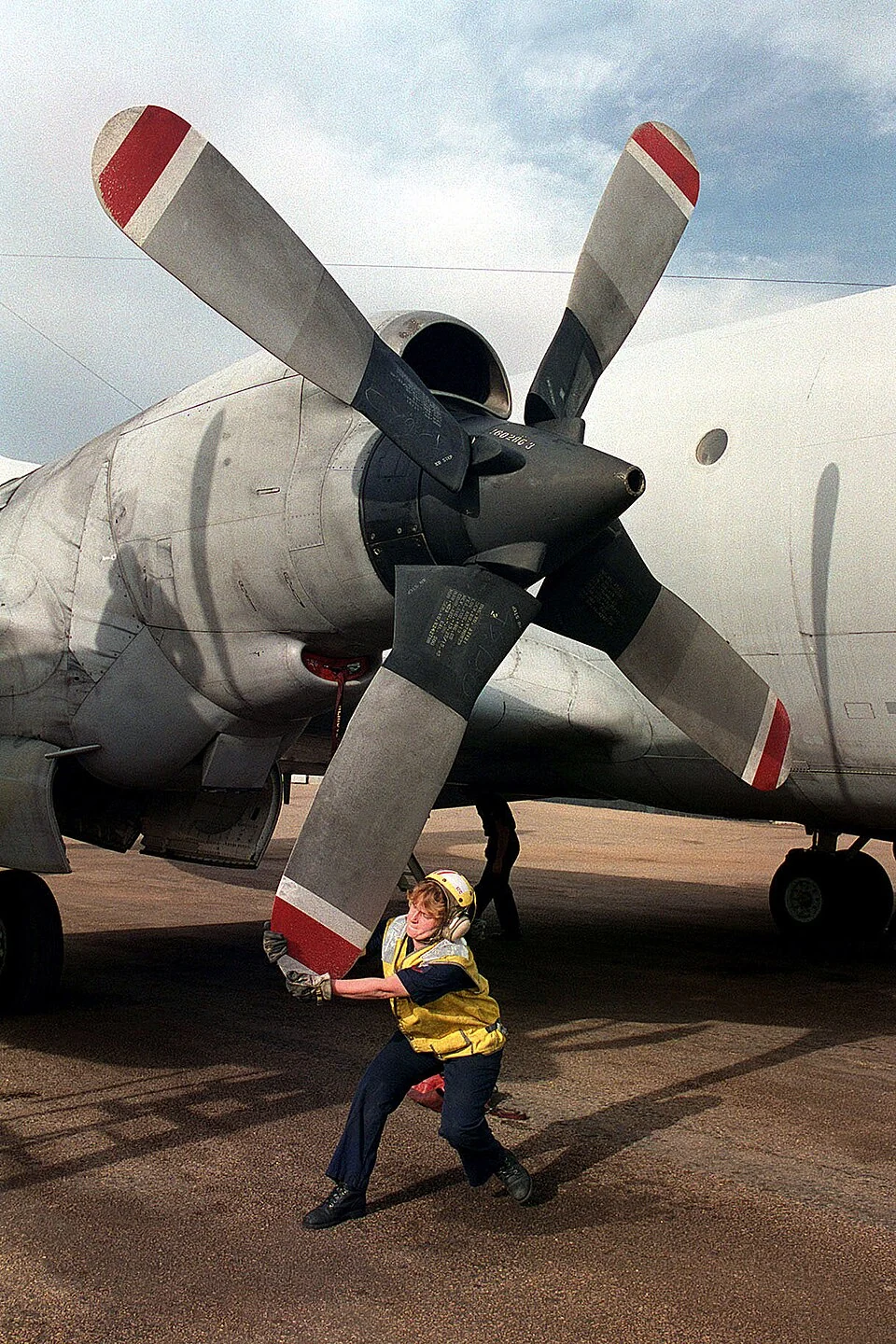
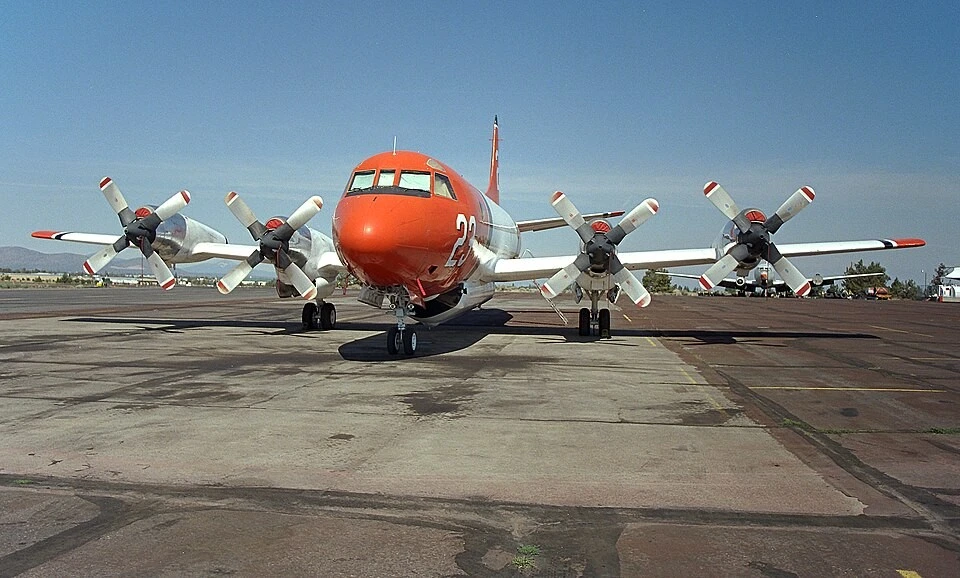
Low wing and propellers
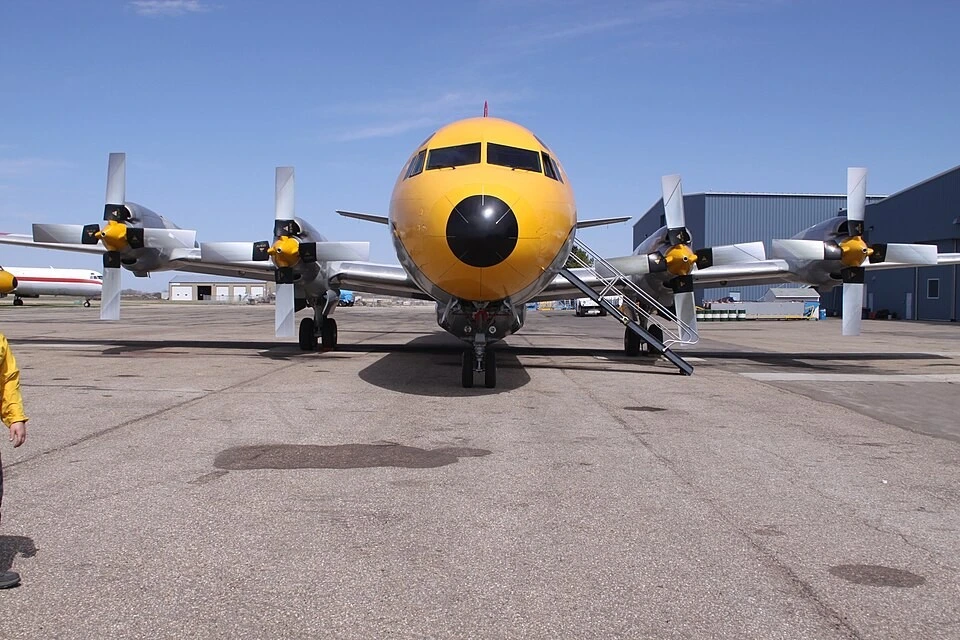
Count four propeller nacelles seated in a low wing. The L-188 Electra and its P-3 Orion derivative share this basic layout.
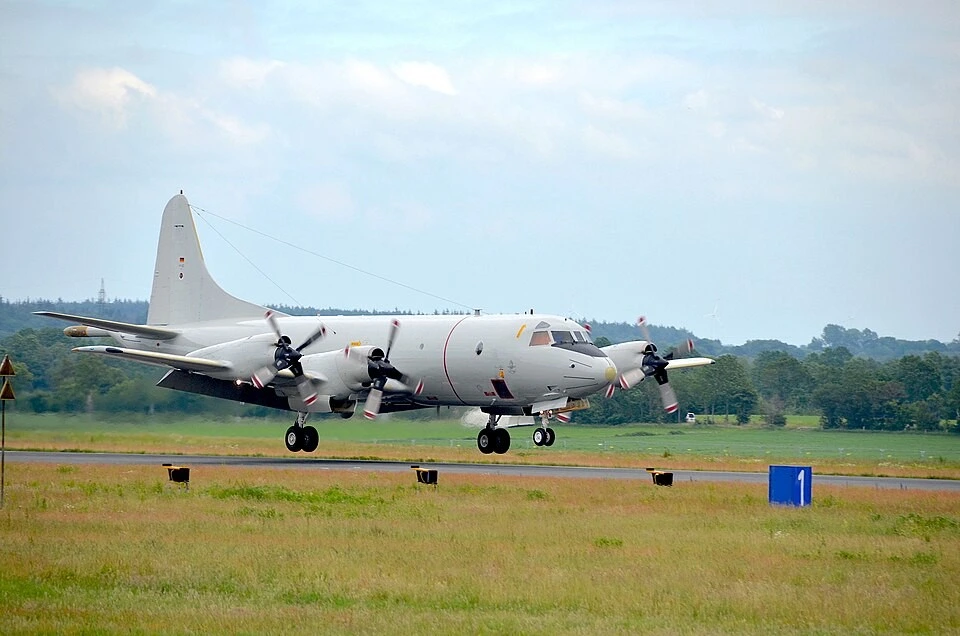
Aft fuselage
Look for a thin boom behind the tailcone on typical P-3 patrol aircraft. On a passenger Electra, check the cabin window row and the unextended tailcone.

Special-purpose modifications can change the tail or window pattern.

Design & cabins

  • Four turboprops and wing-mounted nacelles

    The Electra's four-engine propulsion layout carried into the P-3 lineage. The certified engine and propeller combinations differ by branch.

  • From Electra transport to P-3 airframe

    The P-3 derives from the Electra and has a modified fuselage and a different interior built for its role.

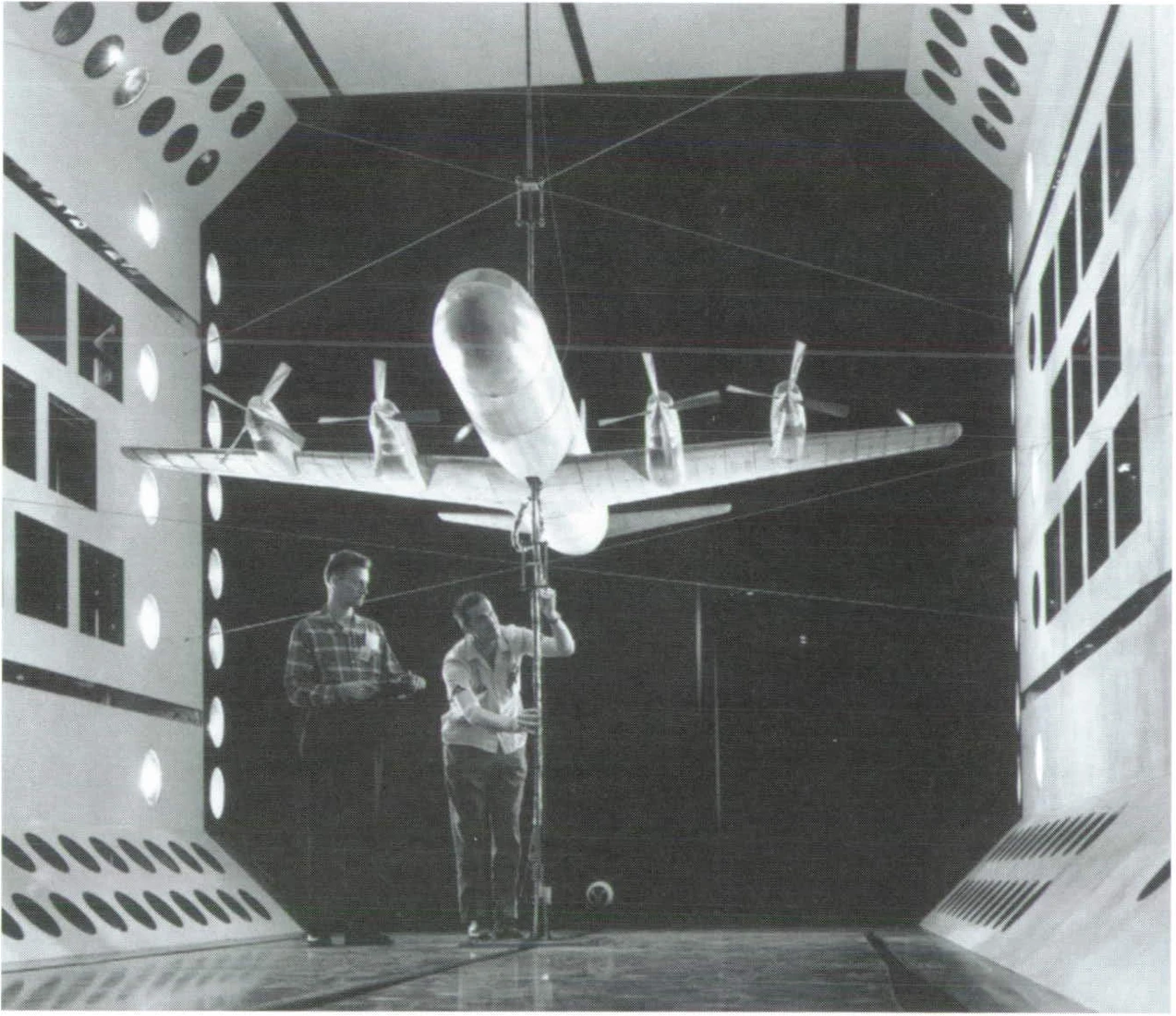
  • Propeller whirl-flutter research

    Electra investigations examined the interaction of the propellers, engine mounts and wing. The findings led to changes to the powerplant support structure.

More aircraft systems
  • Powerplant and fuel

    Fuel systems and endurance provisions depend on the Electra or P-3 variant.

  • Flight controls and avionics

    Airliner, P-3 and research modifications have different cockpit and avionics equipment.

  • Cabin and cargo

    Passenger seating and the P-3's working interior represent distinct configurations of related airframes.

  • Landing gear and braking

    The gear and ground clearances are compared using the respective aircraft's configuration.

Engine references
4 × Allison 501-D13 · 4 × Allison T56-A series
Technical notes

Design notes

  • Four-engine turboprop layout
  • Allison 501/T56 powerplant lineage
  • Efficient medium-speed regional transport
  • P-3 conversion optimized for long maritime patrol endurance
  • Low-altitude patrol and special-mission adaptability

Advantages

  • Four-engine turboprop layout
  • Allison 501/T56 powerplant lineage
  • Efficient medium-speed regional transport

Limitations

  • Electra passenger market quickly overtaken by jets
  • Early wing/engine-nacelle flutter issues required fixes
  • Four-engine turboprop maintenance burden
  • P-3 fleet aging
  • Lower cruise speed than jets
Family Technical Profile

L-188 Electra / P-3 Orion family is one of Aircraft manufacturer's platforms in its market segment, balancing capacity, range, airport compatibility, maintenance economics, and mission flexibility.

L-188 Electra / P-3 Orion family serves the narrowbody market with family commonality and multiple configurations.

Technical features

  • L-188 Electra / P-3 Orion family: Single-aisle fuselage efficiency · structure. A narrow fuselage reduces structural weight and airport footprint for high-frequency short and medium routes.
  • L-188 Electra / P-3 Orion family: High-cycle operating design · maintenance. Doors, landing gear, brakes, and systems are optimized for repeated daily sectors and quick turnarounds.
  • L-188 Electra / P-3 Orion family: Wing and high-lift devices · aerodynamics. Flaps, slats, and wingtip devices balance runway performance with cruise efficiency.
  • L-188 Electra / P-3 Orion family: Engine generation changes · engine. Engine nacelle, thrust rating, fuel burn, and noise standards define each production generation.
  • L-188 Electra / P-3 Orion family: Fleet commonality · operational_efficiency. Common flight decks and maintenance practices reduce training and support cost across subfleets.

Advantages

  • One platform can cover several capacity and mission bands.
  • Family design reduces training, maintenance, and spares complexity.
  • Engine, wingtip, avionics, or structural upgrades can extend lifecycle value.

Weaknesses

  • Configuration identification complexity. Visually similar aircraft can differ materially by engine, weight standard, cabin layout, and conversion status.
  • Generation-dependent economics. Older generations usually trail newer designs in fuel burn, noise, avionics, or maintenance intervals.
  • Market-fit limits. Every variant has an ideal capacity and range band; outside it, load factor, range, or cost can become limiting.

Markets

  • Network airline trunk or feeder markets
  • Leasing and fleet replacement markets
  • Regional, domestic, or international airline markets

Operators

  • Full-service network airlines
  • Low-cost or leisure airlines
  • Cargo, government, or special-mission operators

Routes and missions

  • High-frequency short or medium-haul trunk routes
  • Medium-density long-haul or cross-regional routes
  • Fleet replacement, supplementation, or special missions
Sources