Home/Encyclopedia/Lockheed/JetStar family

JetStar family

JetStar family covers business jet / military executive transport aircraft in the Lockheed portfolio. The entry is imported from the McDonnell Douglas / Lockheed / Bombardier technical workbook and organized by family and derivative variant.

Models at a glance

JetStar I / L-1329

JetStar I / L-1329 is a business jet / military derivative within JetStar family. Market positioning: Large early business jet.

Length
18.42 m
Wingspan
16.29 m
Published range
2,298 nmMuseum JetStar 6 specification of 4,255 km
Published seating
8–10Published passenger accommodation
Engine options
JT12A-8Museum aircraft
Main landing gear
Unavailable
Sources

Identification

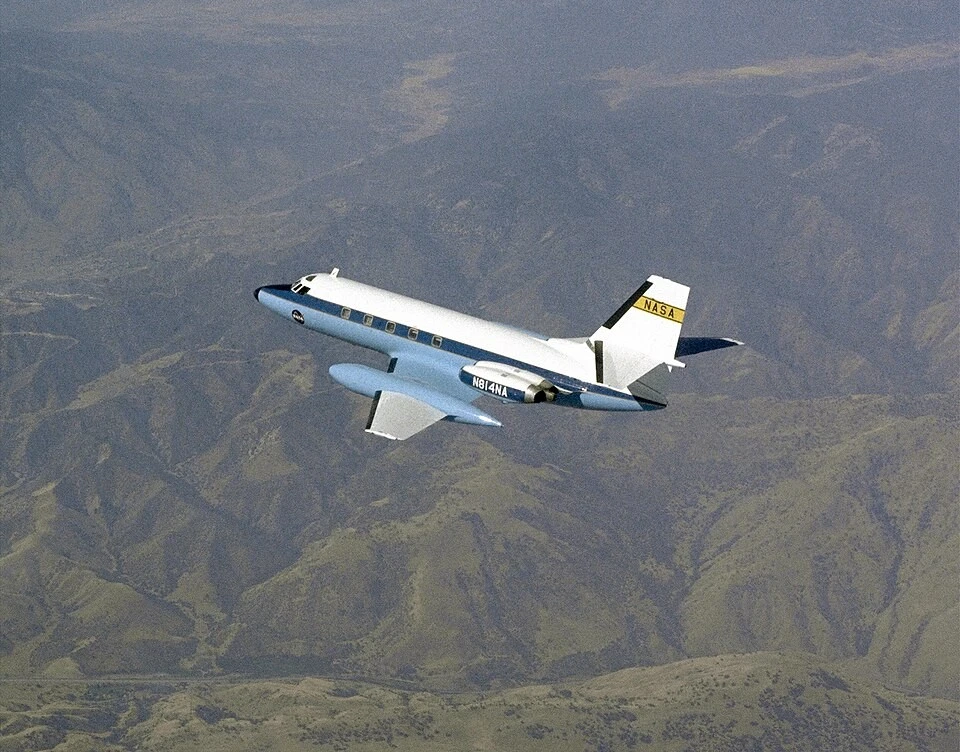
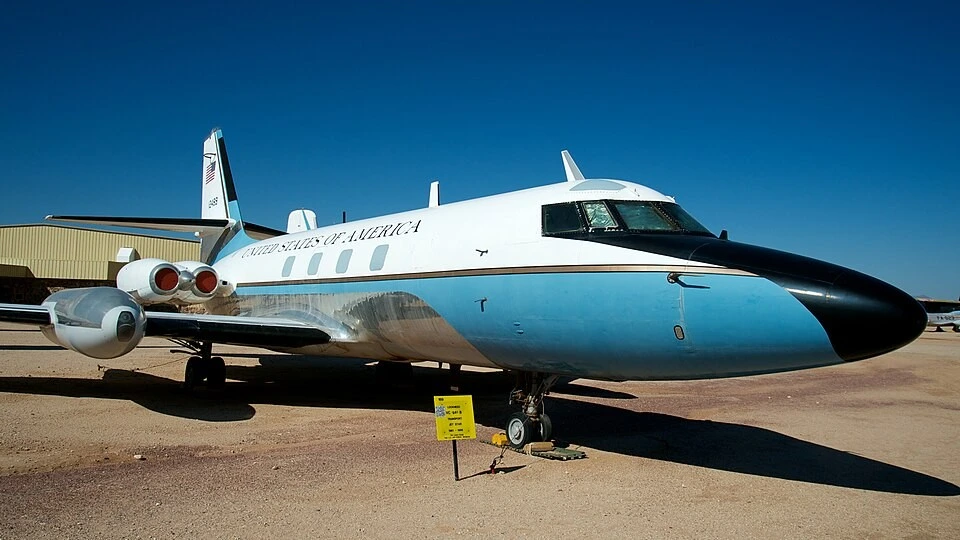
Paired rear engines
Count two engine outlets on each side of the rear fuselage on a production JetStar. The paired pods give it four engines in the space most business jets use for two.
Wing tanks
Look midway out along each wing for the elongated external fuel tank. It straddles the wing, inboard of the tip.

The two-engine development prototype and later tank shapes differ from the standard production JetStar.

Design & cabins

  • Four rear engines and the JT12A

    The JetStar places two engines on each side of its aft fuselage. Early documented aircraft use the Pratt & Whitney JT12A.

  • Swept wing and external wing tanks

    The wing fuel installation combines internal tanks with external tanks, a prominent visual feature of the JetStar.

  • Pressurised executive cabin and C-140 branch

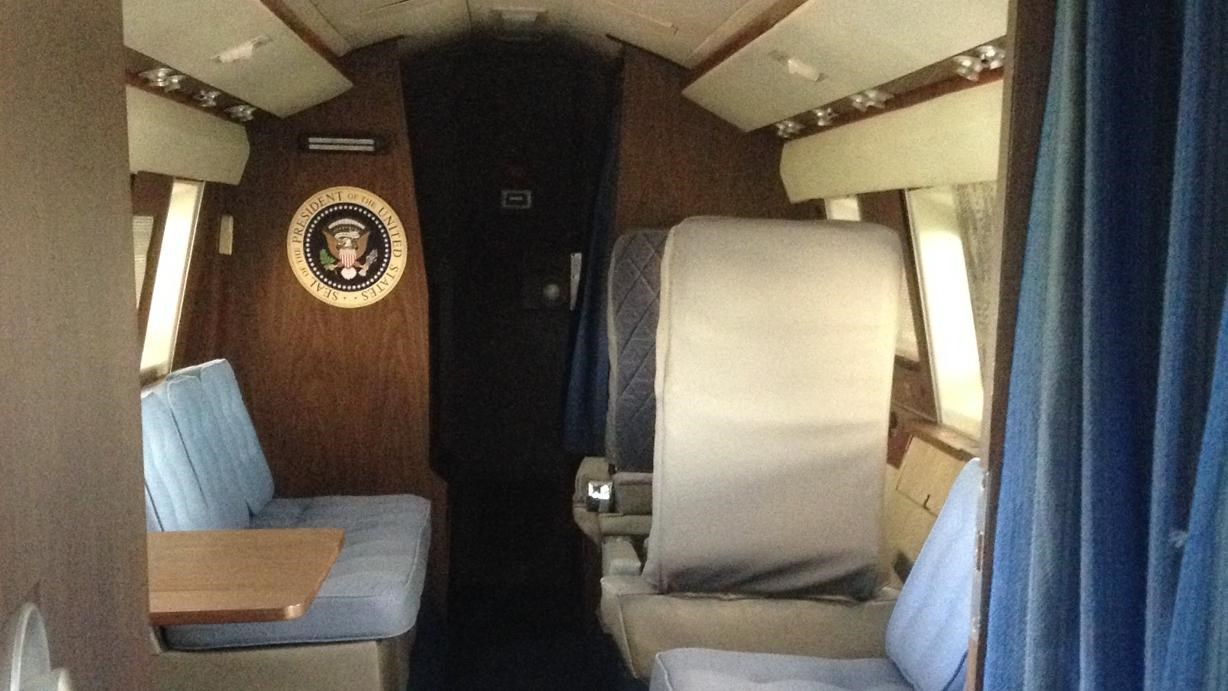
    The cabin was designed for executive transport. The C-140 derivative used different equipment and interior arrangements.

More aircraft systems
  • Powerplant and fuel

    The early engine and fuel architecture can be compared with later re-engined aircraft and their equipment.

  • Flight controls and avionics

    The NASA flight report documents conventional control and trim arrangements on an early JetStar.

  • Landing gear and braking

    Gear and braking should be considered with the aircraft's installed equipment and approved loading.

Engine references
4 × Pratt & Whitney JT12A · 4 × Garrett TFE731 · 4 × JT12A
Technical notes

Design notes

  • Early four-engine business jet
  • Swept wing with tip tanks
  • Large cabin for early business jets
  • Military VC-140 executive transport role
  • JetStar II re-engined with TFE731 turbofans

Advantages

  • Early four-engine business jet
  • Swept wing with tip tanks
  • Large cabin for early business jets

Limitations

  • Four-engine fuel and maintenance cost
  • Early JT12 noise and fuel burn
  • Old avionics and systems
  • Outclassed by newer twin-engine business jets
  • High operating cost for its size
Family Technical Profile

JetStar family is one of Aircraft manufacturer's platforms in its market segment, balancing capacity, range, airport compatibility, maintenance economics, and mission flexibility.

JetStar family serves the narrowbody market with family commonality and multiple configurations.

Technical features

  • JetStar family: Single-aisle fuselage efficiency · structure. A narrow fuselage reduces structural weight and airport footprint for high-frequency short and medium routes.
  • JetStar family: High-cycle operating design · maintenance. Doors, landing gear, brakes, and systems are optimized for repeated daily sectors and quick turnarounds.
  • JetStar family: Wing and high-lift devices · aerodynamics. Flaps, slats, and wingtip devices balance runway performance with cruise efficiency.
  • JetStar family: Engine generation changes · engine. Engine nacelle, thrust rating, fuel burn, and noise standards define each production generation.
  • JetStar family: Fleet commonality · operational_efficiency. Common flight decks and maintenance practices reduce training and support cost across subfleets.

Advantages

  • One platform can cover several capacity and mission bands.
  • Family design reduces training, maintenance, and spares complexity.
  • Engine, wingtip, avionics, or structural upgrades can extend lifecycle value.

Weaknesses

  • Configuration identification complexity. Visually similar aircraft can differ materially by engine, weight standard, cabin layout, and conversion status.
  • Generation-dependent economics. Older generations usually trail newer designs in fuel burn, noise, avionics, or maintenance intervals.
  • Market-fit limits. Every variant has an ideal capacity and range band; outside it, load factor, range, or cost can become limiting.

Markets

  • Network airline trunk or feeder markets
  • Leasing and fleet replacement markets
  • Regional, domestic, or international airline markets

Operators

  • Full-service network airlines
  • Low-cost or leisure airlines
  • Cargo, government, or special-mission operators

Routes and missions

  • High-frequency short or medium-haul trunk routes
  • Medium-density long-haul or cross-regional routes
  • Fleet replacement, supplementation, or special missions
Sources