Home/Encyclopedia/Lockheed/C-141 Starlifter family

C-141 Starlifter family

C-141 Starlifter family covers military strategic transport aircraft in the Lockheed portfolio. The entry is imported from the McDonnell Douglas / Lockheed / Bombardier technical workbook and organized by family and derivative variant.

Models at a glance

C-141A

C-141A is a military strategic transport derivative within C-141 Starlifter family. Market positioning: Early strategic jet airlifter.

Entered service
1965
First flight
17 December 1963
Length
44.2 m
Wingspan
48.98 m
Published range
5,500 nmWith 31,148 lb of cargo
Range at stated payload
5,500 nmWith 14.13 t of cargo
Maximum cargo payload
31.75 t
Engine options
TF33-P-7
Main landing gear
2 axles · 4 wheels per side

C-141B

C-141B is a military strategic transport derivative within C-141 Starlifter family. Market positioning: Stretched/refuelable Starlifter.

Entered service
Unavailable
First flight
Unavailable
Length
51.3 m
Wingspan
48.8 m
Published range
2,550 nmApproximate conversion of USAF's 2,935 statute miles
Range at stated payload
Unavailable
Maximum cargo payload
Unavailable
Engine options
TF33-P-7
Main landing gear
Unavailable

C-141C

C-141C is a military strategic transport derivative within C-141 Starlifter family. Market positioning: Avionics-upgraded Starlifter.

Length
51.31 m
Wingspan
48.77 m
Engine options
TF33-P-7
Main landing gear
Unavailable
Sources

Identification

Wing and engines
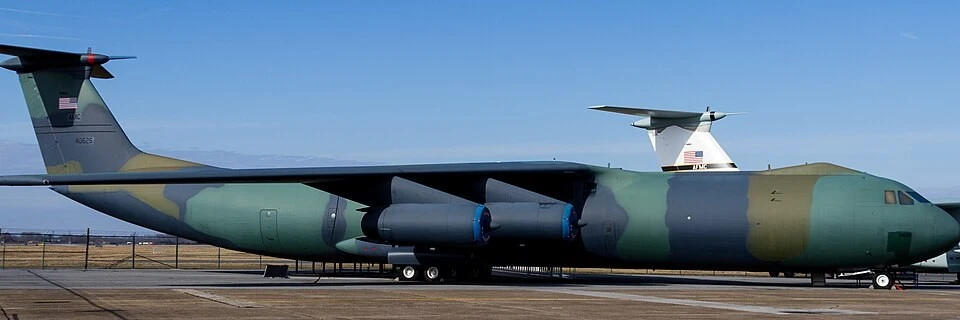
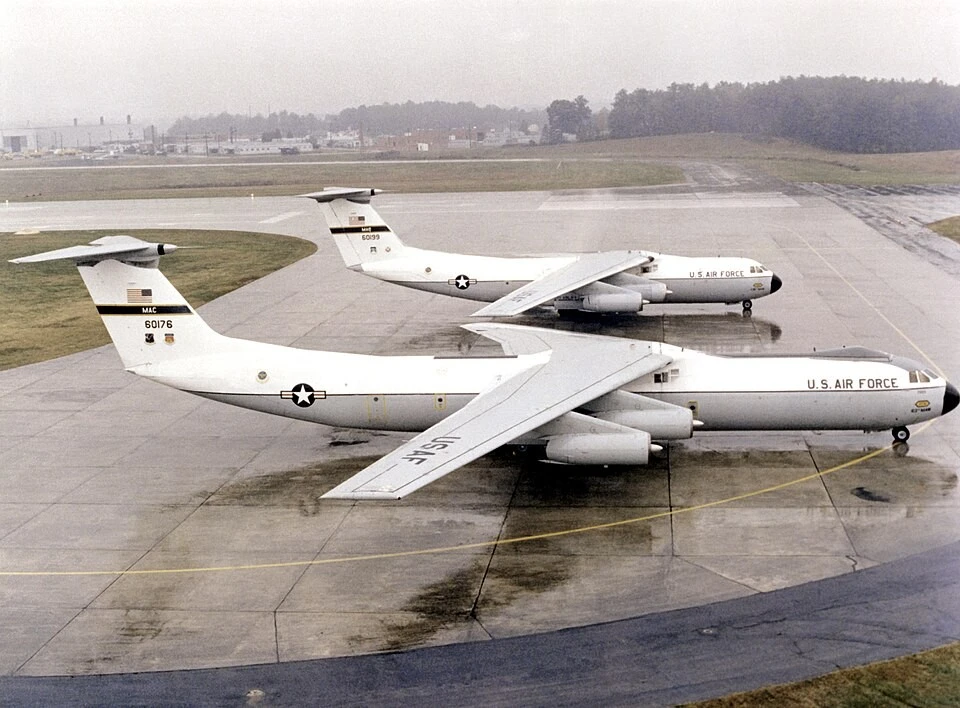
Look beneath the high swept wing for two slim turbofans per side, paired with a tall T-tail. Compare the long narrow fuselage with the broader C-5 profile.
Upper fuselage
On the stretched C-141B and C-141C, look behind the flight deck for the raised refuelling fairing. The earlier C-141A has the shorter body.

Design & cabins

  • Four-engine TF33 transport architecture

    The swept-wing Starlifter uses four Pratt & Whitney TF33 turbofans for long-distance transport.

  • C-141B stretch and cargo volume

    The B conversion added fuselage sections to the C-141A, increasing usable cargo volume. It also brought additional fuel-system equipment.

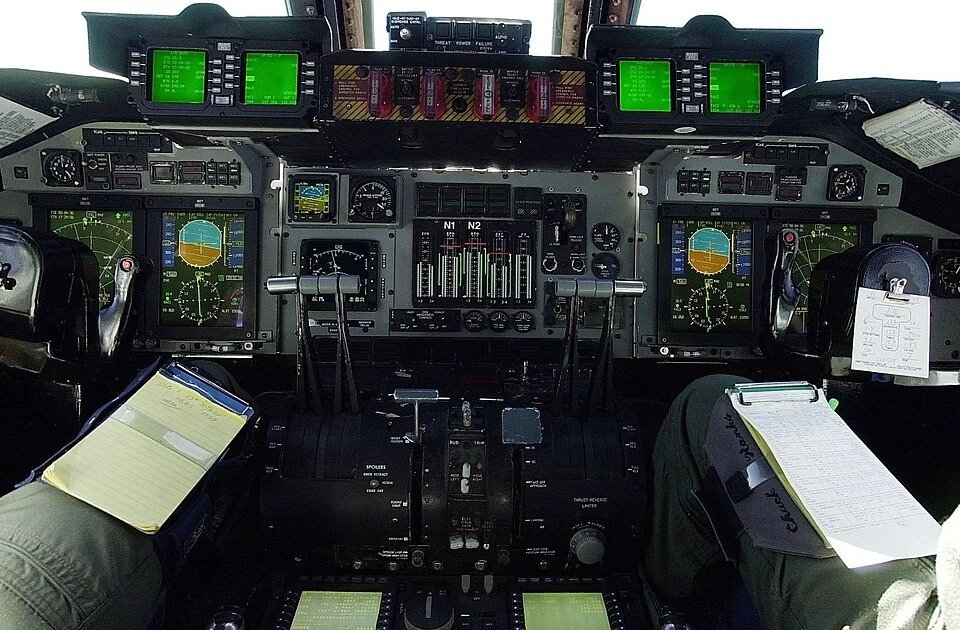
  • C-141C glass cockpit

    Selected C-141Bs were fitted with updated cockpit displays and avionics and redesignated C-141C.

More aircraft systems
  • Powerplant and fuel

    Fuel provisions differ between the early aircraft and subsequent conversions.

  • Cabin and cargo

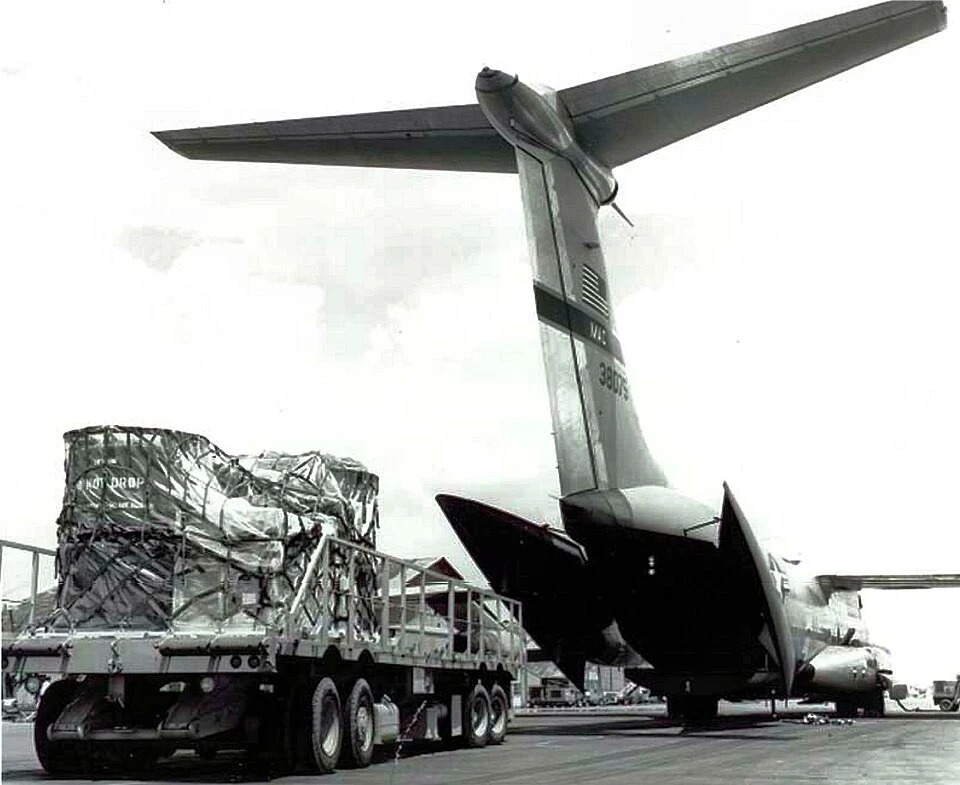
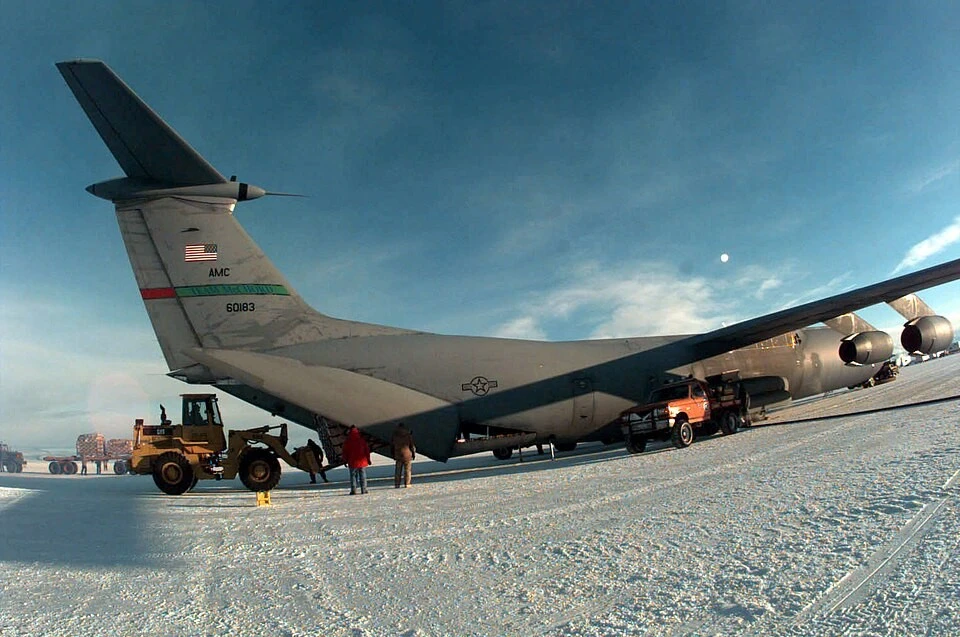
    The rear ramp and cargo floor support different transport layouts across the original and stretched aircraft.

  • Landing gear and braking

    The main gear and brakes are documented with the relevant transport weight and field requirements.

  • Onboard systems

    Pressurisation and other aircraft services are organised by the A, B and C equipment standards.

Technical notes

Design notes

  • High-wing four-engine jet transport
  • Strategic airlift speed vs turboprop transports
  • C-141B fuselage stretch increased volume
  • Aerial refueling capability on later variants
  • C-141C avionics modernization

Advantages

  • High-wing four-engine jet transport
  • Strategic airlift speed vs turboprop transports
  • C-141B fuselage stretch increased volume

Limitations

  • Cargo volume constrained before stretch
  • TF33 engines became old and inefficient
  • Aging structure led to retirement
  • Less outsized-cargo capability than C-5
  • Military-only application
Family Technical Profile

C-141 Starlifter family is one of Aircraft manufacturer's platforms in its market segment, balancing capacity, range, airport compatibility, maintenance economics, and mission flexibility.

C-141 Starlifter family serves the narrowbody market with family commonality and multiple configurations.

Technical features

  • C-141 Starlifter family: Single-aisle fuselage efficiency · structure. A narrow fuselage reduces structural weight and airport footprint for high-frequency short and medium routes.
  • C-141 Starlifter family: High-cycle operating design · maintenance. Doors, landing gear, brakes, and systems are optimized for repeated daily sectors and quick turnarounds.
  • C-141 Starlifter family: Wing and high-lift devices · aerodynamics. Flaps, slats, and wingtip devices balance runway performance with cruise efficiency.
  • C-141 Starlifter family: Engine generation changes · engine. Engine nacelle, thrust rating, fuel burn, and noise standards define each production generation.
  • C-141 Starlifter family: Fleet commonality · operational_efficiency. Common flight decks and maintenance practices reduce training and support cost across subfleets.

Advantages

  • One platform can cover several capacity and mission bands.
  • Family design reduces training, maintenance, and spares complexity.
  • Engine, wingtip, avionics, or structural upgrades can extend lifecycle value.

Weaknesses

  • Configuration identification complexity. Visually similar aircraft can differ materially by engine, weight standard, cabin layout, and conversion status.
  • Generation-dependent economics. Older generations usually trail newer designs in fuel burn, noise, avionics, or maintenance intervals.
  • Market-fit limits. Every variant has an ideal capacity and range band; outside it, load factor, range, or cost can become limiting.

Markets

  • Network airline trunk or feeder markets
  • Leasing and fleet replacement markets
  • Regional, domestic, or international airline markets

Operators

  • Full-service network airlines
  • Low-cost or leisure airlines
  • Cargo, government, or special-mission operators

Routes and missions

  • High-frequency short or medium-haul trunk routes
  • Medium-density long-haul or cross-regional routes
  • Fleet replacement, supplementation, or special missions
Sources