Home/Encyclopedia/Embraer/Embraer Phenom Family

Embraer Phenom Family

Embraer's Phenom 100 and Phenom 300 lines cover entry-level and light business-jet missions, with successive avionics and cabin updates.

Models at a glance

Phenom 100

The Phenom 100 is Embraer's entry-level twinjet with a compact cabin and PW600-series engines. It is the smaller design in the Phenom family.

Length
12.83 m
Wingspan
12.28 m
Published range
1,178 nmManufacturer published range with four occupants and NBAA reserves
Engine options
PW617F-E
Main landing gear
1 axle · 1 wheel per side
Sources

Phenom 100E

The Phenom 100E updates the original Phenom 100 with cabin changes and multifunction spoilers. It retains the compact EMB-500 airframe.

Length
12.83 m
Wingspan
12.28 m
Published range
1,178 nmManufacturer long-range cruise figure with four occupants and NBAA IFR reserves
Engine options
PW617F-E
Main landing gear
1 axle · 1 wheel per side
Sources

Phenom 100EV

The Phenom 100EV advances the EMB-500 with PW617F1-E engines and a Garmin G3000-based flight deck. Its cabin remains in the entry-level Phenom class.

Length
12.83 m
Wingspan
12.28 m
Published range
1,178 nm4 occupants · NBAA reserves
Engine options
PW617F1-E
Main landing gear
1 axle · 1 wheel per side
Sources

Phenom 300

The Phenom 300 is the larger, swept-wing aircraft in the Phenom family. It uses PW500-series engines and is aimed at the light-jet market.

Length
15.64 m
Wingspan
15.91 m
Published range
1,971 nmManufacturer published range with six occupants and NBAA reserves
Engine options
PW535E
Main landing gear
1 axle · 1 wheel per side
Sources

Phenom 300E

The Phenom 300E updates the EMB-505 with a redesigned cabin and avionics improvements. Later updates introduced PW535E1 engines and higher published performance.

Length
15.64 m
Wingspan
15.91 m
Published range
2,010 nm5 occupants · NBAA reserves
Published seating
6Standard passenger cabin
Maximum passenger seats
10With one pilot and optional seating
Engine options
PW535E1
Main landing gear
1 axle · 1 wheel per side
Sources

Identification

Light-jet profile
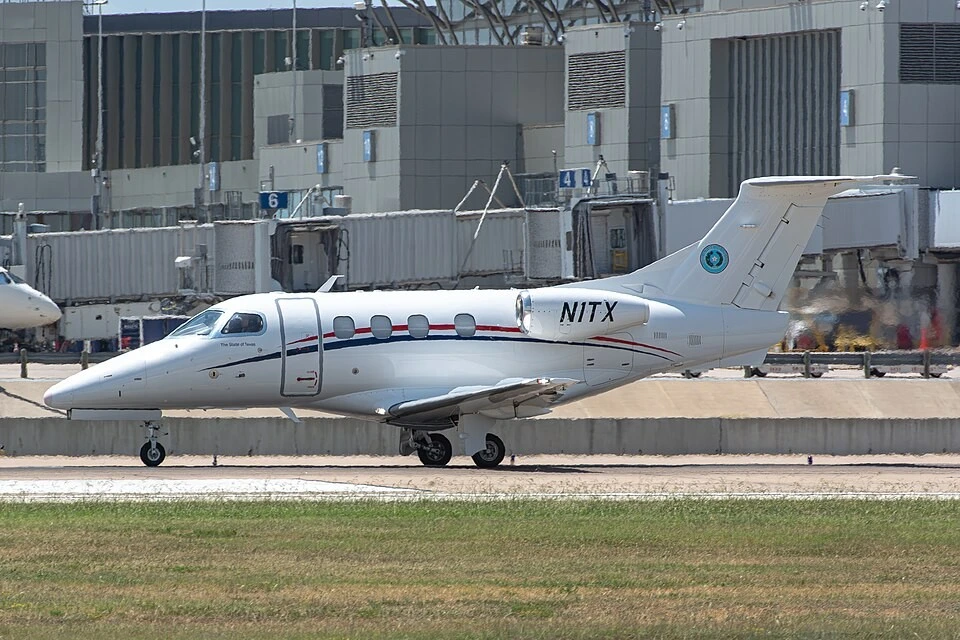
Look for a short, low-wing jet with a T-tail and two nacelles alongside the rear cabin.
100 or 300
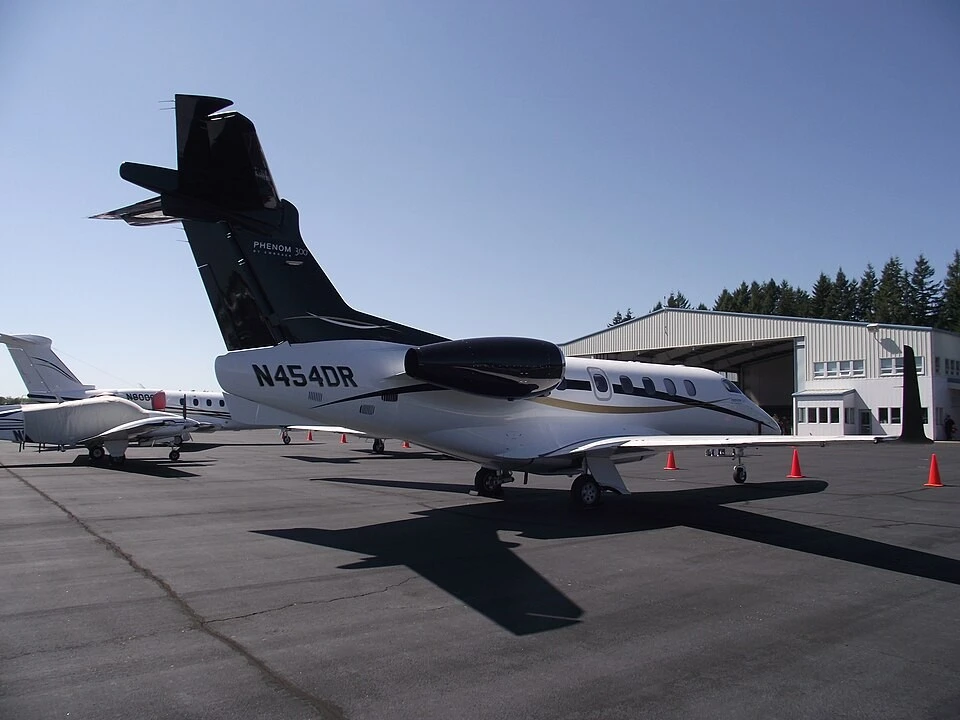
The Phenom 100 has a shorter cabin and span. The Phenom 300 pairs a longer cabin with swept wings and upturned tips.

Use aircraft records to confirm equipment and engine upgrades within a model.

Design & cabins

  • Phenom 100 and 300 airframes

    The Phenom 100 and larger 300 use distinct airframes and cabins for their respective classes. Individual versions add equipment and interior changes.

  • PW617F and PW535 powerplants

    The 100 uses the PW617F series, while the Phenom 300 family uses the PW535 series.

  • Prodigy flight-deck evolution

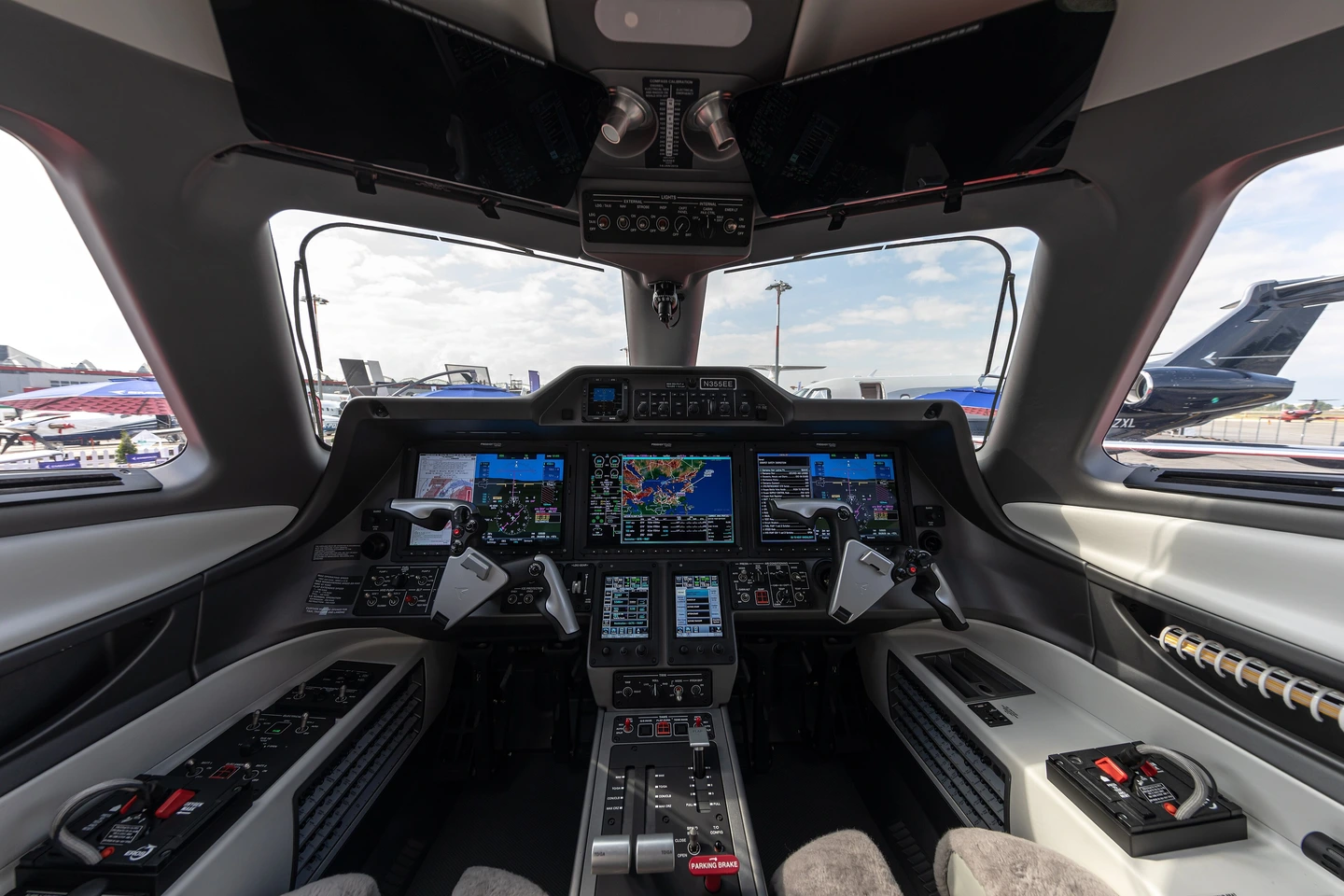
    Compare the Prodigy avionics and automation by model and build standard. The 100EX and 300E have their own equipment options.

More aircraft systems
  • Airframe and aerodynamics

    The wing, wingtip and weight data belong to the specific 100 or 300 model.

  • Cabin and cargo

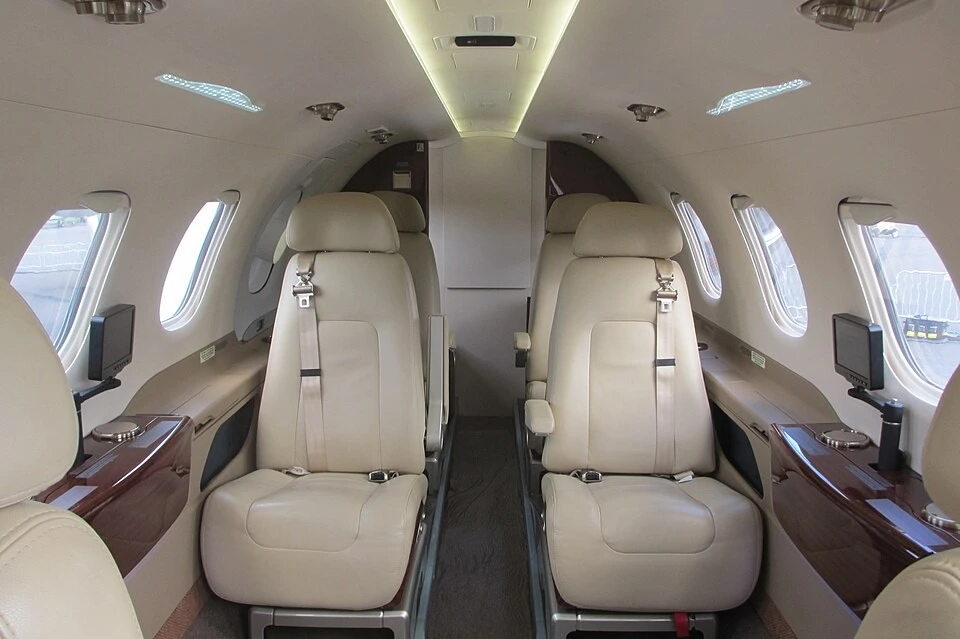
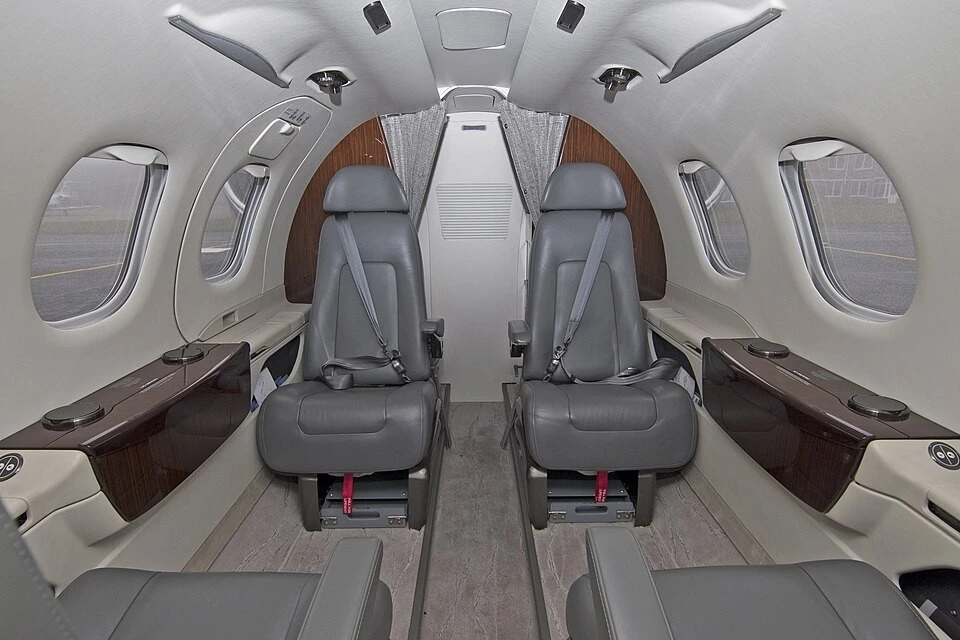
    Cabin furnishings, baggage volume and access depend on the version and its interior.

  • Landing gear and braking

    Gear and braking are compared by platform. Flight-deck automation is identified by equipment fit.

Technical notes

Design notes

  • Phenom 100 variants include the original aircraft, 100E, 100EV, and newer 100EX.
  • The Phenom 300 line includes the updated 300E; each revision should be identified separately.

Advantages

  • Business-jet options for different cabin and mission requirements.

Limitations

  • The 100 and 300 are different aircraft lines; published figures must be matched to the exact version.
Family Technical Profile

Embraer Phenom Family is one of Embraer's platforms in its market segment, balancing capacity, range, airport compatibility, maintenance economics, and mission flexibility.

Embraer Phenom Family serves the business_jet market with family commonality and multiple configurations.

Technical features

  • Embraer Phenom Family: Premium cabin volume · cabin. Cabin height, width, quietness, and baggage volume matter more than airline seat density.
  • Embraer Phenom Family: Range and runway flexibility · range_payload. Business aircraft balance long sectors with access to smaller airports.
  • Embraer Phenom Family: Avionics workload reduction · avionics. Integrated flight decks, automation, and situational awareness help small crews operate efficiently.
  • Embraer Phenom Family: Low cabin noise · passenger_comfort. Engine placement, insulation, and systems tuning are optimized for passenger comfort.
  • Embraer Phenom Family: Maintenance support network · maintenance. Private operators need predictable inspections, parts access, and dispatch reliability.

Advantages

  • One platform can cover several capacity and mission bands.
  • Family design reduces training, maintenance, and spares complexity.
  • Engine, wingtip, avionics, or structural upgrades can extend lifecycle value.

Weaknesses

  • Configuration identification complexity. Visually similar aircraft can differ materially by engine, weight standard, cabin layout, and conversion status.
  • Generation-dependent economics. Older generations usually trail newer designs in fuel burn, noise, avionics, or maintenance intervals.
  • Market-fit limits. Every variant has an ideal capacity and range band; outside it, load factor, range, or cost can become limiting.

Markets

  • Network airline trunk or feeder markets
  • Leasing and fleet replacement markets
  • Regional, domestic, or international airline markets

Operators

  • Full-service network airlines
  • Low-cost or leisure airlines
  • Business aviation and charter operators

Routes and missions

  • High-frequency short or medium-haul trunk routes
  • Medium-density long-haul or cross-regional routes
  • Fleet replacement, supplementation, or special missions
Sources