Home/Encyclopedia/Embraer/Embraer EMB 120 Brasilia

Embraer EMB 120 Brasilia

The EMB 120 Brasilia is the larger, pressurized regional turboprop that followed the Bandeirante. It uses Pratt & Whitney Canada's PW100 family.

Models at a glance

EMB 120 Brasilia

The EMB 120 Brasilia is the larger, pressurized regional turboprop that followed the Bandeirante. It uses Pratt & Whitney Canada's PW100 family.

Entered service
1985First revenue service with Atlantic Southeast Airlines
First flight
1983
Length
20.03 m
Wingspan
19.78 m
Published range
800 nmEmbraer published 1,481 km
Published seating
30
Engine options
PW118BEmbraer historical configuration
Main landing gear
1 axle · 2 wheels per side
Sources

Identification

T-tail
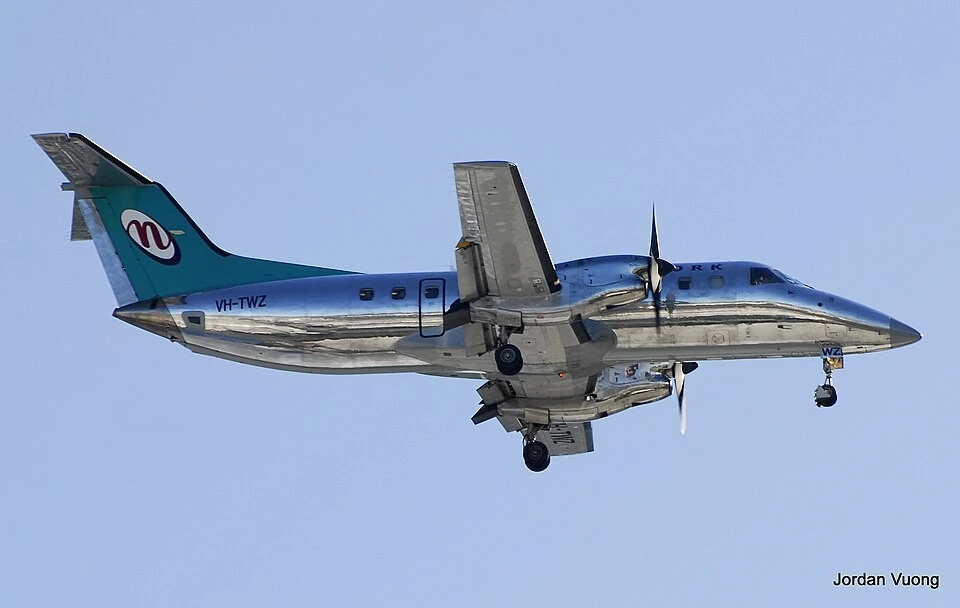
Find the horizontal stabilizer at the top of the fin. The smaller EMB 110 Bandeirante has a conventional tailplane.
Low wing
Look for the two propellers on the low wing. Dash 8s and ATRs carry their propellers on a high wing.

Design & cabins

  • Pressurised regional cabin

    The EMB 120 Brasília was designed with a pressurised regional passenger cabin and a new airframe for this role.

  • PW100-family turboprop installations

    PW115 and PW118-family installations are identified by aircraft and engine version. They form the propulsion context for the Brasília.

More aircraft systems
  • Airframe and aerodynamics

    The wing, fuselage and weight variants describe the scope of the regional transport design.

  • Powerplant and fuel

    Propeller installation and rating information should follow the exact PW100-family engine fitted.

  • Flight controls and avionics

    Avionics are compared by the production or retrofit standard of the aircraft.

  • Cabin and cargo

    Seating and baggage are documented with the passenger configuration and usable loading volume.

  • Landing gear and braking

    The gear and brake layout supports frequent regional cycles.

Technical notes

Design notes

  • The EMB 120 uses a T-tail and a supercritical wing.
  • Its two Pratt & Whitney Canada PW115-series turboprops distinguish it from Embraer's later regional jets.

Advantages

  • Pressurized cabin and turboprop efficiency on short regional sectors.

Limitations

  • Published cabin layouts and operating data vary by operator and aircraft modification.
Family Technical Profile

Embraer EMB 120 Brasilia is one of Embraer's platforms in its market segment, balancing capacity, range, airport compatibility, maintenance economics, and mission flexibility.

Embraer EMB 120 Brasilia serves the narrowbody market with family commonality and multiple configurations.

Technical features

  • Embraer EMB 120 Brasilia: Single-aisle fuselage efficiency · structure. A narrow fuselage reduces structural weight and airport footprint for high-frequency short and medium routes.
  • Embraer EMB 120 Brasilia: High-cycle operating design · maintenance. Doors, landing gear, brakes, and systems are optimized for repeated daily sectors and quick turnarounds.
  • Embraer EMB 120 Brasilia: Wing and high-lift devices · aerodynamics. Flaps, slats, and wingtip devices balance runway performance with cruise efficiency.
  • Embraer EMB 120 Brasilia: Engine generation changes · engine. Engine nacelle, thrust rating, fuel burn, and noise standards define each production generation.
  • Embraer EMB 120 Brasilia: Fleet commonality · operational_efficiency. Common flight decks and maintenance practices reduce training and support cost across subfleets.

Advantages

  • One platform can cover several capacity and mission bands.
  • Family design reduces training, maintenance, and spares complexity.
  • Engine, wingtip, avionics, or structural upgrades can extend lifecycle value.

Weaknesses

  • Configuration identification complexity. Visually similar aircraft can differ materially by engine, weight standard, cabin layout, and conversion status.
  • Generation-dependent economics. Older generations usually trail newer designs in fuel burn, noise, avionics, or maintenance intervals.
  • Market-fit limits. Every variant has an ideal capacity and range band; outside it, load factor, range, or cost can become limiting.

Markets

  • Network airline trunk or feeder markets
  • Leasing and fleet replacement markets
  • Regional, domestic, or international airline markets

Operators

  • Full-service network airlines
  • Low-cost or leisure airlines
  • Cargo, government, or special-mission operators

Routes and missions

  • High-frequency short or medium-haul trunk routes
  • Medium-density long-haul or cross-regional routes
  • Fleet replacement, supplementation, or special missions
Sources