DC-10-10
DC-10-10 engine configuration is recorded from the structured aircraft-engine dataset. Each line maps an engine sub-variant to its parent engine model and aircraft application.
- Length
- 55.55 m
- Wingspan
- 47.35 m
- Engine options
- CF6-6
- Published range
- 2,720 nmiDelta example · converted from 3,130 statute miles
Identification
- Main landing gear
- Use a front or rear-quarter view with the gear down. The -10 has two wing-mounted main bogies. The DC-10-30 has an additional unit below the centreline.
- Wingtips
- Check the unadorned tips alongside the straight centre-engine nacelle. The MD-11 has conspicuous upright winglets.
The DC-10-15 shares the basic gear layout. Use the aircraft record for an exact model.
Compare models
Comparing DC-10-10 with DC-10-15.
| Specification | DC-10-10 | DC-10-15 |
|---|---|---|
| Length | 55.55 m | 55.55 m |
| Wingspan | 47.35 m | 47.35 m |
| Maximum take-off weight | 195.05 tStandard passenger design weight | 206.39 t |
| Maximum payload | 43.01 t | 39.9 tApproximate structural payload · 335,000 lb certified zero-fuel limit less 247,000 lb reported operating empty weight |
| Fuel tank capacity | 82,376 LStandard tanks · optional 26,647 US gal center-wing configuration | 100,969 LIncludes auxiliary center wing tank and system fuel · FAA total at 6.7 lb/US gal |
| Engine options | CF6-6 | CF6-50C2-F |
| Typical two-class seats | 277 / 301Boeing cabin examples · upper / lower galley | 278Standard mixed first/economy layout in period industry specifications |
| Published range | 2,720 nmiDelta example · converted from 3,130 statute miles | 3,800–4,000 nmiPublished with full passenger load and baggage |
A dash indicates that a verified figure is unavailable. Figures follow the configuration specified by each source.
Comparison sources
- Boeing DC/MD-10 ACAP · DAC-67803A Rev ASeries 10 geometry
- Boeing · Historical aircraft technical specificationsDC-10 programme
- Boeing archive · DC-10 passenger modelsPDF pp. 3 and 5, DC-10 Series upper and lower galley cabin diagrams
- Delta Flight Museum · DC-10-10 technical dataDelta DC-10-10 specifications · Range
- Boeing DC/MD-10 (5.9 MB) ACAP · DAC-67803A Rev A§2.1, p. 4, Series 10 passenger column
- FAA AC 36-1H · Certificated aircraft and engine combinationsAppendix 1 p. 170 · DC-10-15 certificated installation
- FAA AC 150/5300-13 · McDonnell Douglas DC-10 geometryAppendix 12, figure A12-75, p. 241, DC-10-15 dimension equivalence note
- Aerospace Industries Association · Aerospace Facts and Figures 1986/87Specifications of U.S. Civil Jet Transport Aircraft, p. 35, DC-10-15 row; FAA A22WE §VII, p. 21
- FAA TCDS A22WE Rev 17 · DC-10 and MD-11, NTSB docket copySection VII, pp. 21–22, DC-10-15 weights and tank capacities
Variants
DC-10-10CF
DC-10-10CF is a widebody / freighter / tanker derivative within DC-10 / KC-10 / MD-11 family. Market positioning: Convertible passenger/freighter.
Design & cabins
CF6-6 installation
See the engine encyclopedia for ratings and aircraft applications.
Featured components & design
Twin-aisle cabin and three-person flight deck
The Series 10 has a twin-aisle passenger cabin. The FAA type certificate specifies a pilot, copilot and flight engineer for the original DC-10-10 flight deck.
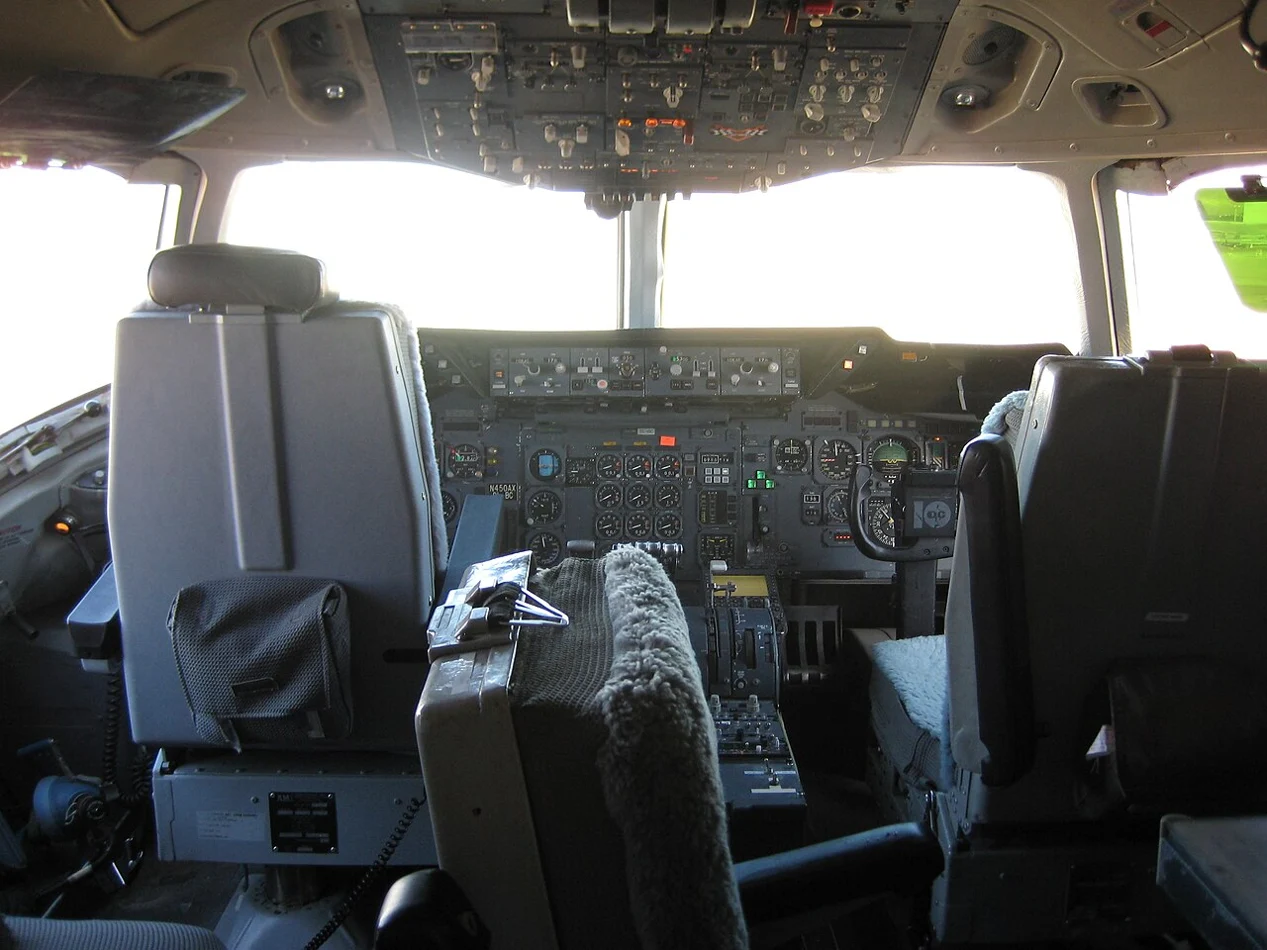
DC-10-10 N450AX · pilot and copilot stations after tanker conversionFireman1994 · resized · Public domain 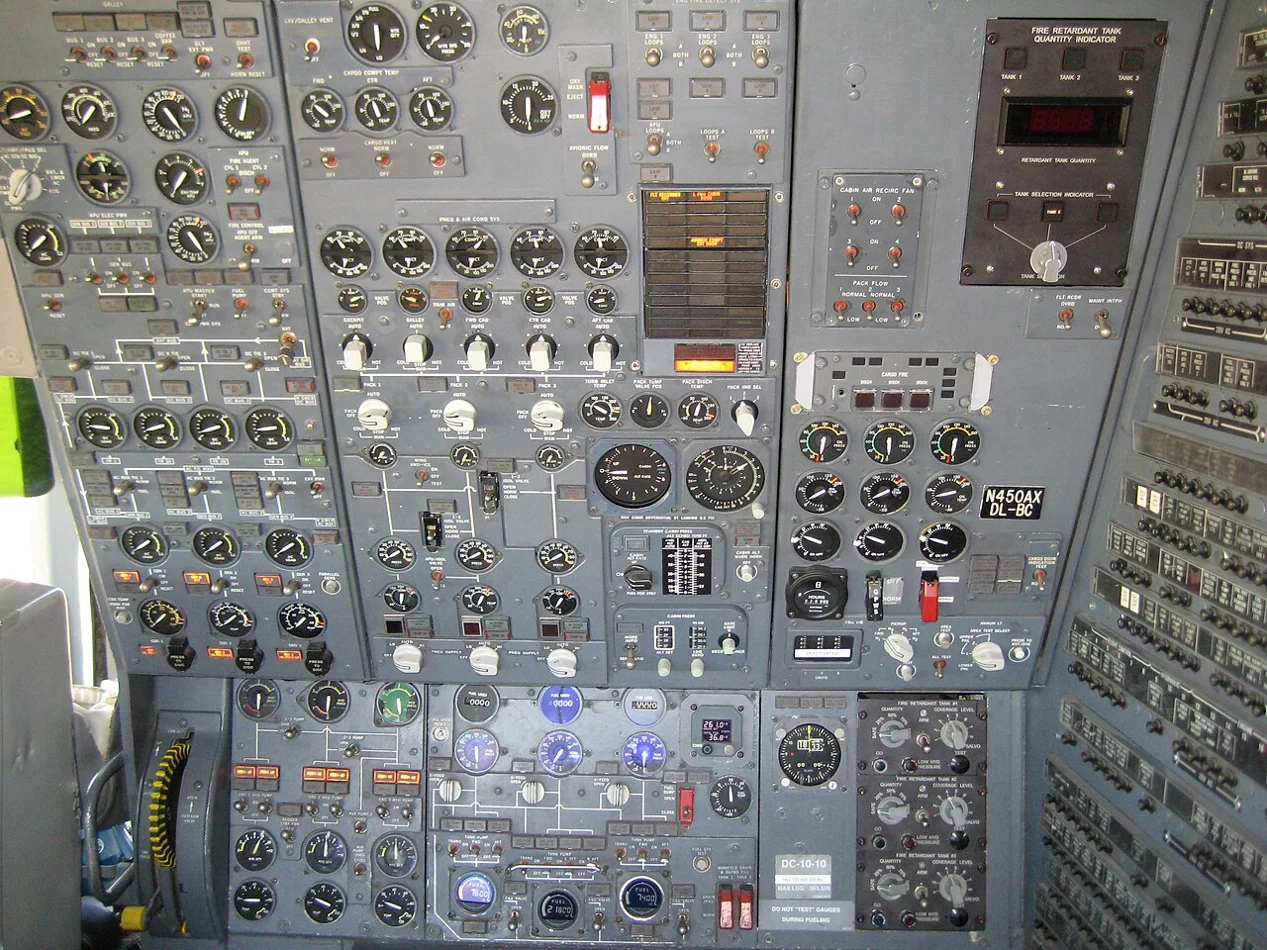
DC-10-10 N450AX · flight engineer station after tanker conversionFireman1994 · resized · Public domain


Technical notes
Design notes
- Engine sub-variants can represent thrust rating, combustor standard, software standard, or installation differences rather than a fully separate hardware family.
- Use aircraft subtype, operator fleet data, and registration-level records before identifying a specific airframe engine.
Advantages
- Precise engine sub-variant lookup is available for this model.
Limitations
- Some planned, development, or military configurations may require certificate-level confirmation before operational use.
Variant Technical Profile
DC-10-10 is a specific configuration within DC-10 / KC-10 / MD-11 family, developed to cover a defined capacity, range, payload, or mission requirement inside the wider family.
DC-10-10 is positioned as a capacity/range-specific solution within the narrowbody segment, serving routes better matched than sibling variants.
Technical features
- DC-10-10: Single-aisle fuselage efficiency · structure. A narrow fuselage reduces structural weight and airport footprint for high-frequency short and medium routes.
- DC-10-10: High-cycle operating design · maintenance. Doors, landing gear, brakes, and systems are optimized for repeated daily sectors and quick turnarounds.
- DC-10-10: Wing and high-lift devices · aerodynamics. Flaps, slats, and wingtip devices balance runway performance with cruise efficiency.
- DC-10-10: Engine generation changes · engine. Engine nacelle, thrust rating, fuel burn, and noise standards define each production generation.
- DC-10-10: Fleet commonality · operational_efficiency. Common flight decks and maintenance practices reduce training and support cost across subfleets.
Advantages
- Provides a more precise capacity or range match within the family.
- Retains training, maintenance, and parts commonality with sibling variants.
- Lets operators tune engine, cabin, and payload choices to route needs.
Weaknesses
- Configuration identification complexity. Visually similar aircraft can differ materially by engine, weight standard, cabin layout, and conversion status.
- Generation-dependent economics. Older generations usually trail newer designs in fuel burn, noise, avionics, or maintenance intervals.
- Market-fit limits. Every variant has an ideal capacity and range band; outside it, load factor, range, or cost can become limiting.
Markets
- Network airline trunk or feeder markets
- Leasing and fleet replacement markets
- Regional, domestic, or international airline markets
Operators
- Full-service network airlines
- Low-cost or leisure airlines
- Cargo, government, or special-mission operators
Routes and missions
- High-frequency short or medium-haul trunk routes
- Medium-density long-haul or cross-regional routes
- Fleet replacement, supplementation, or special missions
Sibling comparison
- smaller sibling variants. Usually provides more seats, cargo volume, or thrust demand, but can be harder to fill on thinner routes.
- larger or longer-range sibling variants. Usually has lower acquisition and operating exposure, but less range, payload, or growth margin.
From the archive
Loading photographs…
Sources
- Boeing DC/MD-10 (5.9 MB) ACAP · DAC-67803A Rev A · Series 10 geometry · §2.1, p. 4, Series 10 passenger column
- Boeing · Historical aircraft technical specifications · DC-10 programme
- Boeing archive · DC-10 passenger models · PDF pp. 3 and 5, DC-10 Series upper and lower galley cabin diagrams
- Delta Flight Museum · DC-10-10 technical data · Delta DC-10-10 specifications · Range