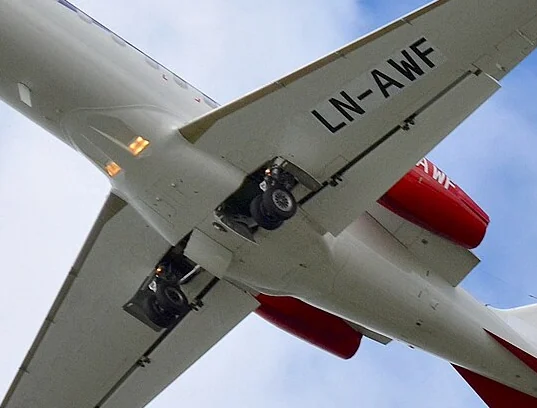
Learjet family

Learjet family covers light / midsize business jet aircraft in the Bombardier portfolio. The entry is imported from the McDonnell Douglas / Lockheed / Bombardier technical workbook and organized by family and derivative variant.

Models at a glance

Learjet 23

Learjet 23 is a business jet derivative within Learjet family. Market positioning: Initial light business jet.

First flight
7 October 1963
Length
13.2 m
Wingspan
10.85 m
Published range
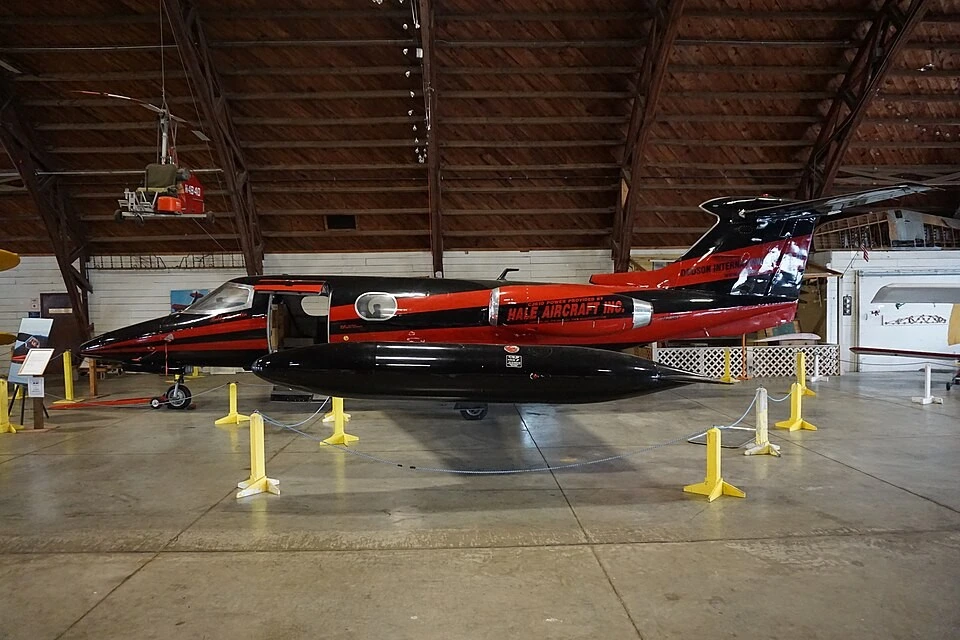
1,000 nmNASA Learjet 23 research-aircraft configuration
Engine options
CJ610-4
Main landing gear
1 axle · 2 wheels per side
Sources

Learjet 24

Learjet 24 is a business jet derivative within Learjet family. Market positioning: Improved light Learjet.

First flight
Unavailable
Length
13.2 m
Wingspan
10.85 m
Published range
1,296 nmUSGS published 2,400 km with eight passengers and a 45-minute reserve
Engine options
CJ610-4 · CJ610-6 · CJ610-8A
Main landing gear
1 axle · 2 wheels per side
Sources

Learjet 25

Learjet 25 is a business jet derivative within Learjet family. Market positioning: Stretched early Learjet.

Length
14.51 m
Wingspan
10.85 m
Published range
1,200 nmWorldwide Critical Care's published Learjet 25 operating figure
Engine options
CJ610-6 · CJ610-8A
Main landing gear
1 axle · 2 wheels per side
Sources

Learjet 31/31A

Learjet 31/31A is a business jet derivative within Learjet family. Market positioning: High-performance light jet.

Length
14.84 m
Wingspan
13.35 m
Published range
900 nmOperator's 31A YU-BRZ figure at maximum payload, under published VFR conditions
Maximum passenger seats
Unavailable
Engine options
TFE731-2-3B
Main landing gear
1 axle · 2 wheels per side
Sources

Learjet 35/36

Learjet 35/36 is a business jet derivative within Learjet family. Market positioning: Longer-range light jet.

Length
14.84 m
Wingspan
12.04 m
Published range
2,100 nmPublished Learjet 35A operator example carrying six passengers plus baggage.
Maximum passenger seats
8 / 6Learjet 35/35A and 36/36A respectively
Engine options
TFE731-2-2B
Main landing gear
1 axle · 2 wheels per side
Sources

Learjet 45/45XR

Learjet 45/45XR is a business jet derivative within Learjet family. Market positioning: Modern light-midsize Learjet.

Length
17.77 m
Wingspan
14.58 m
Published range
1,971 nmLearjet 45 XR, four passengers and two crew with NBAA IFR reserves
Maximum passenger seats
9Type certificate; approved cabin configuration
Engine options
TFE731-20R · TFE731-20AR · TFE731-20BR-1B
Main landing gear
1 axle · 2 wheels per side
Sources

Learjet 55

Learjet 55 is a business jet derivative within Learjet family. Market positioning: Larger-cabin Learjet.

Length
16.79 m
Wingspan
13.35 m
Published range
2,200 nmWorldwide Critical Care's published Learjet 55 operating figure
Maximum passenger seats
Unavailable
Engine options
TFE731-3A-2B1 · TFE731-3A-2B · TFE731-3AR-2B1 · TFE731-3AR-2B
Main landing gear
1 axle · 2 wheels per side
Sources

Learjet 60/60XR

Learjet 60/60XR is a business jet derivative within Learjet family. Market positioning: Midsize high-speed Learjet.

Length
17.89 m
Wingspan
13.35 m
Published range
2,338 nmLearjet 60 XR manufacturer brochure, four passengers and two crew with NBAA IFR reserves
Maximum passenger seats
8EASA type certificate configuration
Engine options
PW305A
Main landing gear
1 axle · 2 wheels per side
Sources

Learjet 70

Learjet 70 is a business jet derivative within Learjet family. Market positioning: Late light Learjet upgrade.

Length
17.18 m
Wingspan
15.56 m
Published range
2,060 nmFour passengers and two crew, with NBAA IFR reserves
Maximum passenger seats
9Type certificate; approved cabin configuration
Engine options
TFE731-40BR
Main landing gear
1 axle · 2 wheels per side
Sources

Learjet 75

Learjet 75 is a business jet derivative within Learjet family. Market positioning: Final main Learjet.

Length
17.77 m
Wingspan
15.56 m
Published range
2,040 nmWith four passengers, two crew and NBAA IFR reserves.
Maximum passenger seats
9Type certificate; approved cabin configuration
Engine options
TFE731-40BR-1B
Main landing gear
1 axle · 2 wheels per side

Identification

Compact rear-engined jet
Look for the narrow cabin and pair of engines near the back of the fuselage. Early Learjets combine this shape with a swept low wing and a T-tail.
Early wingtip tanks
The Learjet 23 has a streamlined tank at each end of the wing. Inspect both tips in an unobstructed front-quarter view.

Wingtip shapes changed across the Learjet line. These tanks point to an early configuration and several models used them.

Design & cabins

  • Early tip tanks and later wing design

    Early Learjets have recognisable wingtip fuel tanks. Later branches adopted different wing and wingtip forms.

  • From turbojets to turbofans

    The original Learjet 23 belongs to the turbojet generation. Later Learjet models use different turbofan families, identified by certified model.

  • Flight-deck evolution through Learjet 75

    The later Learjet 75 flight deck shows the transition from early conventional instruments to integrated digital avionics.

More aircraft systems
  • Airframe and aerodynamics

    Learjet lengths, structural generations and wing loading vary across the 20-, 30-, 45-, 60- and 70-series aircraft.

  • Powerplant and fuel

    Compare internal and wingtip fuel arrangements by branch and installed equipment.

  • Cabin and cargo

    Pressurised cabin and baggage layouts reflect the fuselage size and executive configuration.

  • Landing gear and braking

    The clearance and braking references apply to the particular Learjet airframe and weight.

Engine references
2 × GE CJ610 · 2 × Honeywell TFE731-2 · 2 × Garrett/Honeywell TFE731-2 · 2 × Honeywell TFE731-20 · -20BR · 2 × Garrett TFE731-3A · 2 × Pratt & Whitney Canada PW305A · 2 × Honeywell TFE731-40BR
Technical notes

Design notes

  • High-speed light business jet lineage
  • Rear-mounted twin engines
  • T-tail/low-wing layout on many variants
  • Early wingtip tanks; later winglets/aerodynamic upgrades
  • Engines evolved from CJ610 turbojets to TFE731/PW305 turbofans

Advantages

  • High-speed light business jet lineage
  • Rear-mounted twin engines
  • T-tail/low-wing layout on many variants

Limitations

  • Cabins are narrow compared with newer business jets
  • Early CJ610 variants have high noise/fuel burn
  • Limited baggage/range on smaller variants
  • Learjet market declined versus wider cabins
  • Production ended
Family Technical Profile

Learjet family is one of COMAC's platforms in its market segment, balancing capacity, range, airport compatibility, maintenance economics, and mission flexibility.

Learjet family serves the regional_jet market with family commonality and multiple configurations.

Technical features

  • Learjet family: Right-sized cabin · cabin. Smaller cross-sections and lower trip cost support thin routes that cannot fill larger mainline jets.
  • Learjet family: Regional engine thrust class · engine. Engines are sized for lower passenger counts and frequent short sectors rather than heavy long-haul payload.
  • Learjet family: Airport access · airport_compatibility. Runway, ramp, and gate compatibility are optimized for secondary airports and regional networks.
  • Learjet family: High-utilization systems · maintenance. Maintenance access and dispatch reliability are important because regional aircraft fly many cycles.
  • Learjet family: Scope and network fit · operational_efficiency. Seat count and range often reflect airline scope clauses, feeder networks, and right-sizing strategy.

Advantages

  • One platform can cover several capacity and mission bands.
  • Family design reduces training, maintenance, and spares complexity.
  • Engine, wingtip, avionics, or structural upgrades can extend lifecycle value.

Weaknesses

  • Configuration identification complexity. Visually similar aircraft can differ materially by engine, weight standard, cabin layout, and conversion status.
  • Generation-dependent economics. Older generations usually trail newer designs in fuel burn, noise, avionics, or maintenance intervals.
  • Market-fit limits. Every variant has an ideal capacity and range band; outside it, load factor, range, or cost can become limiting.

Markets

  • Network airline trunk or feeder markets
  • Leasing and fleet replacement markets
  • Regional, domestic, or international airline markets

Operators

  • Full-service network airlines
  • Low-cost or leisure airlines
  • Cargo, government, or special-mission operators

Routes and missions

  • High-frequency short or medium-haul trunk routes
  • Medium-density long-haul or cross-regional routes
  • Fleet replacement, supplementation, or special missions
Sources