Home/Encyclopedia/Bombardier/Challenger 600 / 800 family

Challenger 600 / 800 family

Challenger 600 / 800 family covers large business jet aircraft in the Bombardier portfolio. The entry is imported from the McDonnell Douglas / Lockheed / Bombardier technical workbook and organized by family and derivative variant.

Models at a glance

Challenger 600

Challenger 600 is a business jet derivative within Challenger 600 / 800 family. Market positioning: Original wide-cabin business jet.

Length
20.85 mOriginal CL-600 airframe, Canadian CC-144 serial 144601
Wingspan
18.84 mOriginal CL-600 airframe, Canadian CC-144 serial 144601
Published range
2,760 nmRoyal Canadian Air Force figure of 5,112 km for the Lycoming-powered Challenger
Engine options
ALF502L · ALF502L-2
Main landing gear
Unavailable
Sources

Challenger 601-1A

Challenger 601-1A is a business jet derivative within Challenger 600 / 800 family. Market positioning: CF34-powered improvement.

Length
20.85 mMuseum aircraft serial 3036
Wingspan
18.84 mMuseum aircraft serial 3036, as published by the museum
Published range
Unavailable
Engine options
CF34-1A · CF34-3A · CF34-3A2CF34-1A baseline; certified retrofit engines also listed
Main landing gear
Unavailable
Sources

Challenger 601-3A/3R

Challenger 601-3A/3R is a business jet derivative within Challenger 600 / 800 family. Market positioning: Range/performance upgrade.

Length
20.85 mCL-601-3A
Wingspan
19.61 mCL-601-3A
Published range
3,348 nmCzech operator's CL-601-3A with full tanks, published as 6,200 km
Engine options
CF34-3A · CF34-3A2 · CF34-3A1CF34-3A/-3A2 on 601-3A; CF34-3A1 on 601-3R
Main landing gear
Unavailable
Sources

Challenger 604

Challenger 604 is a business jet derivative within Challenger 600 / 800 family. Market positioning: Main long-range Challenger.

Length
20.85 m
Wingspan
19.6 m
Published range
4,027 nmMach 0.74 with five passengers and two crew, maximum fuel and NBAA IFR reserves
Engine options
CF34-3B
Main landing gear
1 axle · 2 wheels per side
Sources

Challenger 605

Challenger 605 is a business jet derivative within Challenger 600 / 800 family. Market positioning: Avionics/cabin upgraded Challenger.

Length
20.86 m
Wingspan
19.61 m
Published range
4,000 nmBombardier range with six passengers.
Maximum passenger seats
Unavailable
Engine options
CF34-3B
Main landing gear
Unavailable
Sources

Challenger 650

Challenger 650 is a business jet derivative within Challenger 600 / 800 family. Market positioning: Latest large-cabin Challenger.

Length
20.86 m
Wingspan
19.61 m
Published range
4,000 nmPublished maximum range
Maximum passenger seats
12
Engine options
CF34-3B
Main landing gear
Unavailable
Sources

Challenger 800/850

Challenger 800/850 is a business jet derivative within Challenger 600 / 800 family. Market positioning: CRJ-based large executive jet.

Length
26.77 mChallenger 850 uses the CL-600-2B19 airframe
Wingspan
21.21 mChallenger 850 uses the CL-600-2B19 airframe
Published range
2,811 nmChallenger 850 maximum published by Bombardier under specified operating conditions.
Engine options
CF34-3B1Challenger 850/SE configuration
Main landing gear
Unavailable
Sources

Identification

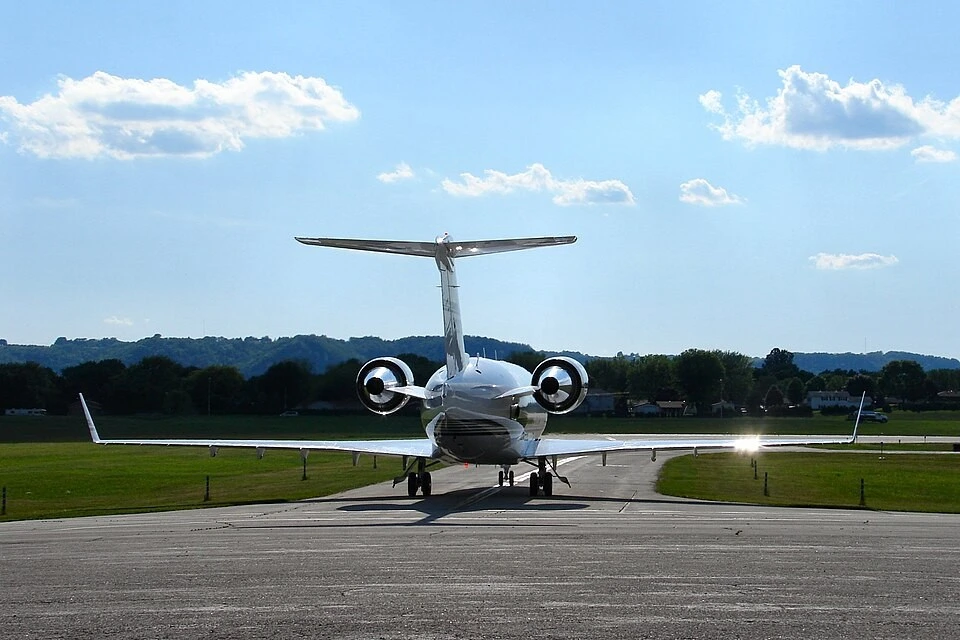
Rear nacelles and T-tail
On a Challenger 600-series profile, find two nacelles on the rear fuselage and the horizontal tailplane high on the fin.
850 airframe
Compare the cabin length with the regional CRJ200. The Challenger 850 uses that longer airframe and shares its proportions.

Confirm the certification model and marketing designation from the registration record.

Design & cabins

  • Wide-cabin Challenger airframe

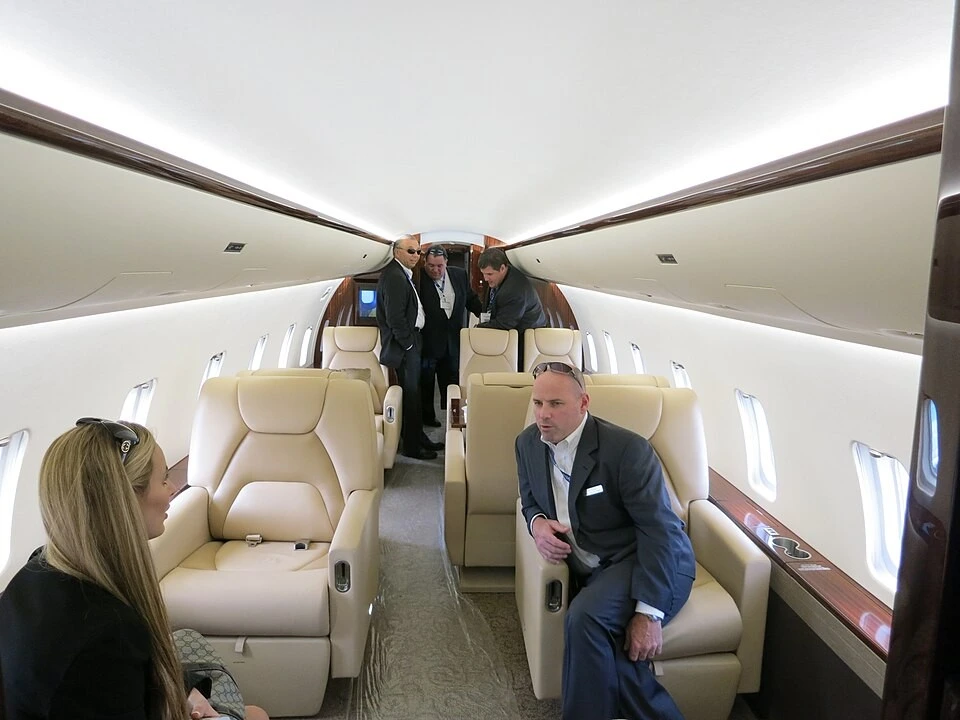
    The CL-600 pairs a wide executive cabin with two rear-mounted engines and a T-tail.

  • ALF 502 to CF34 powerplants

    The original Challenger 600 uses the ALF 502. The later 601 and 604/605/650 line uses specific CF34 variants.

  • Challenger 850 and the CRJ airframe

    The 850 adapts the CRJ regional-jet airframe for a larger business interior. It has its own cabin and airport geometry.

More aircraft systems
  • Airframe and aerodynamics

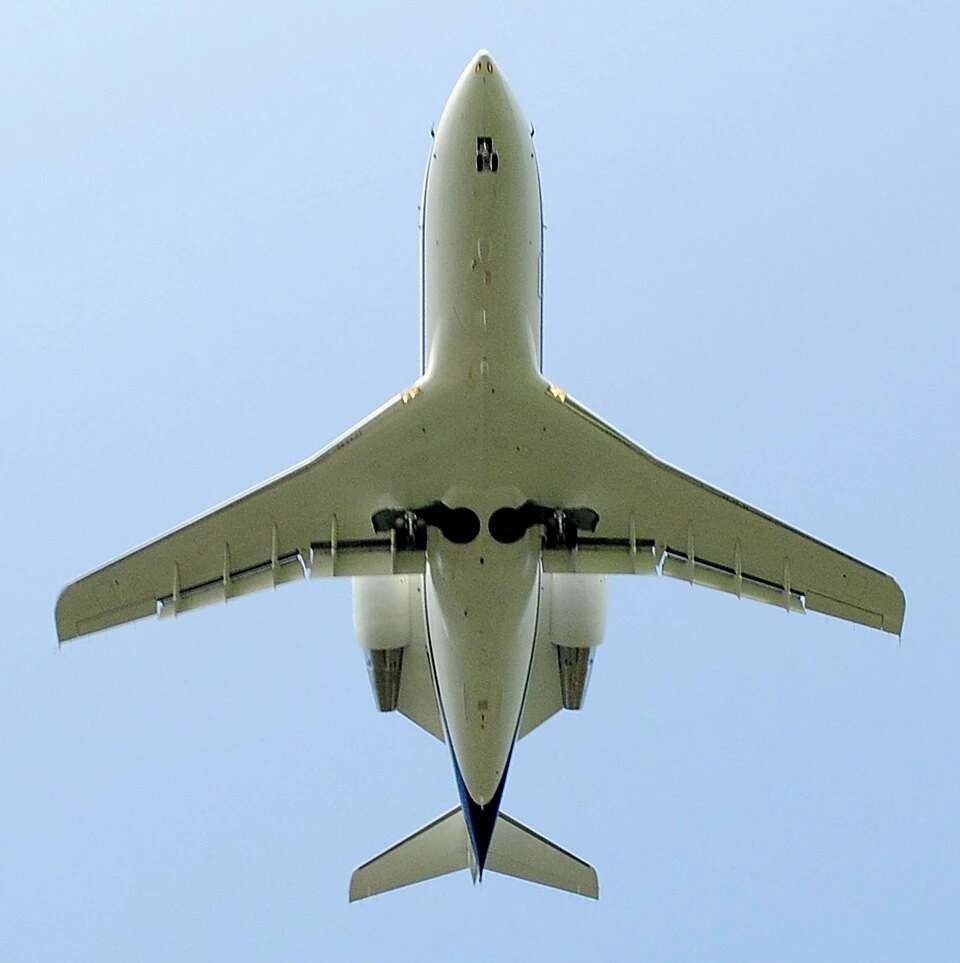
    Compare the wing, wingtip and body dimensions of the CL-600 platform and the CRJ-derived branch.

  • Powerplant and fuel

    Fuel capacity and operating weight differ between the 600-series and 850 installations.

  • Flight controls and avionics

    The 601 and subsequent 604/605/650 have different display and avionics standards.

  • Cabin and cargo

    Interior arrangement, baggage provision and cabin environment vary with the airframe and operator.

  • Landing gear and braking

    The 600 and 850 gear and ground servicing clearances follow their respective airframe documents.

Engine references
2 × Lycoming ALF502L · 2 × GE CF34-1A · 2 × GE CF34-3A · 2 × GE CF34-3B · 2 × GE CF34-3B MTO · 2 × GE CF34-8C5
Technical notes

Design notes

  • Wide-cabin business jet platform
  • Rear-mounted twin engines and T-tail
  • CF34-powered variants improved reliability and range
  • Adapted for special mission/medical/government roles
  • CRJ lineage derived from Challenger platform

Advantages

  • Wide-cabin business jet platform
  • Rear-mounted twin engines and T-tail
  • CF34-powered variants improved reliability and range

Limitations

  • Large aircraft operating cost
  • Early ALF502 performance/reliability limitations
  • Older models require avionics upgrades
  • Less efficient than clean-sheet newer jets
  • Challenger 850 has airliner-derived airport/cost footprint
Family Technical Profile

Challenger 600 / 800 family is one of Aircraft manufacturer's platforms in its market segment, balancing capacity, range, airport compatibility, maintenance economics, and mission flexibility.

Challenger 600 / 800 family serves the narrowbody market with family commonality and multiple configurations.

Technical features

  • Challenger 600 / 800 family: Single-aisle fuselage efficiency · structure. A narrow fuselage reduces structural weight and airport footprint for high-frequency short and medium routes.
  • Challenger 600 / 800 family: High-cycle operating design · maintenance. Doors, landing gear, brakes, and systems are optimized for repeated daily sectors and quick turnarounds.
  • Challenger 600 / 800 family: Wing and high-lift devices · aerodynamics. Flaps, slats, and wingtip devices balance runway performance with cruise efficiency.
  • Challenger 600 / 800 family: Engine generation changes · engine. Engine nacelle, thrust rating, fuel burn, and noise standards define each production generation.
  • Challenger 600 / 800 family: Fleet commonality · operational_efficiency. Common flight decks and maintenance practices reduce training and support cost across subfleets.

Advantages

  • One platform can cover several capacity and mission bands.
  • Family design reduces training, maintenance, and spares complexity.
  • Engine, wingtip, avionics, or structural upgrades can extend lifecycle value.

Weaknesses

  • Configuration identification complexity. Visually similar aircraft can differ materially by engine, weight standard, cabin layout, and conversion status.
  • Generation-dependent economics. Older generations usually trail newer designs in fuel burn, noise, avionics, or maintenance intervals.
  • Market-fit limits. Every variant has an ideal capacity and range band; outside it, load factor, range, or cost can become limiting.

Markets

  • Network airline trunk or feeder markets
  • Leasing and fleet replacement markets
  • Regional, domestic, or international airline markets

Operators

  • Full-service network airlines
  • Low-cost or leisure airlines
  • Cargo, government, or special-mission operators

Routes and missions

  • High-frequency short or medium-haul trunk routes
  • Medium-density long-haul or cross-regional routes
  • Fleet replacement, supplementation, or special missions
Sources