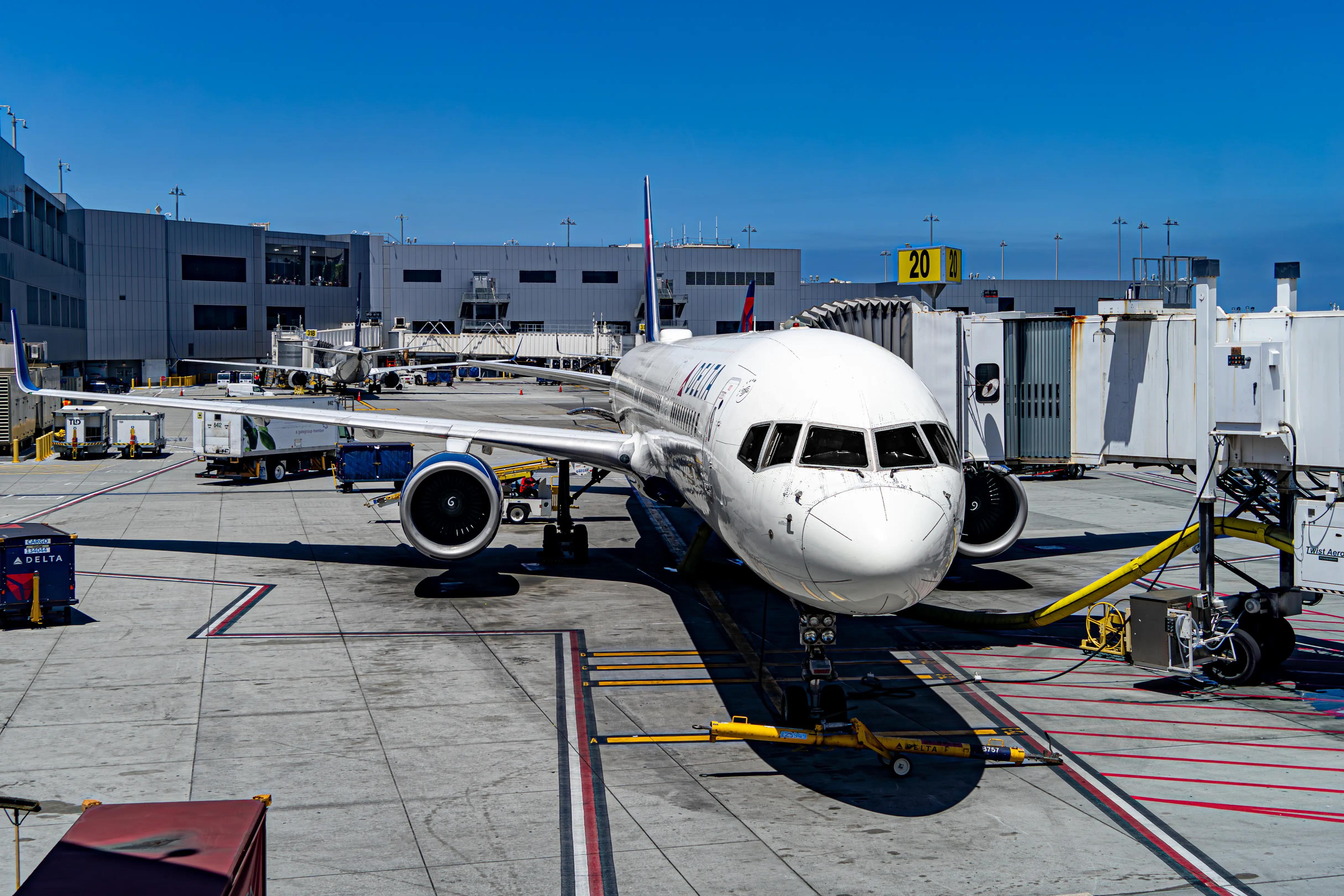
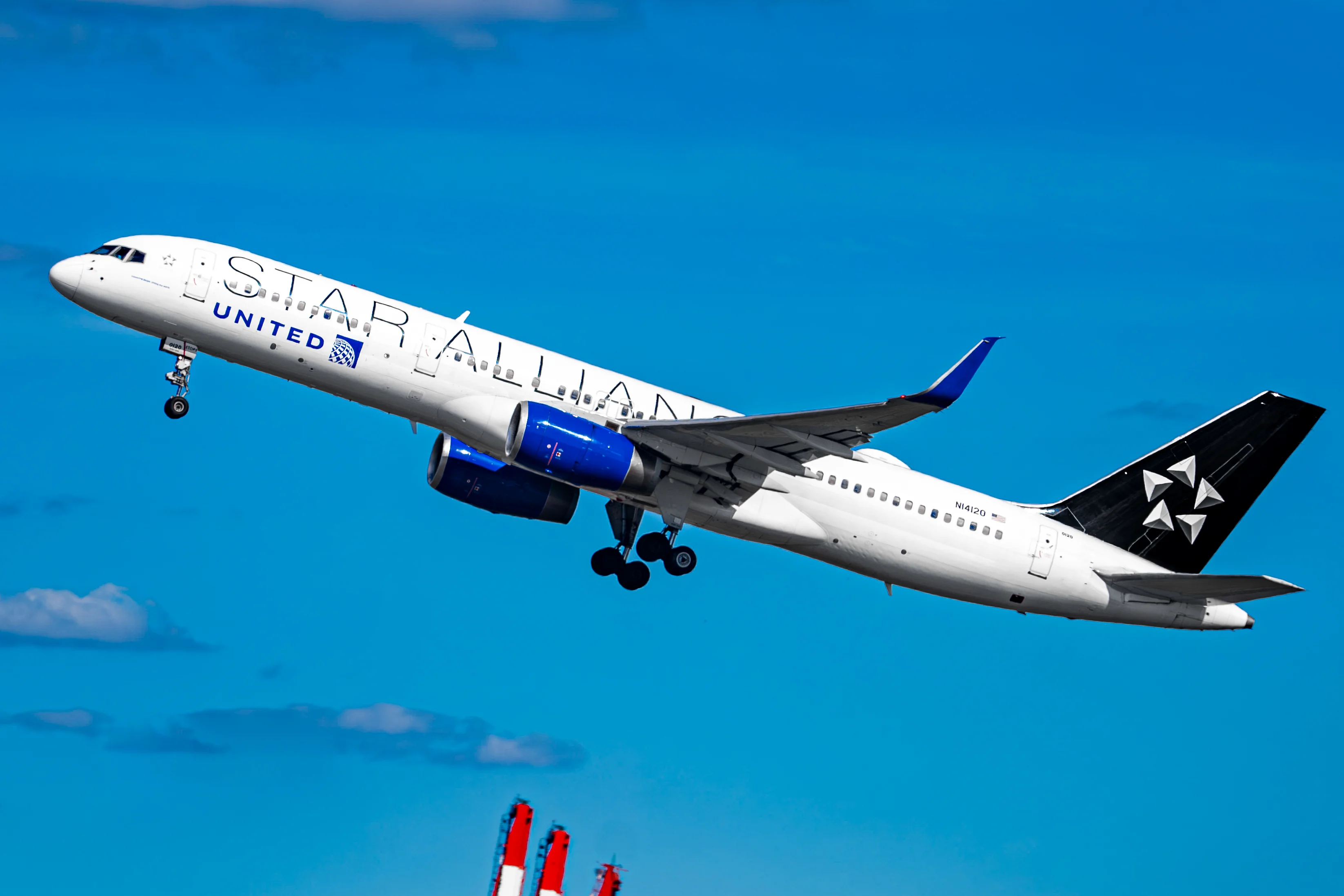
757-200
The 757-200 is the original single-aisle 757. Its wing and engine installations support a range of domestic and longer thin-route operations.
- First flight
- 19 February 1982
- Length
- 47.34 m
- Wingspan
- 38.04 / 41.09 mWithout / with wingtip devices
- Published range
- 2,900 / 3,900 nmFull mixed-class load / high-gross option · approximate
- Typical two-class seats
- 186Boeing mixed-class example
- Maximum passenger seats
- 239Boeing high-density all-economy layout
- Engine options
- RB211-535C · RB211-535E4 · RB211-535E4B · PW2037 · PW2040
- Main landing gear
- 2 axles · 4 wheels per side
Sources
- FAA Aircraft Characteristics Database · October 2024ACD_Data · B752 · Boeing 757-200
- Boeing 757 ACAP · D6-58327 Rev Hpp. 1-3, 2-6–2-7 · Mixed-class example and high gross option
- Boeing · Historical aircraft technical specificationsPDF p. 10 · 757-200 first flight
757-200 variants
757-200 high-thrust
The 757-200 was offered with multiple engine ratings. Higher-rated installations are configuration choices within the -200 production series and are identified by the engine designation.
- Length
- 47.34 m
- Wingspan
- 38.04 / 41.09 mWithout / with wingtip devices
- Published range
- 3,915 nmPW2040 performance example at 255,000 lb and a full 200-passenger load
- Typical two-class seats
- 186Boeing planning example · 16 first and 170 economy
- Engine options
- PW2040 · RB211-535E4BBoeing higher-rated 757-200 examples
- Main landing gear
- 2 axles · 4 wheels per side
Sources
- FAA Aircraft Characteristics Database · October 2024ACD_Data · B752 · Boeing 757-200
- Boeing 757 ACAP · D6-58327 Rev Hpp. 2-6–2-7 · Higher-rated 757-200 planning examples
- Boeing 757 ACAP · D6-58327 Rev H§2.1.2, p. 2-7, 255,000 lb PW2040 757-200 planning configuration
- StartupBoeing · 757 passenger performance data757-PS-2000 · 757-200 Pratt & Whitney two-class performance table
757-200F
757-200F is the archive label for a 757-200 freighter when a factory-build or conversion designation is unspecified.
- Length
- 47.34 mFactory 757-200PF planning example; other freighter conversions differ
- Wingspan
- 38.04 / 41.09 mWithout / with wingtip devices · Factory 757-200PF planning example; other freighter conversions differ
- Published range
- 3,150 nmAt 32.755 t volume-limited pallet payload · Factory 757-200PF planning example; other freighter conversions differ
- Typical two-class seats
- Unavailable
- Engine options
- PW2037 · PW2040 · RB211-535E4 · RB211-535E4BFactory 757-200PF planning example; other freighter conversions differ
- Main landing gear
- Unavailable
Sources
- Boeing 757 ACAP · D6-58327 Rev H§§2.1.3 and 2.2.1 · Factory 757-200PF planning example; other freighter conversions differ
- Boeing archive · 757 factory freighter performancePDF p. 13, PW2040, 255,000 lb · Factory 757-200PF planning example; other freighter conversions differ
757-200P
757-200P is the whyaviation archive label for the 757-200 passenger configuration. The original 757 passenger model uses the shorter fuselage of the two 757 production lengths.
- Programme status
- Unavailable
- Length
- 47.34 m
- Wingspan
- 38.04 / 41.09 mWithout / with wingtip devices
- Published range
- 2,900 / 3,900 nmFull mixed-class load / high-gross option · approximate
- Typical two-class seats
- 186Boeing mixed-class example
- Engine options
- RB211-535C · RB211-535E4 · RB211-535E4B · PW2037 · PW2040
- Main landing gear
- Unavailable
Sources
- FAA Aircraft Characteristics Database · October 2024ACD_Data · B752 · Boeing 757-200 · 757-200 passenger configuration under this archive label
- Boeing 757 ACAP · D6-58327 Rev Hpp. 1-3, 2-6–2-7 · Mixed-class example and high gross option · 757-200 passenger configuration under this archive label
- Programme status
- Certified passenger-to-freighter conversion
- Length
- 47.34 m
- Wingspan
- 38.04 / 41.09 mWithout / with wingtip devices
- Published range
- 2,700 / 2,935 nmAviastar-TU at 250,000 lb MTOW and volume-limited pallet load · RB211-535E4 / E4B configurations
- Typical two-class seats
- Unavailable
- Main landing gear
- 2 axles · 4 wheels per side
Sources
- FAA Aircraft Characteristics Database · October 2024ACD_Data · B752 · Boeing 757-200
- Precision Aircraft Solutions · 757-200PCF conversionApproved Precision freighter conversion configurations
- Aviastar-TU · Ground Operations Manual, 757-200PCF specifications§4.4, p. 32, Table 4 · Aviastar-TU 757-200PCF fleet
- Length
- 47.34 m
- Wingspan
- 38.04 / 41.09 mWithout / with wingtip devices
- Published range
- 3,150 nmAt 32.755 t volume-limited pallet payload · Factory 757-200PF
- Range at stated payload
- 2,900 / 3,150 nmAt 32.76 t volume-limit payload · basic PW2037 / maximum-weight PW2040 examples
- Engine options
- PW2037 · PW2040 · RB211-535E4 · RB211-535E4B
- Main landing gear
- 2 axles · 4 wheels per side
Sources
- FAA Aircraft Characteristics Database · October 2024ACD_Data · B752 · Boeing 757-200
- Boeing archive · 757 factory freighter performancePDF pp. 13–14 · Factory freighter design range and powerplant options
- Boeing archive · 757 factory freighter performancePDF p. 13, PW2040, 255,000 lb · Factory 757-200PF