Home/Encyclopedia/ATR/ATR 42 Family

ATR 42 Family

The ATR 42 is the shorter of the two ATR regional turboprop families. The high wing carries two turboprops and the stabiliser sits above the vertical fin.

Models at a glance

ATR 42-500

ATR 42-500 is a certified model in the shorter ATR family. The later 42-600 retains that certificate designation and adds the New Avionic Suite.

Length
Unavailable
Wingspan
Unavailable
Engine options
PW127E · PW127F · PW127MRepresentative pre-NAS engine options with approved mods
Main landing gear
Unavailable
Sources
ATR 42-500 variants

ATR 42-600

ATR 42-600 is ATR's commercial designation for the ATR 42-500 with the New Avionic Suite, including Mod 5948 and associated changes.

Length
22.67 m
Wingspan
24.57 m
Published range
726 nmManufacturer range with maximum passenger load
Published seating
48Manufacturer example at 30-inch pitch
Engine options
PW127XT-MCurrent manufacturer specification
Main landing gear
Unavailable
Sources

Compare models

Current aircraftATR 42-500
Compare with

Comparing ATR 42-600 with ATR 72-600.

SpecificationATR 42-600ATR 72-600ATR 72 Family
Length22.67 m27.17 m
Wingspan24.57 m27.05 m
Maximum take-off weight18.6 t23 t
Maximum payload5.25 tATR factsheet at 11.75 t typical in-service operating empty weight7.4 tATR factsheet at 13.60 t typical in-service operating empty weight
Fuel tank capacity5,700 LUsable fuel volume at high-level indication6,360 LUsable fuel volume at high-level indication
Engine optionsPW127XT-MCurrent manufacturer specificationPW127XT-MCurrent manufacturer specification
Typical two-class seatsUnavailableUnavailable
Published range726 nmiManufacturer range with maximum passenger load724 nmiManufacturer range with maximum passenger load

A dash indicates that a verified figure is unavailable. Figures follow the configuration specified by each source.

Comparison sources

Identification

Short high-wing fuselage
Compare full side views. The ATR 42-600 is 22.67 m long, versus 27.17 m for the ATR 72-600.
Propellers and T-tail
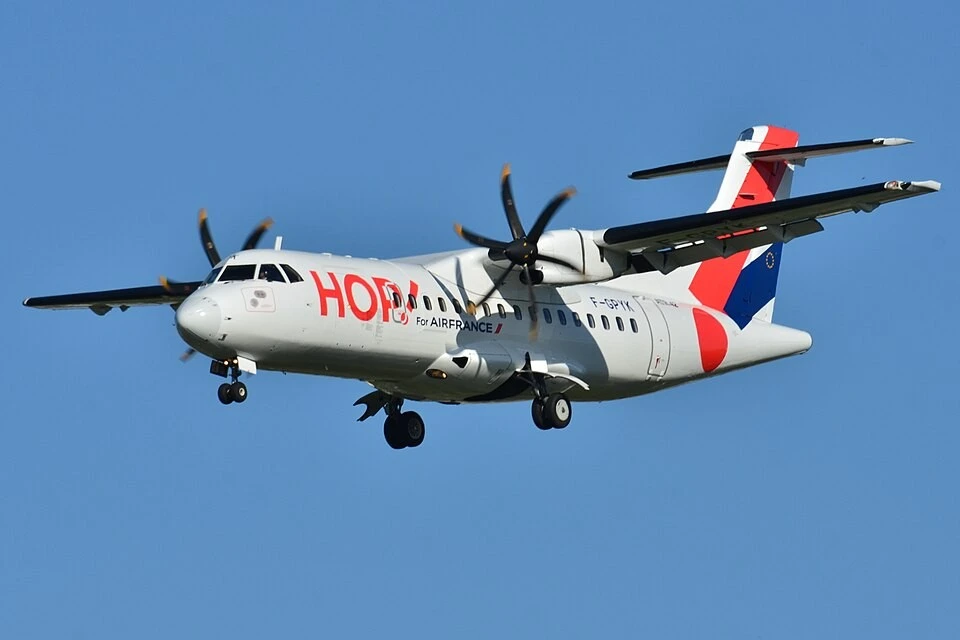
The two propellers sit forward of the high wing. The horizontal tail attaches at the top of the fin.

Use the shape and cabin length to narrow the family. The -500 and -600 share the basic airframe.

Select a circle to see the marked area up close.

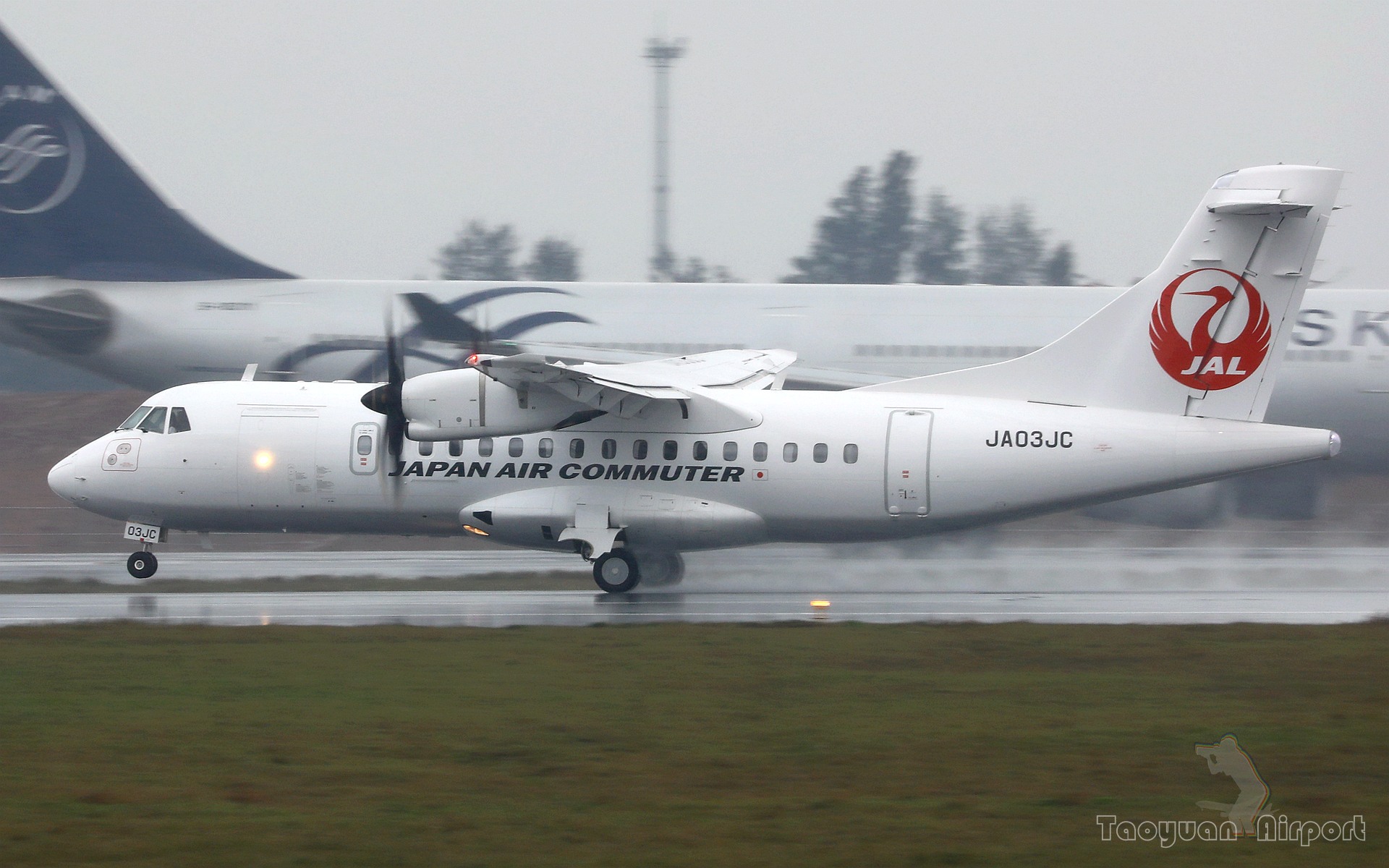
Japan Air Commuter ATR 42-600

JA03JC at Taiwan Taoyuan International Airport, 5 February 2018. Image compressed for display.
JA03JC at Taiwan Taoyuan International Airport, 5 February 2018. Image compressed for display.Photo by 湯小沅
Photo sourceCC0

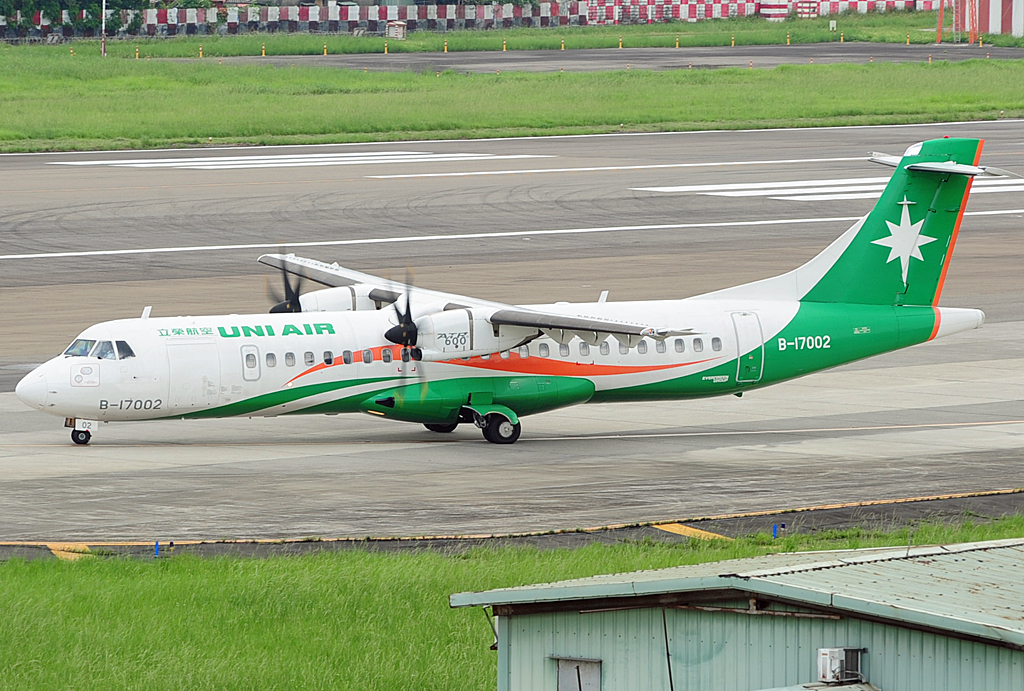
UNI Air ATR 72-600

B-17002 at Taipei Songshan Airport, 11 September 2016.
B-17002 at Taipei Songshan Airport, 11 September 2016.Photo by Steven Byles from Taipei, Taiwan
Photo sourceCC BY-SA 2.0

Design & cabins

Technical notes

Design notes

  • EASA lists the 42-200, -300, -320, -400 and -500 as certified models. The -600 commercial designation describes a new avionics standard on the 42-500.
  • ATR's current -600 figures give the ATR 42 a length of 22.67 m and the ATR 72 a length of 27.17 m.

Advantages

  • The shorter fuselage is intended for routes with lower passenger demand.

Limitations

  • Check aircraft records to distinguish generations that share the same basic exterior.
Family Technical Profile

ATR 42 Family is one of Aircraft manufacturer's platforms in its market segment, balancing capacity, range, airport compatibility, maintenance economics, and mission flexibility.

ATR 42 Family serves the narrowbody market with family commonality and multiple configurations.

Technical features

  • ATR 42 Family: Single-aisle fuselage efficiency · structure. A narrow fuselage reduces structural weight and airport footprint for high-frequency short and medium routes.
  • ATR 42 Family: High-cycle operating design · maintenance. Doors, landing gear, brakes, and systems are optimized for repeated daily sectors and quick turnarounds.
  • ATR 42 Family: Wing and high-lift devices · aerodynamics. Flaps, slats, and wingtip devices balance runway performance with cruise efficiency.
  • ATR 42 Family: Engine generation changes · engine. Engine nacelle, thrust rating, fuel burn, and noise standards define each production generation.
  • ATR 42 Family: Fleet commonality · operational_efficiency. Common flight decks and maintenance practices reduce training and support cost across subfleets.

Advantages

  • One platform can cover several capacity and mission bands.
  • Family design reduces training, maintenance, and spares complexity.
  • Engine, wingtip, avionics, or structural upgrades can extend lifecycle value.

Weaknesses

  • Configuration identification complexity. Visually similar aircraft can differ materially by engine, weight standard, cabin layout, and conversion status.
  • Generation-dependent economics. Older generations usually trail newer designs in fuel burn, noise, avionics, or maintenance intervals.
  • Market-fit limits. Every variant has an ideal capacity and range band; outside it, load factor, range, or cost can become limiting.

Markets

  • Network airline trunk or feeder markets
  • Leasing and fleet replacement markets
  • Regional, domestic, or international airline markets

Operators

  • Full-service network airlines
  • Low-cost or leisure airlines
  • Cargo, government, or special-mission operators

Routes and missions

  • High-frequency short or medium-haul trunk routes
  • Medium-density long-haul or cross-regional routes
  • Fleet replacement, supplementation, or special missions
Sources