Home/Encyclopedia/Airbus/Airbus A220 Family

Airbus A220 Family

The Airbus A220 is a small single-aisle jet family originally developed as the Bombardier CSeries, optimized for efficient short and medium sectors with a modern cabin and geared turbofan engines.

Models at a glance

A220-100

The A220-100 is the shorter A220, originally launched as the Bombardier CS100. Its PW1500G engines and five-abreast cabin are shared with the longer -300.

Entered service
2016
First flight
16 September 2013
Length
35 m
Wingspan
35.1 m
Published range
3,600 nm
Typical two-class seats
100–120
Maximum passenger seats
135
Engine options
PW1500G
Main landing gear
1 axle · 2 wheels per side
A220-100 variants

BD-500-1A10

BD-500-1A10 is the certified aircraft model marketed as the A220-100. Bombardier developed the model as the CS100.

Length
35 m
Wingspan
35.1 m
Published range
3,600 nm
Typical two-class seats
100–120Airbus typical two-class seating range for the A220-100.
Engine options
PW1519G · PW1521G · PW1524G
Main landing gear
Unavailable
Sources

A220-300

The A220-300 is the stretched A220, originally launched as the Bombardier CS300. The longer cabin expands capacity while retaining the A220's basic wing and PW1500G engine family.

Entered service
2016
First flight
27 February 2015
Length
38.7 m
Wingspan
35.1 m
Published range
3,400 nm
Typical two-class seats
120–150
Maximum passenger seats
160
Engine options
PW1500G
Main landing gear
1 axle · 2 wheels per side
A220-300 variants

BD-500-1A11

BD-500-1A11 is the certified aircraft model marketed as the A220-300. It is the longer A220 model.

Length
38.7 m
Wingspan
35.1 m
Published range
3,400 nm
Typical two-class seats
120–150Airbus typical two-class seating range for the A220-300.
Engine options
PW1521G-3 · PW1524G-3
Main landing gear
Unavailable
Sources

Identification

Nose and engine pods
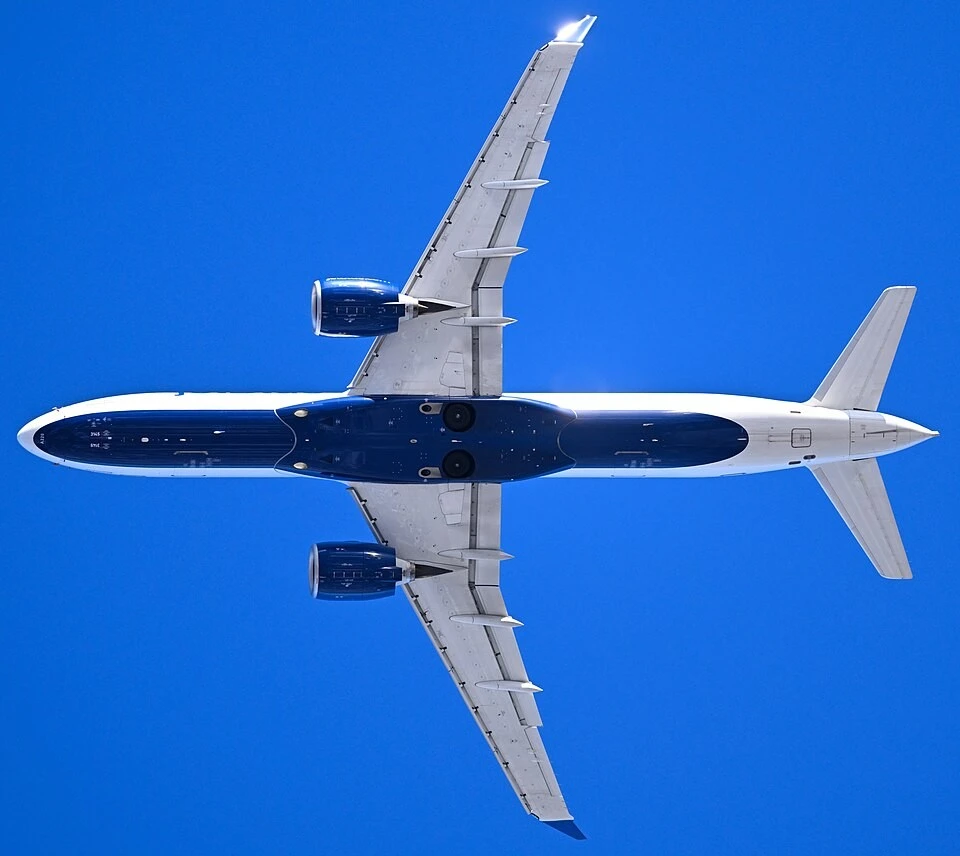
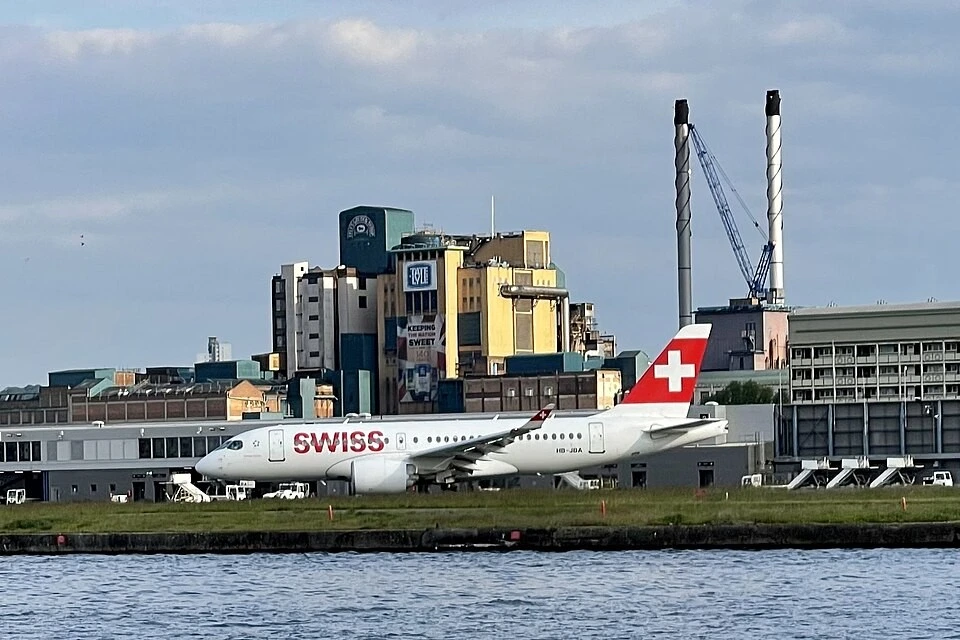
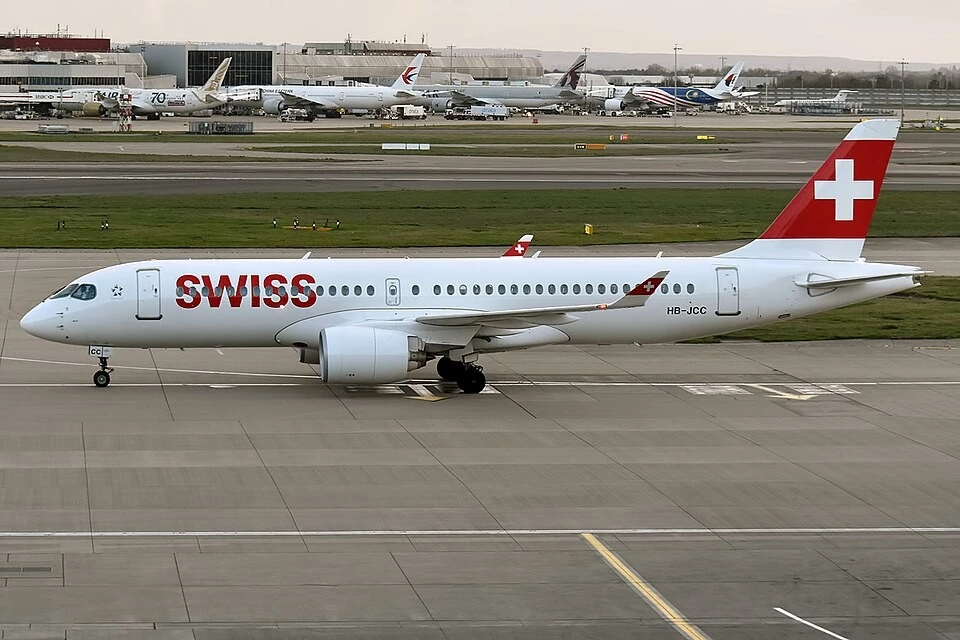
Look from the front quarter for the long taper into the nose, rounded underwing engine inlets, and tips that turn upward at the ends of the wings.
Fuselage stretch
Compare the lengths ahead of and behind the wing in a side profile. The A220-300 is about 3.7 m longer overall than the A220-100.

CS100 and CS300 are the earlier names of the A220-100 and A220-300 respectively.

Design & cabins

  • Pratt & Whitney PW1500G

    The geared turbofan powers both A220 models. Its reduction gearbox allows the fan and low-pressure turbine to turn at different speeds.

  • Composite wing and lightweight airframe

    The composite wing is part of a clean-sheet airframe that uses carbon composites and other lightweight materials where they suit the structure.

  • Five-abreast cabin

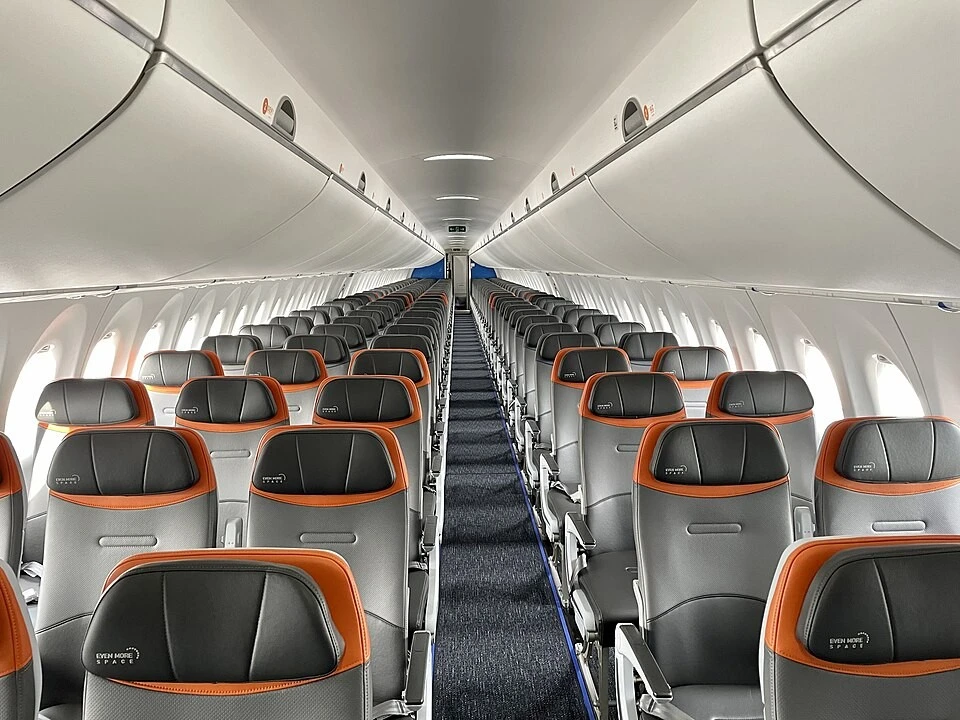
    The A220-100 (CS100) and stretched A220-300 (CS300) share the same cabin cross-section, typically arranged with two seats on one side and three on the other.

More aircraft systems
Engine reference
Pratt & Whitney PW1500G
Cabin configuration examples

Low-cost carriers

Full-service carriers

Five-star airlines

Technical notes

Design notes

  • The family includes A220-100 and A220-300.
  • Its Pratt & Whitney geared turbofan engines and advanced wing target lower fuel burn and noise.
  • The cabin cross-section is wider than many regional jets, giving it a mainline-style passenger experience.
  • Major variants covered here: A220-100, A220-300.

Advantages

  • Efficient on thin short-to-medium routes.
  • Comfortable cabin for its size.
  • Modern engine and wing technology.

Limitations

  • Smaller family scale than A320 or 737 fleets.
  • Payload and range are below larger single-aisle types.
Family Technical Profile

Airbus A220 Family is one of Airbus's platforms in its market segment, balancing capacity, range, airport compatibility, maintenance economics, and mission flexibility.

Airbus A220 Family serves the narrowbody market with family commonality and multiple configurations.

Technical features

  • Airbus A220 Family: Single-aisle fuselage efficiency · structure. A narrow fuselage reduces structural weight and airport footprint for high-frequency short and medium routes.
  • Airbus A220 Family: High-cycle operating design · maintenance. Doors, landing gear, brakes, and systems are optimized for repeated daily sectors and quick turnarounds.
  • Airbus A220 Family: Wing and high-lift devices · aerodynamics. Flaps, slats, and wingtip devices balance runway performance with cruise efficiency.
  • Airbus A220 Family: Engine generation changes · engine. Engine nacelle, thrust rating, fuel burn, and noise standards define each production generation.
  • Airbus A220 Family: Fleet commonality · operational_efficiency. Common flight decks and maintenance practices reduce training and support cost across subfleets.

Advantages

  • One platform can cover several capacity and mission bands.
  • Family design reduces training, maintenance, and spares complexity.
  • Engine, wingtip, avionics, or structural upgrades can extend lifecycle value.

Weaknesses

  • Configuration identification complexity. Visually similar aircraft can differ materially by engine, weight standard, cabin layout, and conversion status.
  • Generation-dependent economics. Older generations usually trail newer designs in fuel burn, noise, avionics, or maintenance intervals.
  • Market-fit limits. Every variant has an ideal capacity and range band; outside it, load factor, range, or cost can become limiting.

Markets

  • Network airline trunk or feeder markets
  • Leasing and fleet replacement markets
  • Regional, domestic, or international airline markets

Operators

  • Full-service network airlines
  • Low-cost or leisure airlines
  • Cargo, government, or special-mission operators

Routes and missions

  • High-frequency short or medium-haul trunk routes
  • Medium-density long-haul or cross-regional routes
  • Fleet replacement, supplementation, or special missions
Key terms
Engine configuration

The exact engine family and thrust standard installed on a specific model or production block.

  • Connects model suffixes, airline maintenance strategy, and performance limits.
  • Important for aircraft identification and fleet comparison.

Advantages. Helps explain range, payload, noise, and fuel-burn differences.

Limitations. Public data may omit thrust derates or later engine swaps.

Cabin configuration

The airline-selected layout of cabins, seats, galleys, lavatories, crew rest, and monuments.

  • Can change the same aircraft type from premium-heavy to high-density.
  • Affects range, payload, passenger experience, and turnaround flow.

Advantages. Lets airlines tailor the aircraft to route economics.

Limitations. Seat-map examples vary over time and by subfleet.

Fly-by-wire commonality

Airbus families use a common cockpit philosophy that helps reduce training differences across related aircraft.

  • This system is part of the A330 operating architecture and interacts with flight-control, electrical, hydraulic, engine, or environmental systems.
  • Exact configuration varies across A330ceo, A330neo, freighter, and military derivatives.

Advantages. Improves operational reliability, economics, or mission flexibility. Uses a mature wide-body systems architecture to reduce operational risk.

Limitations. System complexity increases maintenance, training, and troubleshooting demands. Airline configuration and engine choice can change real-world performance.

Sources