A380-861

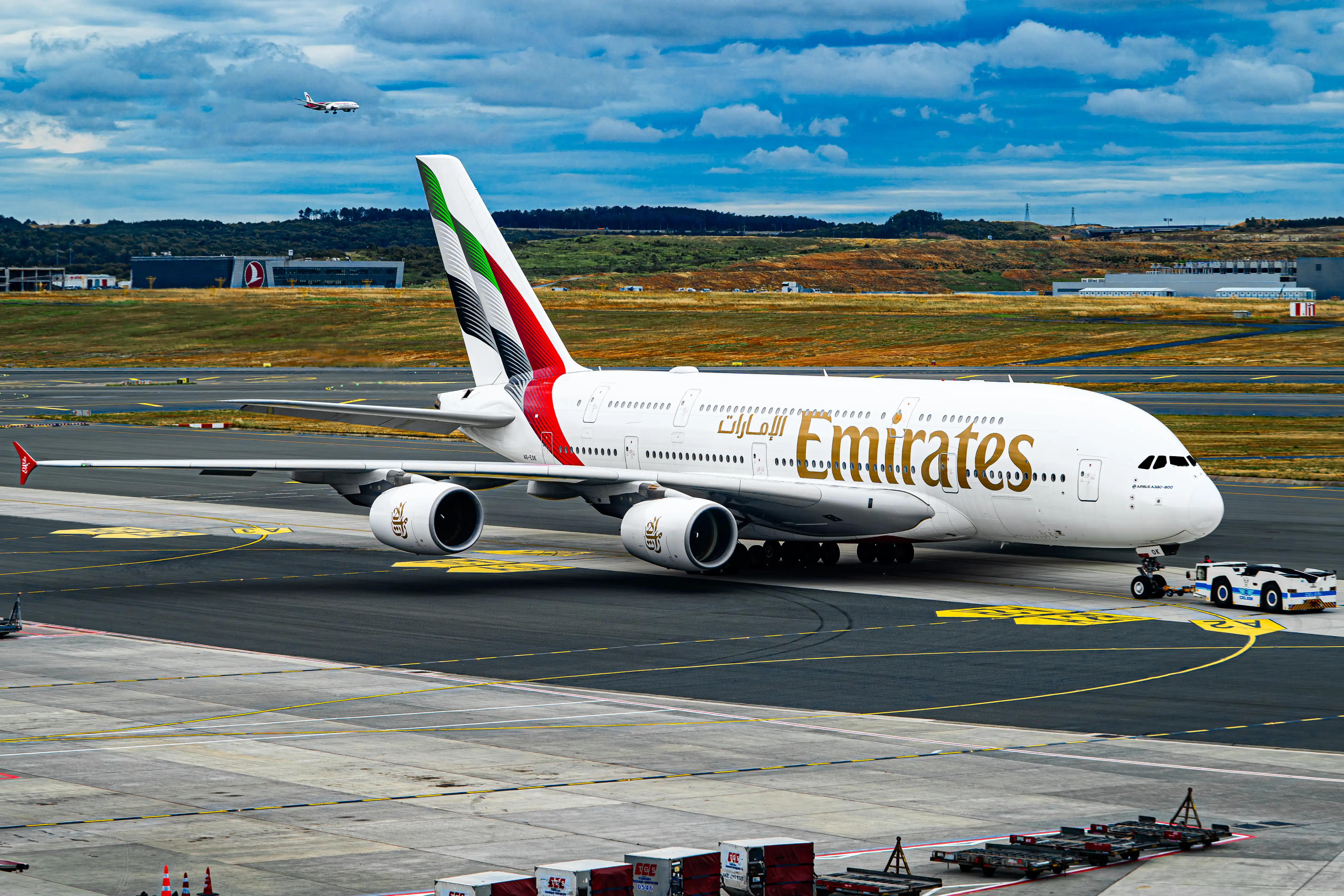
The A380-861 is the Engine Alliance GP7270-powered A380. Its nacelles and engine identification distinguish it from the Rolls-Royce-powered -841 and -842.

At a glance

A380-861

Length
72.73 m
Wingspan
79.77 m
Published range
8,000 nmApproximate Airbus GP7200 planning range at 52 t of passenger payload.
Typical two-class seats
615Emirates original A6-EOP layout with 58 Business and 557 Economy seats.
Engine options
GP7270
Main landing gear
Two 4-wheel wing gears + two 6-wheel body gears
Sources
A380-800 model line

Compare models

Current aircraftA380-800
Compare with

Comparing A380-861 with A380-800.

SpecificationA380-861A380-800
Length72.73 m72.73 m
Wingspan79.77 m79.77 m
Maximum take-off weight575 tCertified WV008 or WV011 maximum. Other weight variants are lower.575 tHighest certified weight variant
Maximum payload83 tApproximate Airbus GP7200 planning figure.84 tApproximate Airbus planning figure with Trent 900.
Fuel tank capacity323,546 L323,546 L
Engine optionsGP7270Trent 900 · GP7200
Typical two-class seats615Emirates original A6-EOP layout with 58 Business and 557 Economy seats.615Emirates two-class long-range layout.
Published range8,000 nmiApproximate Airbus GP7200 planning range at 52 t of passenger payload.8,000 nmi545-seat four-class layout

A dash indicates that a verified figure is unavailable. Figures follow the configuration specified by each source.

Comparison sources

Identification

Use these features to recognise the Airbus A380 Family. Check the aircraft or programme record for the A380-861 designation.

Two full passenger decks
Trace both rows of cabin windows well past the wing. The 747's upper cabin ends much farther forward.
Four main-gear units
From behind with the gear down, look for two four-wheel gear units toward the wings and two six-wheel units closer to the fuselage.

Design & cabins

Engine reference
GP7200
Technical notes

Design notes

  • Engine sub-variants can represent thrust rating, combustor standard, software standard, or installation differences rather than a fully separate hardware family.
  • Use aircraft subtype, operator fleet data, and registration-level records before identifying a specific airframe engine.

Advantages

  • Precise engine sub-variant lookup is available for this model.

Limitations

  • Some planned, development, or military configurations may require certificate-level confirmation before operational use.
Variant Technical Profile

A380-861 is a specific configuration within A380-800, developed to cover a defined capacity, range, payload, or mission requirement inside the wider family.

A380-861 is positioned as a capacity/range-specific solution within the widebody segment, serving routes better matched than sibling variants.

Technical features

  • A380-861: Wide-body fuselage · structure. Twin-aisle cabin and lower-deck cargo volume support long-haul passenger comfort and belly-freight revenue.
  • A380-861: High-bypass turbofan integration · engine. Large engines are matched to long-range payload needs, ETOPS rules, and airline maintenance strategy.
  • A380-861: Long-range fuel and payload balance · range_payload. Wing fuel capacity, MTOW growth, and cabin density determine whether the aircraft favors range, seats, or cargo.
  • A380-861: Advanced flight deck · avionics. Glass-cockpit avionics and modern flight-management systems reduce crew workload on long sectors.
  • A380-861: Cabin systems for long sectors · cabin. Pressurization, air conditioning, galleys, crew rest, and cargo holds are sized for extended missions.

Advantages

  • Provides a more precise capacity or range match within the family.
  • Retains training, maintenance, and parts commonality with sibling variants.
  • Lets operators tune engine, cabin, and payload choices to route needs.

Weaknesses

  • Configuration identification complexity. Visually similar aircraft can differ materially by engine, weight standard, cabin layout, and conversion status.
  • Generation-dependent economics. Older generations usually trail newer designs in fuel burn, noise, avionics, or maintenance intervals.
  • Market-fit limits. Every variant has an ideal capacity and range band; outside it, load factor, range, or cost can become limiting.

Markets

  • Network airline trunk or feeder markets
  • Leasing and fleet replacement markets
  • Regional, domestic, or international airline markets

Operators

  • Full-service network airlines
  • Low-cost or leisure airlines
  • Cargo, government, or special-mission operators

Routes and missions

  • High-frequency short or medium-haul trunk routes
  • Medium-density long-haul or cross-regional routes
  • Fleet replacement, supplementation, or special missions

Sibling comparison

  • smaller sibling variants. Usually provides more seats, cargo volume, or thrust demand, but can be harder to fill on thinner routes.
  • larger or longer-range sibling variants. Usually has lower acquisition and operating exposure, but less range, payload, or growth margin.
Sources